Artwork
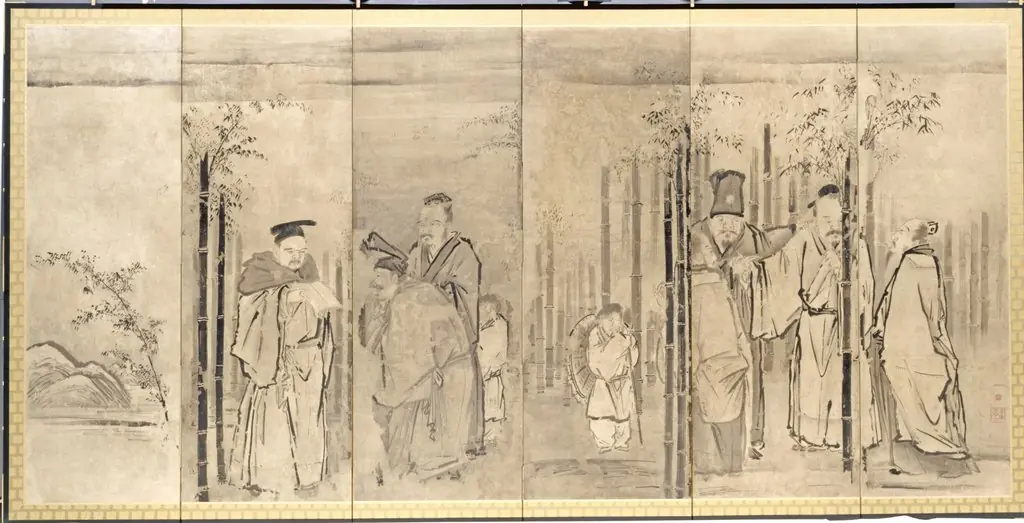
Seven Sages of the Bamboo Grove
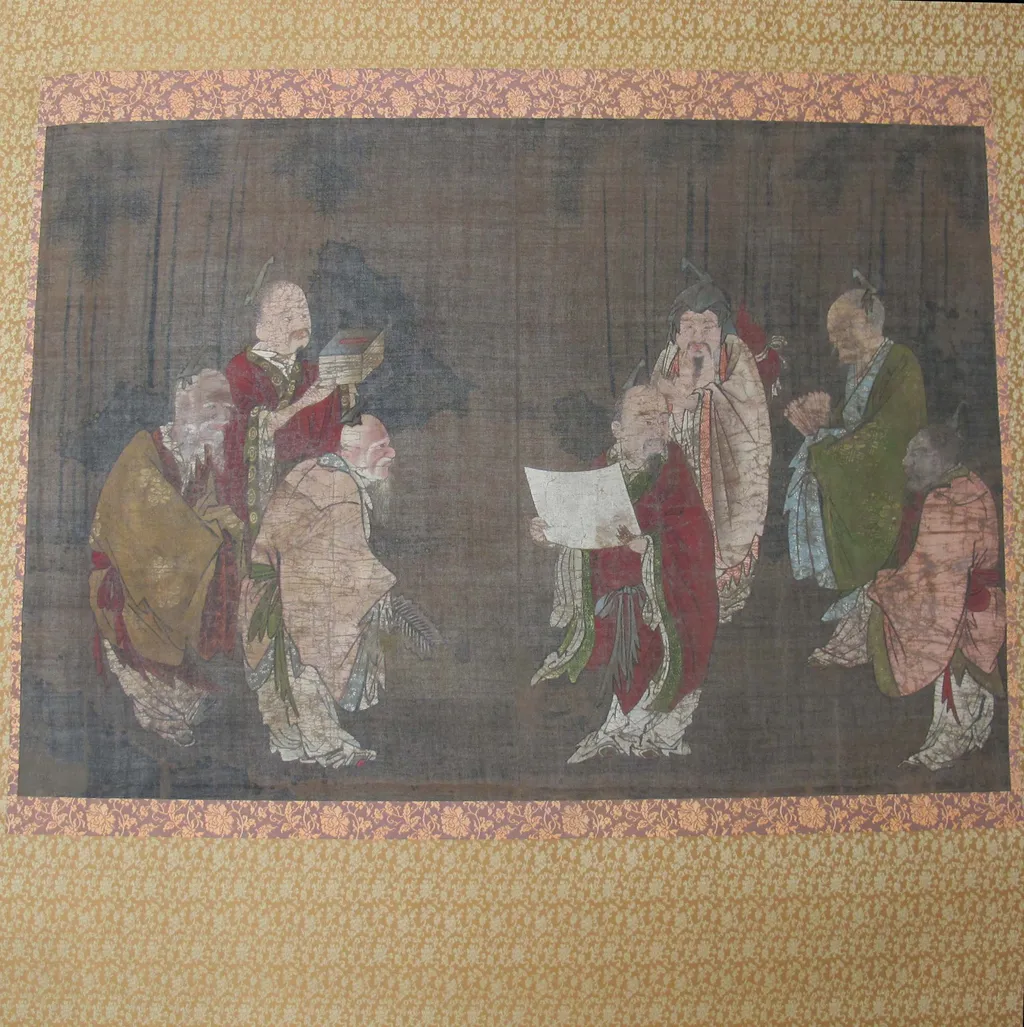
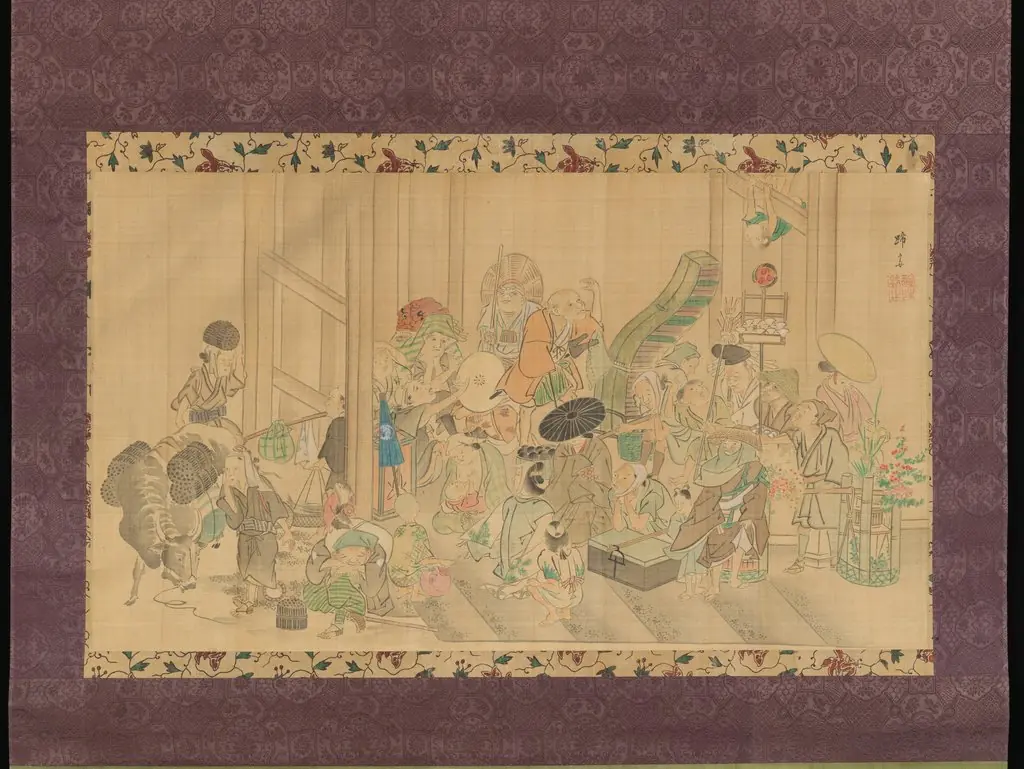
Seven Sages of the Bamboo Grove is an unspecified painting. It dates from 1741 and is held in the collection of the Metropolitan Museum of Art. Created in 1741, this painting depicts a group of six elder figures gathered within a dimly lit interior.
About this work
Check out The Metropolitan Museum of Art to see more works like this.
This painting shows six older men in a dim room. They wear long robes and tall hats, some in red, some in green. One man holds a scroll. The walls are dark, and the floor has a golden border with patterns.
The men look like scholars or poets. Their faces are serious, but one man smiles slightly. The painting is old, made in 1741.
Check out The Metropolitan Museum of Art to see more works like this.
Technique & Style
The Seven Sages of the Bamboo Grove is classified as a painting, produced in Japan in 1741. The work's recorded dimensions are 89.6 cm in height and 61.5 cm in width, indicating a vertical, portrait-oriented format consistent with hanging-scroll conventions of Japanese painting of that period. The piece is held in the collection of the Metropolitan Museum of Art. Beyond the classification, medium, support, condition, and stylistic details are not documented in the available sources.
History & Provenance
The painting Seven Sages of the Bamboo Grove, created in 1741 by an anonymous Japanese artist, is held in the collection of the Metropolitan Museum of Art. The work measures 89.6 cm in height and 61.5 cm in width. While the sources confirm its current location and physical dimensions, no specific inventory or accession number is provided in the available records. Additionally, the provided documentation does not list any exhibition history for this piece.
Legacy
The painting inspired subsequent scholarly and curatorial interest in Edo-period genre scenes, leading to its inclusion in major exhibitions on East Asian art at the Metropolitan Museum of Art and influencing later visual culture studies of bamboo grove motifs in Japanese art history.
Its reputation grew through catalogues and academic discussions highlighting its role in documenting early 18th-century narrative painting, establishing it as a reference point for research on anonymous workshop traditions in Japan.
Overview
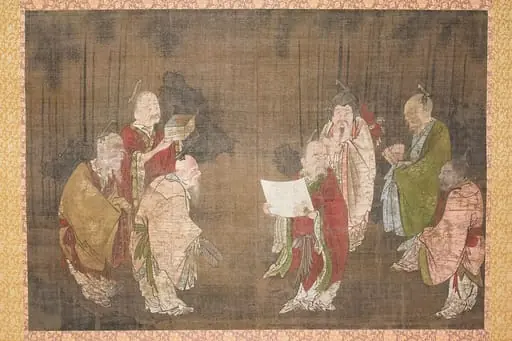
Created in 1741, this painting depicts a group of six elder figures gathered within a dimly lit interior. The men are dressed in long robes and tall hats, their garments rendered in muted reds and greens. A scroll is held by one of the figures, while the floor is outlined with a gilded border featuring decorative motifs. The overall atmosphere is subdued, emphasizing the contemplative nature of the scene.
Subject & Meaning
The six individuals appear to be scholars or poets, suggested by their attire and the presence of a scroll, a traditional symbol of literary activity. Their expressions range from solemn to a faint smile, hinting at a nuanced interaction among learned men, possibly engaged in discussion or shared reflection within a private setting.
Context
In the cultural milieu of 1740s China, gatherings of scholars, sometimes referred to as the Seven Sages of the Bamboo Grove, were idealized as exemplars of intellectual camaraderie and moral integrity. This painting reflects that tradition, translating a literary motif into a visual representation of learned companionship.
Artist & collection

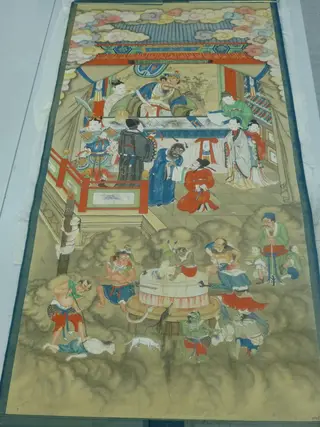 The Ten Kings of Purgatory: King of the Five Offices of the Fourth Court
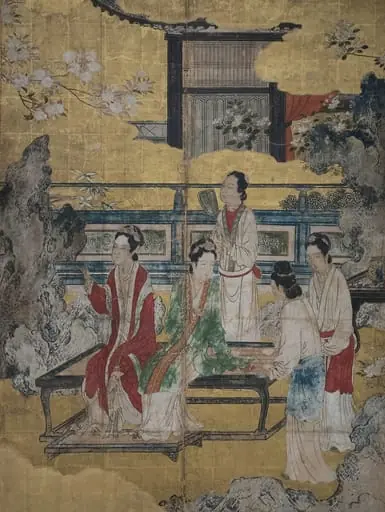 伝狩野永徳筆 唐美人図|Chinese Women in a Palace Garden
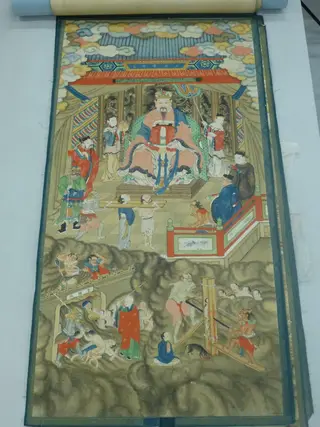 The Ten Kings of Purgatory: King Songdi of the Third Court
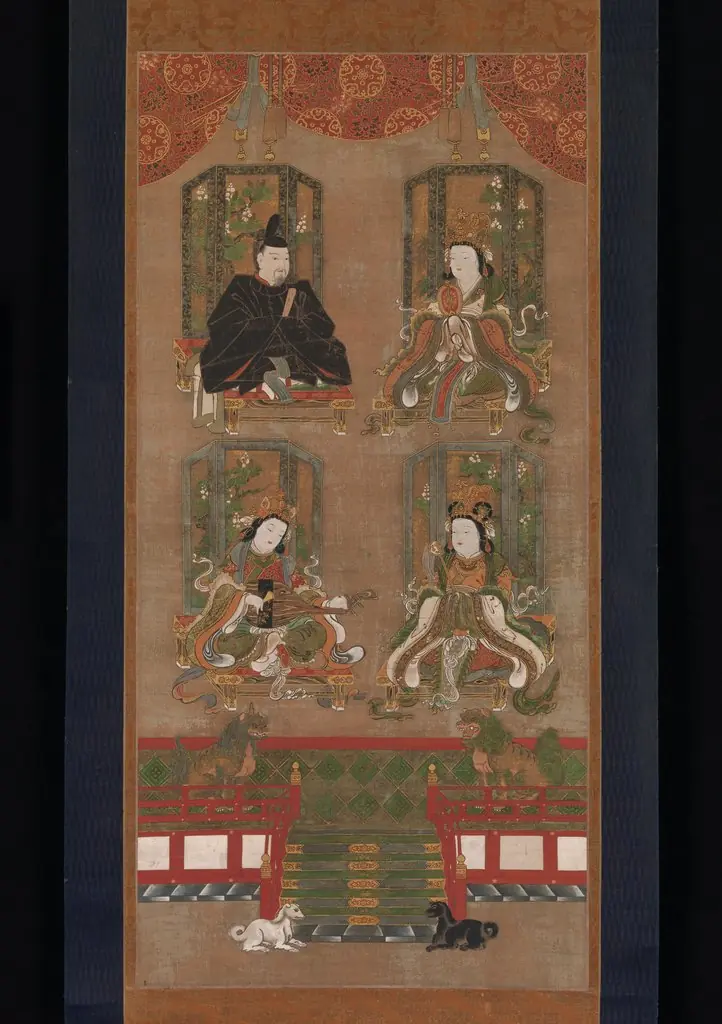 The Four Deities of Mount Kōya
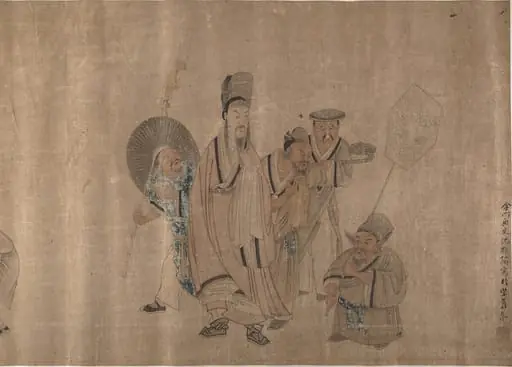 Untitled
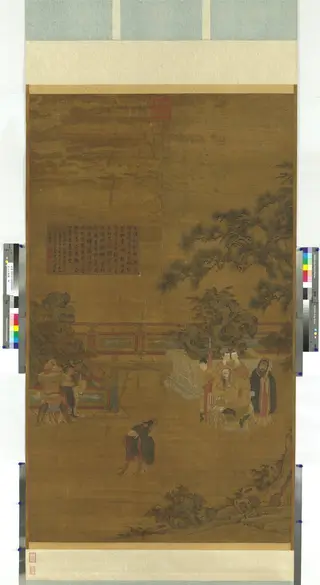 宋人折檻圖 軸
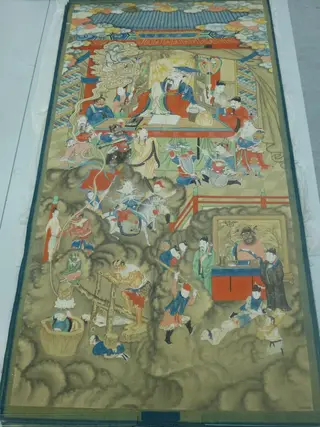 The Ten Kings of Purgatory: King Qinguang of the First Court
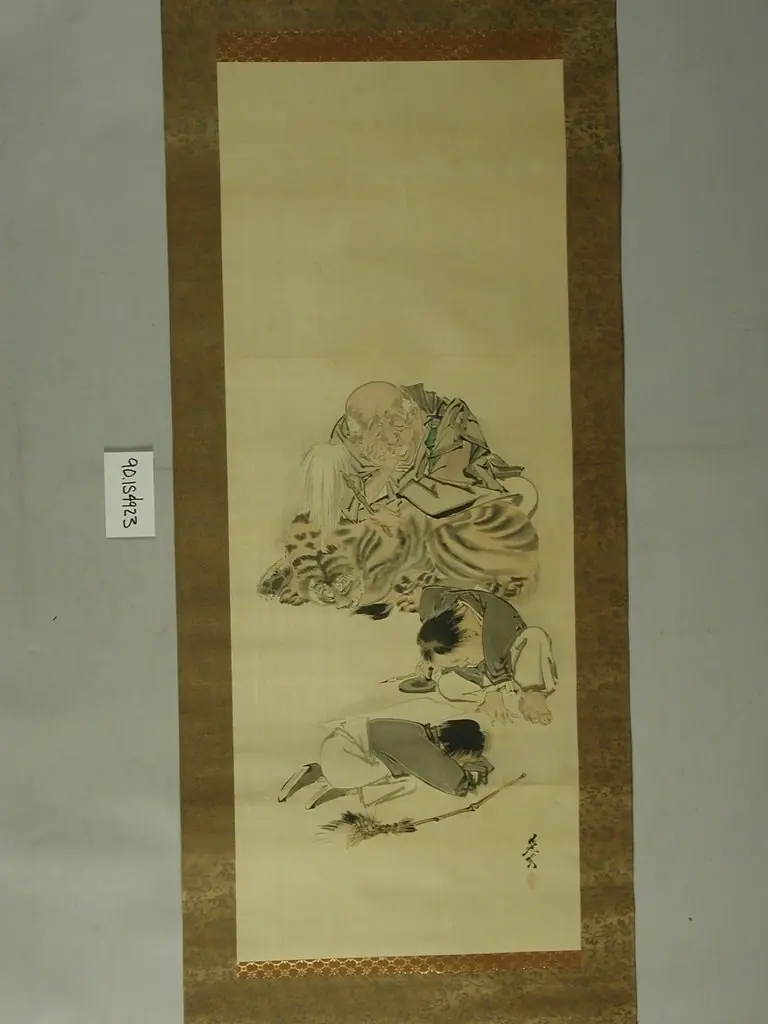 Mandjus'ri
 Taking Shelter from the Rain