Artwork
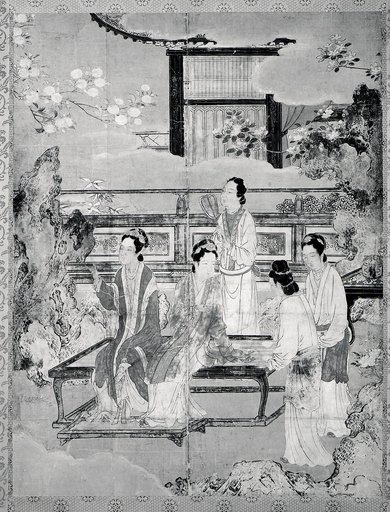
伝狩野永徳筆 唐美人図|Chinese Women in a Palace Garden
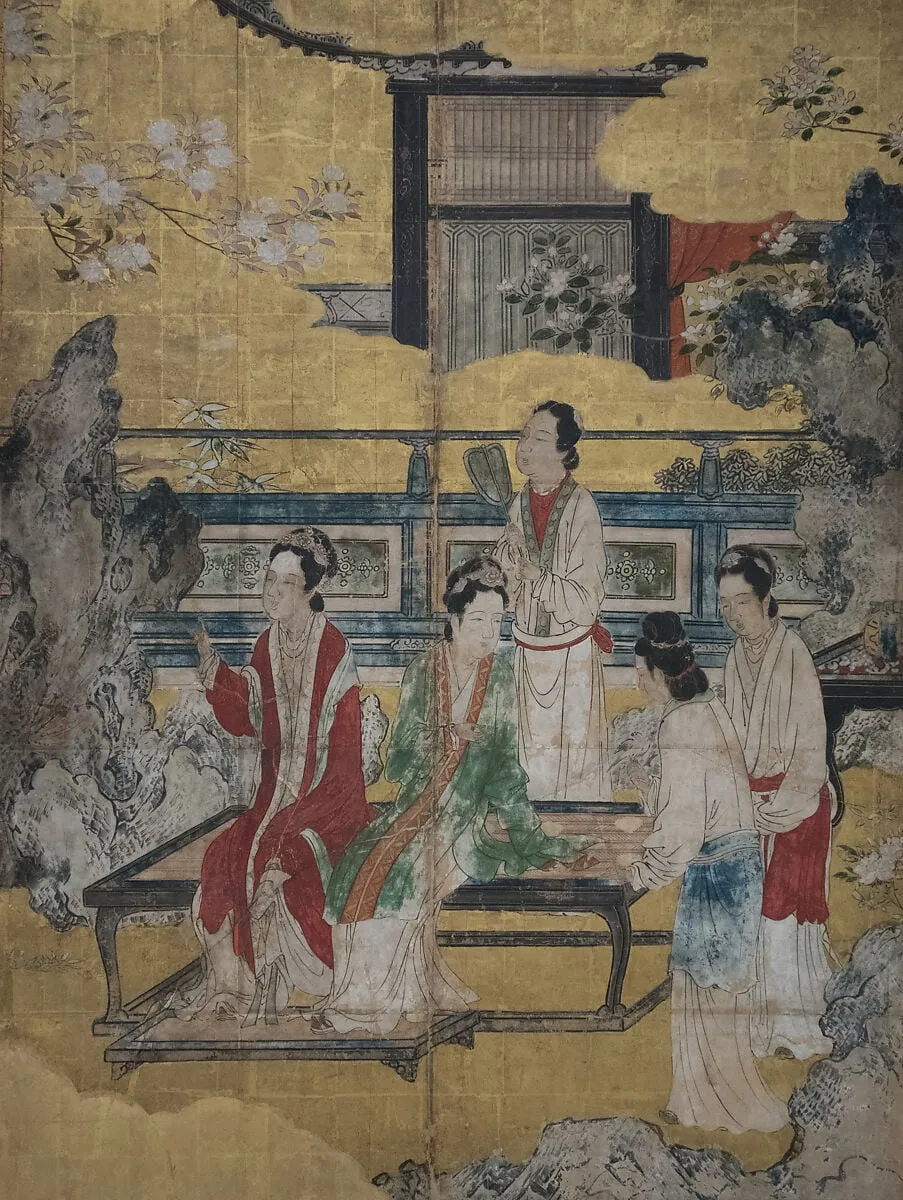
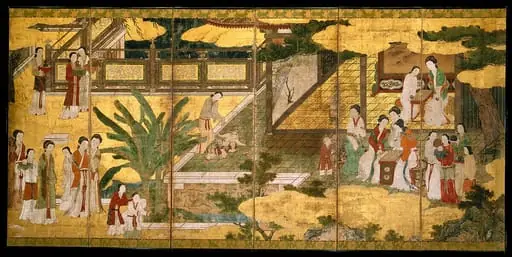
伝狩野永徳筆 唐美人図|Chinese Women in a Palace Garden is an ink painting by the Kanō school artist Kano Eitoku. It dates from 1562 and is held in the collection of the Metropolitan Museum of Art.
About this work
Subject & Meaning
It is housed in the Metropolitan Museum of Art, where it is documented as a sixteenth‑century Japanese painting portraying courtly female figures.
The painting 伝狩野永徳筆 唐美人図 (Chinese Women in a Palace Garden) depicts women within an enclosed palace garden. Attributed to Kano Eitoku and dated 1562, it is rendered in ink, color, gold, and gold leaf on paper. Originally executed as two panels of a folding screen, the work was later remounted as a hanging scroll.
It is housed in the Metropolitan Museum of Art, where it is documented as a sixteenth‑century Japanese painting portraying courtly female figures.
Technique & Style
Chinese Women in a Palace Garden is executed in ink, color, gold, and gold leaf on paper. Originally painted as two panels of a folding screen, the work was subsequently remounted as a hanging scroll. The combination of polychrome pigments with gold and gold-leaf accents on a paper support is consistent with the decorative screen-painting tradition of mid-sixteenth-century Japan, lending the surface a luminous, courtly quality suited to its subject of women in a palace setting.
History & Provenance
The work titled 伝狩野永徳筆 唐美人図 (Chinese Women in a Palace Garden) is attributed to Kano Eitoku and dated to 1562 in Japan. Originally executed as two panels of a folding screen using ink, color, gold and gold leaf on paper, the pieces were subsequently remounted as a hanging scroll. The painting entered the collection of the Metropolitan Museum of Art in New York, where it is catalogued among the museum's holdings, though no specific accession number is published in the sources.
Its creation reflects the late Muromachi period aesthetic and a focus on courtly female figures, and no exhibition history is noted in the documentation examined.
Overview
Created in 1562 by Kano Eitoku, this work consists of two tall panels originally designed as a folding screen but now displayed as a hanging scroll. Executed on paper with ink, pigments, and gold leaf, it presents a garden scene populated by three elegantly dressed women. The composition combines delicate brushwork with a luminous gold background, characteristic of the Kano workshop’s decorative approach.
Context
The mid‑sixteenth century saw the Kano school dominate official painting in Japan, supplying works for castles and aristocratic households. Eitoku’s garden scenes, often featuring Chinese-inspired subjects, catered to elite tastes for exoticism and opulence. This piece aligns with contemporaneous trends that blended native aesthetic principles with imported motifs to convey status and cultural sophistication.
Artist & collection