Artwork
The Four Deities of Mount Kōya
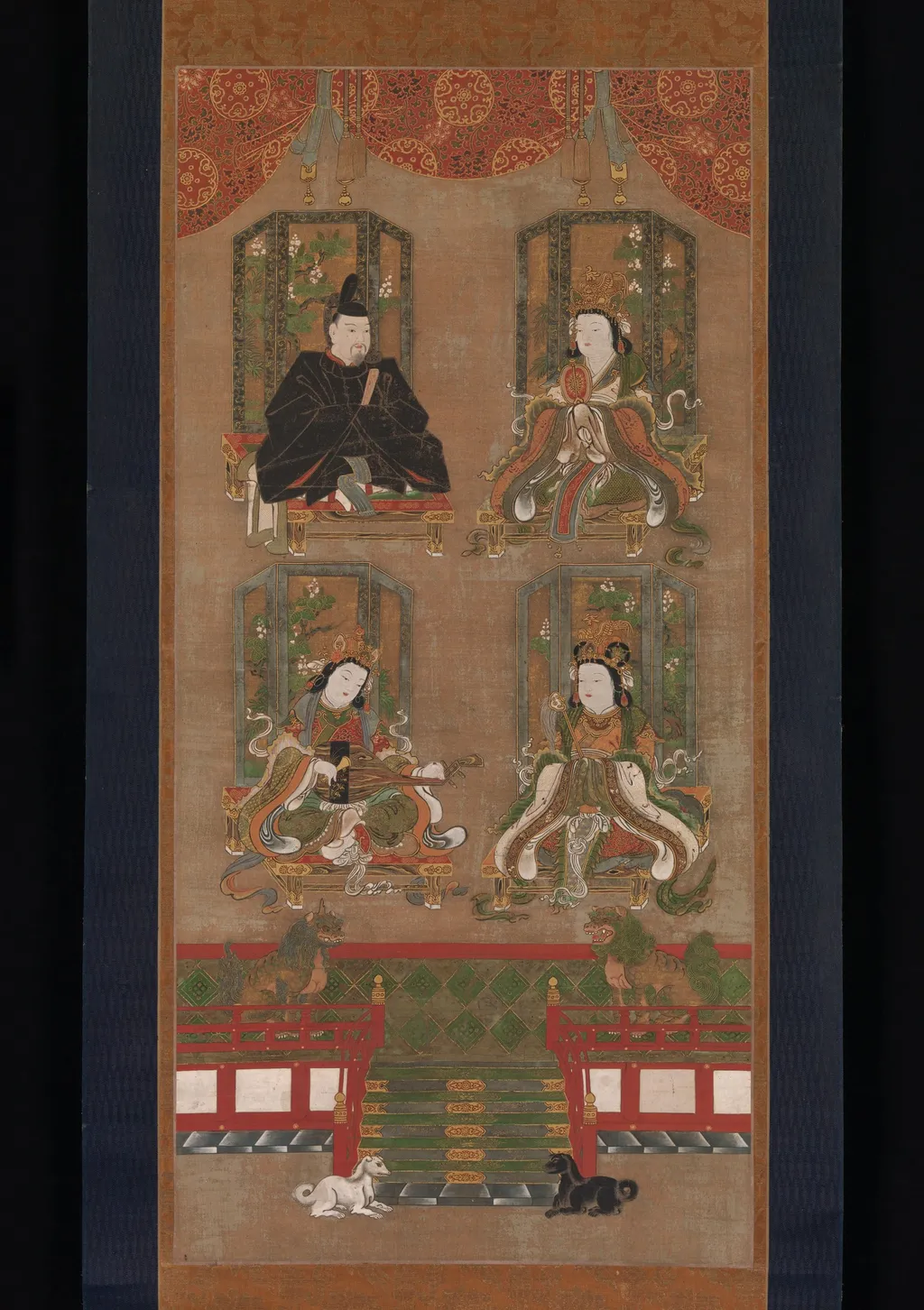
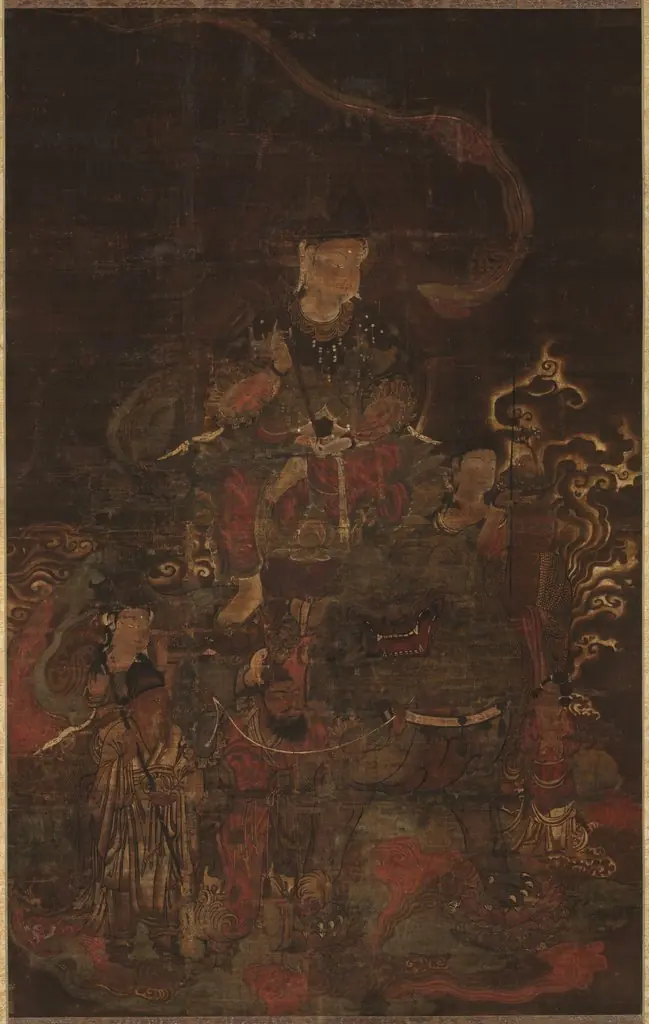
The Four Deities of Mount Kōya is an unspecified painting. It dates from 1549 and is held in the collection of the Metropolitan Museum of Art.
About this work
Subject & Meaning
The iconography includes representations of animal, deity, and human figures, with some figures shown holding musical instruments.
The painting depicts four deities associated with Mount Kōya, a sacred Buddhist mountain in Japan. The iconography includes representations of animal, deity, and human figures, with some figures shown holding musical instruments. As a religious work from 1549 Japan, the painting embodies the protective and venerative function of depicting divine guardians connected to a specific sacred site.
Mount Kōya serves as the center of Shingon Buddhism, and the four deities likely represent protective or tutelary figures associated with the mountain's spiritual significance. The inclusion of musical instruments in the iconography suggests ritual or celestial associations, common in Buddhist imagery where music accompanies divine presence. The work functions as both devotional object and visual assertion of Mount Kōya's religious authority during the Muromachi period.
History & Provenance
The Four Deities of Mount Kōya is held by the Metropolitan Museum of Art, where it is recorded under accession number 2015.169. The painting is listed as part of the museum’s permanent collection, with no indication of deaccession or loan transfers. No exhibition history is documented in the provided sources.
Overview
This painting, titled The Four Deities of Mount Kōya, presents a traditional Japanese artistic representation. It features four distinct figures, each enclosed within its own frame, against a backdrop characterized by a brown hue. The composition is further enhanced by prominent red and gold accents, suggesting a work of significant visual richness and spiritual importance.
Technique & Style
Rendered in a style indicative of traditional Japanese painting, this work employs a distinctive compositional approach with individual framing for each deity. The palette is notable for its bold colors, particularly the red and gold highlights that stand out against the brown ground. Intricate details are evident throughout the piece, a characteristic feature of Japanese art from its period, contributing to the overall visual complexity and aesthetic appeal.
Artist & collection

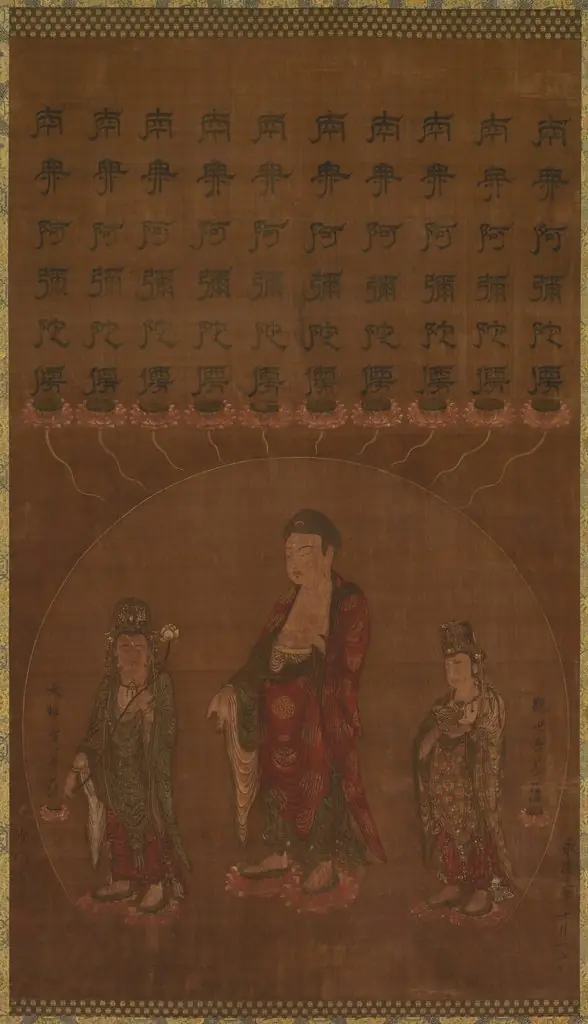 Buddha Amitābha with Two Attending Bodhisattvas
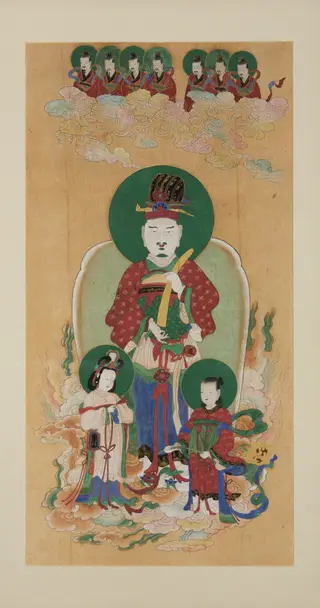 Daoist Official of Heaven with Seven Stars and Jade Maidens
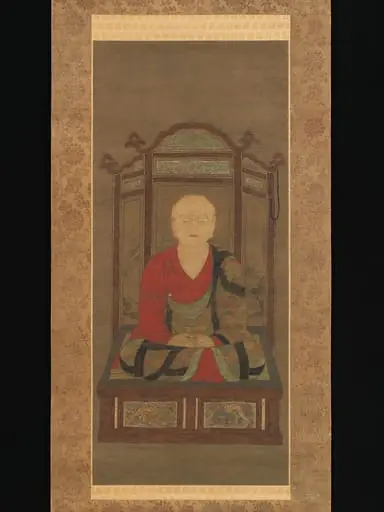 鑑真像 (Ganjin zō)|Portrait of Jianzhen
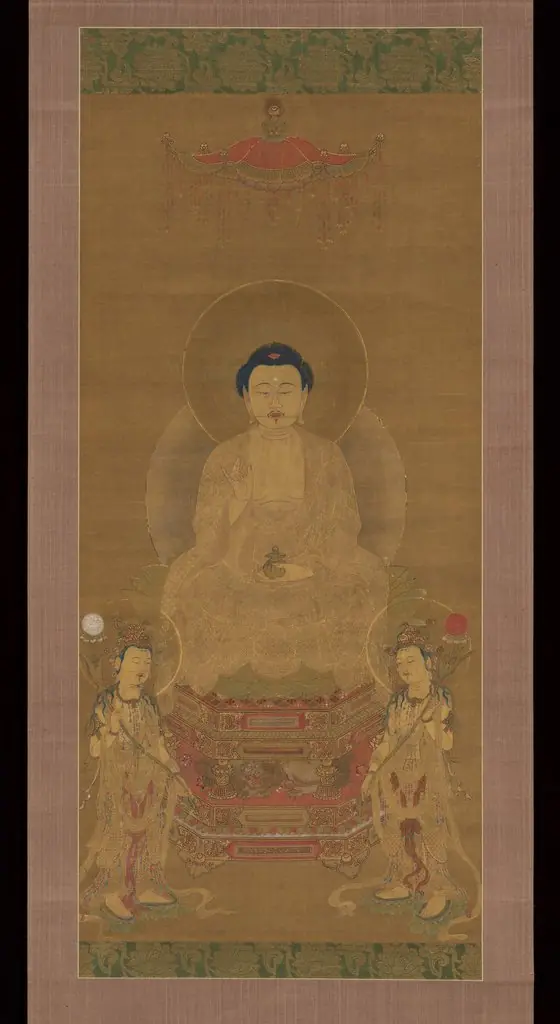 Triad of the Medicine Master Buddha Yakushi (Bhaisajya Buddha)
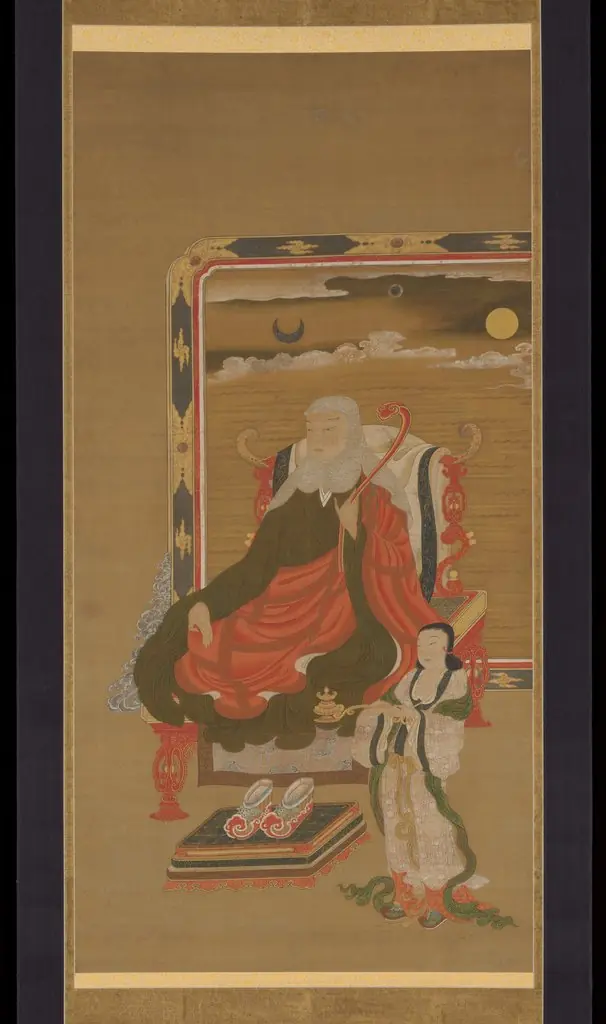 Portrait of Dengyō Daishi (Saichō)
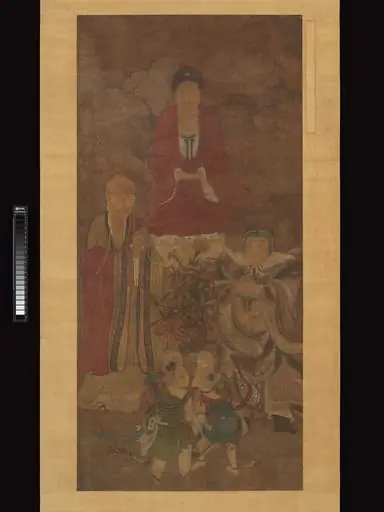 明 佚名 禮佛圖 軸|Shakyamuni with luohan, heavenly king, and boys
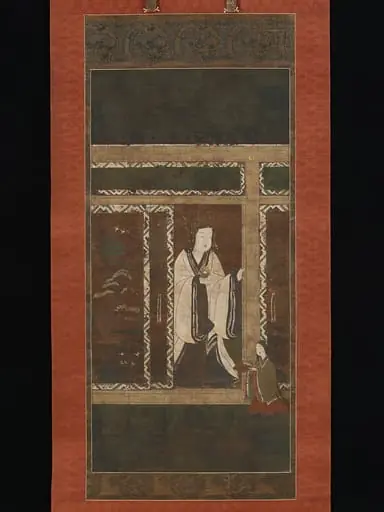 清滝権現像|Seiryū Gongen
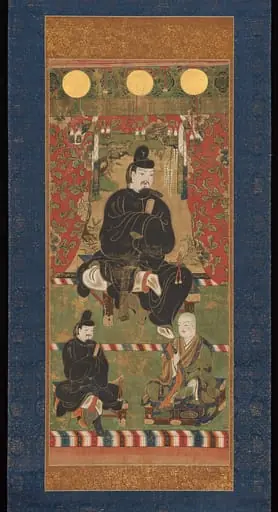 藤原鎌足像|Fujiwara no Kamatari as a Shinto Deity
 Monju Riding Lion with Attendants