Artwork
Seven Sages of the Bamboo Grove
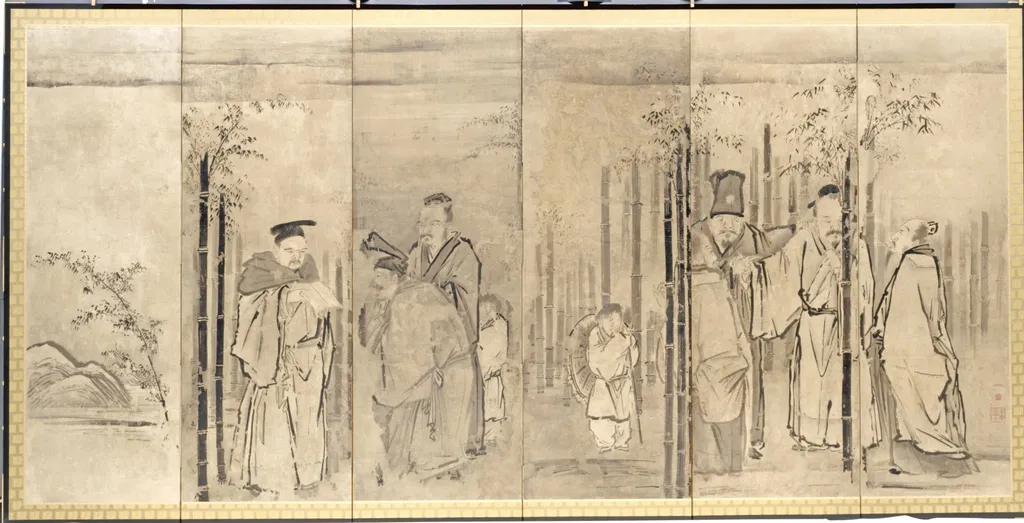
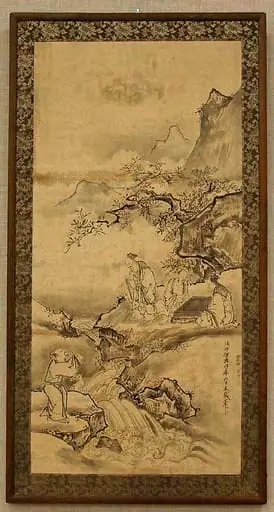
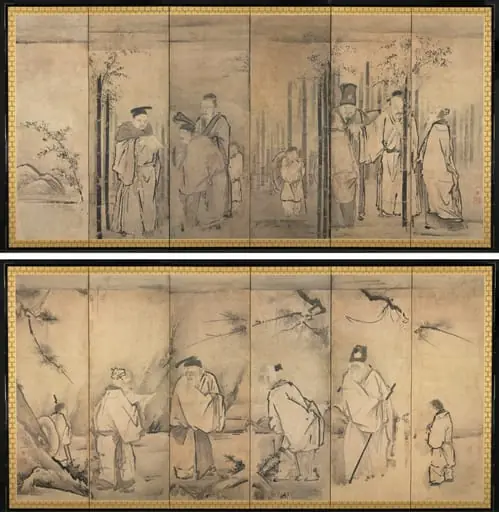
Seven Sages of the Bamboo Grove is an unspecified painting by the Baroque artist Kano Tan'yū. It dates from 1604 and is held in the collection of the Cleveland Museum of Art. The work is a screen painting from the Edo‑period Kano school, attributed to Kano Tanyu.
- Accession no.
- 1979.78.1
- Credit line
- Gift of Osborne and Gratia Hauge and Victor and Takako Hauge
About this work
Overview
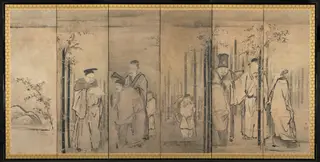
The work is a screen painting from the Edo‑period Kano school, attributed to Kano Tanyu. It depicts seven figures seated amid a bamboo grove, rendered in traditional Japanese attire. The composition is tranquil, emphasizing the natural setting and the quiet interaction of the characters.
Subject & Meaning
The seven figures represent the legendary Seven Sages of the Bamboo Grove, Chinese scholars who withdrew from the political turmoil of the Wei‑Jin era to pursue free expression through conversation, music, and wine. Their presence in the painting conveys themes of reclusion, intellectual camaraderie, and the ideal of withdrawing from worldly disorder.
Technique & Style
Executed in the refined brushwork characteristic of the Kano school, the painting combines ink and subtle color washes to delineate the bamboo foliage and the figures’ garments. The composition balances detailed rendering of the scholars with the atmospheric suggestion of the surrounding vegetation, reflecting the school’s synthesis of Chinese literati motifs and Japanese aesthetic restraint.
History & Provenance
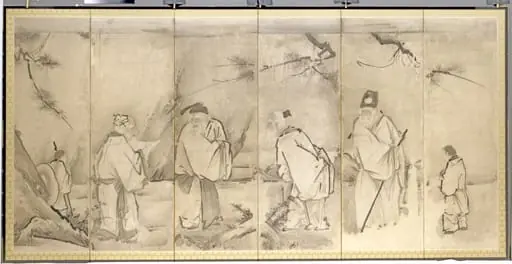
Kano Tanyu, a leading Edo‑era Kano master, created this piece as part of a paired set with a screen titled Four Elders of Mt. Shang. The pairing references an earlier composition by Kano Motonobu, linking the two works through a shared theme of scholarly retreat.
The screens were likely commissioned by a shogunal patron, aligning with the school’s long‑standing relationship with the ruling elite.
Context
During the Edo period, the Kano school served the shogunate, employing motifs of reclusion to underscore loyalty and moral order. By invoking Chinese hermit scholars, the painting aligns with contemporary Japanese values that prized disciplined withdrawal from chaos as a model of virtuous conduct.
Legacy
The screen exemplifies the Edo‑period practice of creating complementary panels to convey narrative or philosophical ideas. It also illustrates how Japanese artists adapted Chinese cultural references, integrating them into the visual language of the Kano school and influencing later generations of Japanese painters.
Artist & collection