Artwork
Strachină de lut
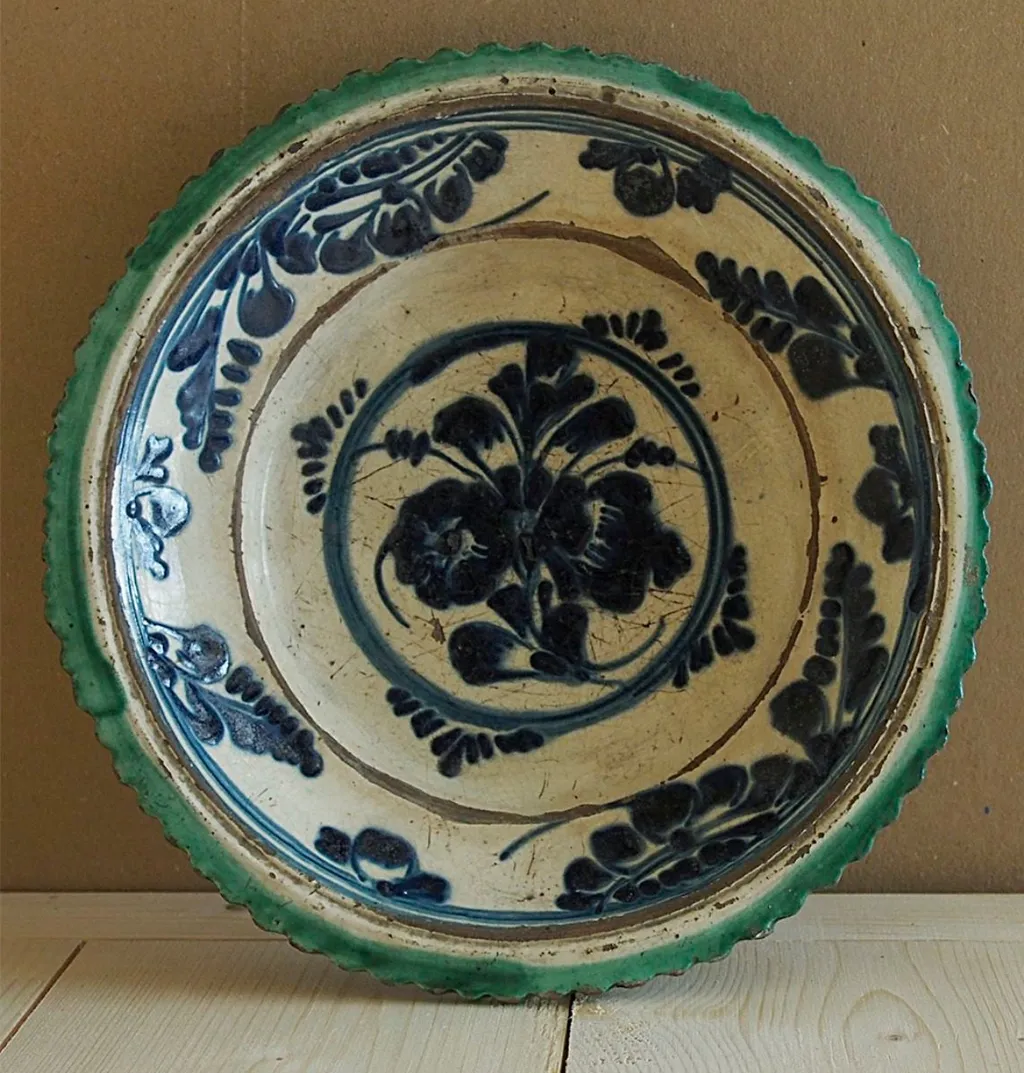
Strachină de lut is a print by Unknown. It dates from 1850 and is held in the collection of the Bucharest Municipality Museum. A circular, flat ceramic dish with a scalloped rim, this piece features a restrained palette of white, green, and dark blue.
About this work
Overview
The design is centered on a large bloom, surrounded by smaller vegetal patterns, creating a balanced, meditative composition.
A circular, flat ceramic dish with a scalloped rim, this piece features a restrained palette of white, green, and dark blue. The surface shows signs of age, faded pigment, minor cracks, and wear, suggesting prolonged use. Its form and decoration align with traditional hand-painted pottery, emphasizing symmetry and repetitive floral motifs.
The design is centered on a large bloom, surrounded by smaller vegetal patterns, creating a balanced, meditative composition.
Subject & Meaning
The central flower, rendered with thick, stylized petals and leaves, serves as the primary visual anchor. Surrounding leafy motifs extend outward, filling the space without overcrowding. These elements likely draw from local botanical traditions, though no specific symbolic meaning is documented.
The repetition of natural forms suggests an emphasis on harmony with the environment, common in utilitarian ceramics of rural communities.
Technique & Style
Hand-painted with brushwork, the design uses bold outlines and flat areas of color. The green rim contrasts with the white ground, while the dark blue patterns are applied with deliberate, slightly uneven strokes. The lack of glaze or high-fire finish indicates low-temperature firing, typical of regional earthenware. Decorative lines along the scalloped edge add rhythm, reinforcing the piece’s handmade character.
History & Provenance
The dish shows signs of domestic use, with surface wear consistent with daily handling. Its construction and decoration resemble ceramics produced in Eastern European households during the late 19th to early 20th century. No documented provenance exists, but similar pieces are held in the Museum of Ethnography, suggesting a shared regional tradition of functional pottery with decorative intent.
Context
This object belongs to a broader category of folk ceramics made for everyday use, not ceremonial display. Its simplicity and durability reflect practical needs, while the painted designs express cultural aesthetics passed through generations. Comparable items from the same region often feature floral motifs, suggesting a shared visual language rooted in local flora and artisanal customs.
Legacy
Though not signed or attributed to a known maker, the dish exemplifies the persistence of handcrafted pottery traditions in rural communities. Its preservation in institutional collections underscores its value as a material record of domestic life. Similar pieces continue to inform contemporary studies of vernacular art and regional identity in Eastern Europe.
Artist & collection








 farfurie
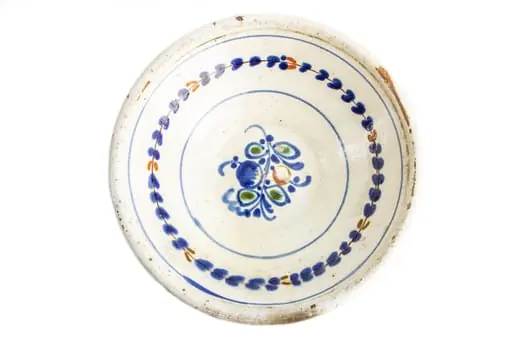 Formă tronconică; fond alb; culori: albastru, verde, cărămiziu; în centrul farfuriei este amplasat un buchet din flori albastre și una de culoare cărămizie, cu frunze verzi, înscris într-un cerc de culoare albastră. Pe perete este amplasat un vrej circular cu frunze albastre și cîteva de culoare cărămizie. Sub buză este dispus un cerc albastru.
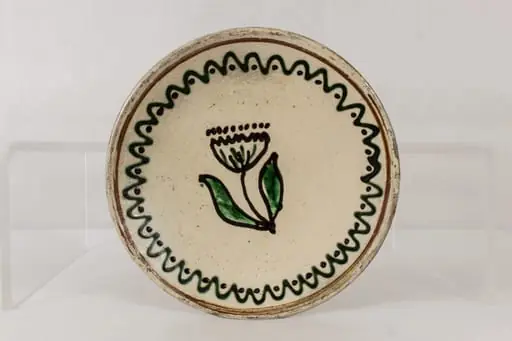 Vas de formă rotundă, smălțuit în interior, decorat pe suprafața interioară prin pictare astfel: motivul floarea de mac în centru, cercul vălurit, dublat de motive punctiforme, și un motiv circular cărămiziu (spre margini). Cromatică: negru, verde, alb, maro, cărămiziu.
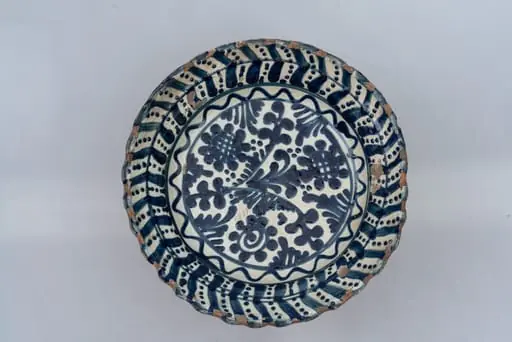 Farfurie semi-adâncă, cu fund larg, buză evazată și muchia buzei ondulată. Este acoperită pe suprafața interioară cu un strat de angobă albă peste care este pictat cu pensula și cu cornul decorul monocromatic format din motive geometrice și florale stilizate: registrul central de pe fundul farfuriei conține un buchet format din trei flori cu petale rotunde și mijlocul umplut cu linii hașurate intersectat, una dintre flori având mijlocul dintr-o linie spiralată, și din frunze; acest registru este încadrat între două linii circulare simple și o linie circulară ondulată și este completat cu șase motive formate din grupuri de linii crescătoare și descrescătoare, dispuse sub formă de triunghi și cu puncte. Registrul decorativ marginal de pe buza farfuriei este decorat cu un șir continuu de frunze duble între care se găsesc motive punctate (linii). Muchia buzei este marcată cu o dungă albastră. Suprafața ornamentată a farfuriei este acoperită cu un strat de smalț transparent. Cromatica: alb, albastru.
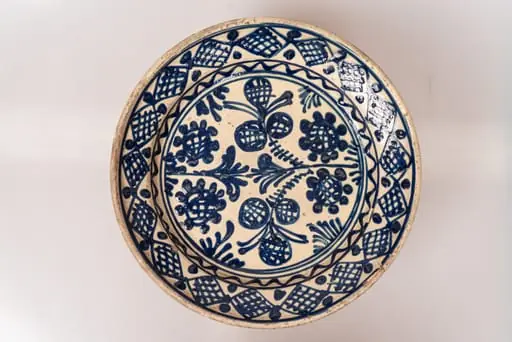 Farfurie de formă semi-adâncă, cu buza răsfrântă; piesa este modelată la roata olarului și angobată cu humă albă pe fața interioară. Decorul monocromatic este realizat prin pictare cu cornul și cu pensula și se compune din motive florale stilizate și geometrice, dispuse pe întreaga suprafață a piesei (registrul central de pe fundul farfuriei, delimitat de un cerc format din două linii concentrice, conține două perechi de flori cu petale rotunde, așezate diametral opus și o tulpină cu două ramuri ce se termină cu câte trei boboci și frunze; florile sunt umplute cu linii hașurate). Registrul marginal de pe buza farfuriei este decorat cu un șir continuu de romburi umplute cu linii hașurate și cu puncte groase. Peretele foarte îngust al farfuriei este decorat cu un cerc dintr-o linie vălurită iar muchia buzei și bordura interioară a farfuriei sunt marcate de câte o linie albastră sub formă de cerc. Cromatica: alb, albastru. Piesa este acoperită pe fața ornamentată cu un strat de smalț transparent.
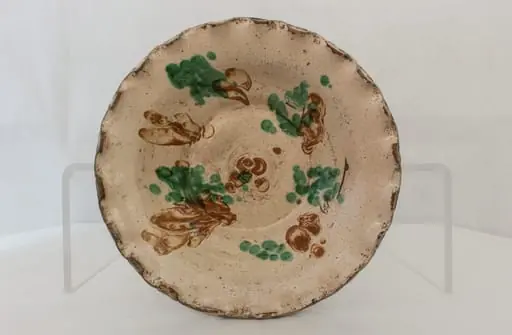 Vas de formă rotundă, cu pereții ușor evazați, smălțuit în interior, cu marginea vălurită, decorat (în mod unic) pe suprafața interioară cu motive punctiforme și neregulate, dispuse aleatoriu, realizate cu pensula. Cromatică: verde, maro, bej.
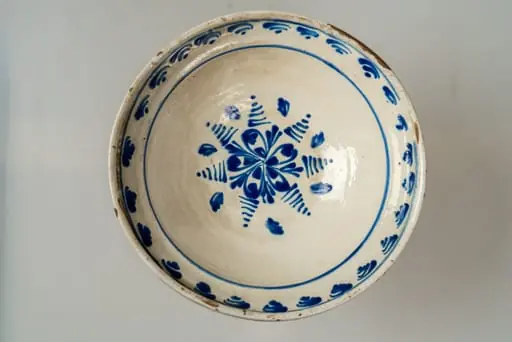 Farfurie adâncă, de tip castron, modelată la roata olarului și angobată cu humă albă pe fața interioară. Decorul este realizat prin pictare cu cornul și cu pensula, cu pigment albastru pe bază de oxid de cobalt, și este format din motive decorative florale (o floare cu 5 petale, dispusă central, pe fundul farfuriei, completată de 7 grupuri de câte 6 linii paralele, descrescătoare, dispuse în formă de stea) și geometrice (grupuri de câte trei linii paralele, concave și descrescătoare ca mărime, dispuse într-un șir continuu pe buza farfuriei, încadrate de două linii sub formă de cerc). Fața decorată a farfuriei este acoperită cu un strat de smalț transparent. Cromatica: alb, albastru.
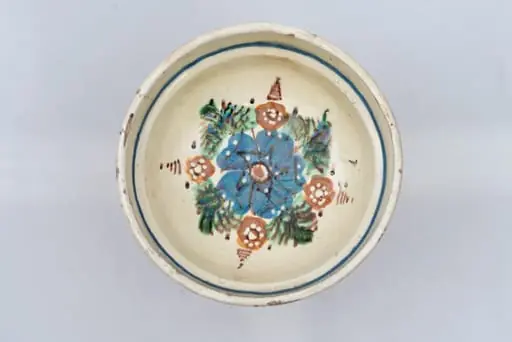 Farfurie adâncă de tip castron, cu corp tronconic, ușor concav, și buza dreaptă și verticală. Este acoperită pe suprafața interioară și pe exteriorul buzei cu un strat de angobă albă. Decorul este pictat cu pensula și cu cornul și se compune din motive florale și vegetale stilizate: central pe fundul farfuriei este pictată o floare cu cinci petale albastre, frunze verzi și patru flori mai mici, maro. O linie circulară albastră marchează pe interior partea inferioară a buzei, iar exteriorul acesteia este decorat cu o linie circulară simplă, ș una ondulată, albastre. Cromatica: alb, albastru, verde, maro. Ambele suprafețe ale farfuriei sunt acoperite cu un strat de smalț transparent.
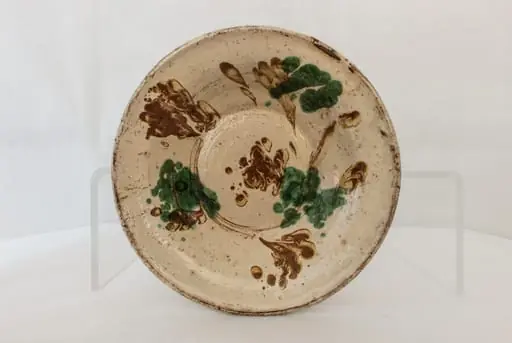 Vas de formă rotundă, adâncită, cu pereții evazați, smălțuit în interior, cu marginea ușor rotunjită, cu decor abstract realizat în tehnicile stropirii și scurgerii dirijate a colorantului maro. Cromatică: verde, maro, bej.
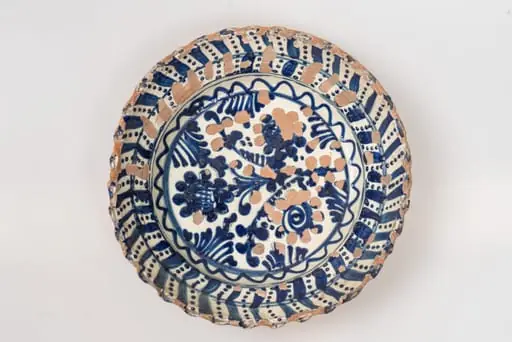 Farfurie de formă semi-adâncă, cu buză lată, evazată și muchia buzei ondulată. Farfuria este angobată pe fața interioară cu un strat de humă albă, peste care este pictat cu cornul și cu pensula decorul monocromatic, format din motive florale și fitomorfe stilizate (tulpină cu trei flori și frunze, reprezentate pe centrul farfuriei și un șir continuu de frunze duble între linii punctate, pe buza farfuriei) și geometrice (linii simple circulare, linie ondulată dispusă sub formă de cerc, puncte, grupuri de linii paralele, crescătoare și descrescătoare ca mărime, linii spiralate, linii hașurate). Buza farfuriei este marcată cu o dungă de culoare albastră. Cromatica: alb, albastru. Farfuria este acoperită pe fața decorată cu un strat de smalț transparent.