Artwork
The Attractions of Music
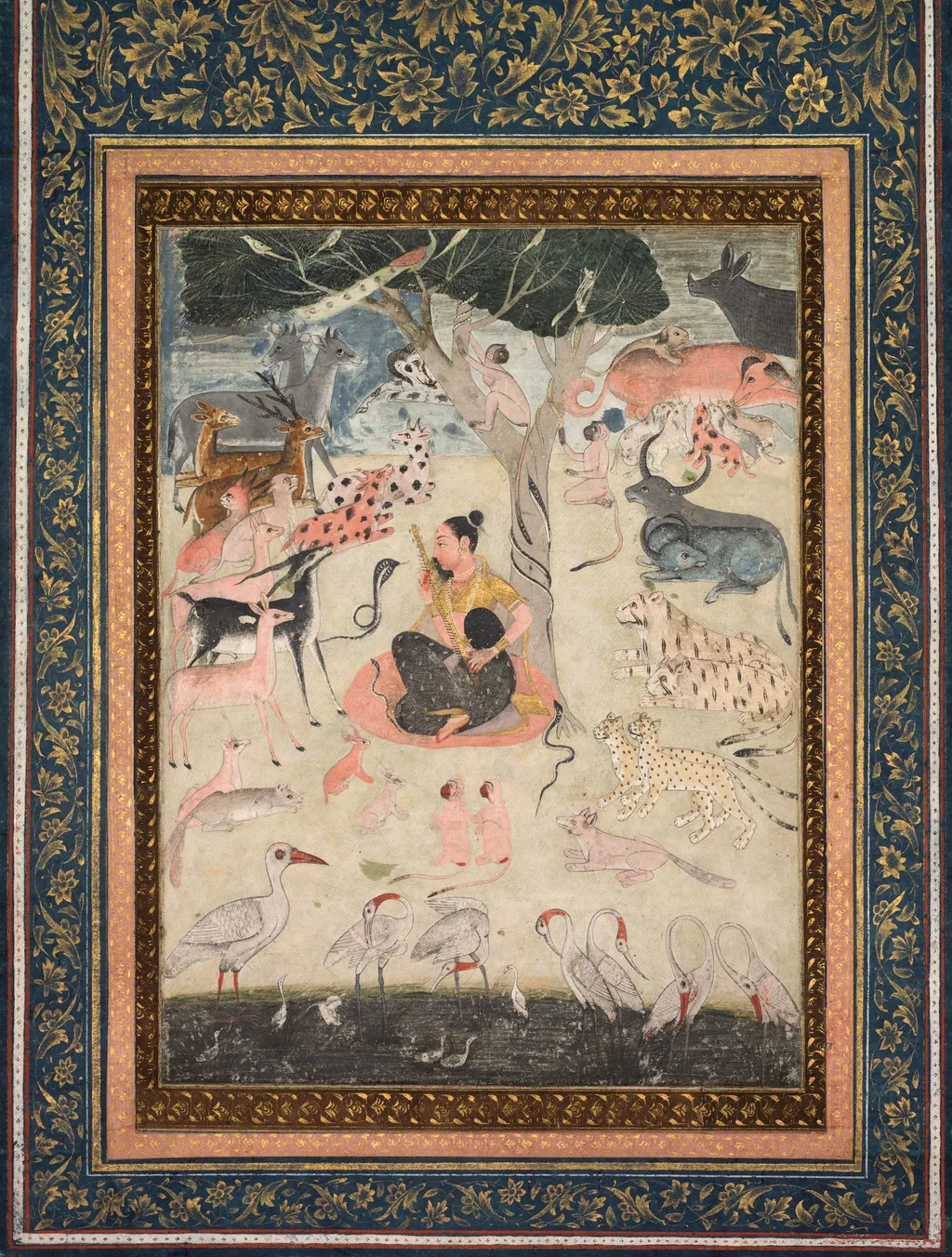
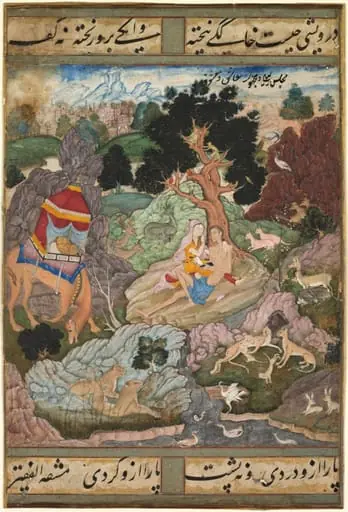
The Attractions of Music is an unspecified painting. It dates from 1690 and is held in the collection of the Cleveland Museum of Art. The work presents a bustling tableau in which a man strums a stringed instrument while a child sits nearby.
About this work
Technique & Style
It is handled as a standard canvas support, and its condition is described as well-preserved with no noted alterations to the original surface.
The painting is executed in oil on canvas, a medium typical of 17th-century easel painting. It is handled as a standard canvas support, and its condition is described as well-preserved with no noted alterations to the original surface. The formal composition features a balanced arrangement of figures engaged in musical activity, rendered with a restrained palette and clear outlines characteristic of the period's academic style.
History & Provenance
The Attractions of Music is a painting dated to 1680 and attributed to an unknown artist, as indicated by both the artwork’s title record and its museum documentation. The Cleveland Museum of Art lists the work in its collection under accession number 1971.87, with an inception date of 1680-01-01, and notes that it is currently housed at the museum. Prior to its acquisition by the Cleveland Museum of Art in 1971, the painting’s ownership chain, any possible commission, and earlier exhibition history are not recorded in the available sources.
Consequently, the creation history of the work is limited to its dating and the absence of a identified artist.
The painting is held by the Cleveland Museum of Art, accessioned under the identifier 1971.87.
It was exhibited in the museum's 1971 exhibition of European paintings.
The work dates to 1680 and is part of the museum's collection of 17th-century paintings.
Overview
The work presents a bustling tableau in which a man strums a stringed instrument while a child sits nearby. A variety of animals, deer, rabbits, birds, congregate around the musicians, seemingly attracted by the sound. In the distance, figures and fantastical beings drift among trees and clouds, contributing to an atmosphere of whimsical disorder.
Subject & Meaning
The composition suggests a celebration of music’s power to unite the natural and supernatural realms. The juxtaposition of human performers with wildlife and mythic entities implies that melody transcends ordinary boundaries, drawing together disparate elements into a shared, enchanted experience.
Context
The inclusion of both domestic and mythological elements reflects a period when artists explored allegorical representations of the arts. Musical gatherings were a common motif, used to illustrate harmony between humanity and nature, and to convey moral or philosophical ideas about the universal appeal of music.
Artist & collection

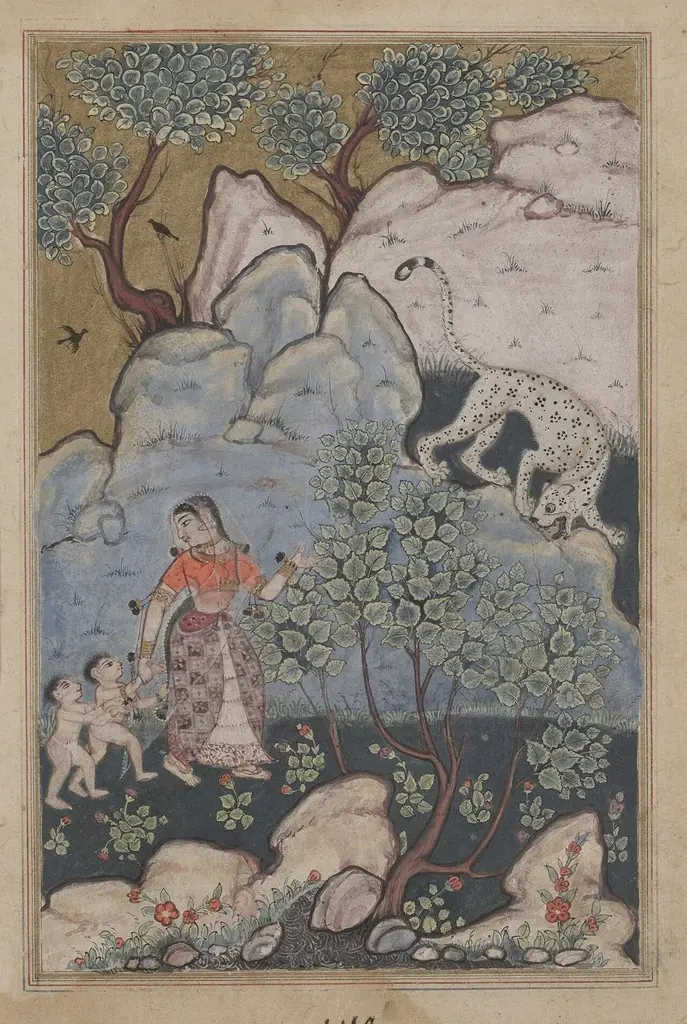 A woman with two children, having abandoned her home, goes into the forest where she encounters a leopard, from a Tuti-nama (Tales of a Parrot): Thirtieth Night
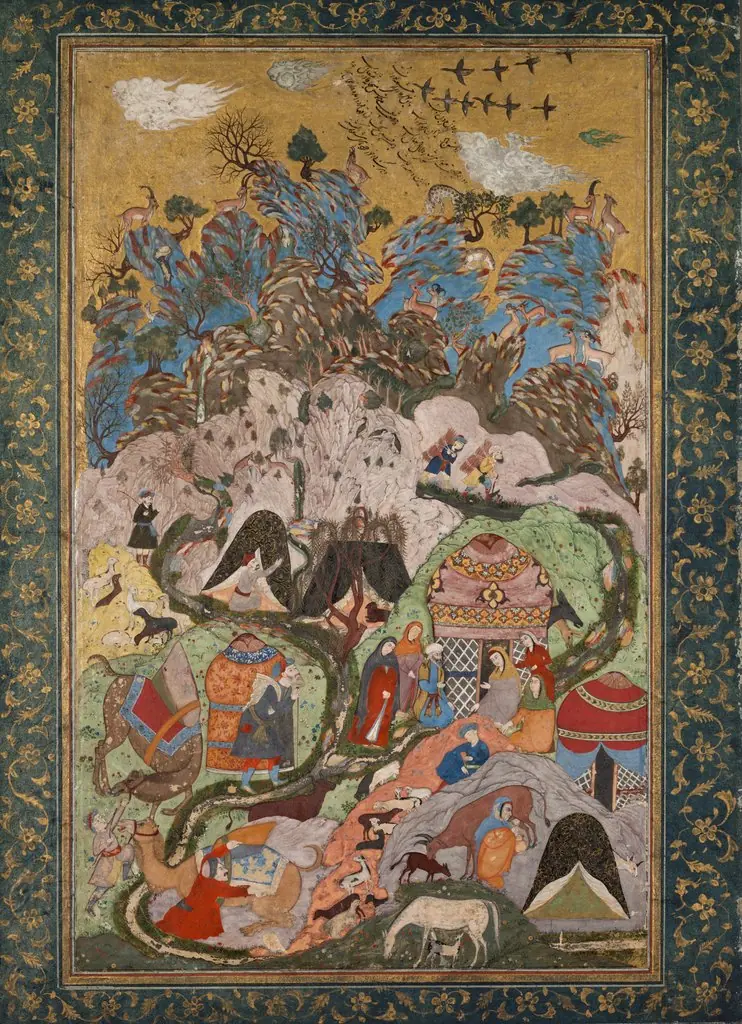 Encampment in the Mountains
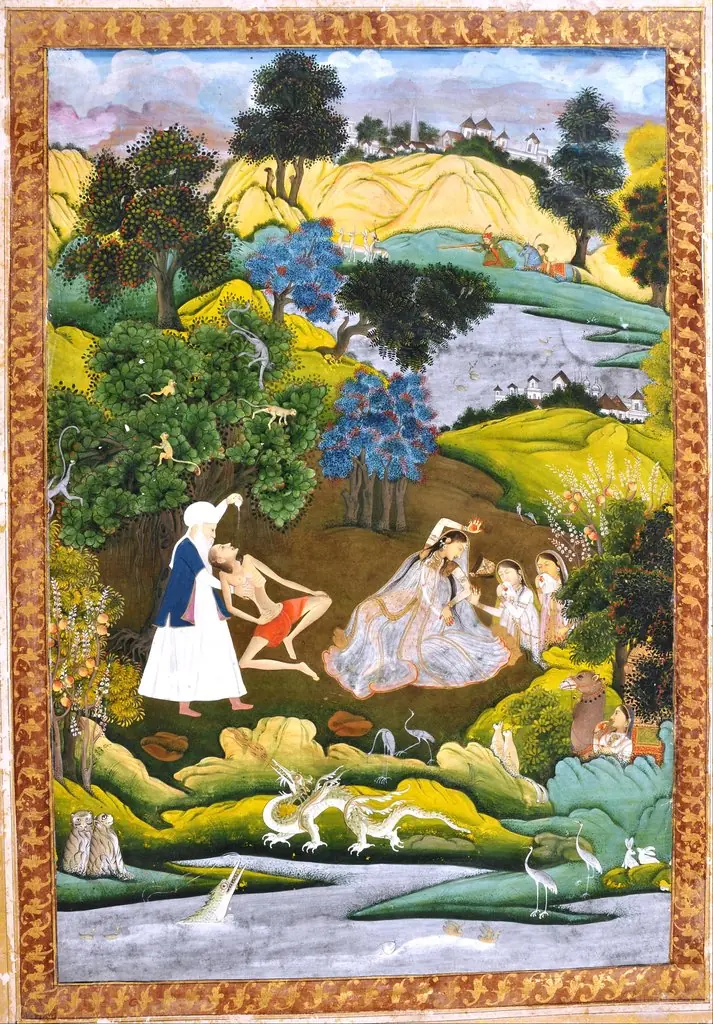 Fainted Laila and Majnun-Based on the Khamsa of Persian poet Nizami
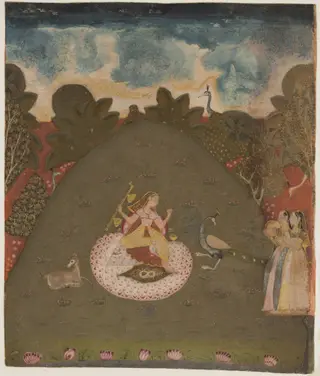 Gaura-Mallara Ragini (A Musical Mode)
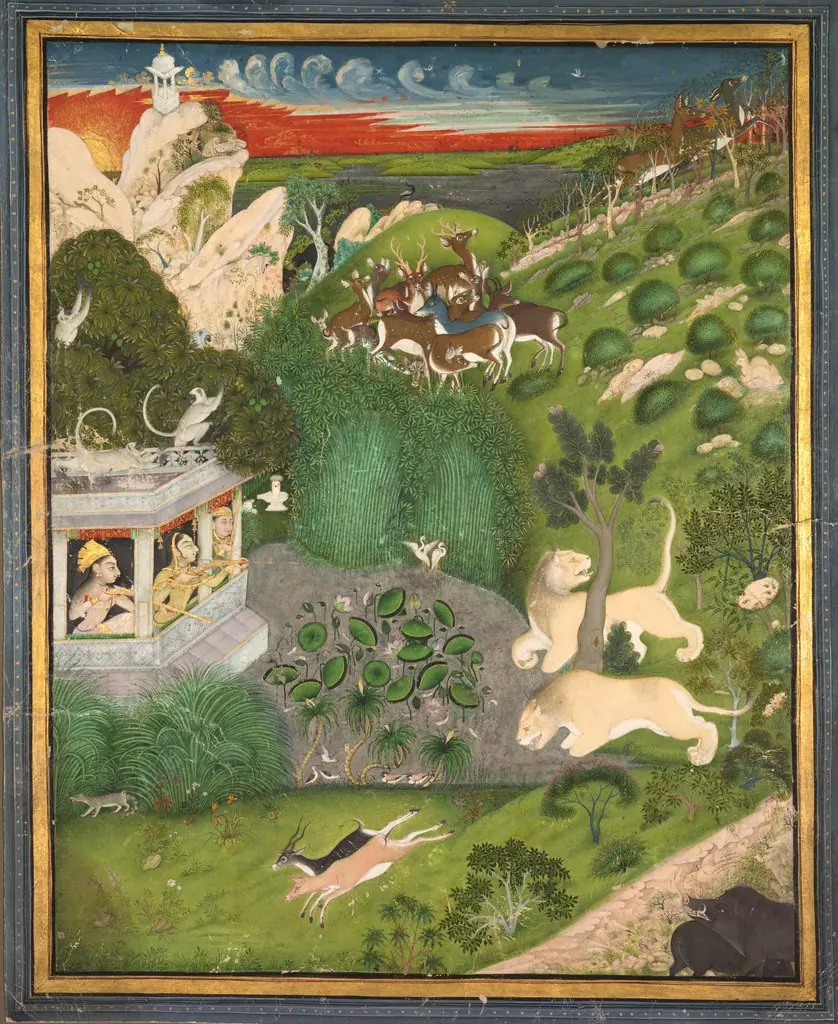 Royal women shooting from a pavilion
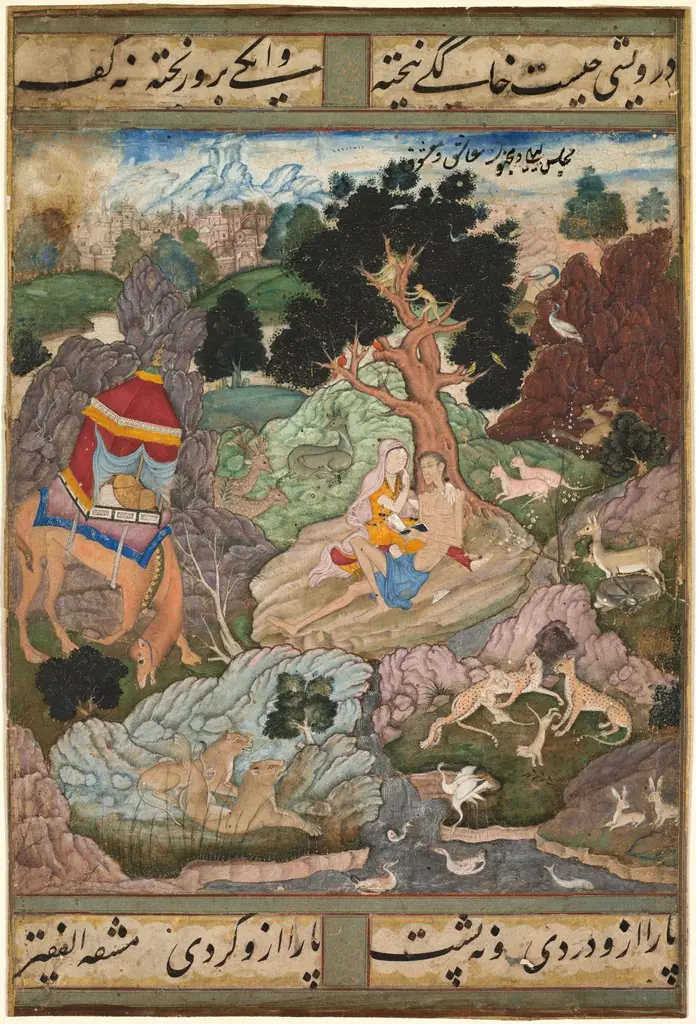 Layla and Majnun in the wilderness with animals, from a Khamsa (Quintet) of Amir Khusrau Dihlavi
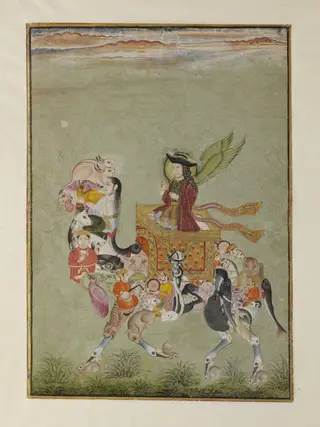 Untitled
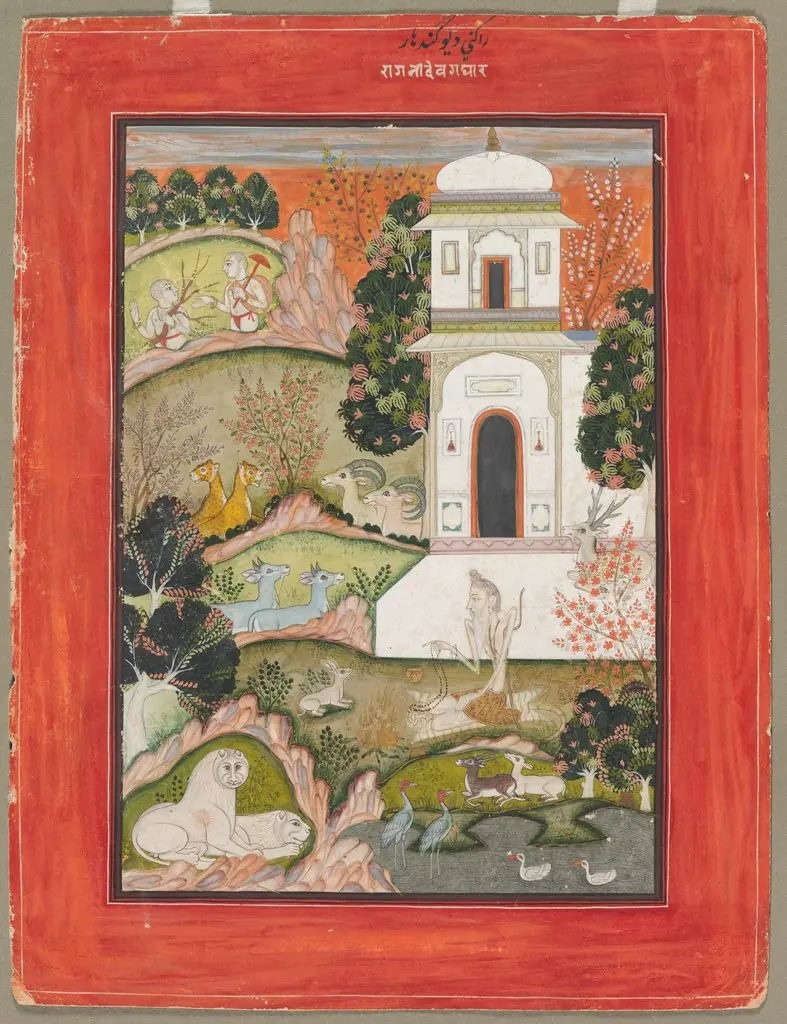 Devagandhara Ragini: An Ascetic in Retreat, from the Ragamala Series
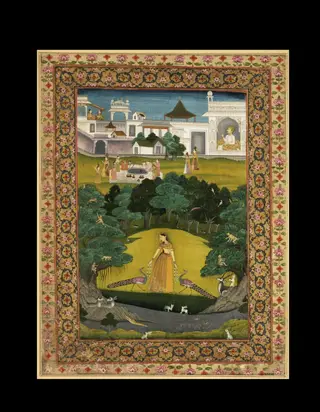 Kakubha ragini
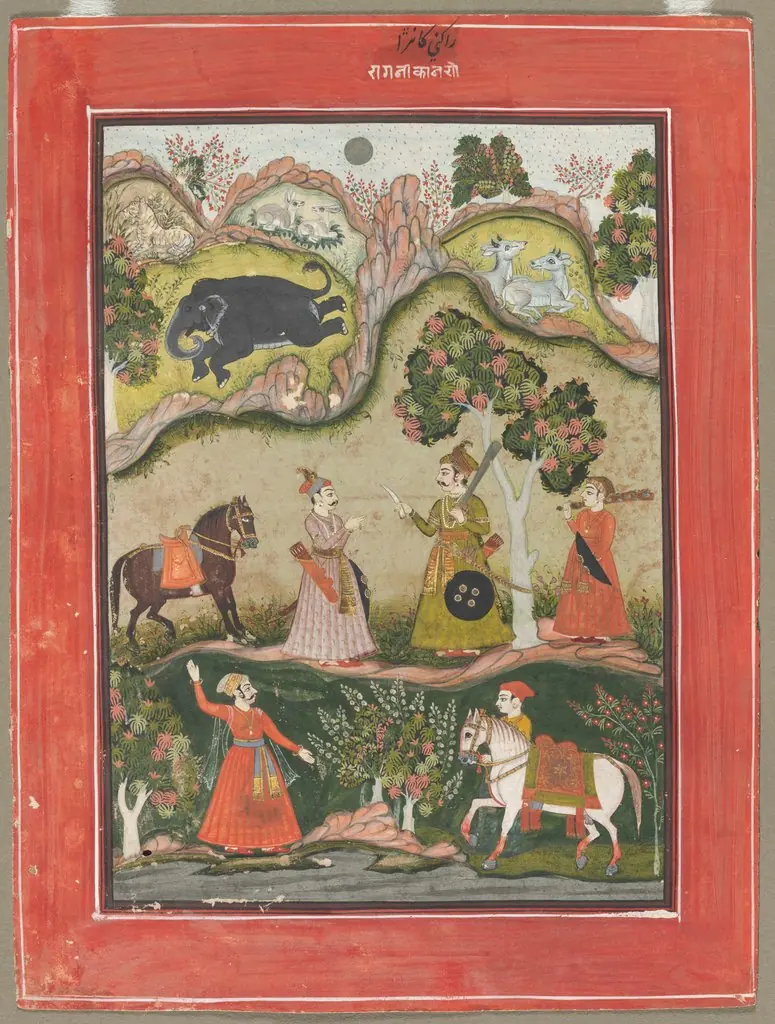 Kanhara Ragini: Song of Inspiration to Krishna for Killing the Elephant Demon, from the Ragamala Series
 Layla and Majnun in the wilderness with animals, from a Khamsa (Quintet) of Amir Khusrau Dihlavi
- The Attractions of Music