Artwork
The Blue Gown (Portrait of Ethel Coe)
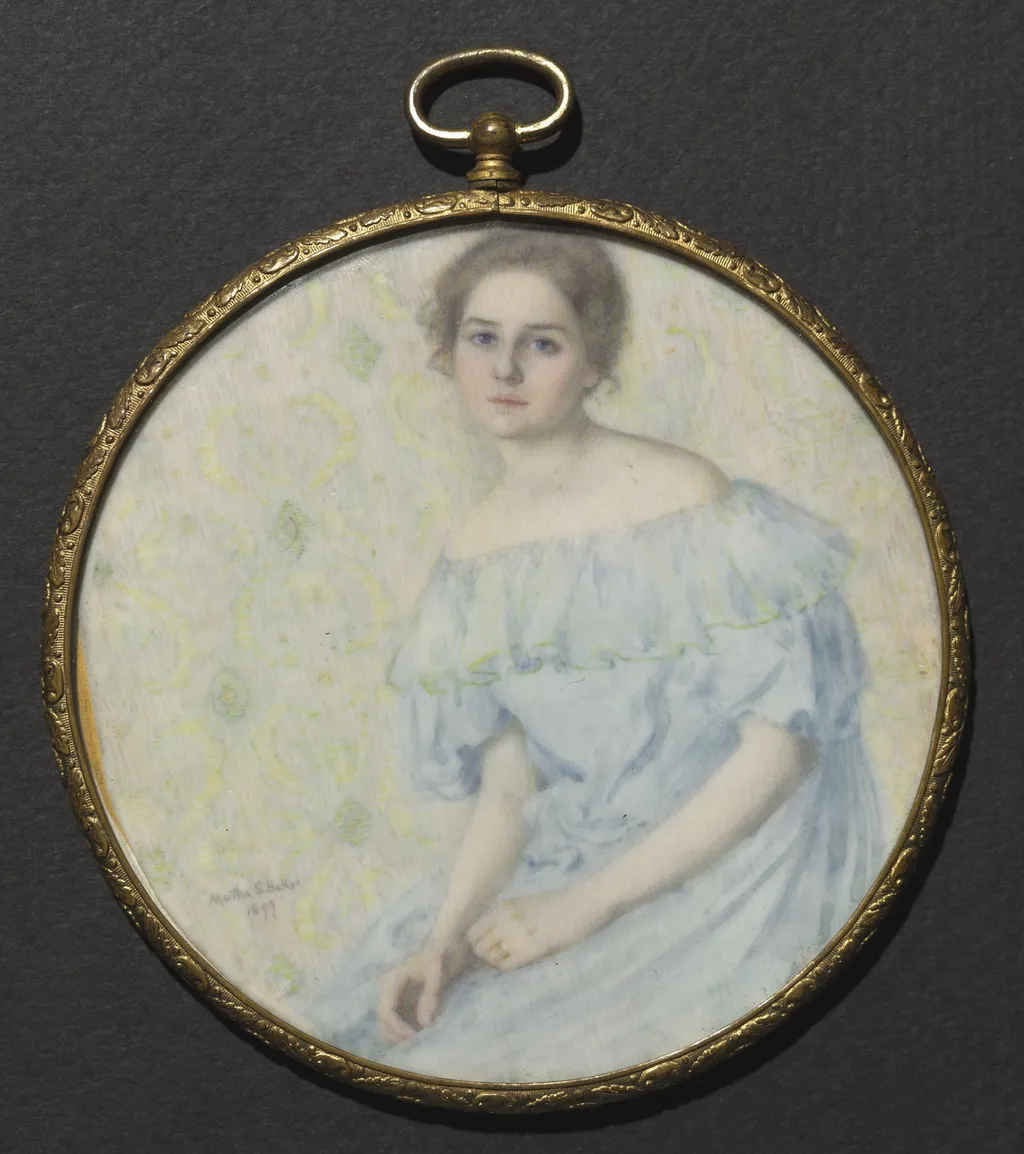
The Blue Gown (Portrait of Ethel Coe) is an unspecified painting. It dates from 1900 and is held in the collection of the Cleveland Museum of Art.
About this work
History & Provenance
The work has been part of the Cleveland Museum of Art collection since its inception, and it is displayed in Cleveland, Ohio.
The Blue Gown (Portrait of Ethel Coe) is a painting created in 1899 and classified as a portrait. It is described as a portrait miniature, depicting Ethel Coe in a blue gown. The work has been part of the Cleveland Museum of Art collection since its inception, and it is displayed in Cleveland, Ohio.
Documentation attributes the piece to American miniature painter Martha S. Baker, though another source lists the artist as unknown. The inception date recorded for the work is January 1, 1899.
The Blue Gown (Portrait of Ethel Coe) is a portrait miniature painted in 1899. It is part of the collection of the Cleveland Museum of Art, where it is housed in the museum’s permanent holdings. The work is classified as a miniature portrait, reflecting the style of Martha S. Baker, though the attribution remains uncertain.
It appears in the museum’s catalog under the title The Blue Gown (Portrait of Ethel Coe). No additional provenance or exhibition record is documented in the available sources.
Overview
This small, circular painting, titled The Blue Gown (Portrait of Ethel Coe), presents a woman in a distinctive light blue dress. Her hair is styled away from her face, and she stands with a subtle shift in posture, her weight resting on one leg. The artwork is presented within an elaborate, aged gold frame, which contrasts with the simplicity of the subject's attire and the muted background.
Subject & Meaning
The painting centers on the figure of Ethel Coe, whose name is included in the artwork's title. She is depicted in a light blue garment, which serves as the primary visual focus against a subdued, unadorned background. This compositional choice emphasizes her presence and the specific details of her dress and facial features, suggesting a direct and unembellished portrayal of the sitter.
Technique & Style
The artist utilized loose brushstrokes, particularly noticeable in the rendering of the blue gown. This technique imparts a delicate, almost translucent quality to the fabric, contributing to a sense of softness and fluidity. The plain background further highlights the figure, allowing the viewer to appreciate the painter's handling of form and texture through these free applications of paint. The artist's signature is discreetly placed in one corner.
Artist & collection

 Katherine Forest
 An Art Student of Paris
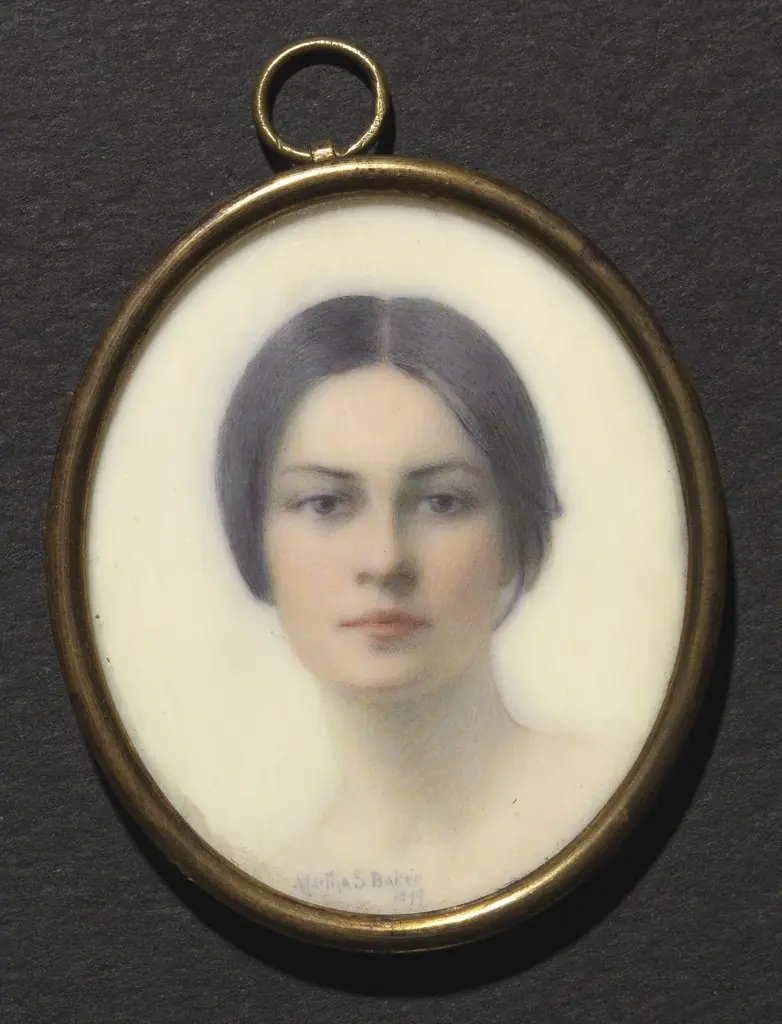 An Art Student of Paris
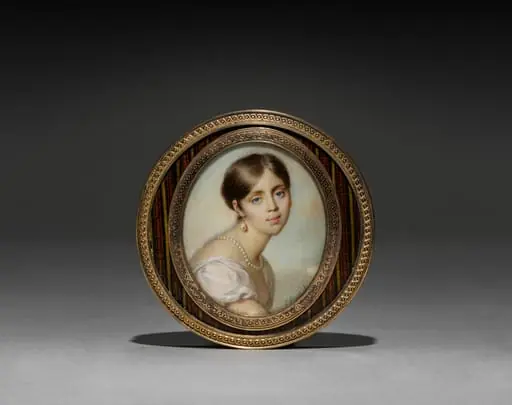 Cover for a Snuff Box with a Portrait of a Young Woman
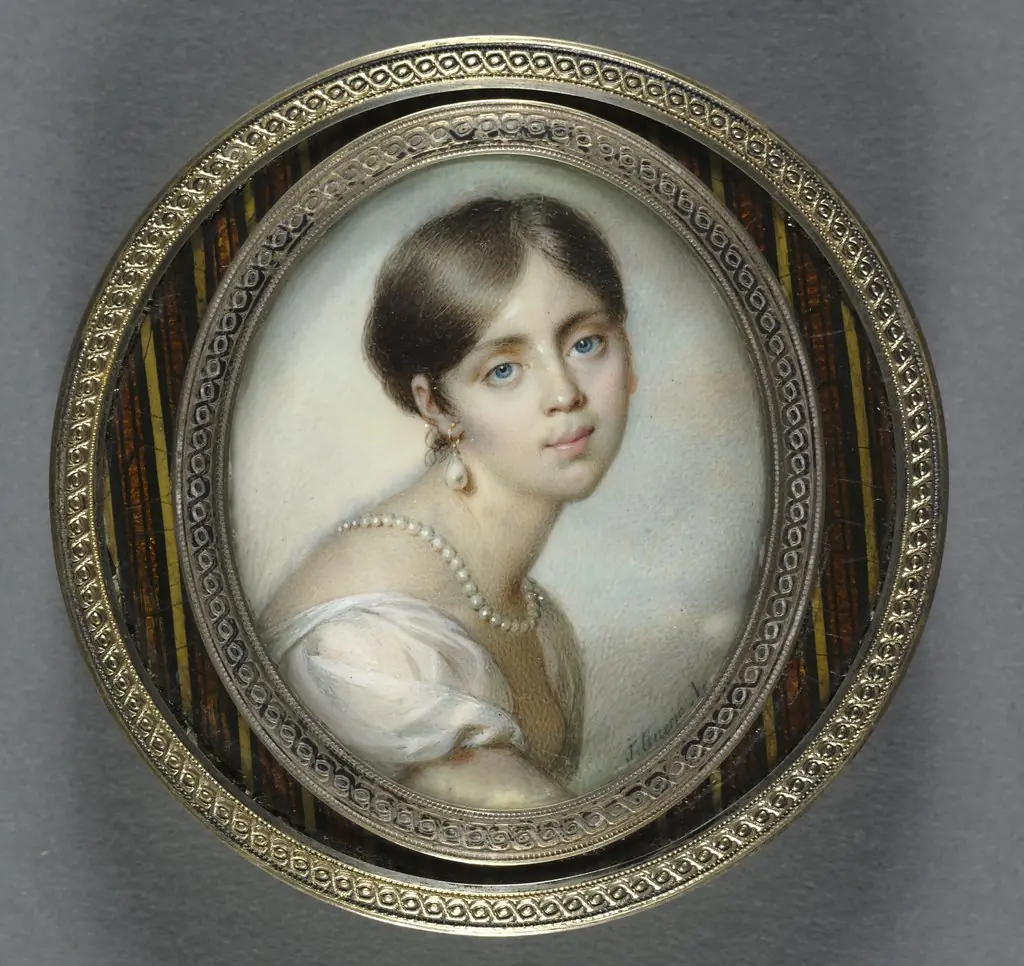 Snuff Box with a Portrait of a Young Woman
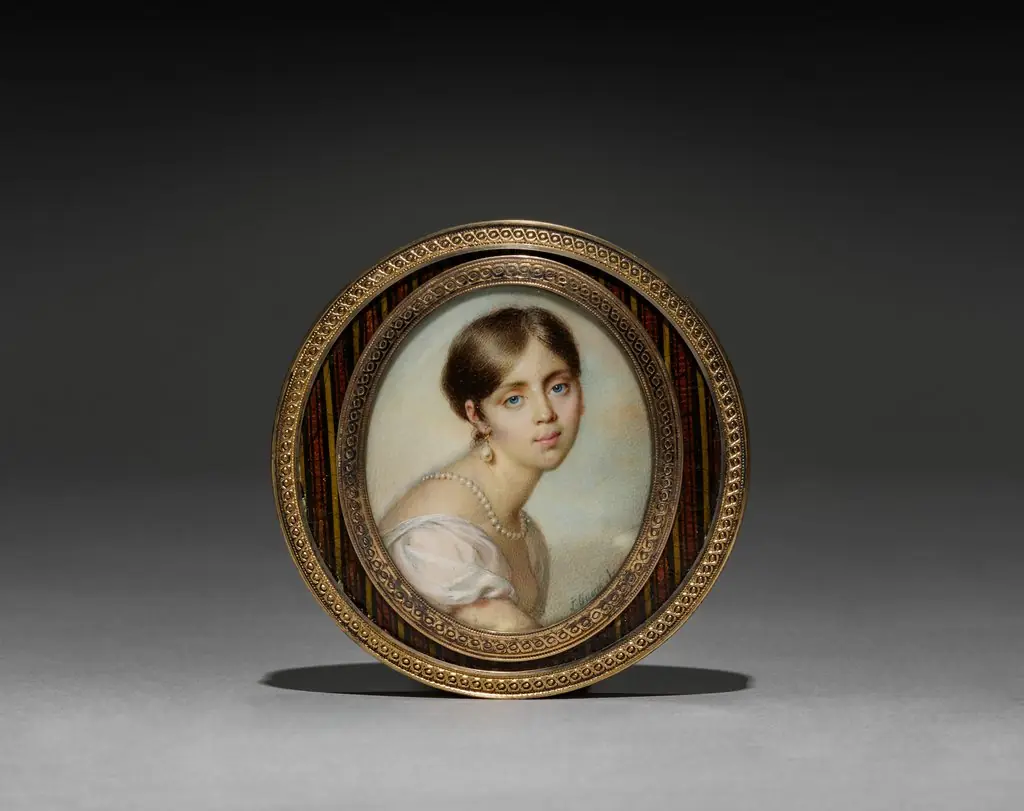 Cover for a Snuff Box with a Portrait of a Young Woman
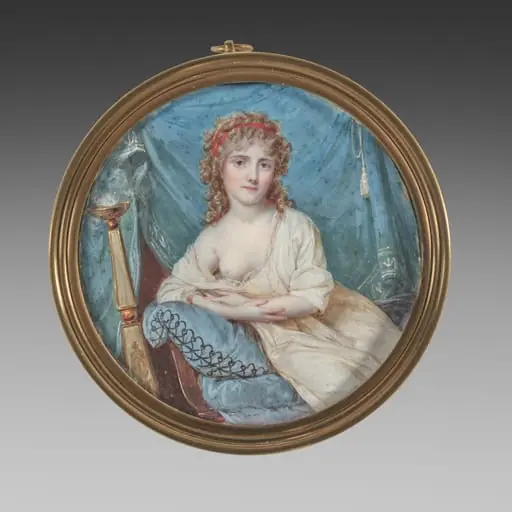 Portrait of a Woman Reclining on a Sofa
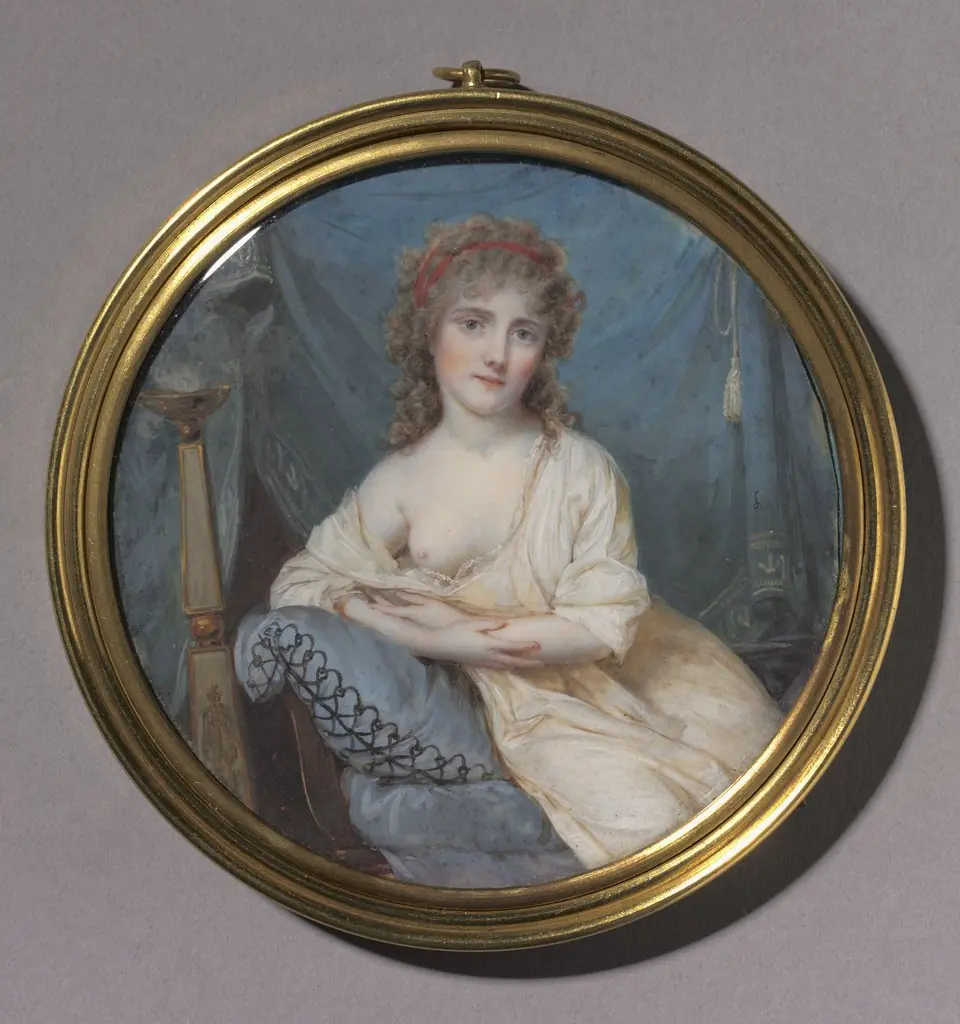 Portrait of a Woman Reclining on a Sofa
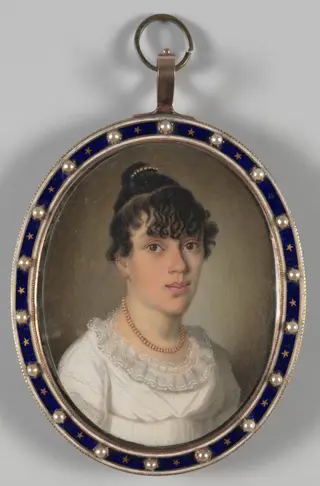 Portrait of a Surinamese Girl
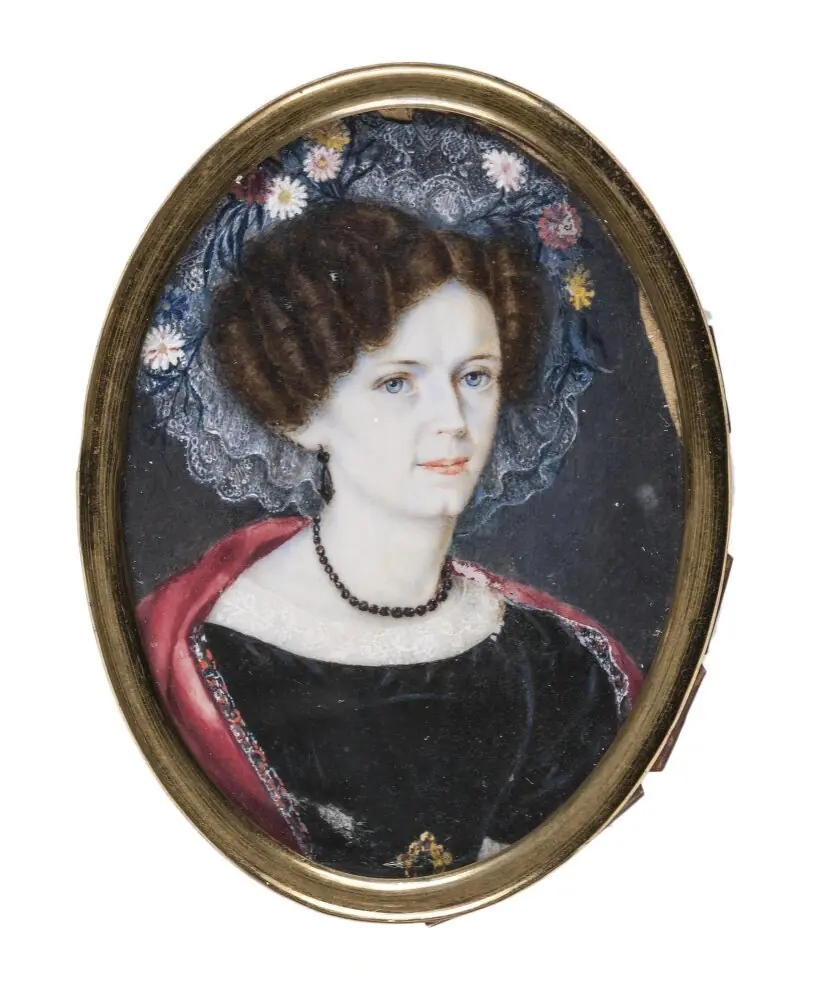 Ulrika Dahlman m. Camitz, Canoness