Artwork
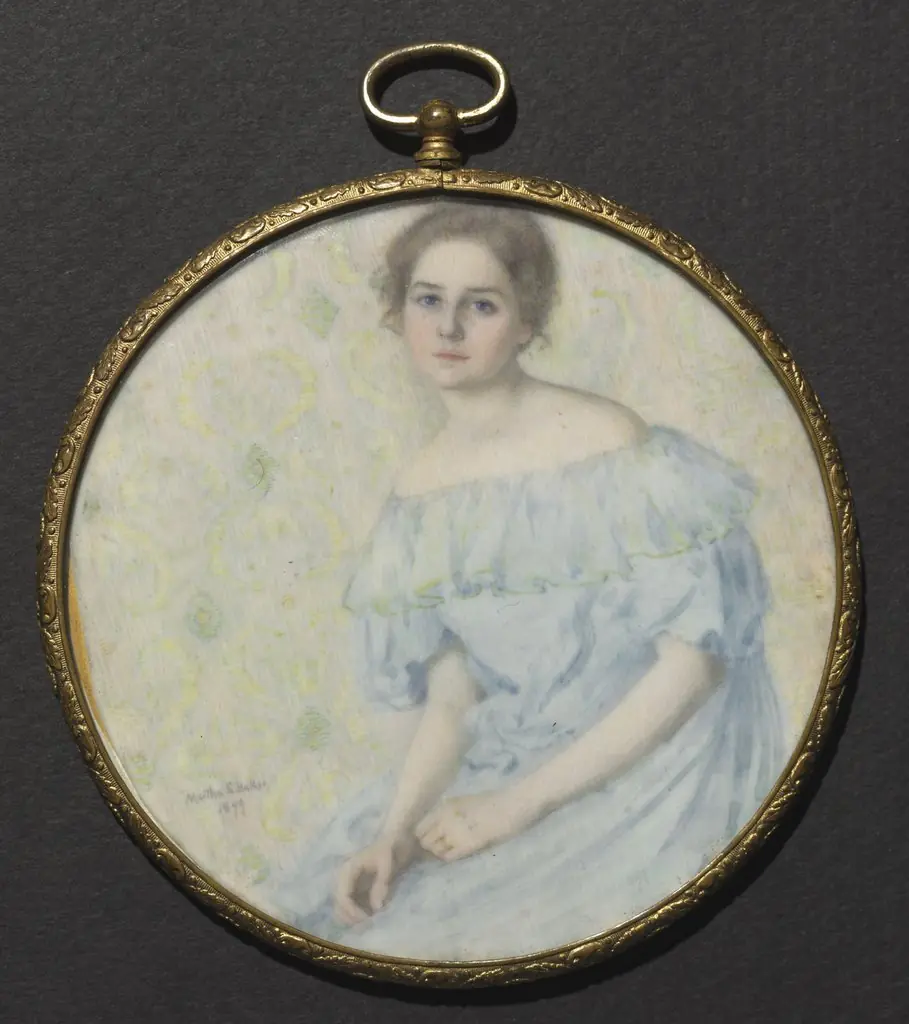
The Blue Gown (Portrait of Ethel Coe)
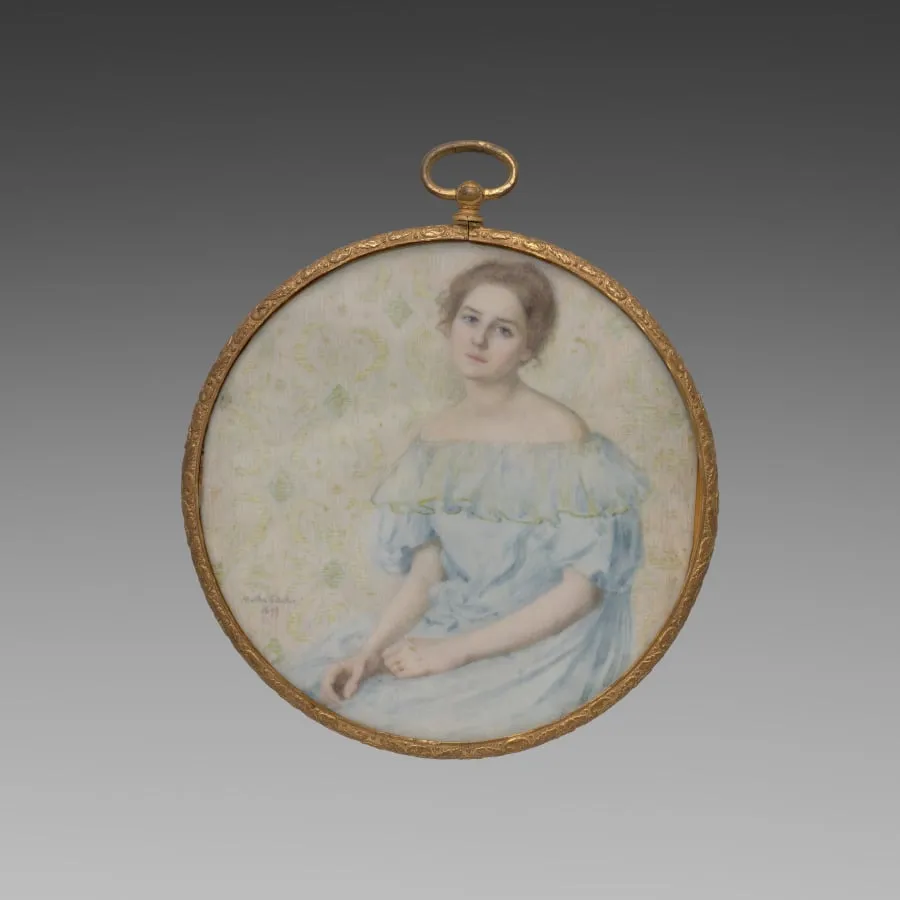
The Blue Gown (Portrait of Ethel Coe) is an unspecified portrait miniature by the American Impressionist artist Martha S. Baker. It dates from 1899 and is held in the collection of the Cleveland Museum of Art. This portrait miniature, titled The Blue Gown, depicts Ethel Coe, a fellow artist and possibly a former student of the painter Martha S.
- Accession no.
- 1915.142
- Credit line
- Gift of Mr. and Mrs. Charles E. Baker
About this work
Overview
This portrait miniature, titled The Blue Gown, depicts Ethel Coe, a fellow artist and possibly a former student of the painter Martha S.
This portrait miniature, titled The Blue Gown, depicts Ethel Coe, a fellow artist and possibly a former student of the painter Martha S. Baker. Executed on ivory, the work exemplifies Baker’s skill in the intimate scale of miniature portraiture. It remained in Baker’s personal collection until her death, after which it was donated to the museum by her family, preserving a private artistic relationship within a public collection.
Subject & Meaning
Ethel Coe is portrayed in quiet composure, dressed in a blue gown and gazing directly at the viewer. The choice of attire and stillness suggests dignity and introspection rather than formal grandeur. As both a peer and a student of Baker, Coe’s presence in the portrait may reflect mutual artistic respect, transforming the image from a conventional commission into a personal tribute between women in the art world.
Technique & Style
Baker rendered the portrait using traditional miniature techniques, applying watercolor with fine brushwork on a thin ivory panel. The delicate handling of light and texture captures the softness of fabric and skin without overt detail, relying on subtlety and restraint. The limited palette, centered on the blue gown, enhances the quiet intimacy of the composition, characteristic of Baker’s refined approach to the genre.
History & Provenance
The miniature was kept by Martha S. Baker throughout her life, indicating its personal significance. After her death, it passed to her relatives, who eventually gifted it to the museum. This trajectory, from private studio to public institution, highlights how personal artistic connections were preserved and later shared with broader audiences, offering insight into Baker’s circle and values.
Context
In the late 19th and early 20th centuries, portrait miniatures on ivory were a respected, though diminishing, art form, often practiced by women artists. Baker and Coe operated within this context, navigating a field where technical precision and personal expression intersected. Their relationship reflects the networks among female artists who supported one another amid limited institutional recognition.
Legacy
The portrait endures as a quiet testament to the relationships between women artists of the period. Its preservation in a public collection ensures that Baker’s craftsmanship and the bond between artist and sitter are not forgotten. It contributes to a broader understanding of miniature painting as a medium of personal and professional connection, rather than mere ornamentation.
Artist & collection

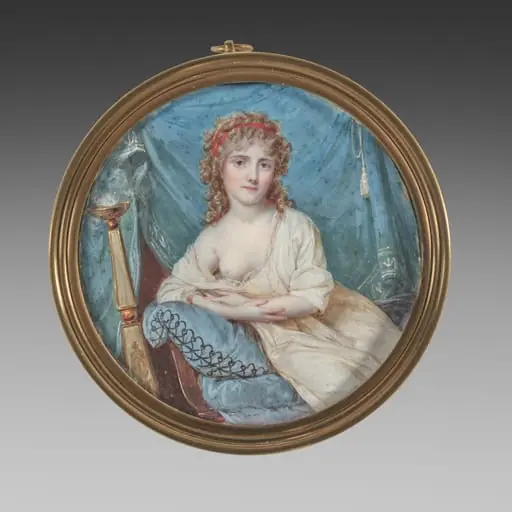 Portrait of a Woman Reclining on a Sofa
 Cover for a Snuff Box with a Portrait of a Young Woman
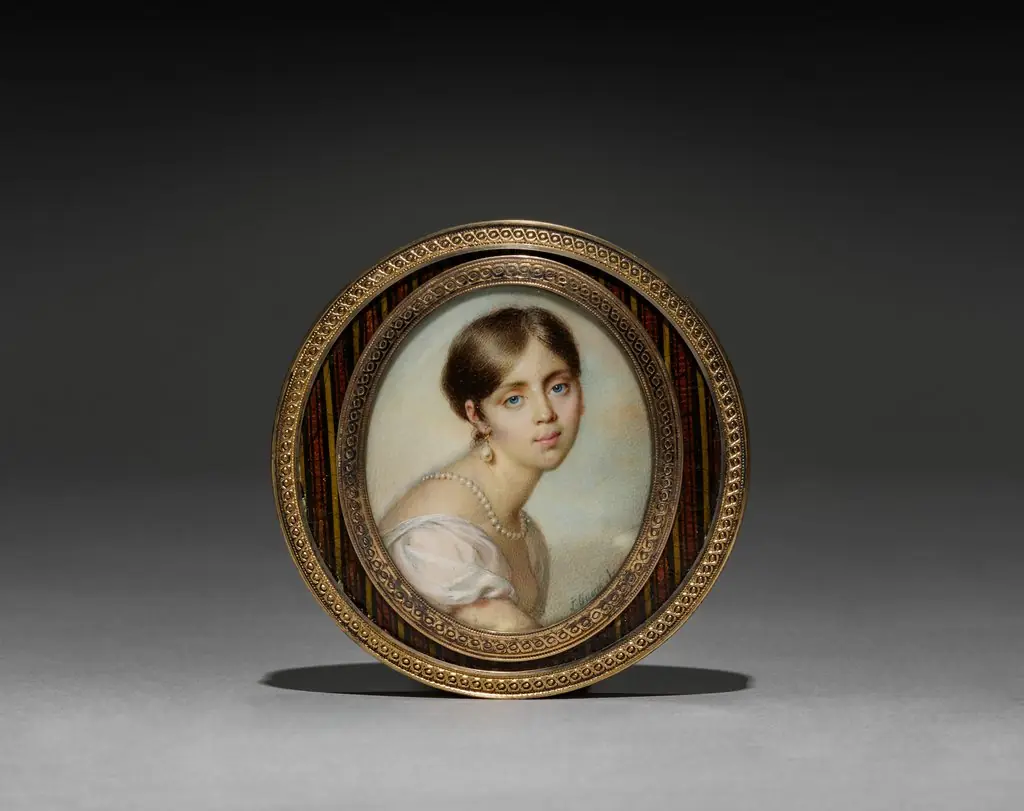 Cover for a Snuff Box with a Portrait of a Young Woman
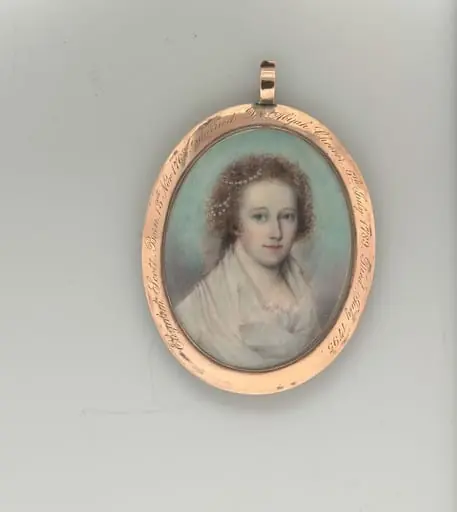 Mrs. Abijah Cheever (Elizabeth Scott)
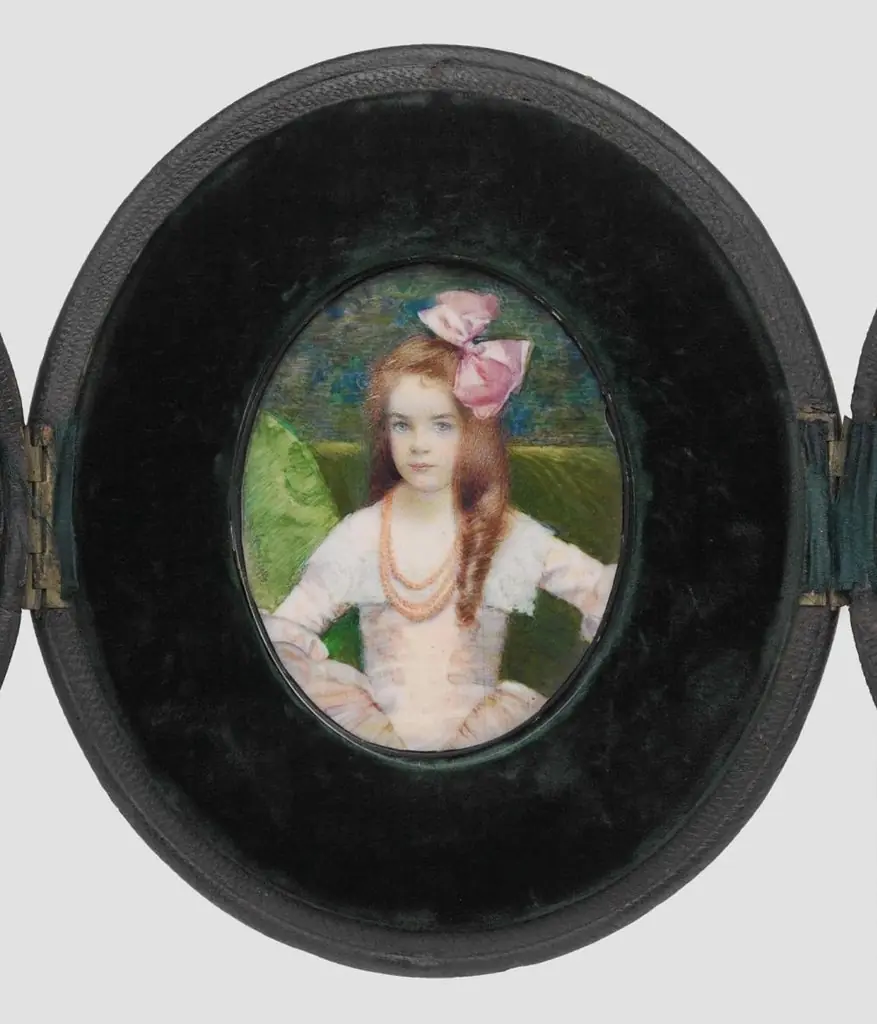 Persis Blair
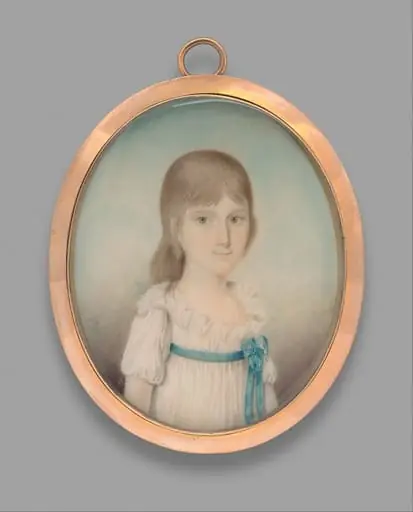 Miss Annis
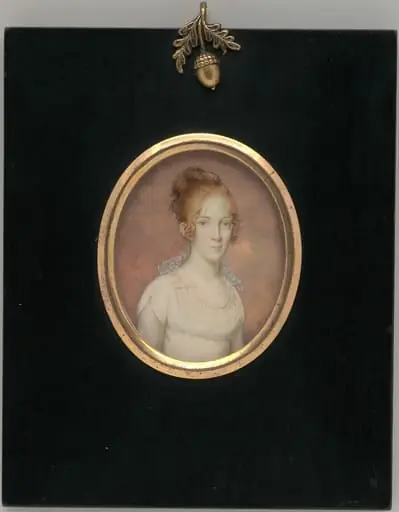 Mrs. Nathaniel Bowen (Margaret Blake)
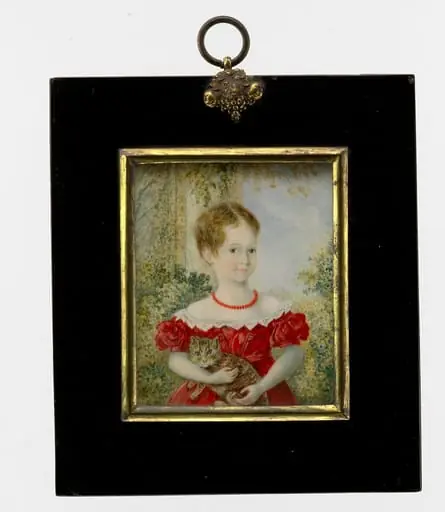 Mrs. Edward Loyd (C. Louisa Foster)
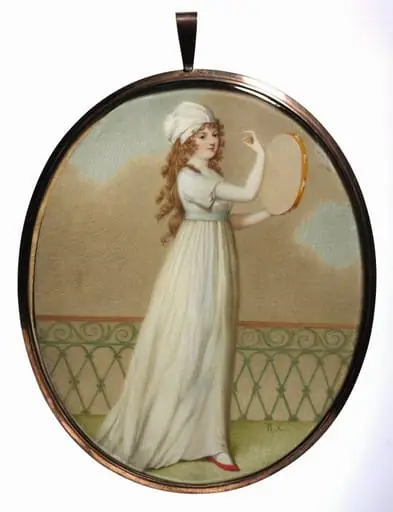 Woman with a Tambourine, in Neoclassical Costume