Artwork
The Brahman’s predicament is conveyed by the wind to the fish who carries the news to the king of the Ocean, from a Tuti-nama (Tales of a Parrot): Eleventh Night
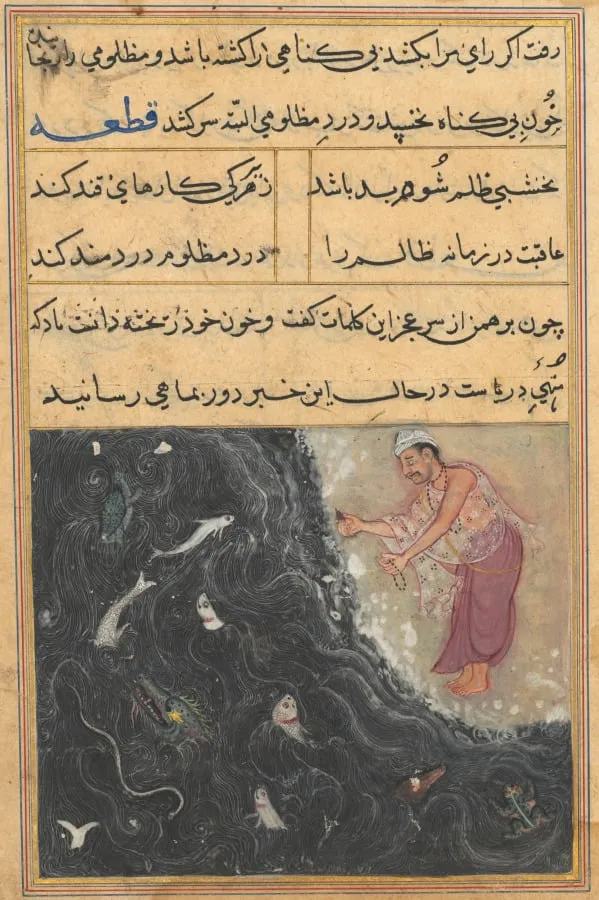
The Brahman’s predicament is conveyed by the wind to the fish who carries the news to the king of the Ocean, from a Tuti-nama (Tales of a Parrot): Eleventh Night is an unspecified painting by the Mughal Painting artist Unknown. It dates from 1560 and is held in the collection of the Cleveland Museum of Art. This painting illustrates the eleventh night of the Tuti-nama, a collection of illustrated tales commissioned for the Mughal emperor Akbar.
About this work
The man is a Brahman sent on an impossible task—fetch the ocean’s king for a wedding—or die.
You see a man in a red robe standing on a beach, hands raised as if begging. Waves crash behind him, filled with fish, a crocodile, and a snake. The wind whips his clothes and hair.
This painting comes from a book of parrot tales made for Emperor Akbar. The man is a Brahman sent on an impossible task—fetch the ocean’s king for a wedding—or die. The fish are his only hope.
To see more paintings like this, look up Mughal India, court of Akbar (reigned 1556–1605).
Overview
This painting illustrates the eleventh night of the Tuti-nama, a collection of illustrated tales commissioned for the Mughal emperor Akbar. It depicts a Brahman stranded on a shore, desperate to deliver an impossible command: summon the king of the ocean to a royal wedding within three days. His plea, carried by the wind, reaches marine life who become messengers, transforming a human crisis into a natural phenomenon.
Subject & Meaning
The Brahman, bound by duty under threat of death, embodies the vulnerability of human agents caught in royal demands. His isolation on the shore contrasts with the teeming sea, where fish, a crocodile, a snake, a frog, and a turtle respond to his cry. The narrative suggests that nature, not human power, holds the key to resolving impossible tasks, subtly critiquing the arbitrariness of sovereign authority.
Technique & Style
The artist employs fluid brushwork to render wind as a visible force, lifting the Brahman’s robes and hair while churning the waves into spiraling foam. Marine creatures are rendered with precise detail, their forms interwoven with the water’s motion. The composition directs the viewer’s eye from the central figure outward, emphasizing the spread of his plea across the ecosystem, a hallmark of Mughal narrative painting’s attention to movement and interconnection.
History & Provenance
Created in the late 16th century under Akbar’s patronage, this work belongs to a manuscript series illustrating Persian and Indian fables adapted for the Mughal court. The Tuti-nama was among the earliest major illustrated projects of Akbar’s reign, blending Persian literary traditions with Indian visual sensibilities. Its production involved teams of artists, calligraphers, and poets, reflecting the imperial workshop’s collaborative nature.
Context
The Tuti-nama’s tales were chosen for their moral ambiguity and allegorical depth, aligning with Akbar’s interest in pluralism and storytelling as a tool of governance. The Brahman’s plight mirrors courtly anxieties: the tension between obedience and impossibility, the reliance on intermediaries, and the limits of human control. The inclusion of diverse aquatic life reflects a worldview where nature and royalty coexist in a fragile, interdependent order.
Legacy
This painting exemplifies the Mughal synthesis of Persian narrative structure and Indian naturalism, influencing later court illustration. Its emphasis on environmental agency and subtle political critique set a precedent for storytelling in Mughal art. Though the manuscript was dispersed over centuries, surviving folios remain key to understanding how imperial patronage shaped visual culture through allegory and ecological symbolism.
Artist & collection

 Domestic Scene
 Giacomo and Cardinal Marco, investing Andrea, Abbot of San Zeno, with his Benefice
 The Nymph of Fontainebleau
 Portrait of a Woman
 Madonna and Child with Saints in the Enclosed Garden
 Venus and Minerva
 Family Group of Four on Sofa
 Wall painting from Room H of the Villa of P. Fannius Synistor at Boscoreale
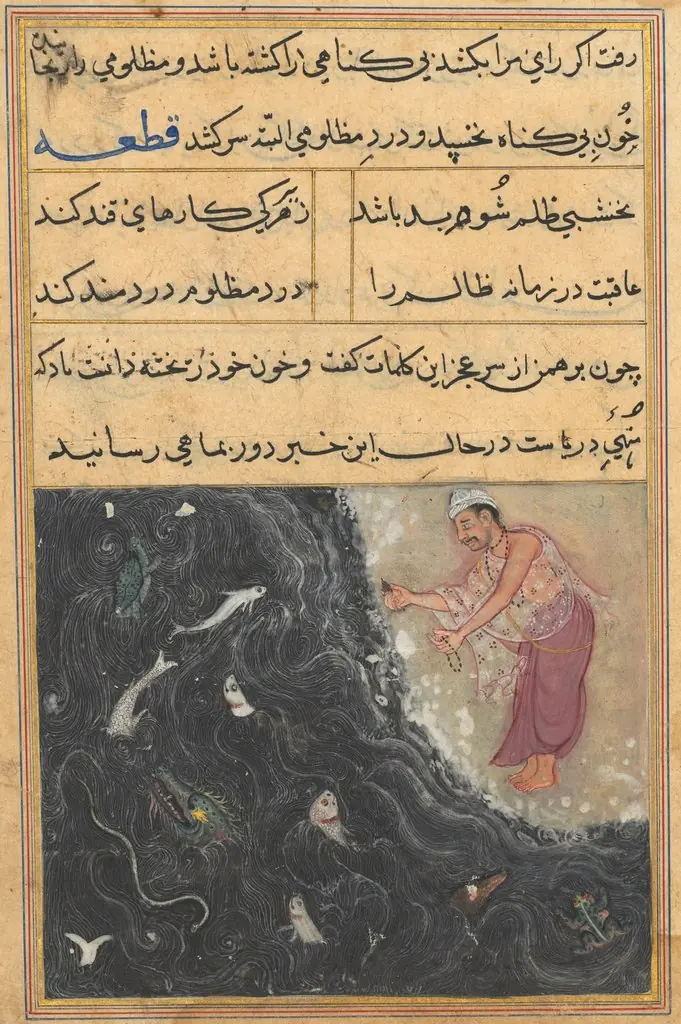 The Brahman’s predicament is conveyed by the wind to the fish who carries the news to the king of the Ocean, from a Tuti-nama (Tales of a Parrot): Eleventh Night
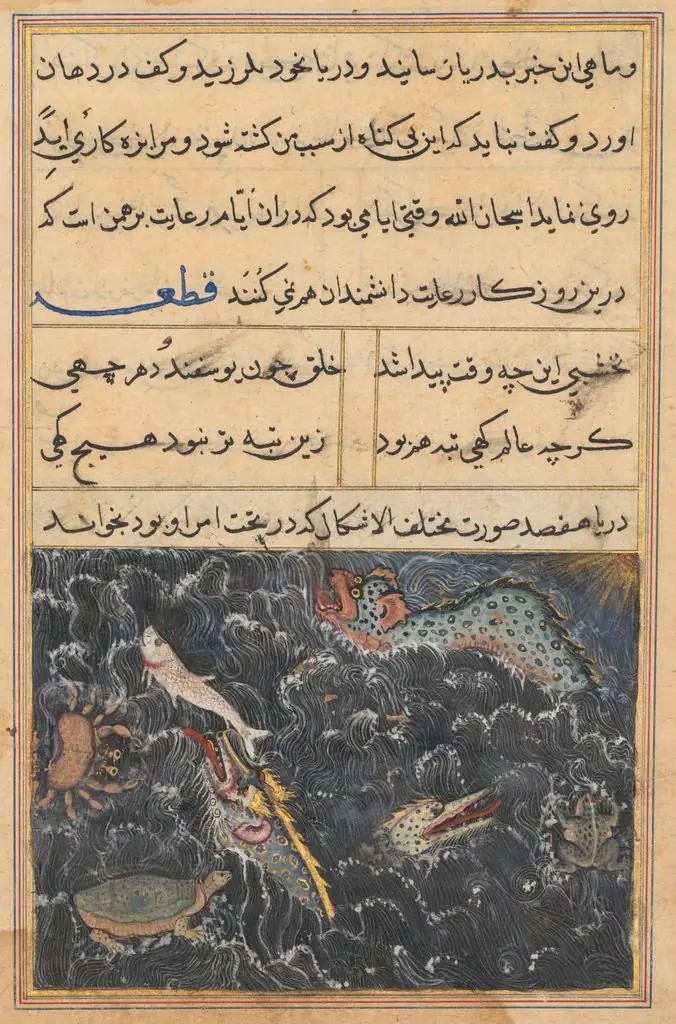 The creatures of the sea are asked by the king of the Ocean to take a message to the Brahman, from a Tuti-nama (Tales of a Parrot): Eleventh Night
 The creatures of the sea are asked by the king of the Ocean to take a message to the Brahman, from a Tuti-nama (Tales of a Parrot): Eleventh Night
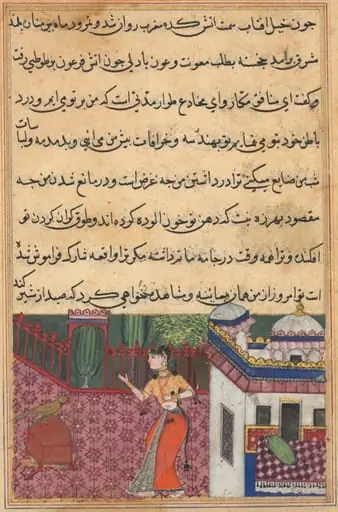 The parrot addresses Khujasta at the beginning of the thirty-third night, from a Tuti-nama (Tales of a Parrot)
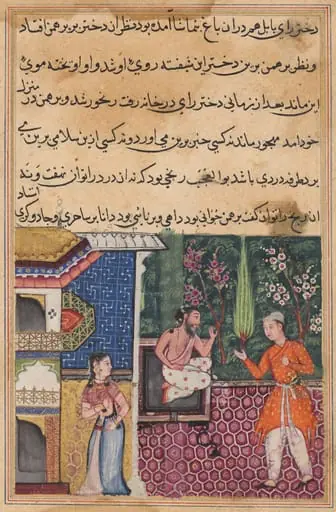 The Brahman gives an account of his falling in love with the king of Babylon’s daughter to his friend, the magician, from a Tuti-nama (Tales of a Parrot): Thirty-fifth Night
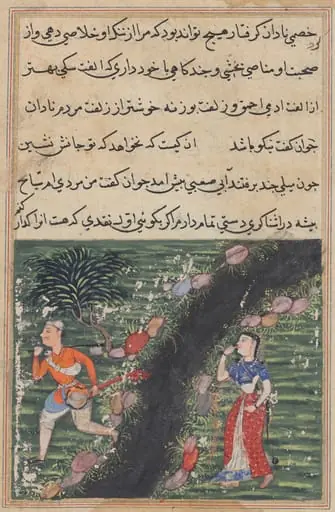 The vagabond crosses a stream with the possessions of the daughter-in-law of the king of Banaras and absconds, from a Tuti-nama (Tales of a Parrot): Sixteenth Night
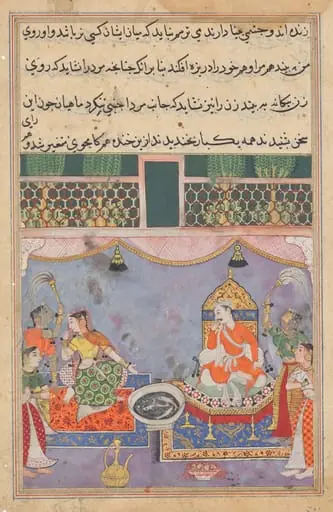 Kamjuy, the wife of the Raja, averts her face from the fishes, from a Tuti-nama (Tales of a Parrot): Twenty-third Night
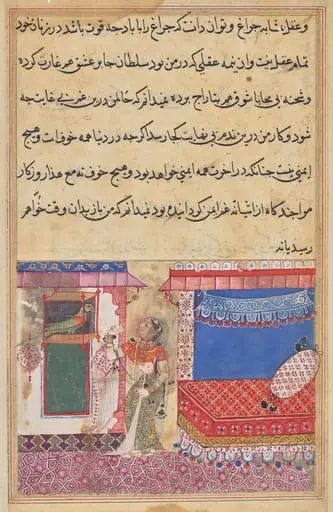 The Parrot Addresses Khujasta at the Beginning of the Eighteenth Night, from a Tuti-nama (Tales of a Parrot)
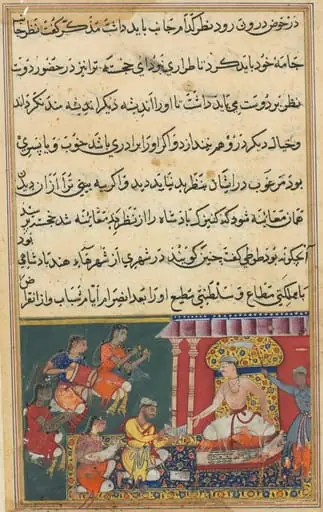 The astrologer predicts a calamity for the newly born prince in his thirteenth year, but one which he would be able to overcome, from a Tuti-nama (Tales of a Parrot): Eighth Night
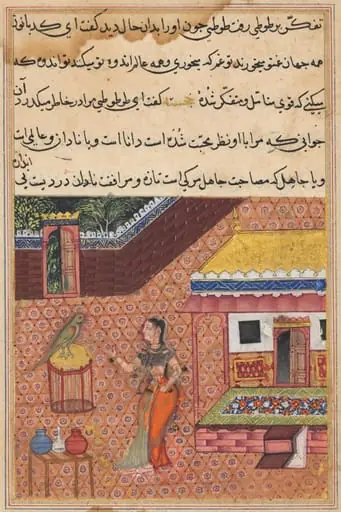 The parrot addresses Khujasta at the beginning of the thirty-fourth night, from a Tuti-nama (Tales of a Parrot)