Artwork
The creatures of the sea are asked by the king of the Ocean to take a message to the Brahman, from a Tuti-nama (Tales of a Parrot): Eleventh Night
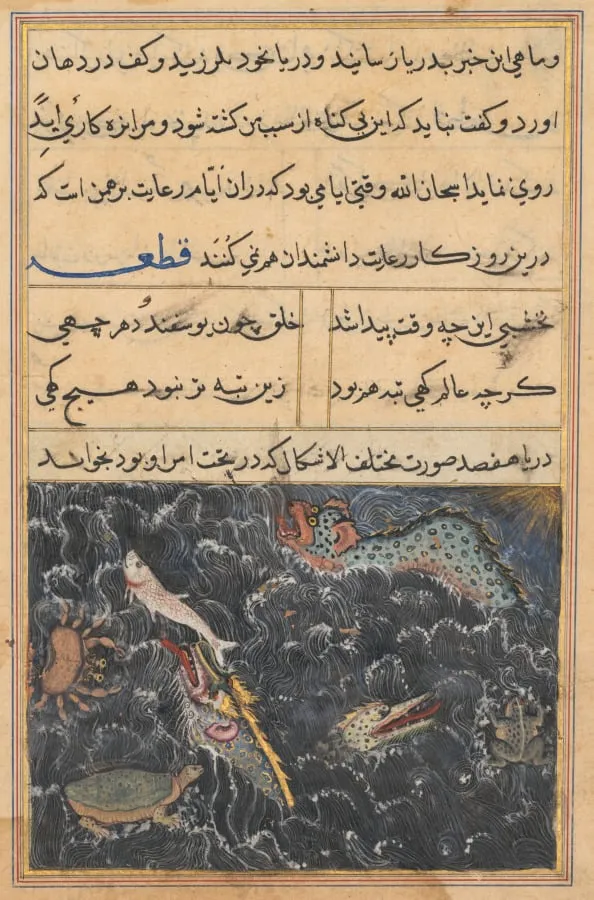
The creatures of the sea are asked by the king of the Ocean to take a message to the Brahman, from a Tuti-nama (Tales of a Parrot): Eleventh Night is an unspecified painting by the Mughal Painting artist Unknown. It dates from 1560 and is held in the collection of the Cleveland Museum of Art.
- Accession no.
- 1962.279.89.b
- Credit line
- Gift of Mrs. A. Dean Perry
About this work
You see fish, a whale, a turtle, a crab, and a dragon crowded in blue waves, all talking to each other.
You see fish, a whale, a turtle, a crab, and a dragon crowded in blue waves, all talking to each other.
This painting comes from a book of parrot tales made for Emperor Akbar’s court. Each sea creature gives a reason why it can’t deliver a message, funny, human-like excuses. The artist packed the scene with tiny details, like the dragon’s worried face.
To see more paintings like this, look up Mughal India, court of Akbar (reigned 1556–1605).
Overview
The painting illustrates a scene from the eleventh night of the Tuti‑nama, a collection of parrot tales compiled for the court of Emperor Akbar. In a crowded seascape, various marine beings are shown debating who should carry the ocean king’s reply to a Brahman’s wedding invitation.
Subject & Meaning
Each creature offers a self‑deprecating excuse for refusing the task: the dragon worries he will frighten people, the whale cites his lack of legs, the turtle claims he would be too slow, the crab doubts his credibility, the crocodile feels too coarse, while the frog finally accepts. The dialogue satirises human procrastination and the tendency to shift responsibility.
Technique & Style
Rendered in the Mughal miniature tradition, the work combines delicate brushwork with vivid pigments. The composition packs numerous figures, fish, whale, turtle, crab, dragon, into a compact blue‑toned wave, each rendered with expressive facial features that convey individual personalities.
History & Provenance
The image originates from a manuscript created for Akbar’s imperial atelier in the late 16th century. The Tuti‑nama was a didactic collection of moral stories, and this illustration served both decorative and instructional purposes within the royal library.
Context
Mughal court art often blended Persian artistic conventions with Indian themes, producing richly detailed narrative scenes. The inclusion of a parrot‑told tale reflects the era’s interest in moral storytelling and the synthesis of diverse cultural motifs under Akbar’s patronage.
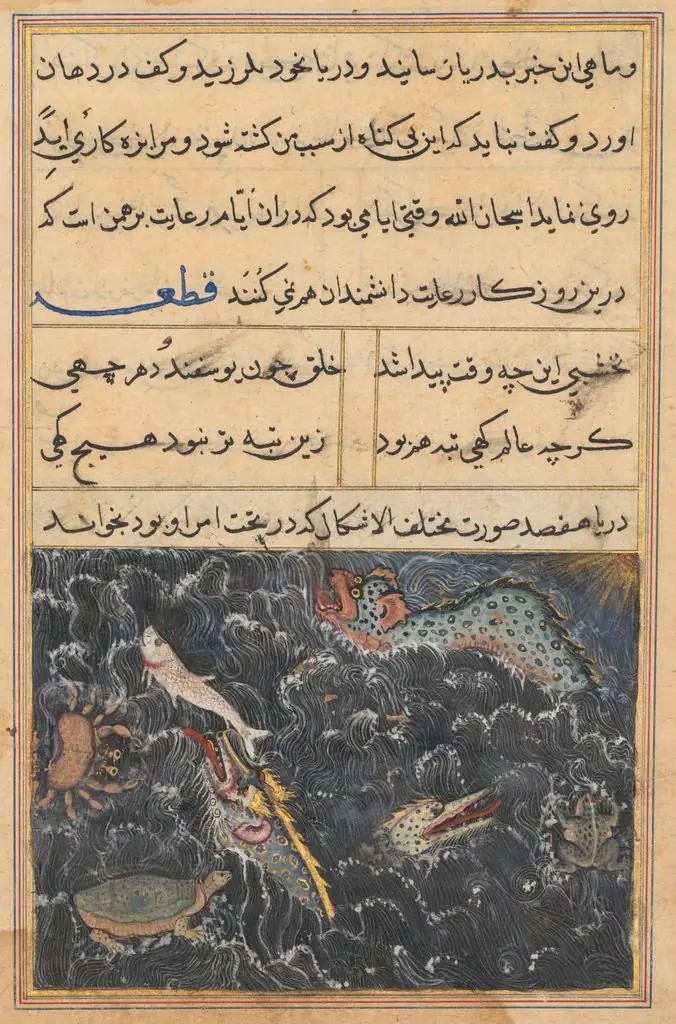
Artist & collection









- The creatures of the sea are asked by the king of the Ocean to take a message to the Brahman, from a Tuti-nama (Tales of a Parrot): Eleventh Night
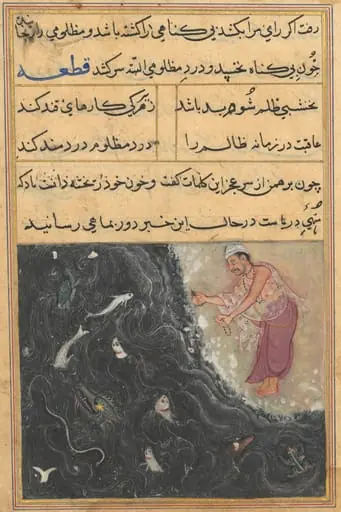 The Brahman’s predicament is conveyed by the wind to the fish who carries the news to the king of the Ocean, from a Tuti-nama (Tales of a Parrot): Eleventh Night
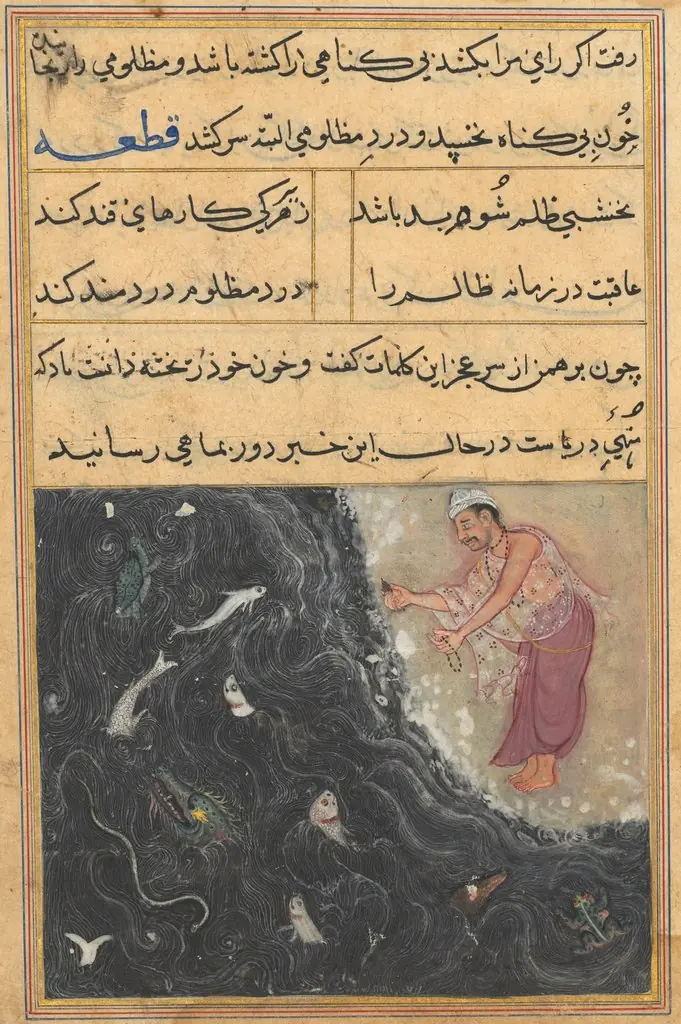 The Brahman’s predicament is conveyed by the wind to the fish who carries the news to the king of the Ocean, from a Tuti-nama (Tales of a Parrot): Eleventh Night
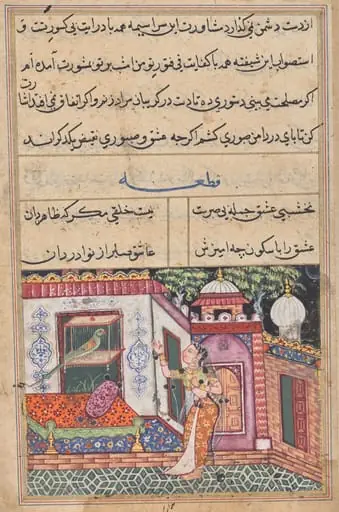 The Parrot Addresses Khujasta at the Beginning of the Eleventh Night, from a Tuti-nama (Tales of a Parrot)
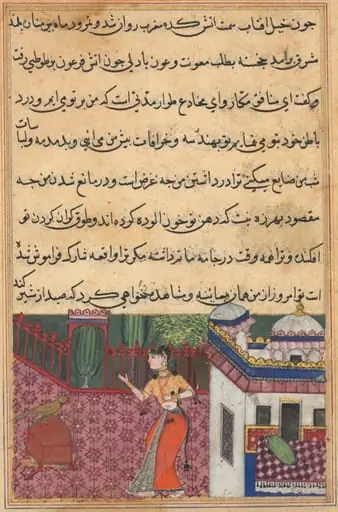 The parrot addresses Khujasta at the beginning of the thirty-third night, from a Tuti-nama (Tales of a Parrot)
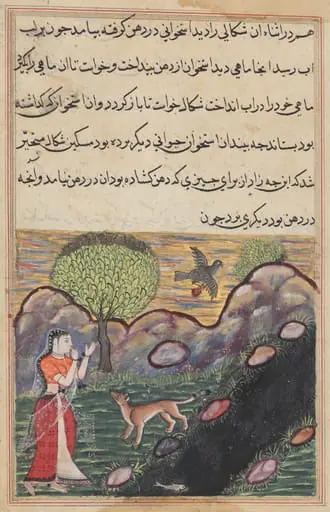 The daughter-in-law of the king of Banaras sees the jackal deprived of its food by a bird, as it unsuccessfully attempts to catch a fish, from a Tuti-nama (Tales of a Parrot): Sixteenth Night
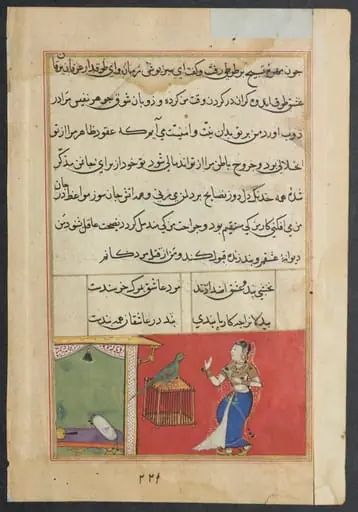 The parrot addresses Khujasta at the beginning of the forty-seventh night, from a Tuti-nama (Tales of a Parrot): Forty-seventh Night
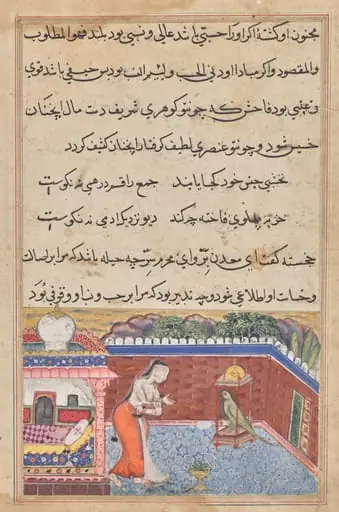 The parrot addresses Khujasta at the beginning of the thirty-first night, from a Tuti-nama (Tales of a Parrot)
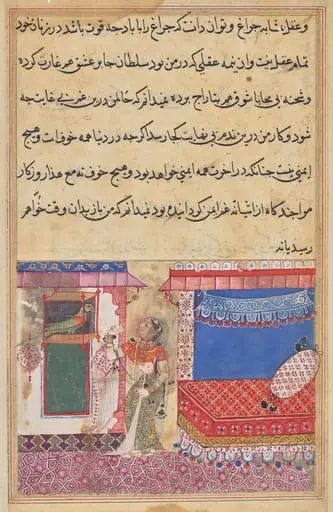 The Parrot Addresses Khujasta at the Beginning of the Eighteenth Night, from a Tuti-nama (Tales of a Parrot)
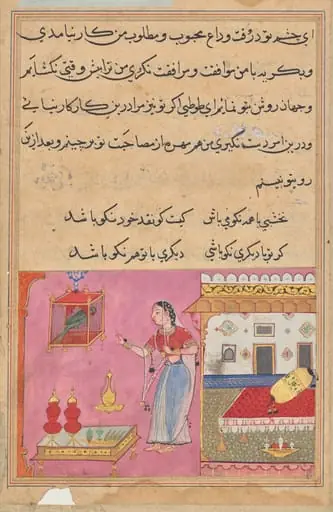 The Parrot Addresses Khujasta at the Beginning of the Twentieth Night, from a Tuti-nama (Tales of a Parrot)
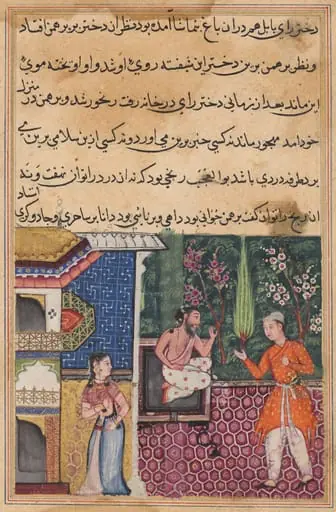 The Brahman gives an account of his falling in love with the king of Babylon’s daughter to his friend, the magician, from a Tuti-nama (Tales of a Parrot): Thirty-fifth Night
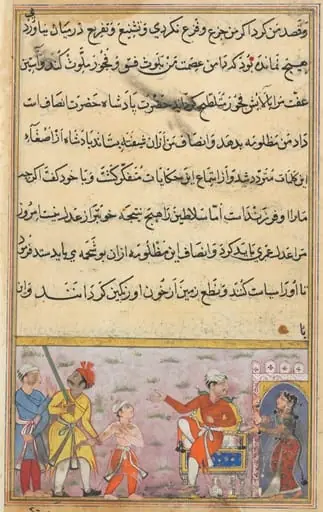 The prince being taken away for execution on the false complaint of the handmaiden, from a Tuti-nama (Tales of a Parrot): Eighth Night