Artwork
The Coronation of the Virgin
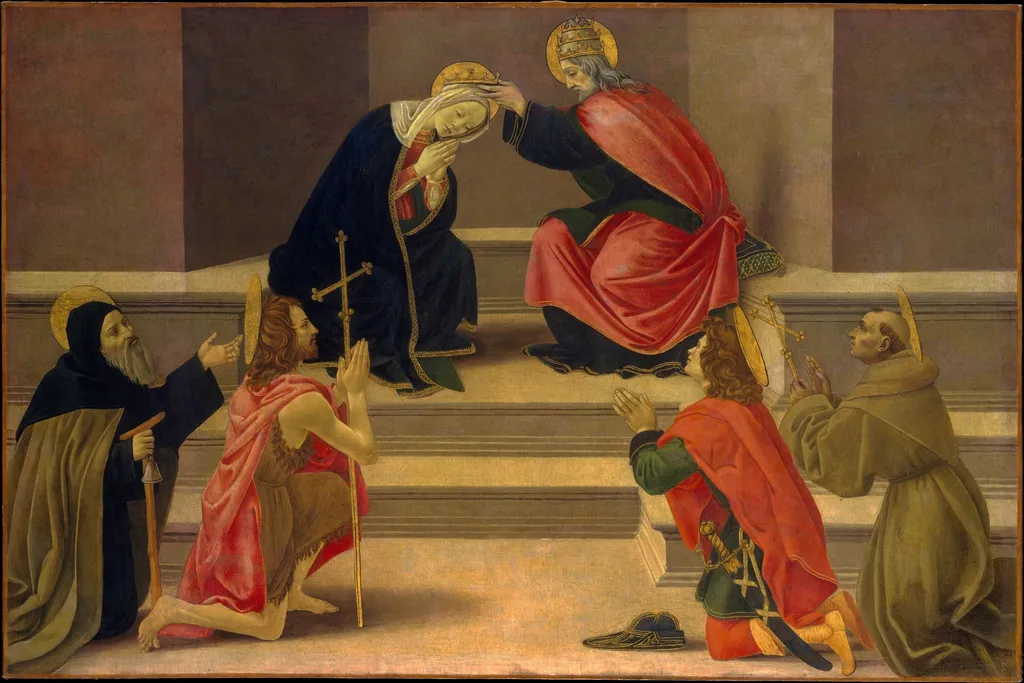
The Coronation of the Virgin is an unspecified painting. It dates from 1500 and is held in the collection of the Metropolitan Museum of Art.
About this work
Subject & Meaning
This iconography emphasizes Mary’s role as queen of heaven and underscores the divine authority bestowed upon her.
The painting illustrates the heavenly coronation of the Virgin Mary, a common motif in Renaissance religious art. In the composition Mary is crowned by God the Father, while a group of saints, including Anthony the Great, John the Baptist, Julian the Hospitaller, and Francis of Assisi, witness the ceremony. This iconography emphasizes Mary’s role as queen of heaven and underscores the divine authority bestowed upon her.
Executed around 1500 by a follower of Botticelli, the work was later owned by collector Jules Bache and is now part of the Metropolitan Museum of Art’s collection.
History & Provenance
The painting titled “The Coronation of the Virgin” was created circa 1500 by a follower of Botticelli, likely in Italy, and is classified as a religious work. Its dimensions measure 100.3 cm by 153 cm. The composition depicts the Virgin being crowned by God the Father alongside saints such as Anthony the Great and John the Baptist. The work remained in the collection of Jules Bache, who later bequeathed it to the Metropolitan Museum of Art, where it is presently housed.
No surviving documentation records its original commission, but stylistic analysis places its execution in the early sixteenth‑century Florentine workshop tradition.
Overview
The Coronation of the Virgin is a painting depicting a significant moment in Christian theology. It shows a central scene within a church-like setting, where a female figure is being crowned by a robed individual. Surrounding them are several male figures, some kneeling and some standing, observing the event.
The artwork primarily uses a palette of red, blue, and gold, set against a dark background, to highlight the central figures and their sacred interaction.
Technique & Style
The artist employs a focused composition, drawing attention to the central act of crowning through the arrangement of figures. A rich color scheme, dominated by reds, blues, and golds, enhances the sacred atmosphere and distinguishes the principal subjects. The dark background serves to further isolate and emphasize the brightly illuminated group, creating a sense of solemnity and spiritual depth around the divine event.
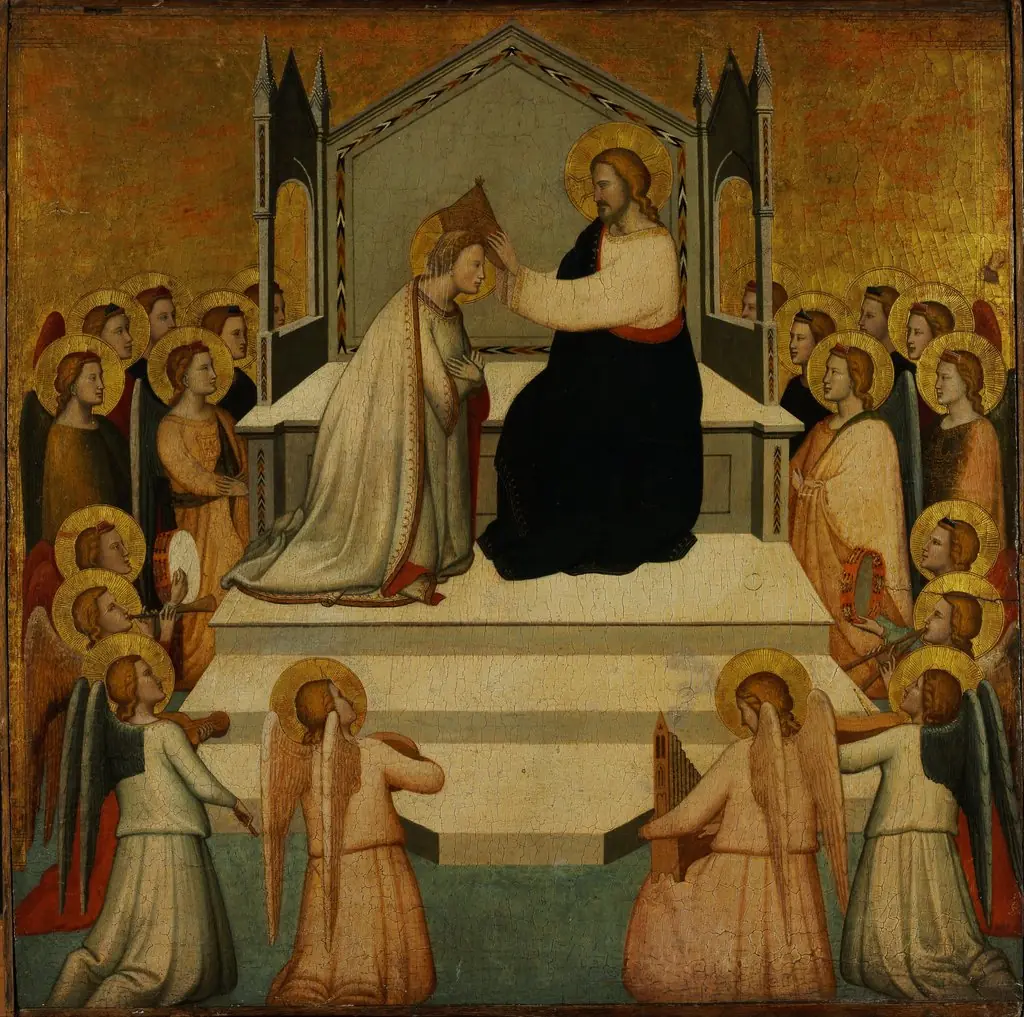
Artist & collection

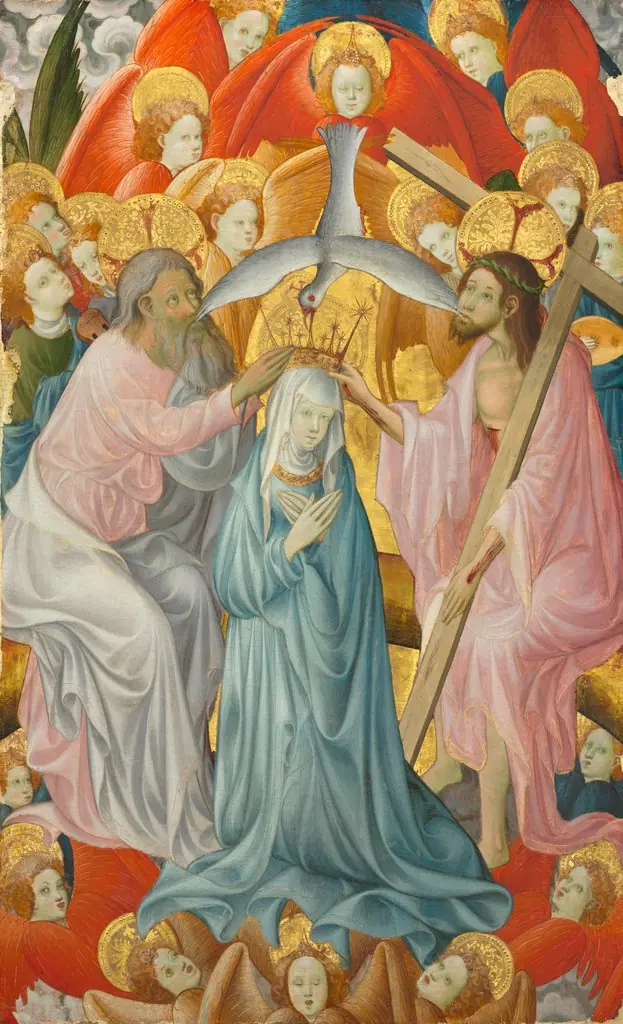 The Coronation of the Virgin with the Trinity
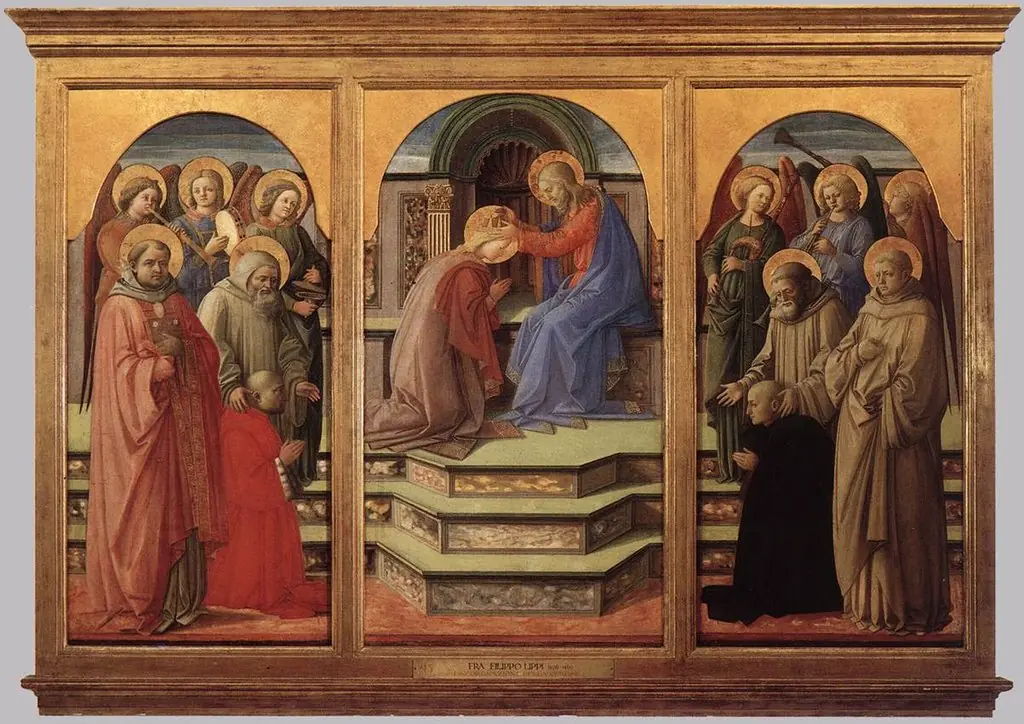 Marsuppini Coronation
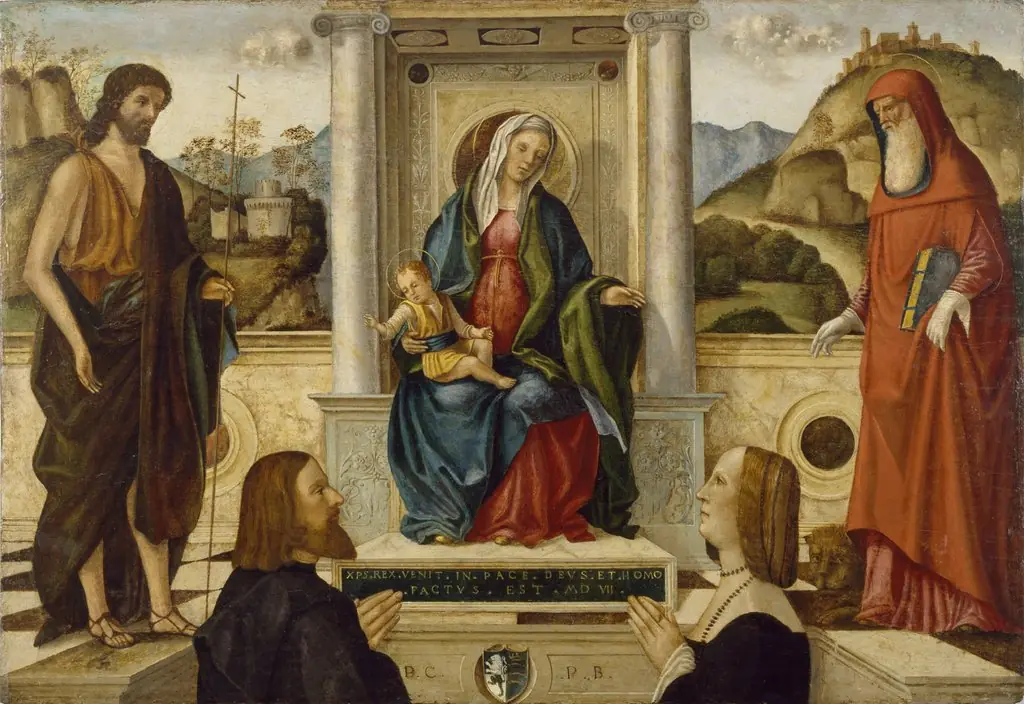 Madonna and Child Enthroned with Saints and Donor
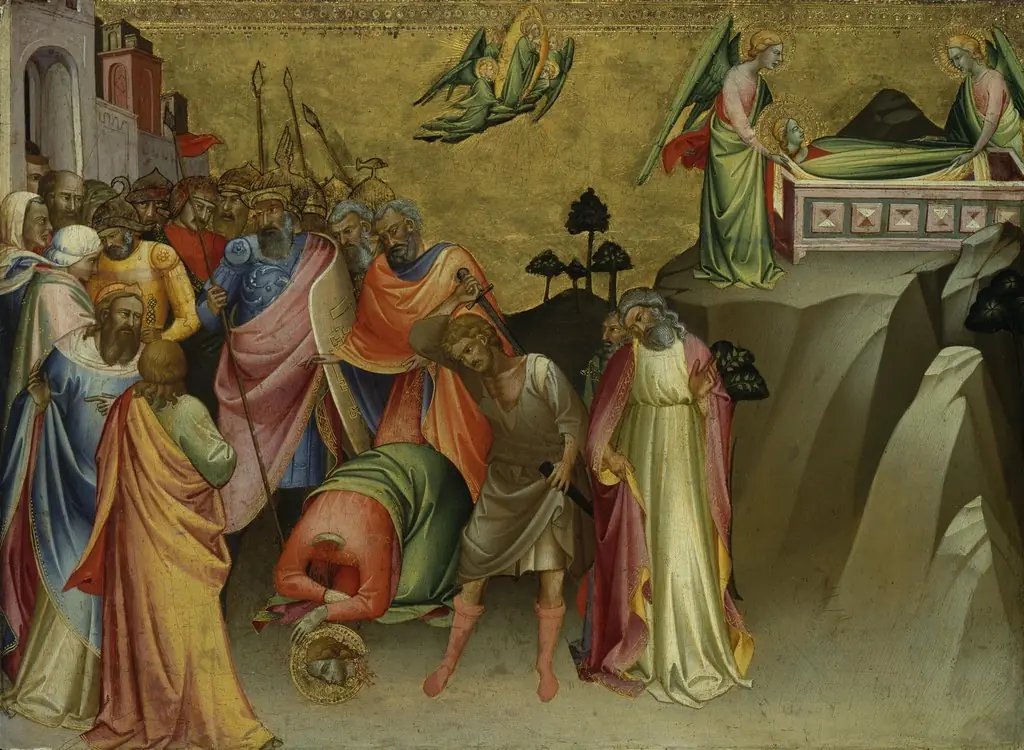 The Beheading of St. Catherine of Alexandria
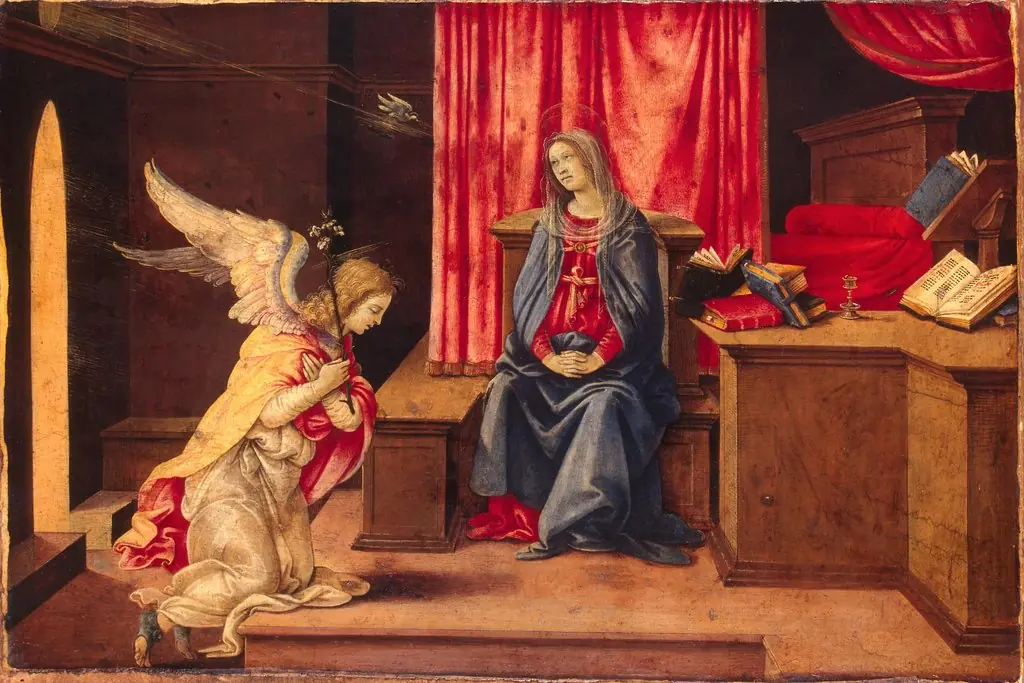 The Annunciation
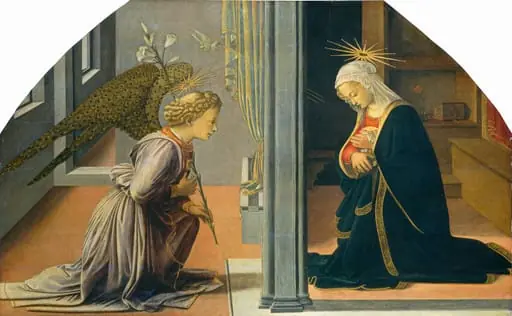 The Annunciation
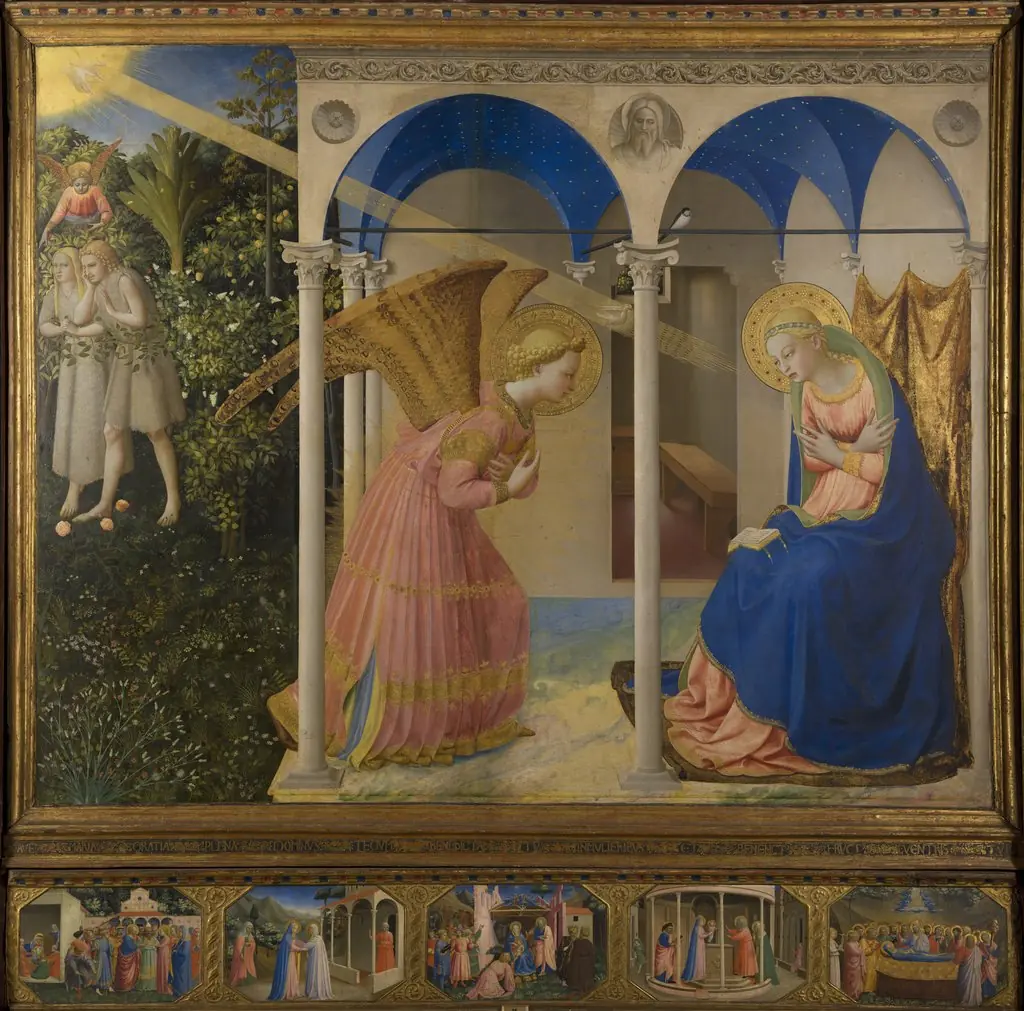 Annunciation
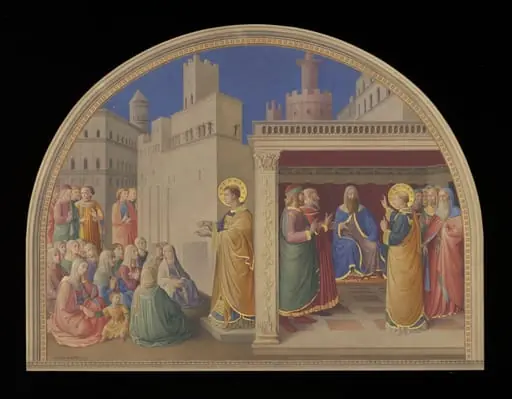 Copy after St Stephen preaching and St Stephen before the Council, Fra Angelico in the Niccoline Chapel (Vatican, Rome)