Artwork
The Annunciation
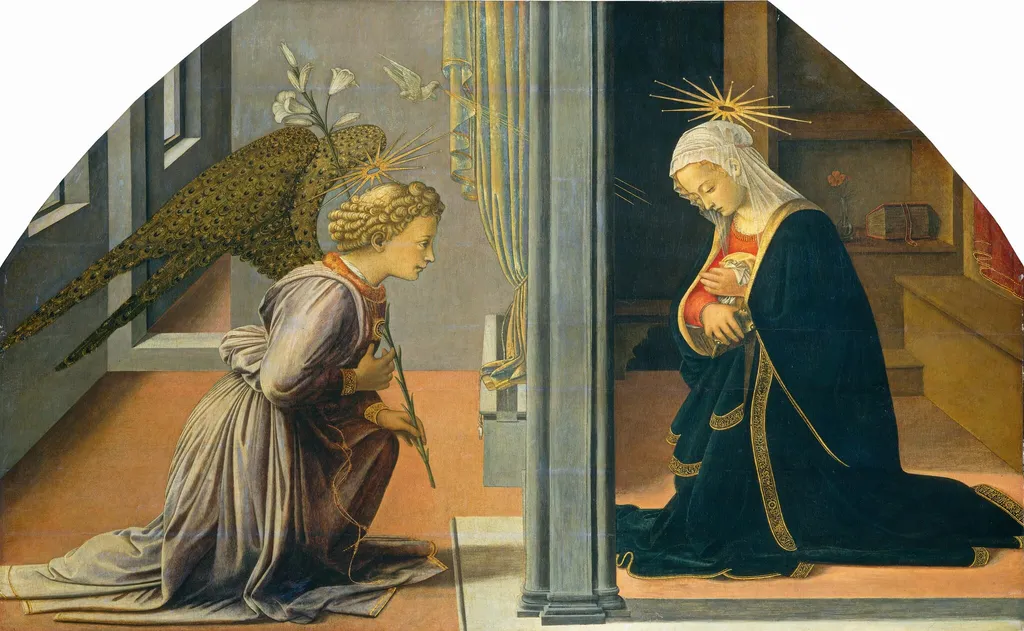
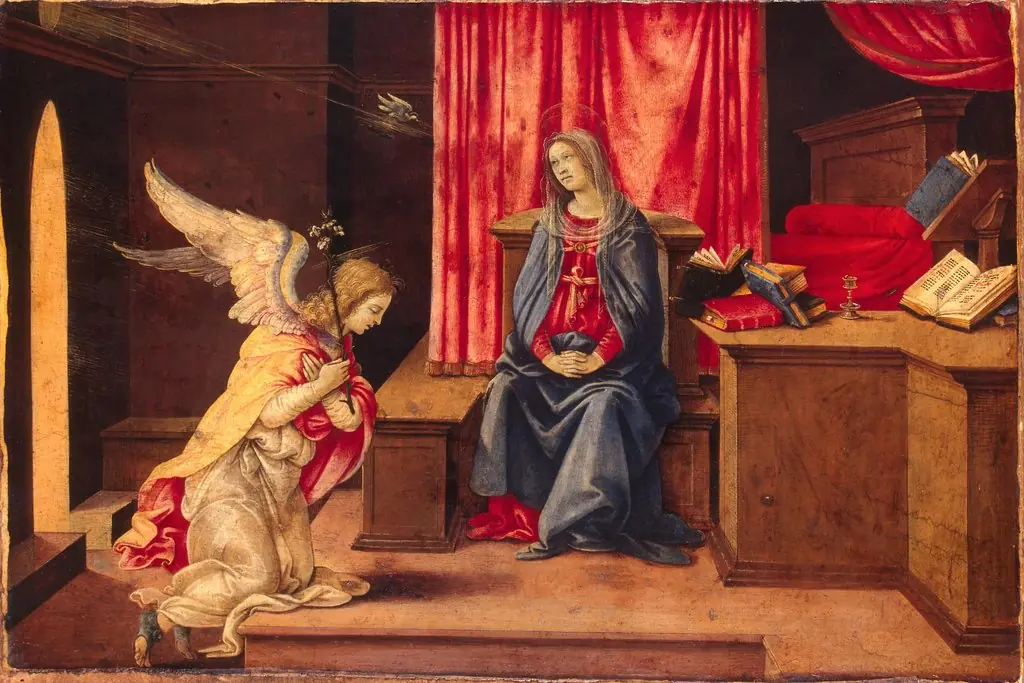
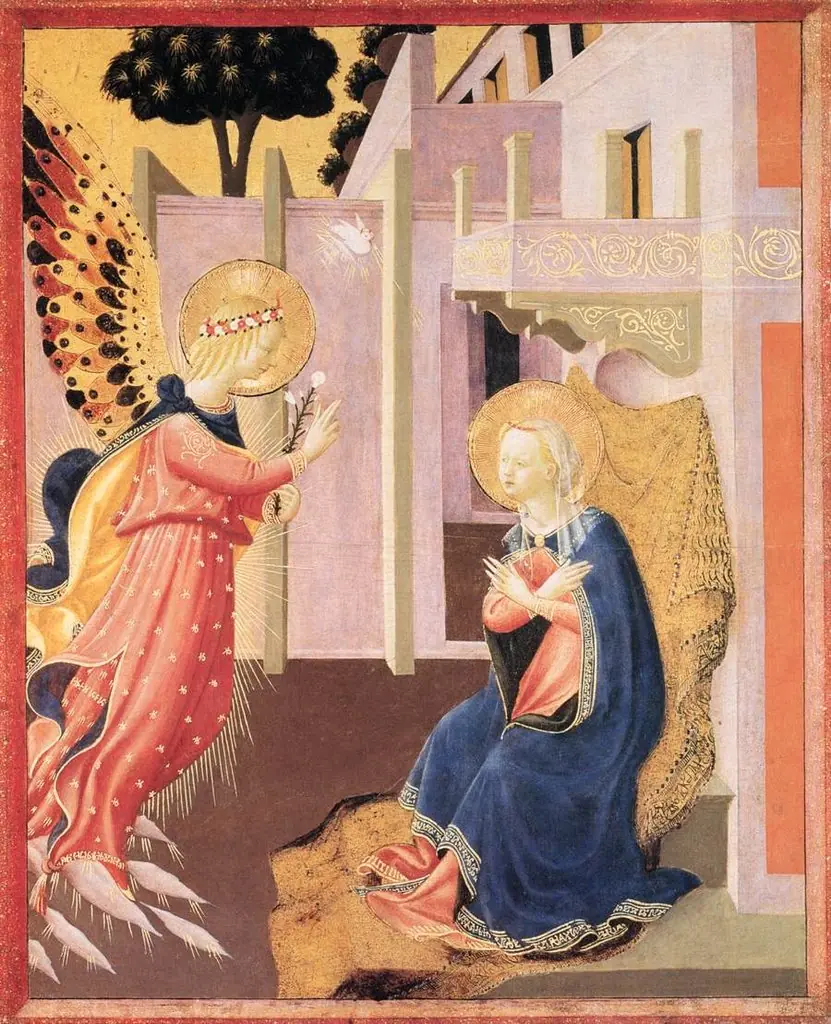
The Annunciation is a tempera painting by the Early Renaissance artist Filippo, Fra Lippi. It dates from 1438 and is held in the collection of the National Gallery of Art.
About this work
A woman, likely Mary, in a quiet scene with simple furnishings and a few objects. Fra Filippo Lippi painted it in 1438, when artists were working out new ways to show depth and perspective.
Subject & Meaning
Gabriel's gesture of announcement and Mary's lowered gaze and hand on her chest convey humble acceptance of the divine message.
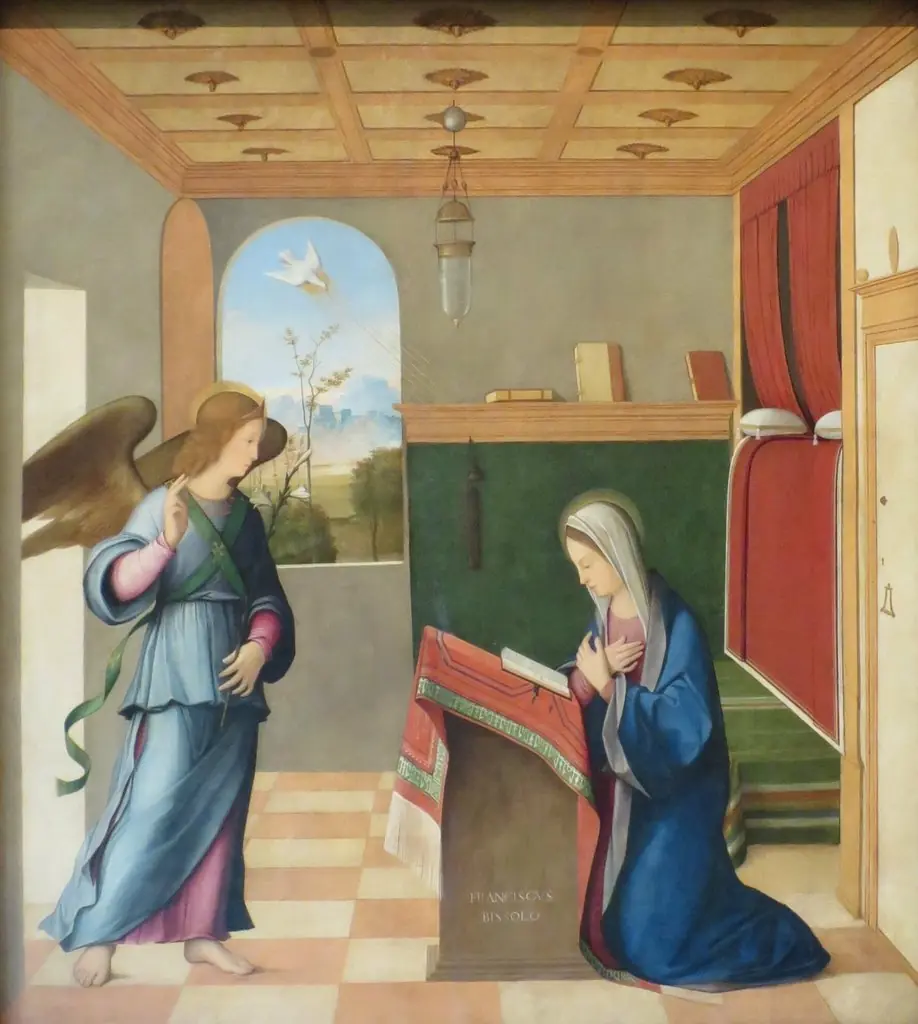
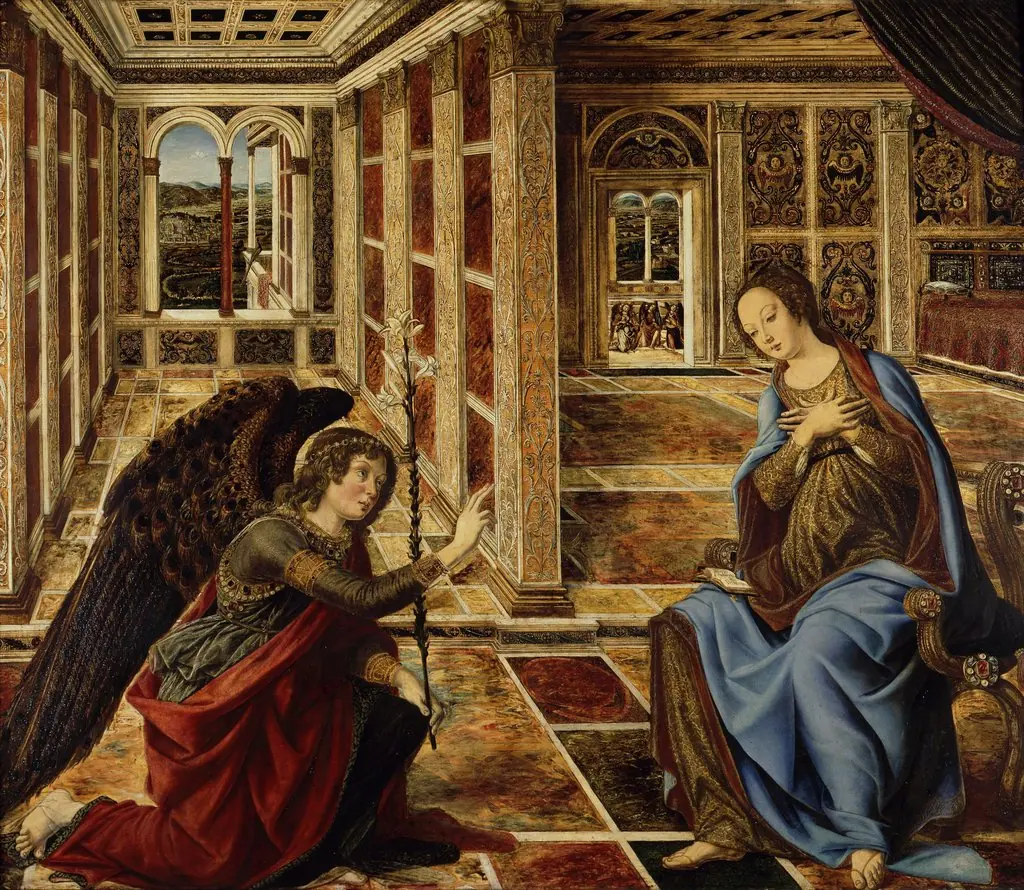
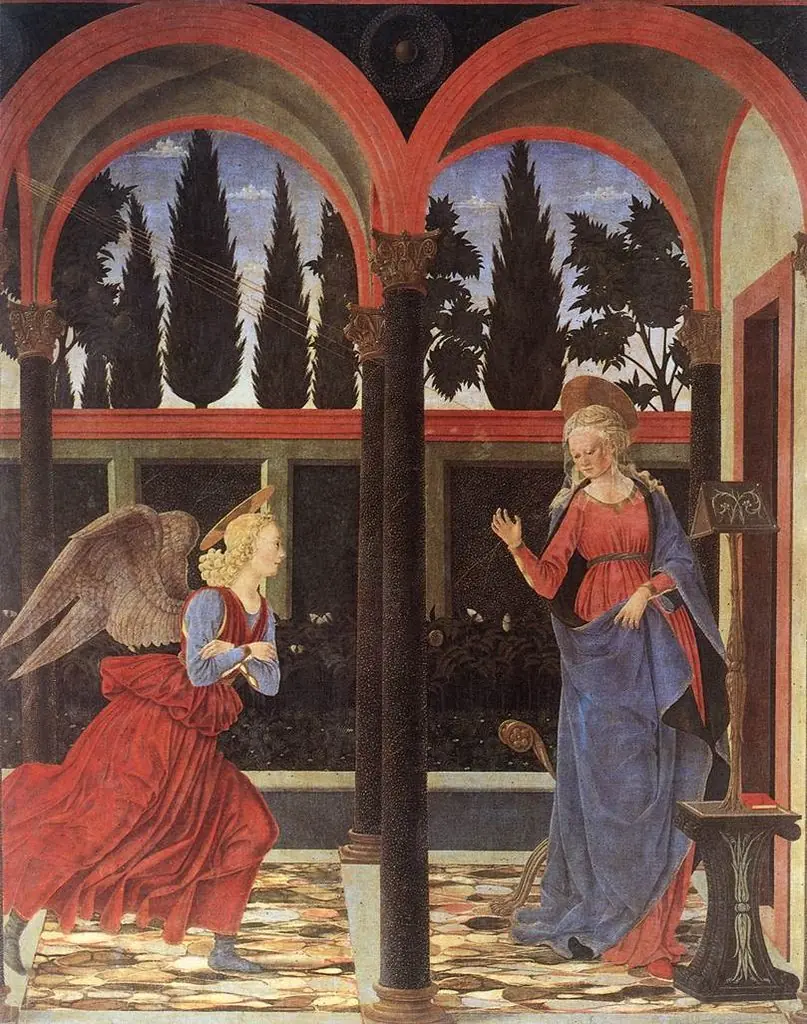
The painting shows the moment of the Annunciation, with the Virgin Mary kneeling in a modest interior and the angel Gabriel standing to her left, holding a lily and clothed in white. Gabriel's gesture of announcement and Mary's lowered gaze and hand on her chest convey humble acceptance of the divine message. The interior is organized by central perspective, illuminated by a strong light that streams from an unseen doorway, casting a clear shadow on the floor and highlighting the delicate drapery of Mary's garments.
Symbolic elements such as the white lily, the angel's suspended pose, and the spatial depth reflect a fusion of devotional narrative and Renaissance interest in naturalistic space and light.
Technique & Style
The work is executed in tempera on a wooden panel (approximately 100 × 161 cm) and is held by the National Gallery of Art in Washington, D.C. Lippi arranges the interior space with a central pilaster that bisects the composition, placing the angel on the left and the Virgin on the right; the Virgin is depicted kneeling, hands at her chest, in a gesture of humble acceptance. A strong, directional light illuminates the angel's room while a softer, filtered light falls on the Virgin's chamber, creating a nuanced chiaroscuro that enhances the three-dimensionality of the figures. The drawing emphasizes elegant linear contours and delicate drapery, reflecting a synthesis of Flemish lighting techniques with Lippi's own refined linear style.
History & Provenance
The Annunciation was executed circa 1438 as a tempera panel (100 × 161 cm) by Filippo Lippi. Its early history places the work in the collection of Tommaso Puccini of Pistoia, then with Sangiorgi in Rome, Achillito Chiesa in Milan, and subsequently Piero Tozzi in New York before 1925. The painting passed through the holdings of Percy S. Straus, the Duveen firm, and the Bachstitz Gallery before Samuel H. Kress acquired it in 1940; Kress later gifted the work to the National Gallery of Art in 1943.
Fra Filippo Lippi's The Annunciation is held in the collection of the National Gallery of Art in Washington, D.C., within the Samuel H. Kress Collection. The work entered the gallery in 1943 as a gift from the Samuel H. Kress Foundation, which had purchased it from Duveen Brothers, Inc. in 1940. Prior to this acquisition, the painting's documented history includes ownership by Percy S. Straus in New York by 1932 and representation by the Bachstitz Gallery in The Hague by 1934.
Earlier provenance traces the panel to Achillito Chiesa in Milan and the New York dealer Piero Tozzi, who held it between 1925 and at least 1927. While early nineteenth-century commentary suggests the work may have originally belonged to Tommaso Puccini near Pistoia, its location in the early twentieth century is linked to the Sangiorgi collection in Rome.
Context
The Annunciation has been studied as a pivotal moment in Lippi's transition from Masaccian solidity toward a more lyrical, light-driven language. Scholars note the central perspective dividing the interior, the angel's dynamic pose, and the Virgin's humble gesture, all illuminated by a dual source of light that recalls Northern realism while retaining Lippi's linear elegance. The work's date, circa 1438, situates it alongside the Madonna of Tarquinia, marking Lippi's early synthesis of Florentine and Flemish influences.
Contemporary observations recorded in a 19th-century Florentine commentary praised the "very well preserved little picture" and its meticulous spatial rendering, underscoring the painting's early recognition as a technical achievement. Its inclusion in the Kress Collection and subsequent display at the National Gallery of Art have reinforced its status as a canonical example of early Renaissance devotional painting.
Legacy
The Annunciation by Lippi has become a touchstone for studies of early Renaissance devotional painting, its composition and lighting analyzed in scholarship as a pivotal moment when the artist moved beyond Masaccio's influence toward a more naturalistic, perspective-driven style. Its journey from a private Tuscan collection to the holdings of the Samuel H. Kress Foundation and eventual donation to the National Gallery of Art cemented its status as a highlighted work in major museum inventories, often cited in surveys of Italian painting. The painting's detailed narrative, spatial depth, and treatment of light have informed subsequent artists' renditions of the Annunciation, securing its reputation as both a technical achievement and a paradigmatic example of 15th-century Marian imagery.
Overview
Fra Filippo Lippi's painting, The Annunciation, created around 1438, is a tempera on panel work. This religious composition portrays the Virgin Mary, a central figure in Christian theology, at the moment she receives the divine message. The artwork exemplifies early Renaissance painting, combining traditional subject matter with evolving artistic approaches of the period.
Own this work as a print
Artist & collection