Artwork
Annunciation
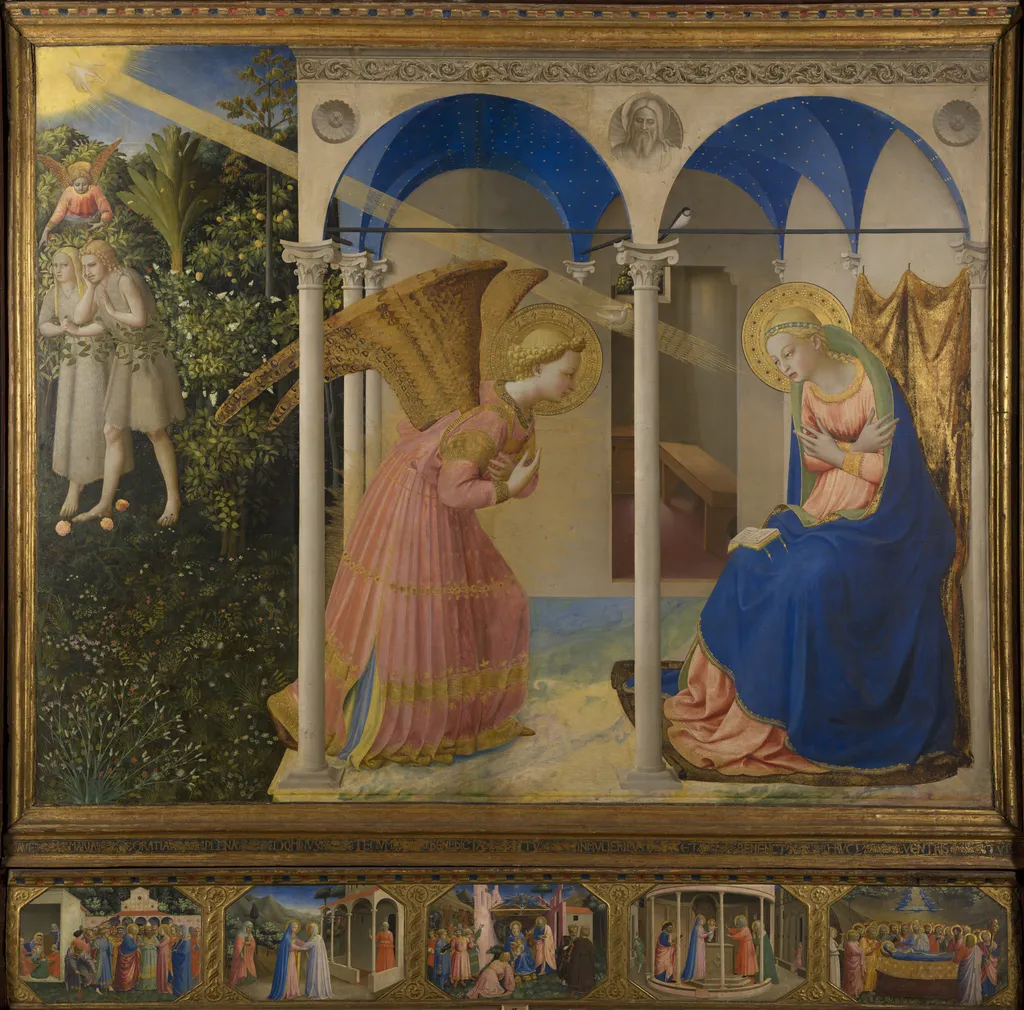
Annunciation is a tempera painting by the High Renaissance artist Fra Angelico. It dates from 1420 and is held in the collection of the Museo del Prado.
About this work
Subject & Meaning
Among the precisely rendered plants, the palm alludes to Christ's future martyrdom and the red roses to the blood of the Passion.
The panel depicts the Annunciation to the Virgin Mary by the Archangel Gabriel, as recounted in the Gospel of Luke and elaborated in Jacobus de Voragine's Legenda Aurea, a key reference for Renaissance painters. The scene is set within an enclosed garden, the hortus conclusus, signifying Mary's virginity and evoking paradise. Among the precisely rendered plants, the palm alludes to Christ's future martyrdom and the red roses to the blood of the Passion.
To the left, Adam and Eve are expelled from Eden, their presence framing the moment as the reversal of humanity's fall: through Mary's acceptance, salvation in Christ is made possible, presenting her as the "new Eve" and Christ as the "new Adam."
A ray of divine light descends from the upper left, carrying the dove of the Holy Spirit toward Mary, who bows submissively. She is seated on a draped bench with an open book on her lap, symbolizing the Scriptures now being fulfilled. The predella below extends the Marian narrative through five scenes: the Birth and Marriage of the Virgin, the Visitation, the Adoration of the Magi, the Presentation in the Temple, and the Dormition.
Technique & Style
The work is executed in egg-tempera on a wooden panel, with delicate gold leaf applied to decorative elements. Its support is a multi-plank panel measuring roughly 194 by 194 cm, including a predella, and the surface is reinforced by a later wooden frame. The painting employs a clear Renaissance perspective, with a unified light that moves from left to right, and a structured composition divided into garden, angelic arch, and Virgin's arch.
Symbolic flora such as palm and red roses are rendered with botanical precision, while the architectural backdrop reflects Michelozzo-like motifs. The predella features five narrative panels depicting episodes from the life of Mary, painted with a slightly freer compositional approach. The surface shows a vertical crack and incomplete original framing, but the pigment layer remains largely intact.
History & Provenance
Commissioned for the Convent of San Domenico in Fiesole, where Fra Angelico was a friar, this altarpiece dates to around 1420. The painting remained at the convent until 1611, when the friars sold it to Mario Farnese to fund construction of the campanile. Farnese subsequently gifted the panel to Francisco Gomez de Sandoval, Duke of Lerma, who placed it first in Valladolid (Convent of San Pablo) before it passed to the Convent of the Descalzas Reales in Madrid.
It remained there until the mid-nineteenth century, when the painter Federico de Madrazo facilitated its move to the royal collections. The work entered the Museo del Prado as a royal donation on 16 July 1861, where it is displayed (Hall 056B) and recognized as one of the museum's most important pieces.
Overview
Fra Angelico's painting, titled Annunciation, is a tempera work from the 1420s. This altarpiece is recognized as a significant example of the Italian Renaissance master's output. It currently resides in the collection of the Museo del Prado in Madrid, having originally been created for a Dominican convent. The artwork exemplifies the artist's characteristic approach to religious narrative.
Context
Fra Angelico created several depictions of the Annunciation, and this particular work from the 1420s is generally considered the earliest of three major altarpieces on the theme. It precedes the Cortona Annunciation and the Annunciation of San Giovanni Valdarno. This painting thus offers insight into the artist's evolving interpretation of this pivotal Christian event across his career, establishing a foundational example for his subsequent treatments.
Own this work as a print
Artist & collection

Artist
Fra Giovanni da Fiesole (born Guido di Pietro; c. 1395 – 18 February 1455), known posthumously as Fra Angelico ( FRAH an-JEL-ik-oh, Italian: ), was an Italian Dominican friar and painter active during the early…

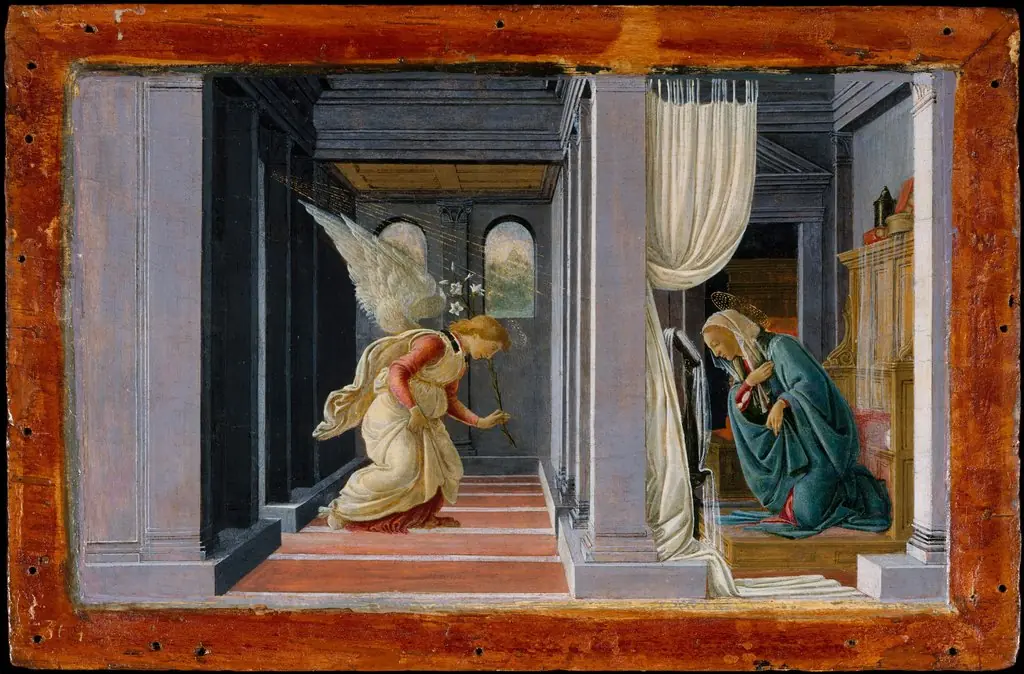 The Annunciation
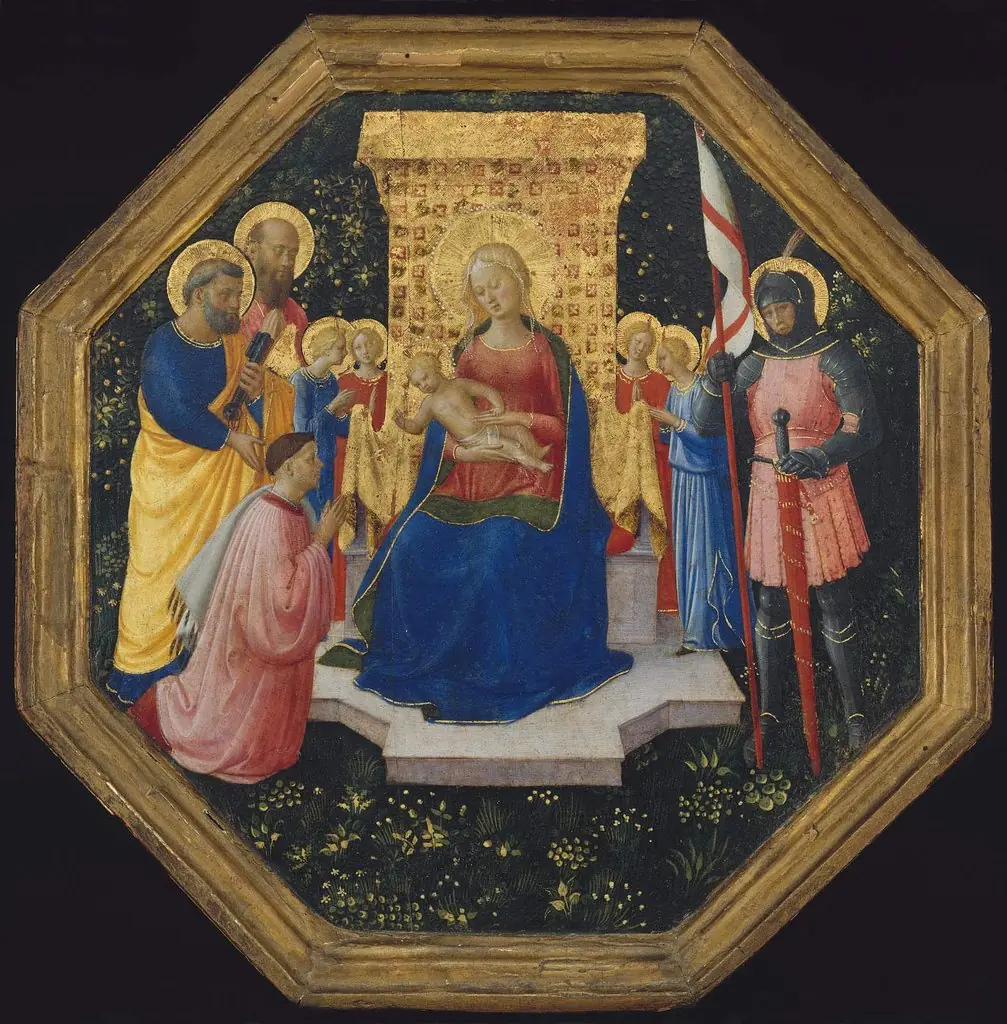 Virgin and Child Enthroned with Saints Peter, Paul and George (?), Four Angels, and a Donor
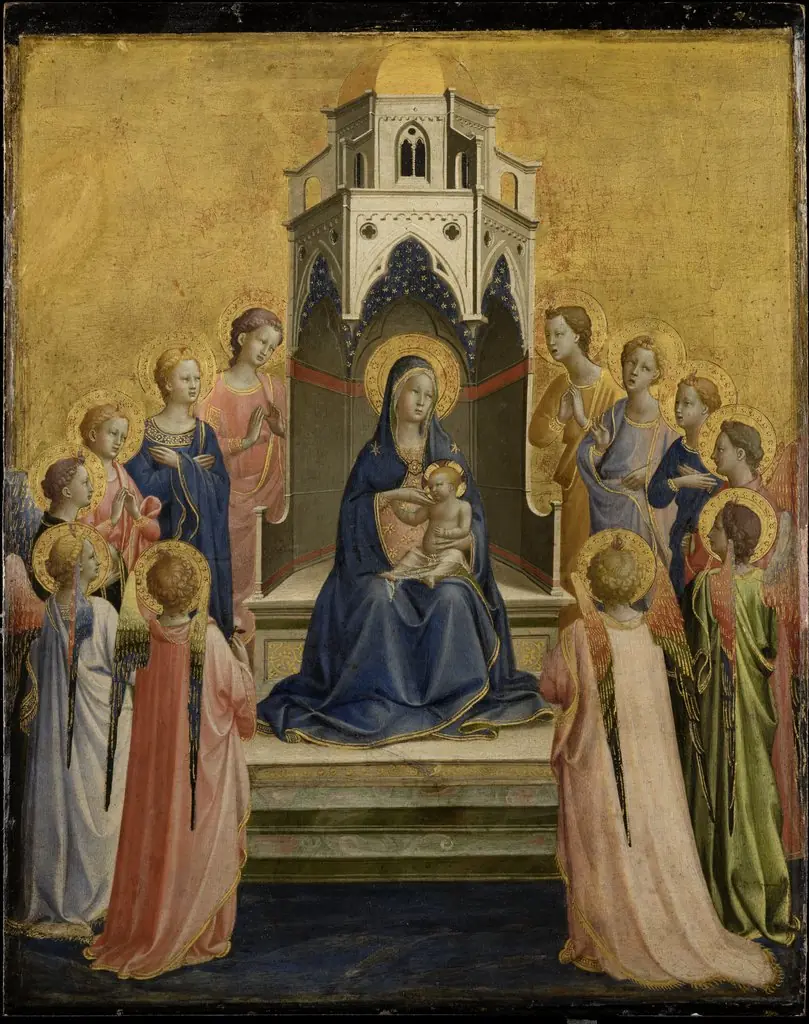 Madonna and Child Enthroned and Twelve Angels
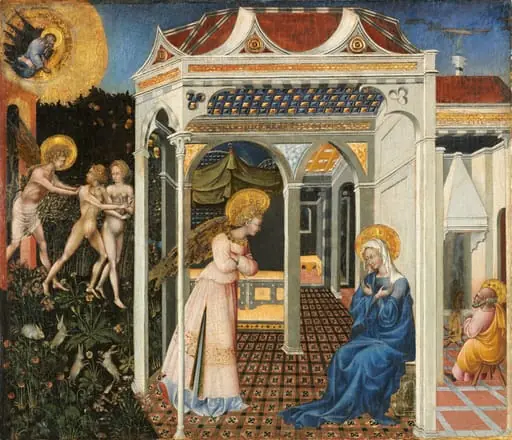 The Annunciation and Expulsion from Paradise
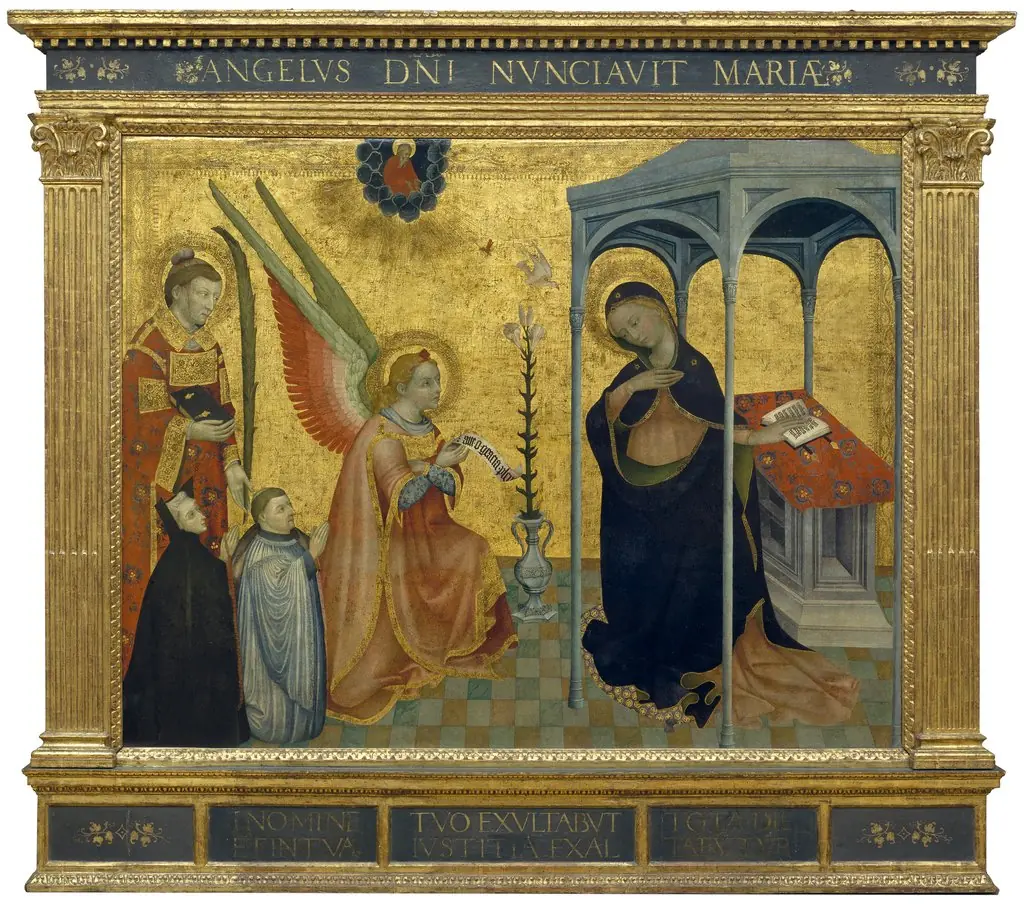 The Annunciation
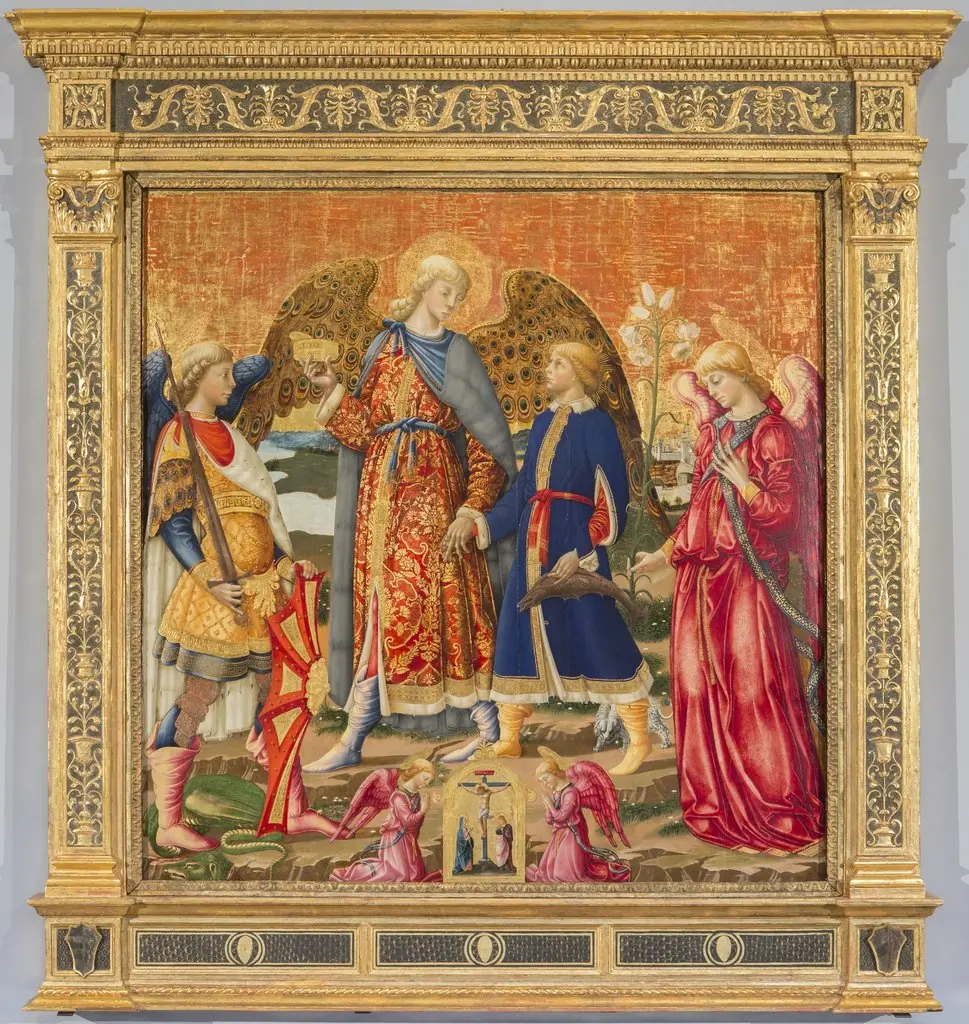 Tobias and Three Archangels
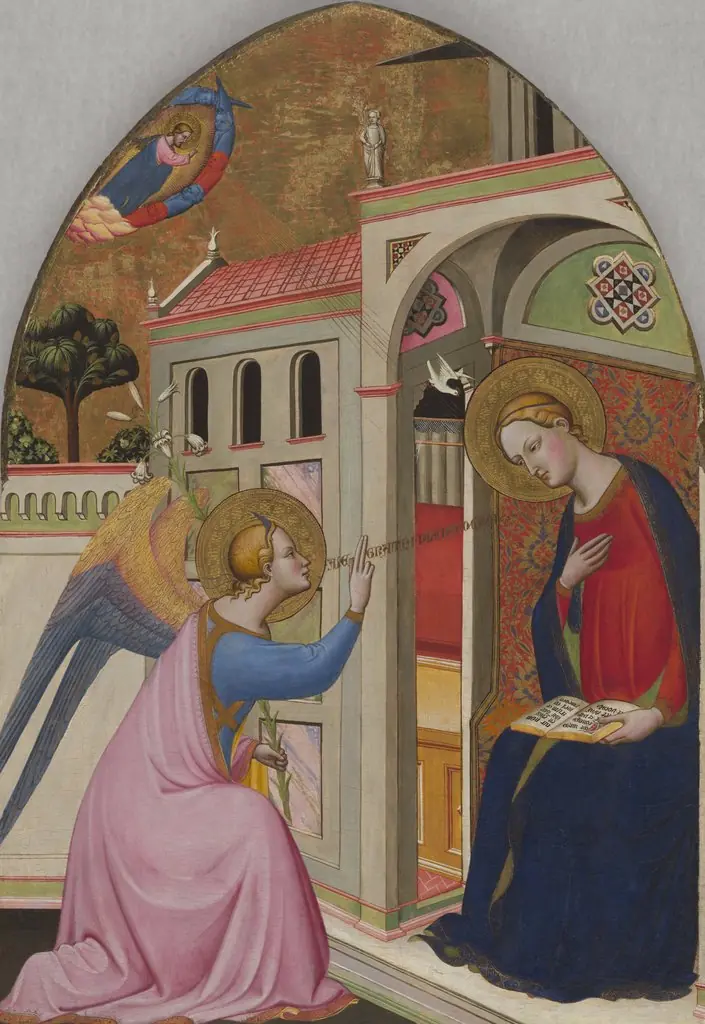 The Annunciation
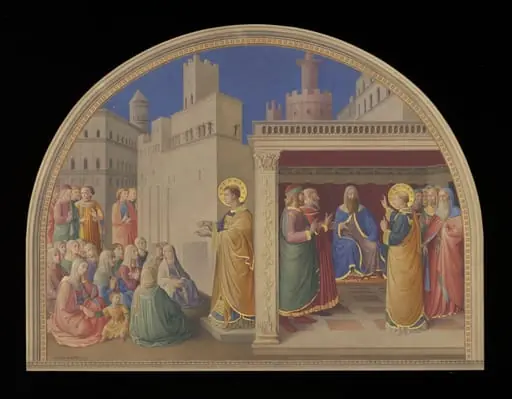 Copy after St Stephen preaching and St Stephen before the Council, Fra Angelico in the Niccoline Chapel (Vatican, Rome)
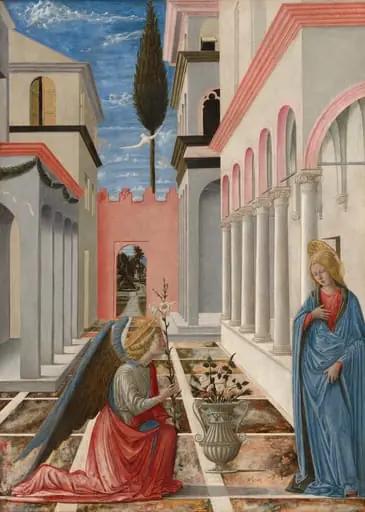 The Annunciation