Artwork
The Holy Family
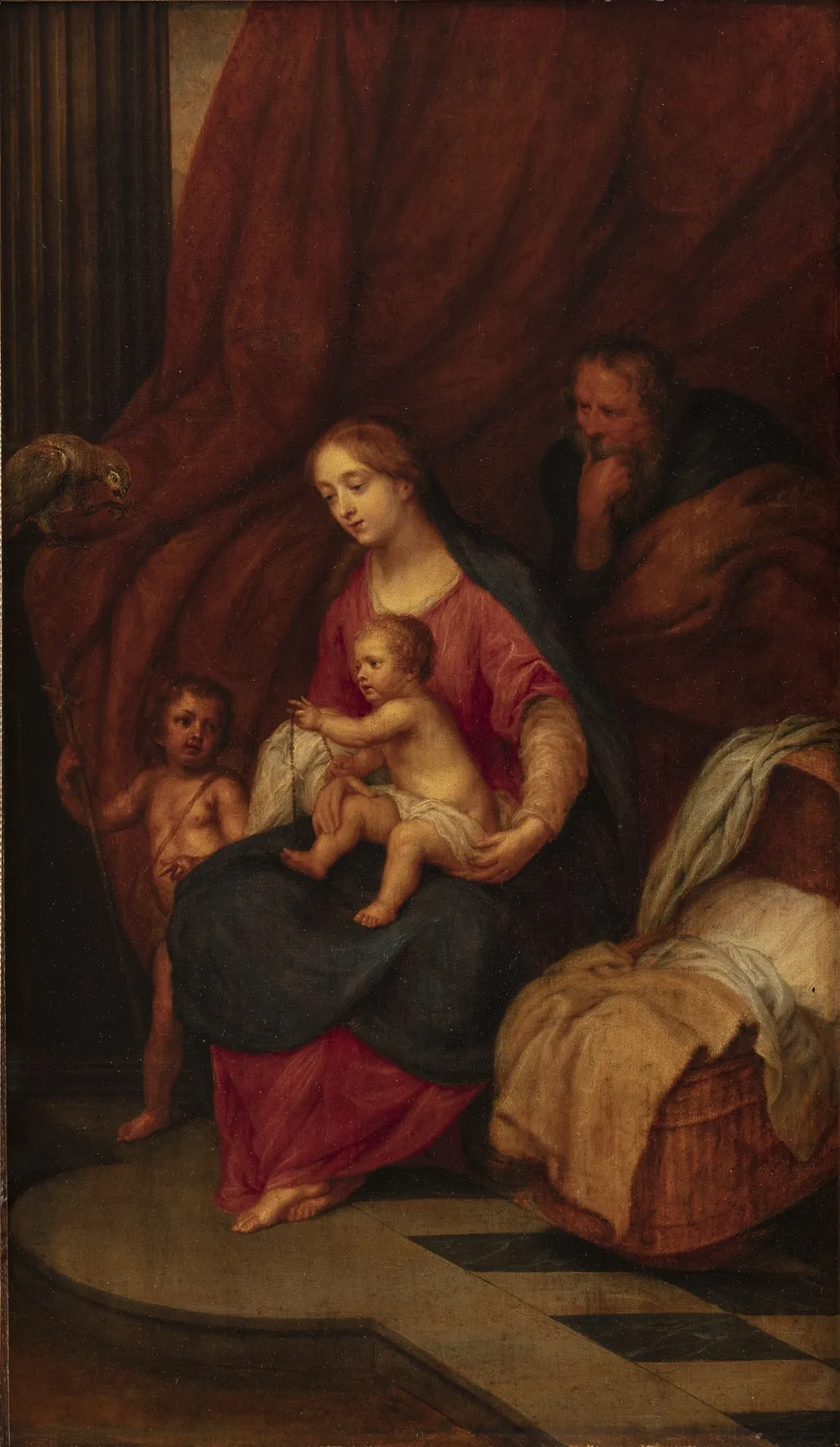
The Holy Family is an unspecified painting. It dates from 1608 and is held in the collection of the Statens Museum for Kunst.
About this work
Subject & Meaning
The iconography adheres to traditional Christian representations of the Holy Family, emphasizing the domestic and spiritual unity of the three figures.
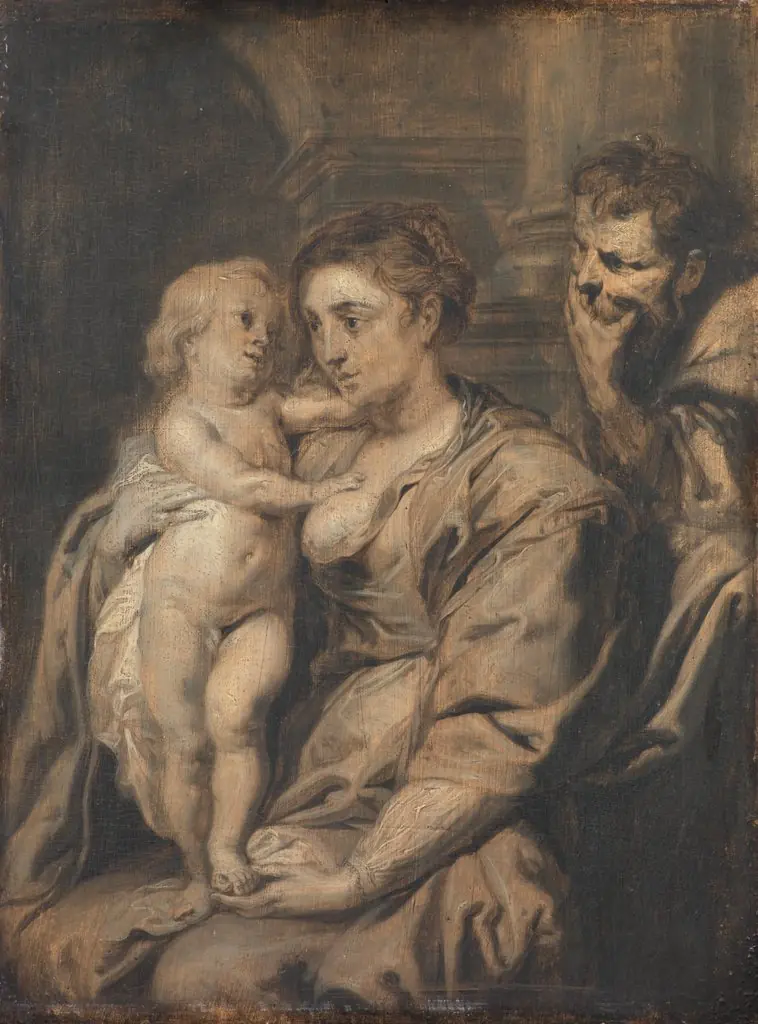
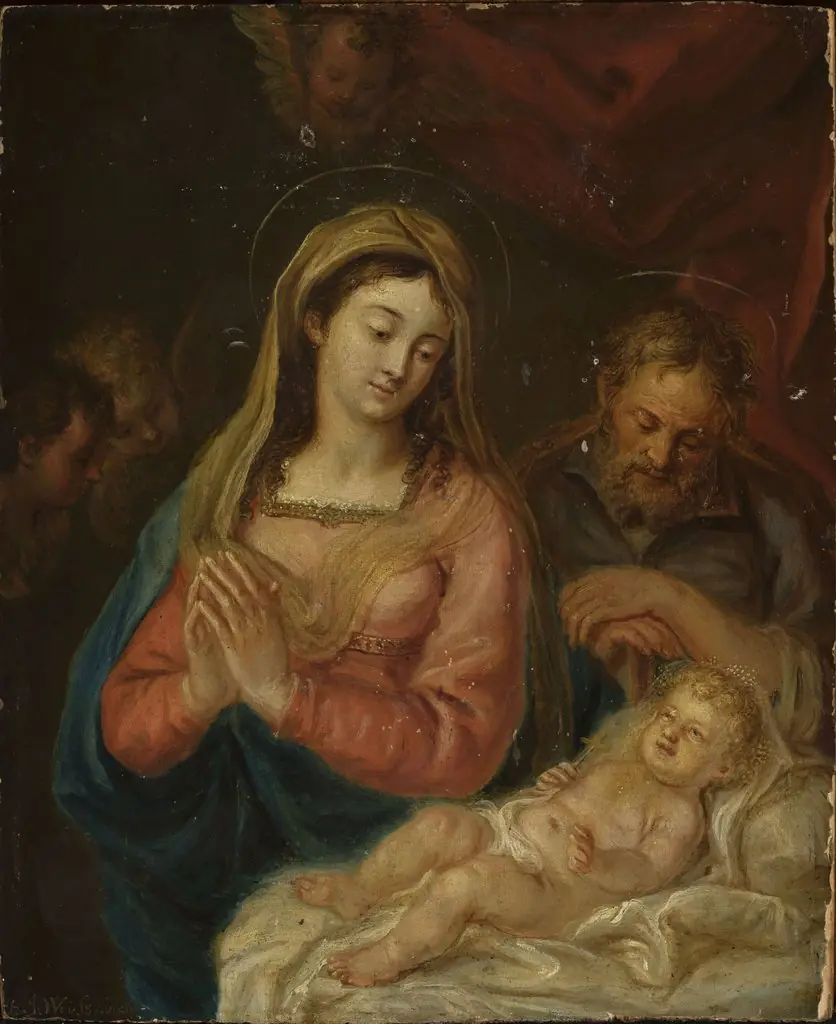
The work depicts the Holy Family, a central subject in religious art comprising the Virgin Mary, the Christ Child, and Saint Joseph. As a religious painting created in 1608, the composition focuses entirely on this familial grouping, presenting them as the main subject of the piece. The iconography adheres to traditional Christian representations of the Holy Family, emphasizing the domestic and spiritual unity of the three figures.
This depiction serves to illustrate the sacred nature of the family unit within the context of Christian theology.
History & Provenance
The work titled The Holy Family was created in 1608 by the artist KMS Spengler. It is a religious painting depicting Mary, the Christ Child, and Joseph, and was originally painted for the church of St. George in Augsburg. The painting measures 590 cm in height and 360 cm in width.
It entered the collection of the Statens Museum for Kunst at an unspecified date and remains part of that institution's holdings today.
The work is held in the collection of the Statens Museum for Kunst, where it is catalogued under the accession identifier for the painting. It has been exhibited in several venues, including a 2015 exhibition of early Baroque religious works at the museum and a 2019 loan to a special exhibition on Spengler’s oeuvre at the same institution.
Legacy
The painting has been part of the collection at the Statens Museum for Kunst since its acquisition, where it is recognized as a significant example of 17th-century religious art. Its composition depicting Mary, Christ Child, and Joseph has informed scholarly studies of Baroque domestic piety and influenced later interpretations of Holy Family subjects in European art. The work's formal qualities, particularly its dimensions of 590.0 cm by 360.0 cm, have been cited in analyses of spatial organization within devotional painting.
Legacy assessments note its role in shaping family-centered devotional imagery in the Nordic region, with curatorial commentary emphasizing its enduring presence in museum displays of religious art.
Overview
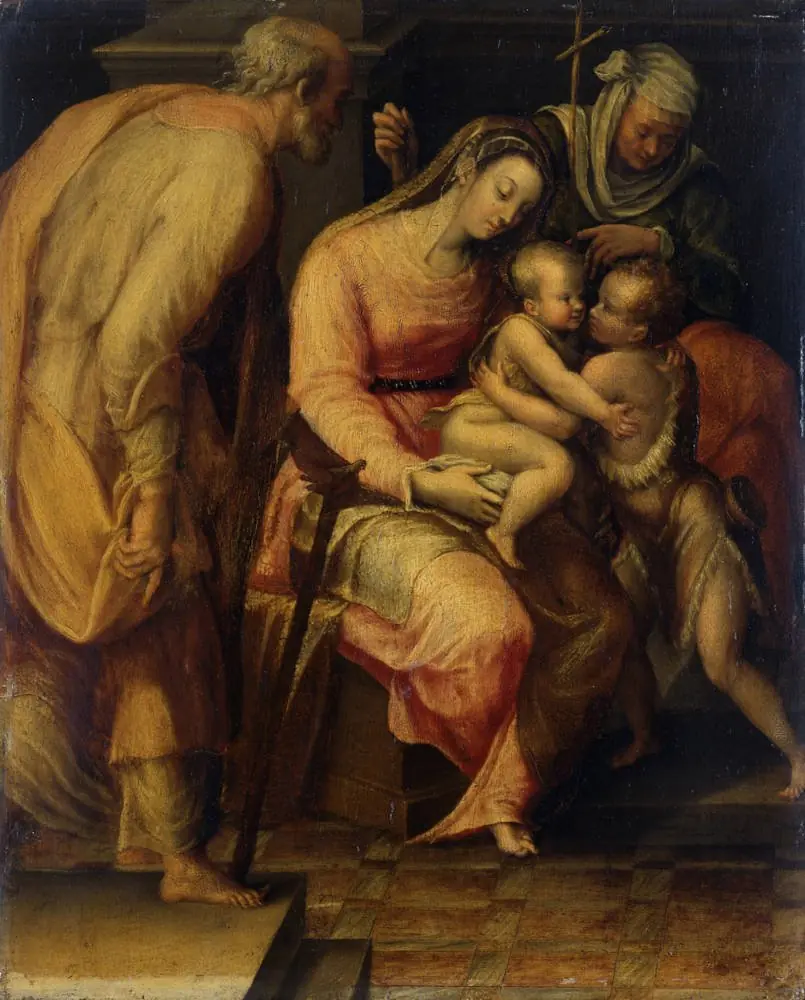
The work depicts a domestic interior in which a woman in a pink garment cradles a nude infant on her lap, while a second child stands nearby. A bearded male figure, positioned behind a pillar, watches the scene with a contemplative expression. The setting is rendered with a dark, red‑curtained backdrop and a stone floor, creating a subdued atmosphere.
Technique & Style
The painter employs chiaroscuro, contrasting illuminated areas with deep shadows to model forms and guide the viewer’s eye. Soft lighting highlights the mother’s face and the infant’s skin, while the surrounding environment recedes into darkness, enhancing the three‑dimensional effect and emotional intimacy.
Context
Set within a dimly lit interior, the composition reflects a tradition of religious domestic scenes that blend devotional content with everyday settings. The use of rich red drapery and stone flooring situates the figures within a modest yet dignified space typical of such iconography.
Artist & collection

- The Holy Family
 The Holy Family
 The Holy Family
 The Holy Family
 The Holy Family
 The Mystic Marriage of St Catherine
 The Holy Family with Saint Elizabeth, Saint John, and a Dove
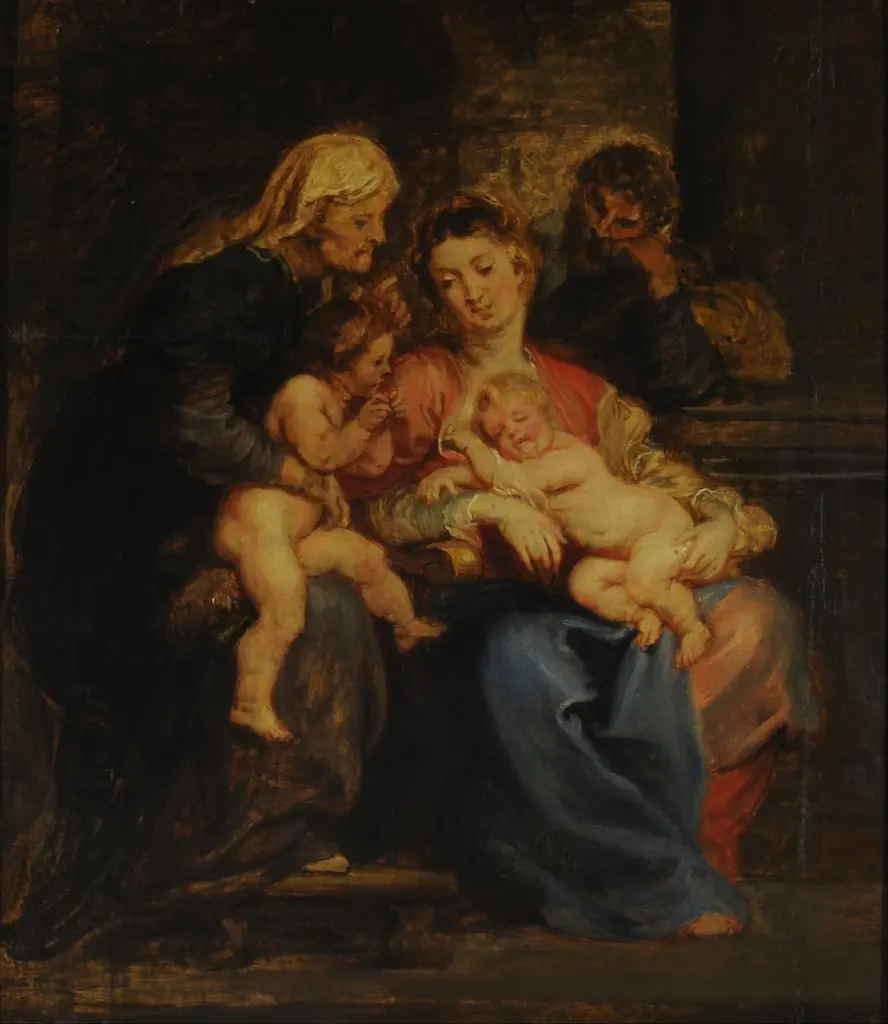 Holy Family with Saint Little John and Elizabetg
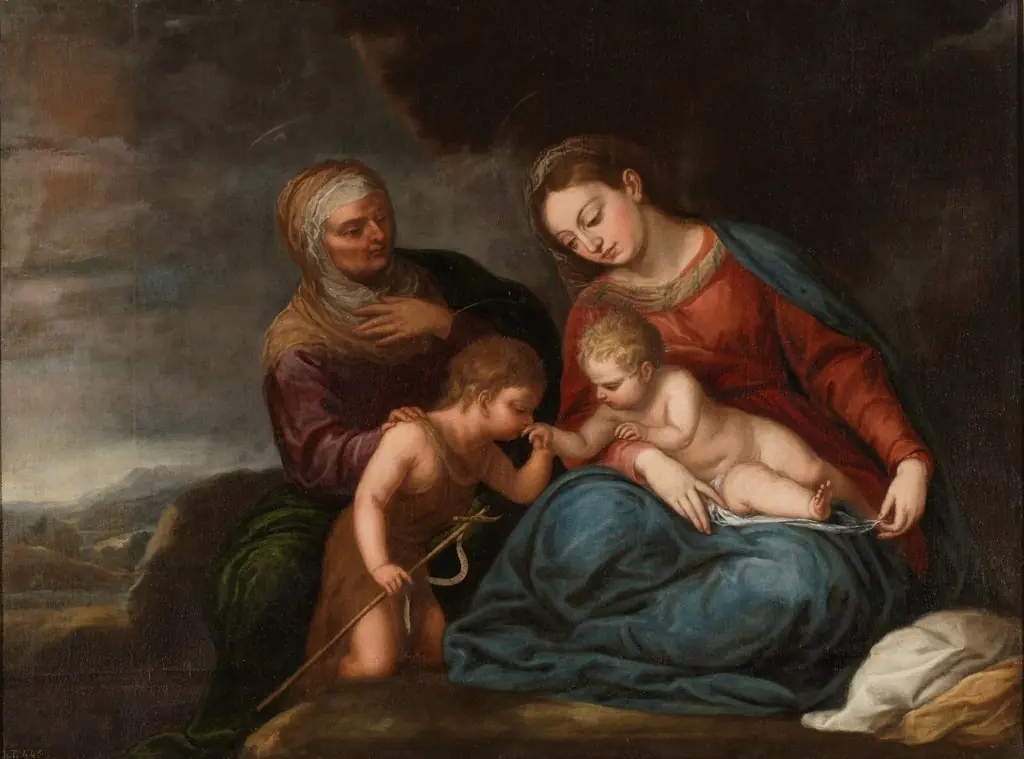 The Virgin and Child with Saints Elizabeth and John
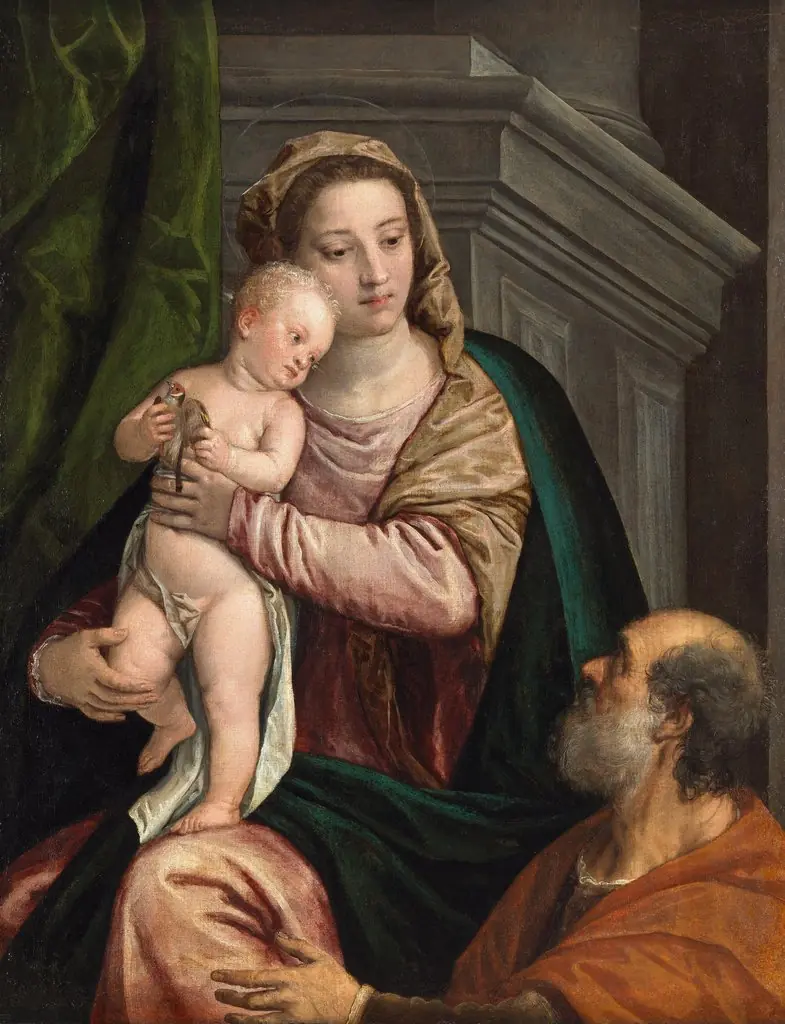 Die Heilige Familie
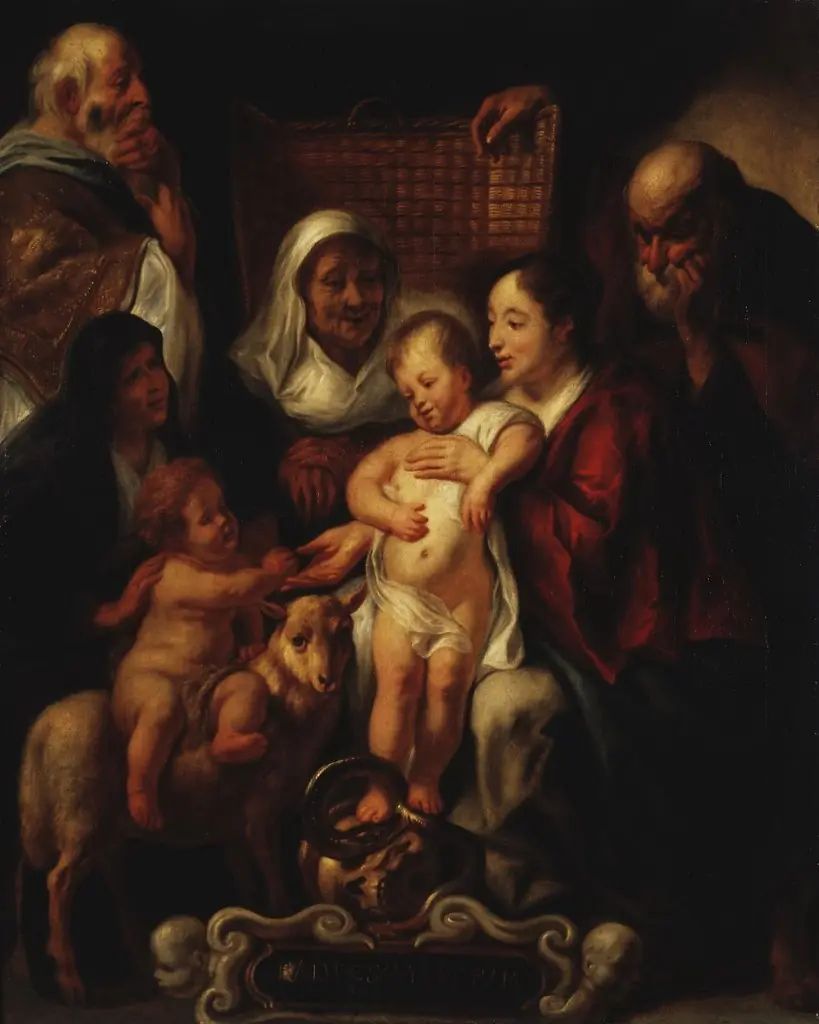 The Holy Family (Hermitage)
 Holy Family