Artwork
Heilige Familie
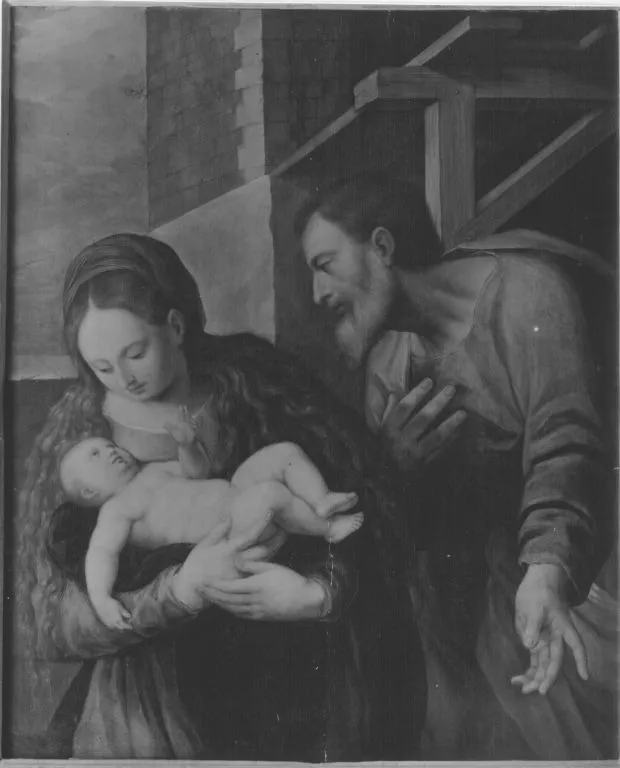
Heilige Familie is an unspecified painting. It dates from 1560 and is held in the collection of the Bavarian State Painting Collections.
About this work
Subject & Meaning
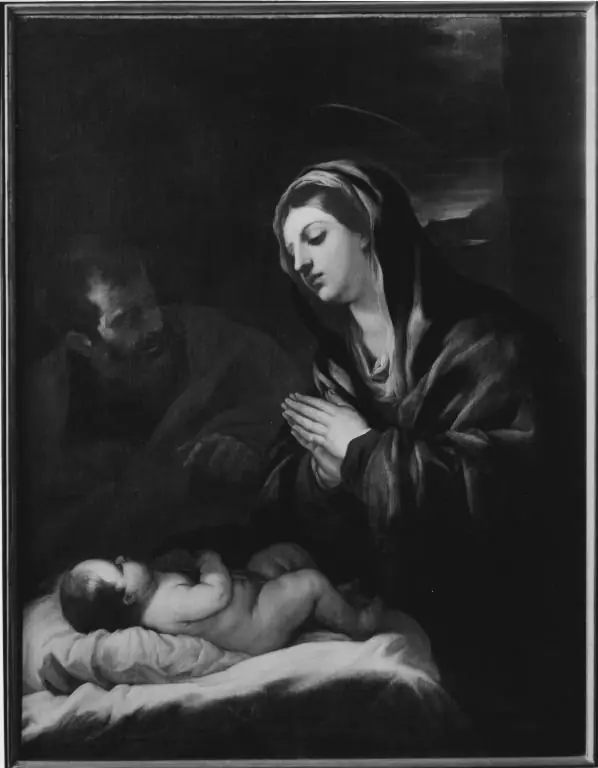
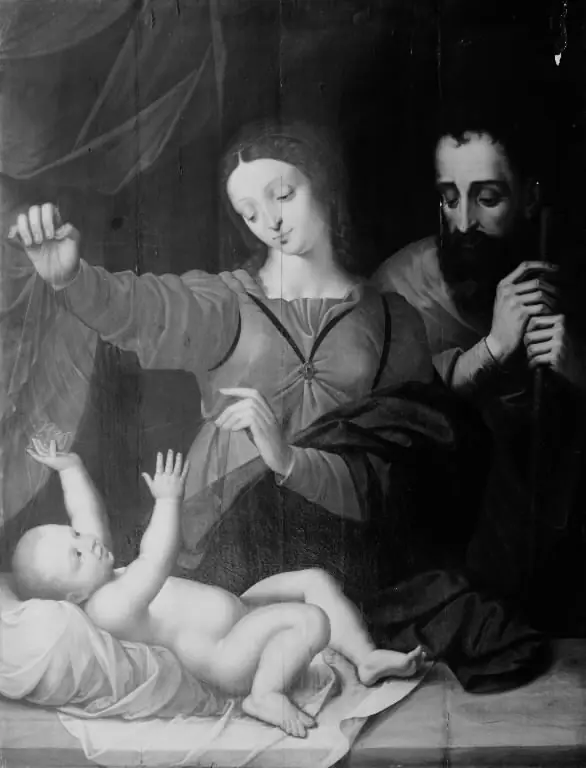
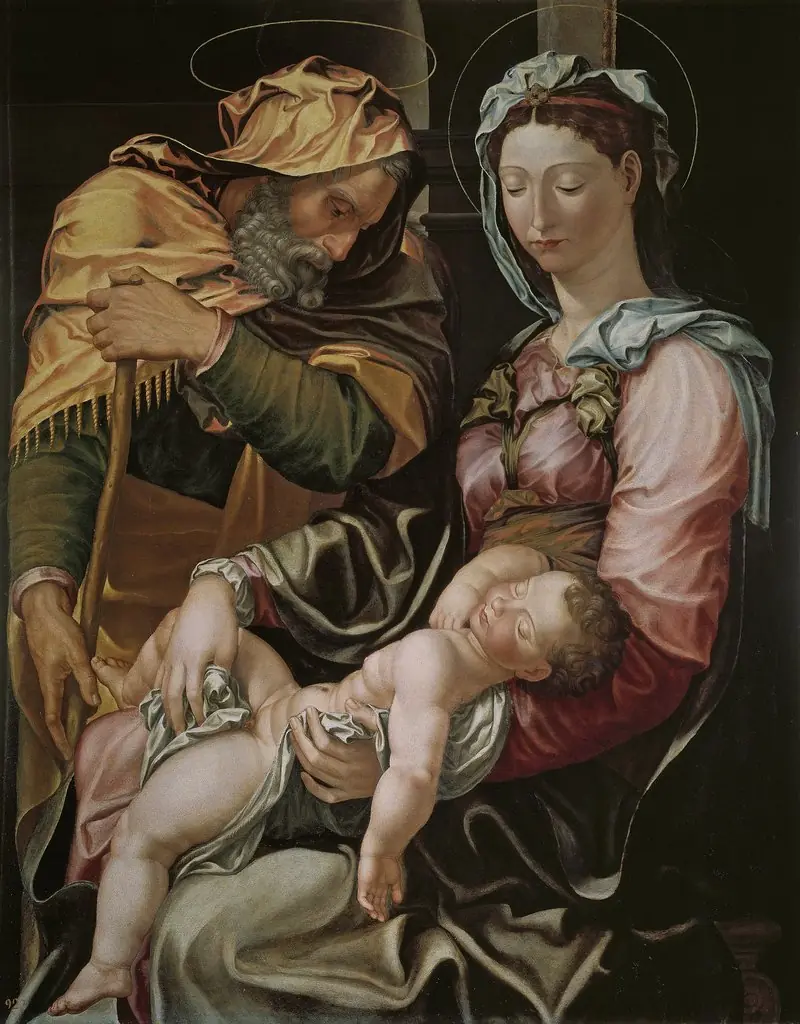
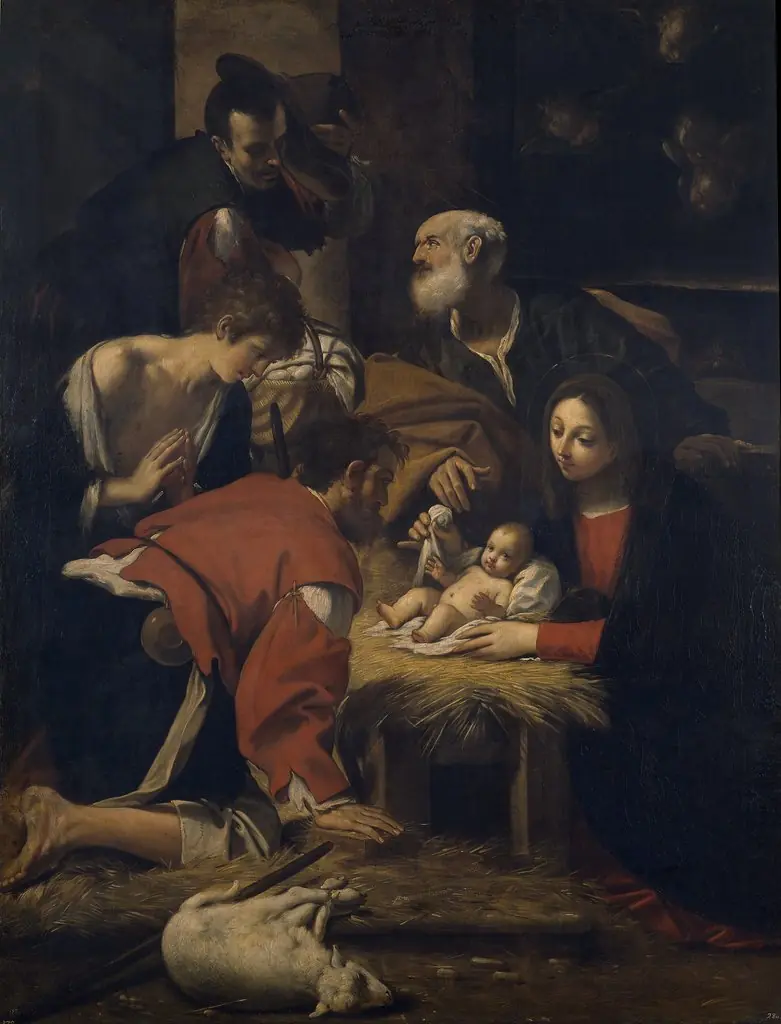
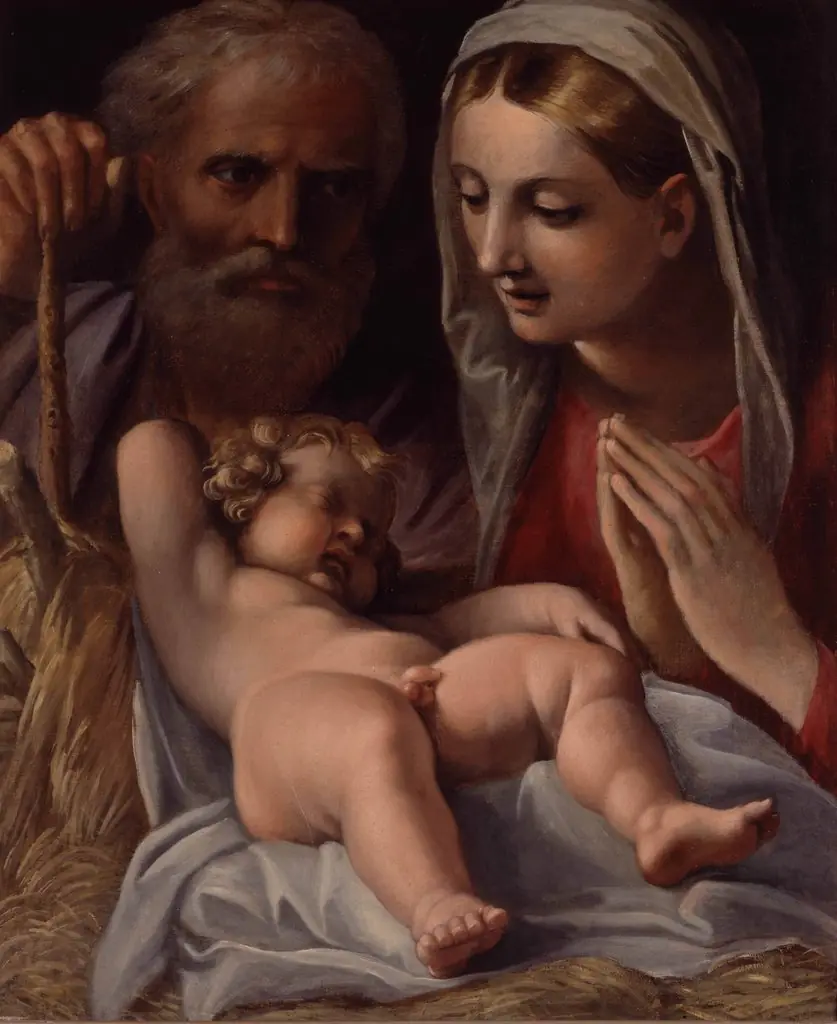
The painting depicts the Holy Family, a devotional subject grouping the Virgin Mary, the Christ Child, and Saint Joseph.
The painting depicts the Holy Family, a devotional subject grouping the Virgin Mary, the Christ Child, and Saint Joseph. In Christian iconography, this triad represents the earthly family of Jesus and serves as a model of piety, domestic harmony, and divine incarnation, with Mary symbolizing motherhood and grace, Joseph embodying paternal protection, and the Christ Child signifying the mystery of the Incarnation. The work belongs to the genre of religious art, situating it within the broader tradition of devotional imagery produced for both private contemplation and public veneration.
Technique & Style
Heilige Familie is classified as a painting on a relatively modest support, measuring 63 cm in height by 52 cm in width. The work belongs to the genre of religious art, with its main subject being the Holy Family, Mary, the Christ Child, and Joseph, rendered in a manner consistent with mid-sixteenth-century devotional panels. Created in 1560 by an Augsburg master, the small-scale format suggests an intimate, cabinet-style treatment typical of private religious imagery from the period, though the specific medium, ground, and current condition are not documented in the available sources.
History & Provenance
The painting known as Heilige Familie was created in 1560 by the Augsburg Master. This religious work, which depicts the Holy Family including Mary, the Christ Child, and Joseph, measures 63 cm in height and 52 cm in width. It is currently held within the collection of the Bavarian State Painting Collections and is located at the Alte Pinakothek.
The work is classified as a religious painting from the mid-16th century. Its creation is dated specifically to the year 1560, establishing its place within the artistic output of the Augsburg Master during that period.
The work is held at the Alte Pinakothek within the Bavarian State Painting Collections. Its inventory number is not specified in the sources. The painting was created in 1560 and has not been documented in any exhibition history according to the provided information.
Context
The work titled Heilige Familie belongs to the religious painting tradition of the 16th century, depicting Mary, Christ Child, and Joseph in a composition dated to 1560. It is attributed to the Augsburger Meister and housed in the Alte Pinakothek, part of the Bavarian State Painting Collections, where it is recognized as a significant example of devotional art from Augsburg. Scholars have examined its stylistic qualities within the context of Southern German Renaissance painting, emphasizing its role in understanding regional artistic practices and devotional imagery of the period.
The attribution and iconography of this painting have been discussed in relation to broader trends in Counter-Reformation religious art, with its composition reflecting devotional conventions of the time. Its inclusion in major collections and exhibitions underscores its importance in the study of Southern German art and the evolution of sacred subjects in early modern European painting.
Overview
Heilige Familie is a painted depiction of the Holy Family, presenting a mother cradling an infant while a bearded father leans protectively close. The figures are arranged in a compact group, the mother dressed in a dark outer garment over a lighter underlayer, and the child appears serene. The composition is anchored by the father’s arm resting on the mother’s shoulder, creating a sense of intimacy.
Artist & collection