Artwork
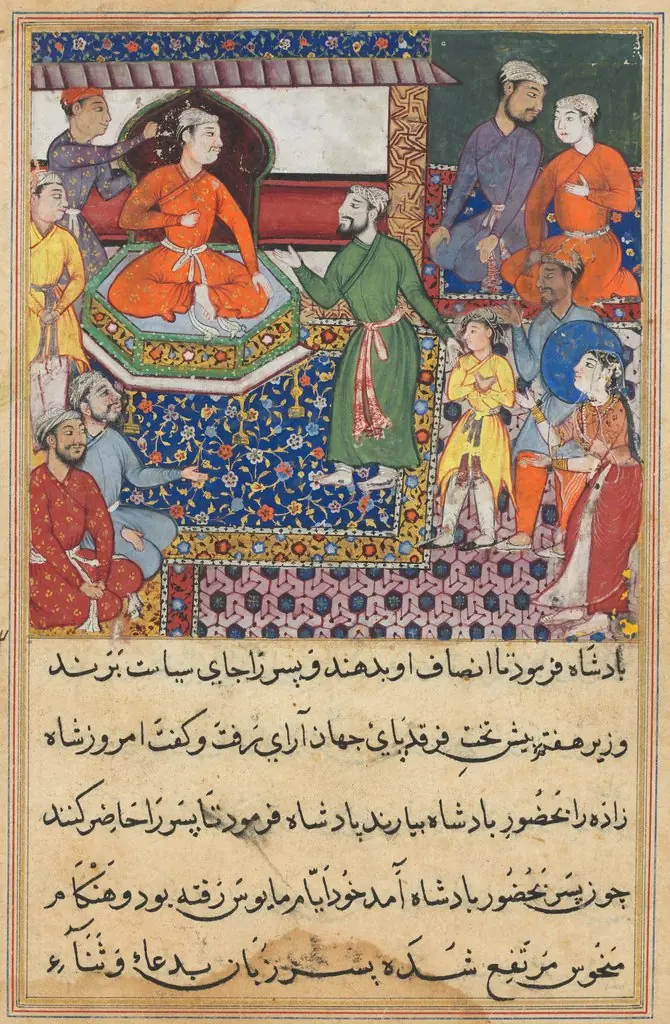
The marriage of ‘Ubaid, son of a merchant of Tirmiz, from a Tuti-nama (Tales of a Parrot): Forty-second Night
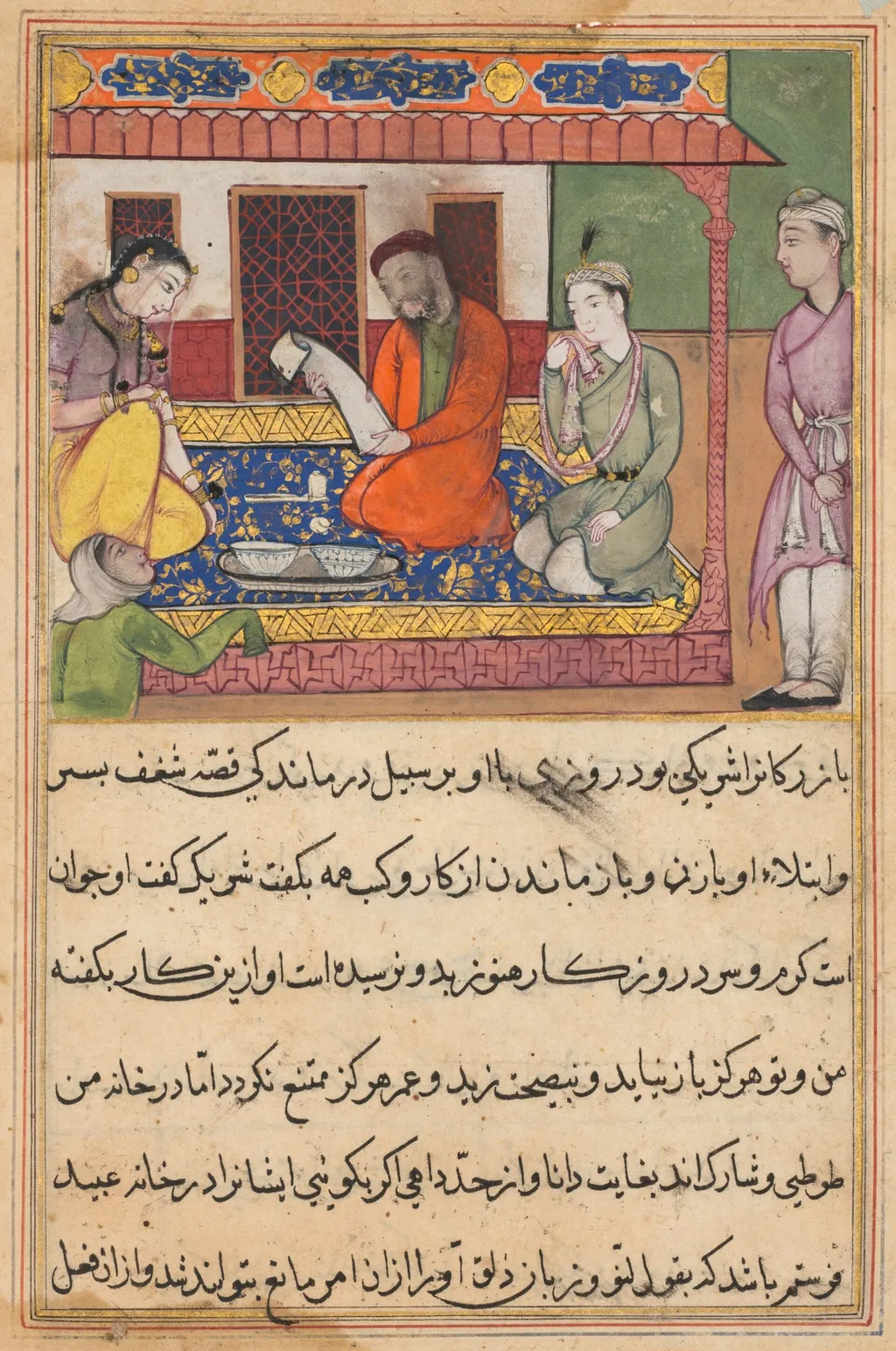
The marriage of ‘Ubaid, son of a merchant of Tirmiz, from a Tuti-nama (Tales of a Parrot): Forty-second Night is an unspecified painting. It dates from 1560 and is held in the collection of the Cleveland Museum of Art. The work portrays a domestic gathering of five figures arranged around a low table.
About this work
History & Provenance
It is currently held in the collection of the Cleveland Museum of Art, where it is cataloged under the accession number 1962.
This painting, titled The marriage of ‘Ubaid, son of a merchant of Tirmiz, from a Tuti-nama (Tales of a Parrot): Forty-second Night, was created in 1560 within the Mughal Empire. The work is attributed to an unknown artist and is classified as a painting. It is currently held in the collection of the Cleveland Museum of Art, where it is cataloged under the accession number 1962.279.268.b. The specific commission details and the original patron's identity are not recorded in the available documentation.
The work is held by the Cleveland Museum of Art, where it is recorded as inventory number 1962.279.268.b. The painting entered the museum’s collection in 1962, aligning with its Mughal Empire origin dated to circa 1560. No further exhibition history is recorded in the provided sources.
Legacy
The marriage of ‘Ubaid, son of a merchant of Tirmiz, from a Tuti-nama (Tales of a Parrot): Forty-second Night has been recognized as a significant example of Mughal-era miniature painting, influencing later Indian artistic traditions through its compositional clarity and narrative detail. Its inclusion in the Cleveland Museum of Art collection has ensured continued scholarly attention and public display, contributing to renewed interest in Persianate storytelling imagery within museum curation and academic study of South Asian art.
Overview
The work portrays a domestic gathering of five figures arranged around a low table. Central to the composition is a man in an orange robe who holds a scroll, suggesting a literary or ceremonial function. The setting includes a patterned blue‑and‑gold cloth on the table, a window and a doorway that frame the interior space, and a muted palette that highlights the varied costumes of the participants.
Subject & Meaning
The scene likely illustrates a moment from the Persian narrative collection known as the Tuti‑nama, specifically the “Forty‑second Night” episode involving Ubaid, son of a merchant of Tirmiz. The presence of the scroll and the celebratory posture of the figures imply a reading or storytelling event, possibly a communal recitation of the tale.
Technique & Style
Executed in a flat, decorative manner, the painting employs bold, saturated colors, orange, yellow, green, and pink, to differentiate the characters. The patterned tablecloth and architectural elements are rendered with stylized linear detail rather than realistic perspective, a hallmark of manuscript illustration traditions that emphasize narrative clarity over naturalism.
Context
The Tuti‑nama, or “Tales of a Parrot,” compiled moral stories for instruction and entertainment. This particular illustration captures the social practice of communal storytelling, where listeners gathered in a private chamber to hear moral lessons conveyed through vivid narrative episodes.
Artist & collection

- The marriage of ‘Ubaid, son of a merchant of Tirmiz, from a Tuti-nama (Tales of a Parrot): Forty-second Night
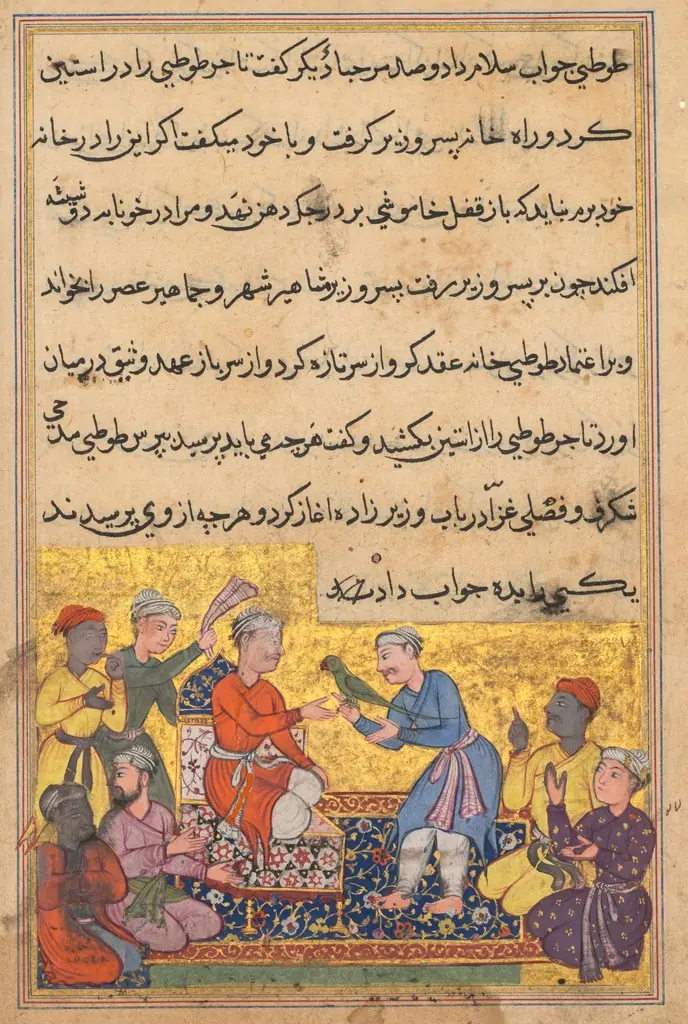 The magic parrot of the merchant talks to the vizier’s son, from a Tuti-nama (Tales of a Parrot): Tenth Night
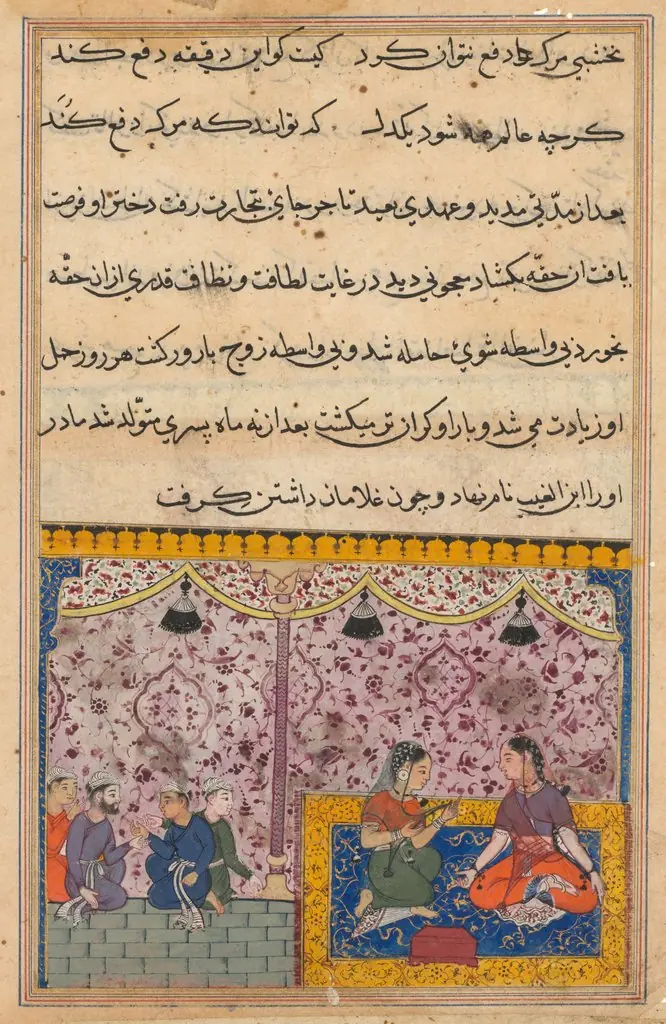 The merchant’s daughter gives birth to a son as a result of eating out of the box. The clever child recognizes the false gems from true, from a Tuti-nama (Tales of a Parrot): Twenty-third Night
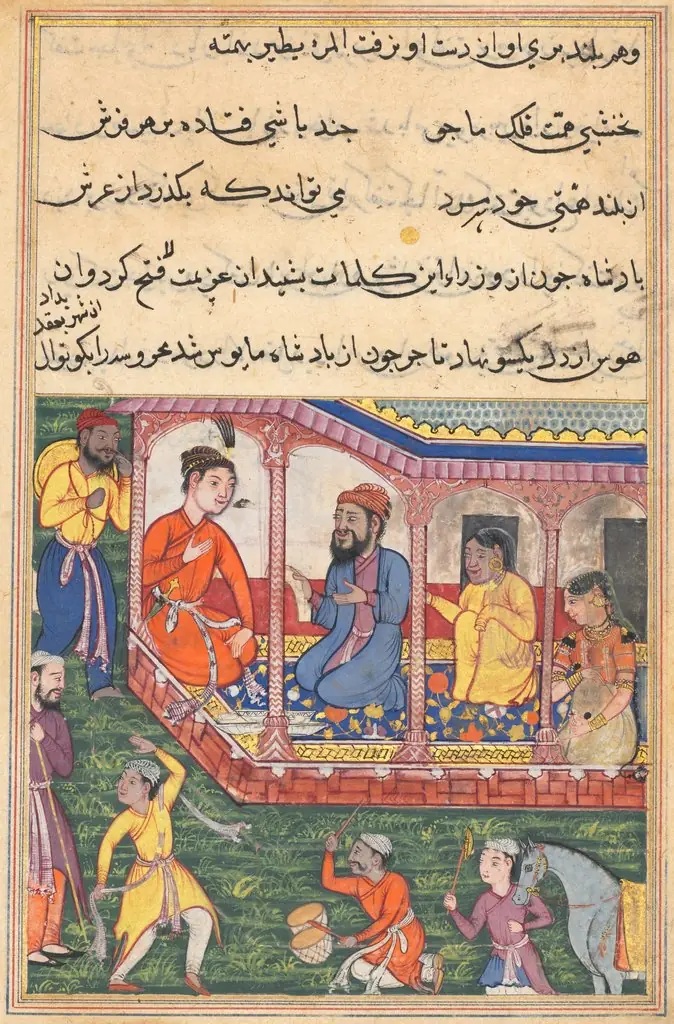 Mahrusa’s marriage to the prefect of the city, from a Tuti-nama (Tales of a Parrot): Thirty-sixth Night
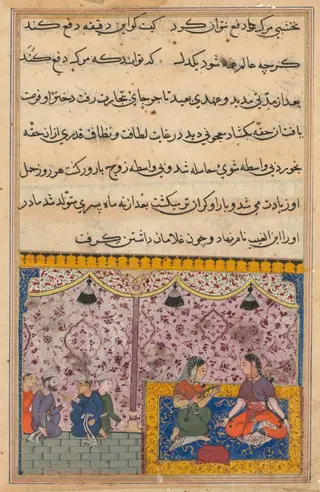 The merchant’s daughter gives birth to a son as a result of eating out of the box. The clever child recognizes the false gems from true, from a Tuti-nama (Tales of a Parrot): Twenty-third Night
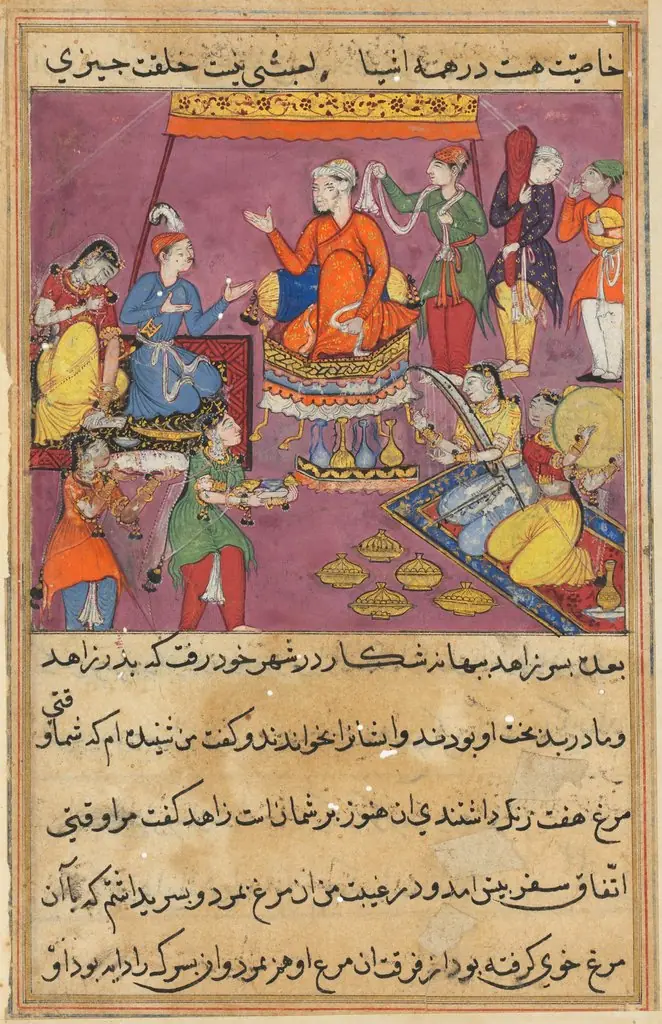 The king gives his daughter in marriage to the pious man’s son, from a Tuti-nama (Tales of a Parrot): Fifty-second Night
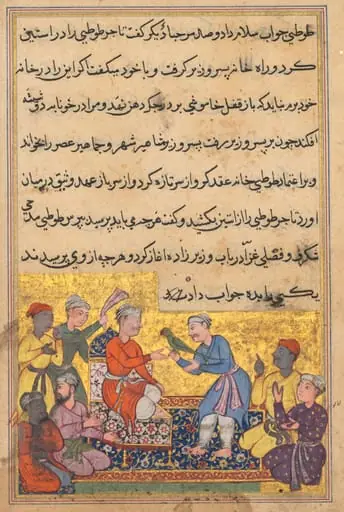 The magic parrot of the merchant talks to the vizier’s son, from a Tuti-nama (Tales of a Parrot): Tenth Night
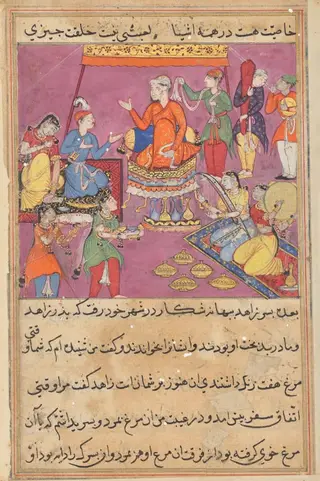 The king gives his daughter in marriage to the pious man’s son, from a Tuti-nama (Tales of a Parrot): Fifty-second Night
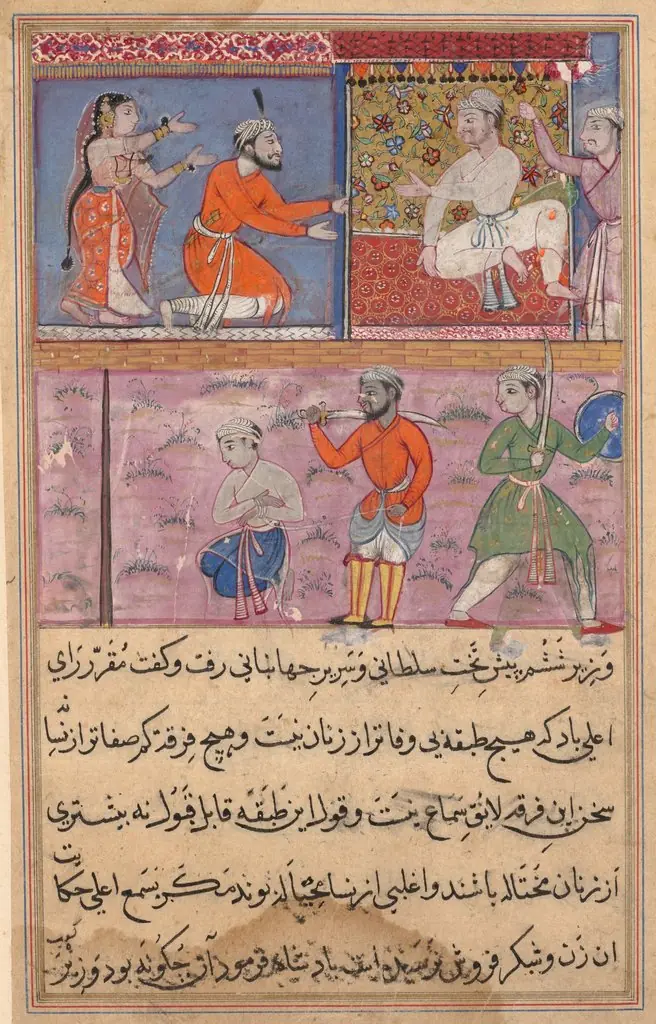 Page from Tales of a Parrot (Tuti-nama): text page
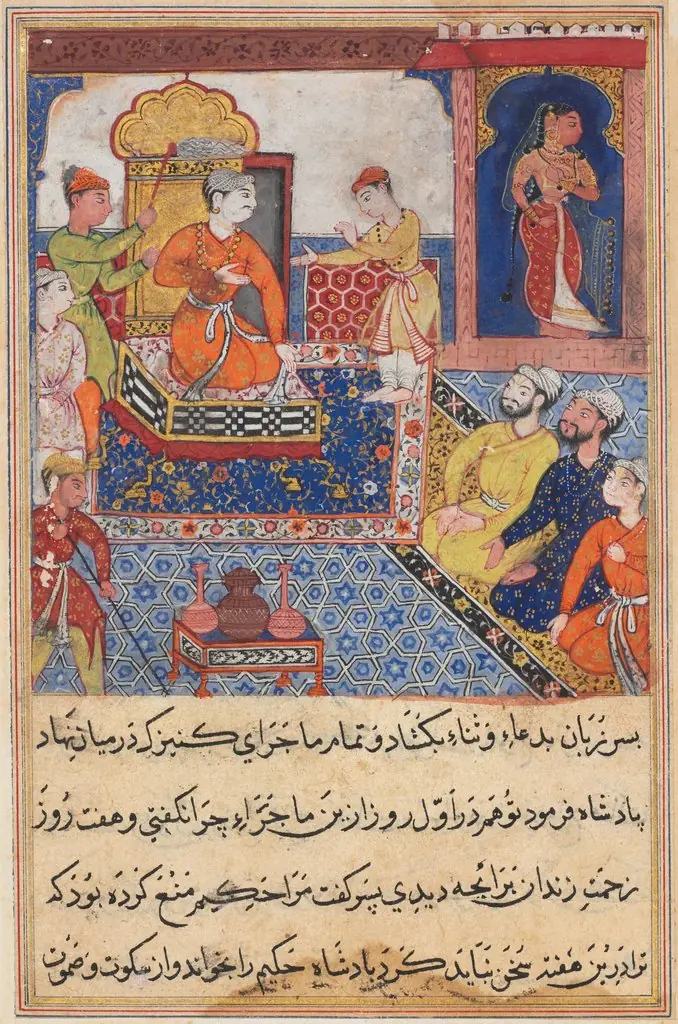 The young prince recounts his experiences to his father, the king, from a Tuti-nama (Tales of a Parrot): Eighth Night
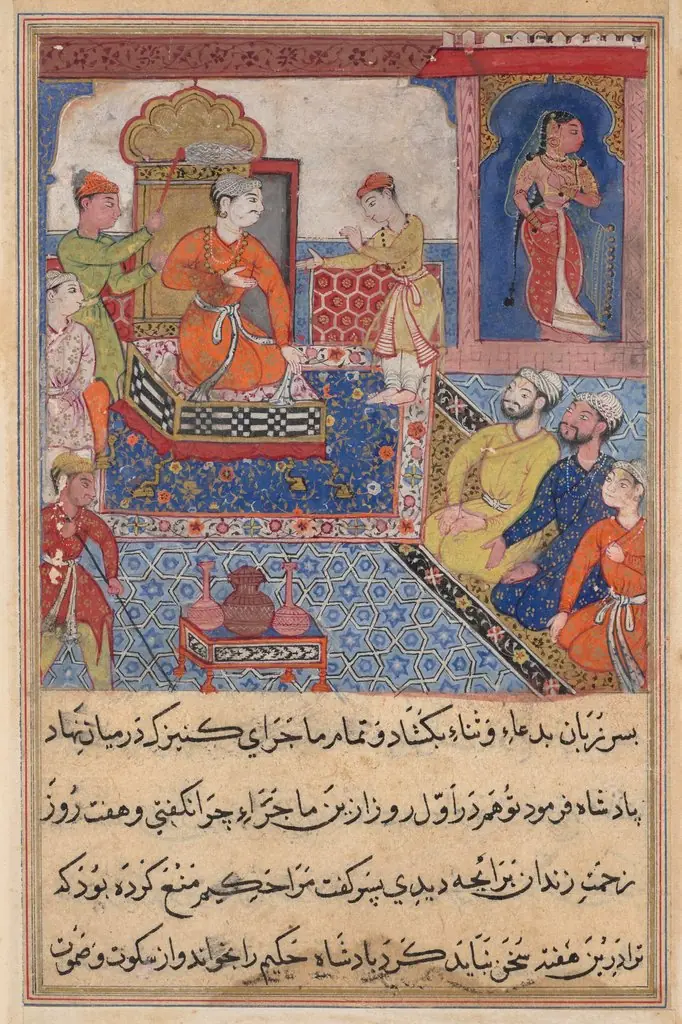 Page from Tales of a Parrot (Tuti-nama): text page
 The handmaiden again pleads for the death of the prince, from a Tuti-nama (Tales of a Parrot): Eighth Night