Artwork
The merchant’s daughter gives birth to a son as a result of eating out of the box. The clever child recognizes the false gems from true, from a Tuti-nama (Tales of a Parrot): Twenty-third Night
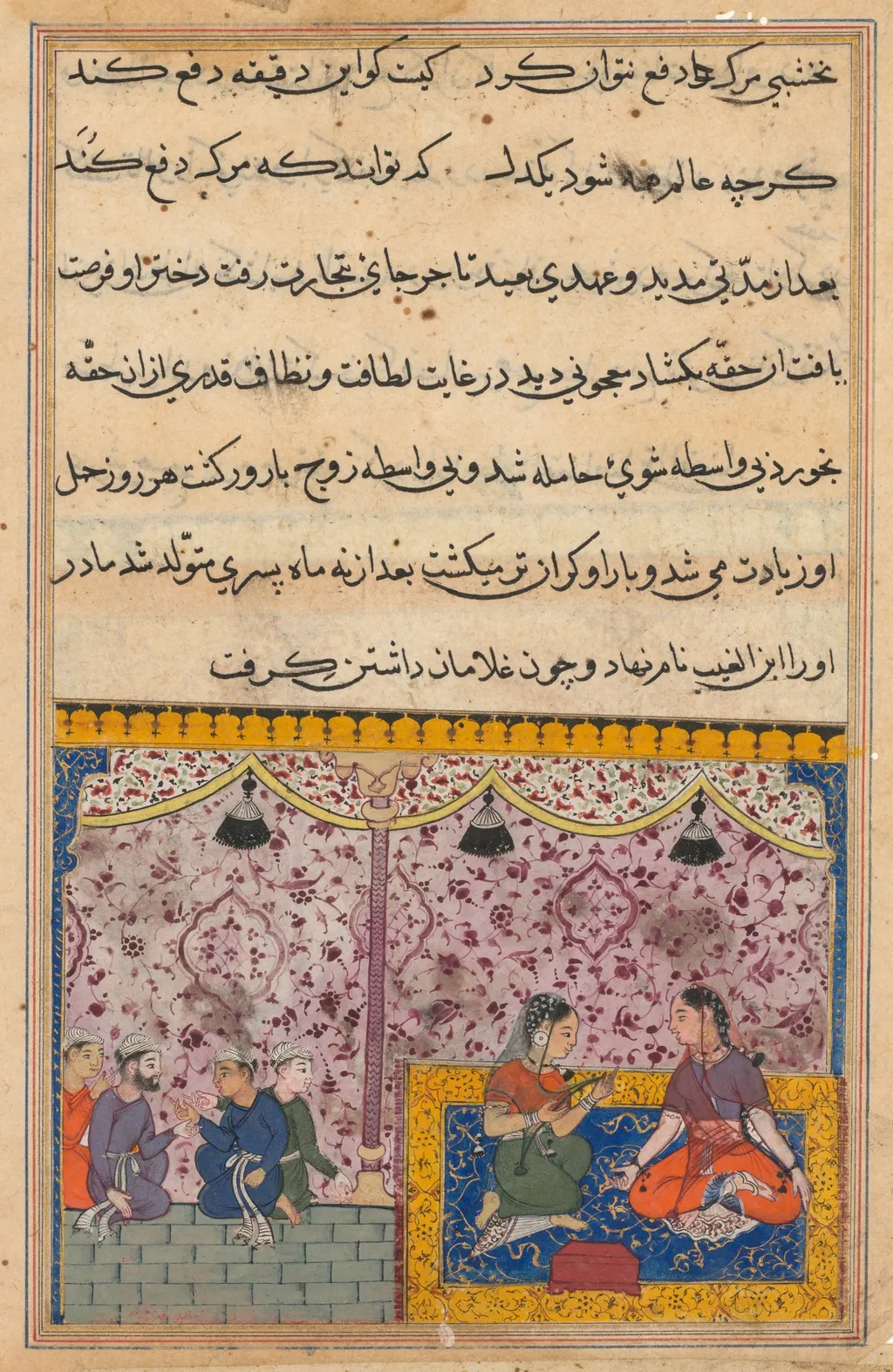
The merchant’s daughter gives birth to a son as a result of eating out of the box. The clever child recognizes the false gems from true, from a Tuti-nama (Tales of a Parrot): Twenty-third Night is an unspecified painting. It dates from 1560 and is held in the collection of the Cleveland Museum of Art. The work illustrates a domestic interior where a woman, seated on a patterned blue‑yellow blanket, is in the act of childbirth.
About this work
Subject & Meaning
Together, the narrative episode underscores the consequences of indulgence and the virtue of clear judgment.
The painting illustrates the twenty‑third night of the Tuti‑nama, depicting the merchant’s daughter who, after eating from a mysterious box, gives birth to a son. The infant, already perceptive, is shown distinguishing false gems from genuine ones. The scene visualizes the tale’s moral contrast between deceit and discernment: the box symbolizes temptation or trickery that leads to unintended consequence, while the child’s ability to discern true value represents innate wisdom and the triumph of truth over falsehood. Together, the narrative episode underscores the consequences of indulgence and the virtue of clear judgment.
Technique & Style
The painting was executed in 1560 using tempera and gold leaf on paper, a technique characteristic of Mughal manuscript illumination. The support is paper, and the work shows fine line work and delicate handling of color, with stylized figures and flattened perspective typical of the period. The composition emphasizes narrative clarity, and the formal qualities reflect the intricate decorative patterning and subtle gradations of tone found in Persian-influenced Indian art. The condition is stable, with only minor surface wear noted in the museum's conservation records.
The painting is housed at the Cleveland Museum of Art, where it remains part of their collection of South Asian manuscripts.
History & Provenance
The painting is dated to 1560 and was produced in the Mughal Empire as an illustration for the Tuti-nama manuscript; the artist remains unidentified. It is one of the illustrations from the Tuti-nama series. It entered the Cleveland Museum of Art in 1962 and is catalogued under accession number 1962.279.161.b, where it is currently housed. No further details about its earlier ownership, commission, or subsequent provenance are recorded in the available sources.
The painting is housed in the Cleveland Museum of Art, accessioned under the identifier 1962.279.161.b. It was created in 1560 within the Mughal Empire and has been part of the museum’s collection since its acquisition, though it has not been featured in any documented exhibition according to available records.
Context
The painting, dated 1560 and created in the Mughal Empire, depicts a narrative from the Tuti-nama where the merchant’s daughter bears a son after eating from a box, and her child discerns false gems from true ones. It is part of the Cleveland Museum of Art's collection and exemplifies Mughal artistic engagement with Persianate literary traditions.
Scholarship situates this work within the broader context of 16th-century Mughal manuscript painting, highlighting its role in cross-cultural storytelling and visual innovation.
The artist, attributed to an anonymous Mughal painter, reflects the period's collaborative and often unattributed workshop practices, aligning with the stylistic conventions of manuscript illustration in the imperial court.
Legacy
The painting has been cited as an early example of narrative visual storytelling that blends moral allegory with intricate detail, influencing later manuscript illuminations in the Indian subcontinent. Its depiction of a clever child discerning true gems from false ones has been referenced in studies of visual pedagogy within Mughal artistic traditions. The work is part of the Cleveland Museum of Art collection and is documented in scholarly analyses of 16th‑century Indian painting.
Overview
The work illustrates a domestic interior where a woman, seated on a patterned blue‑yellow blanket, is in the act of childbirth. Surrounding figures gather on a muted gray brick floor, their attention focused on the central event. The composition is framed by a pink, flower‑decorated wall edged with a vivid yellow‑red border, creating a lively visual environment.
Artist & collection

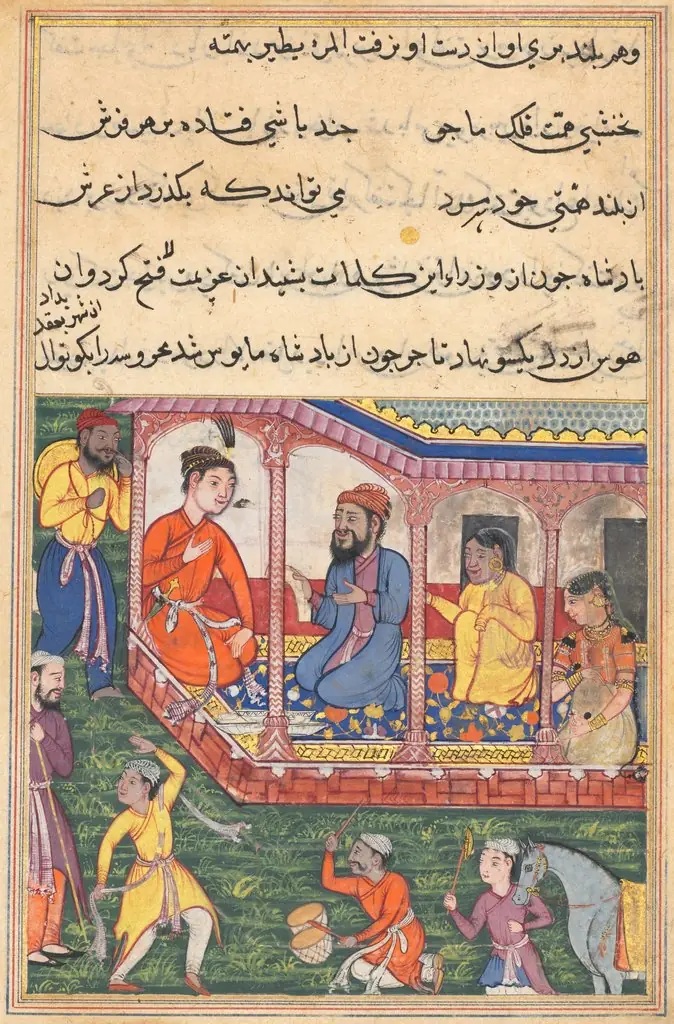 Mahrusa’s marriage to the prefect of the city, from a Tuti-nama (Tales of a Parrot): Thirty-sixth Night
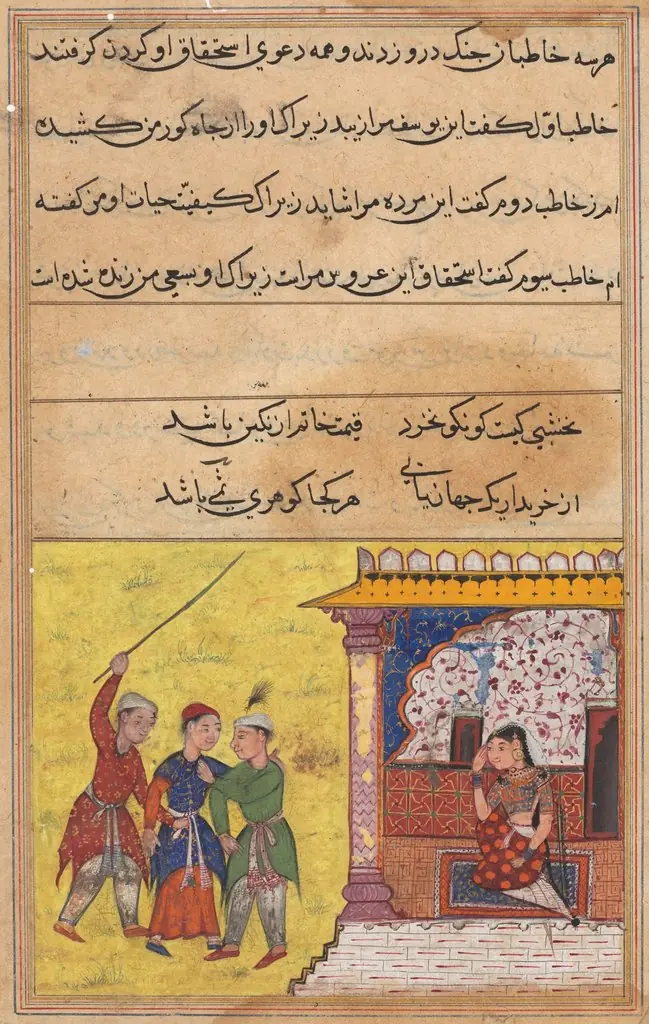 The three suitors again begin to quarrel among themselves for the hand of the devotee’s daughter, from a Tuti-nama (Tales of a Parrot): Twentieth Night
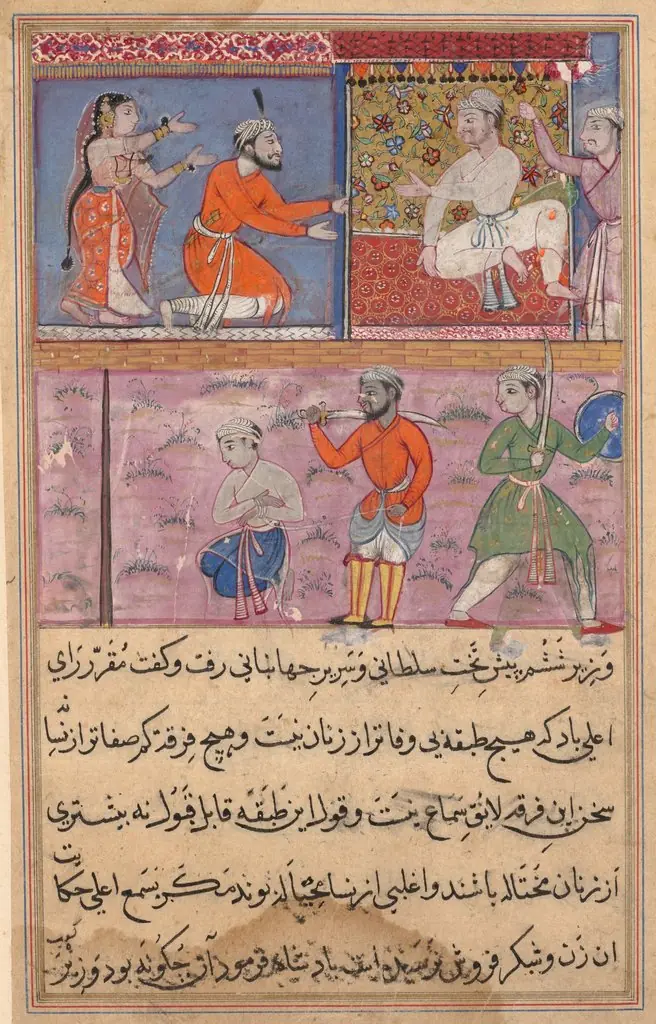 Page from Tales of a Parrot (Tuti-nama): text page
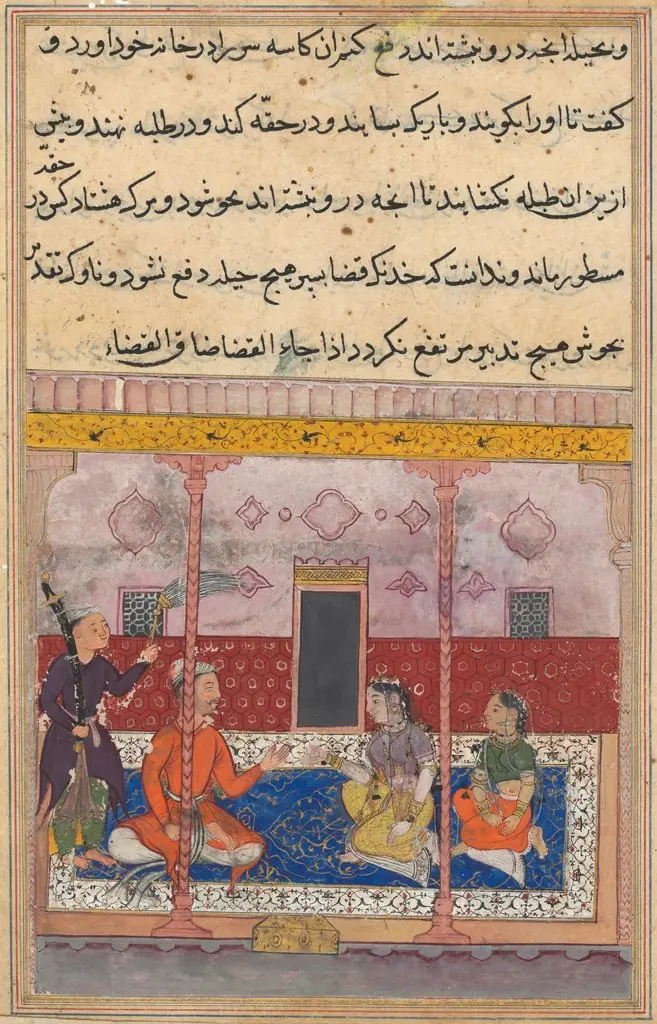 The merchant has the hateful skull ground and put into a box, from a Tuti-nama (Tales of a Parrot): Twenty-third Night
 The merchant has the hateful skull ground and put into a box, from a Tuti-nama (Tales of a Parrot): Twenty-third Night
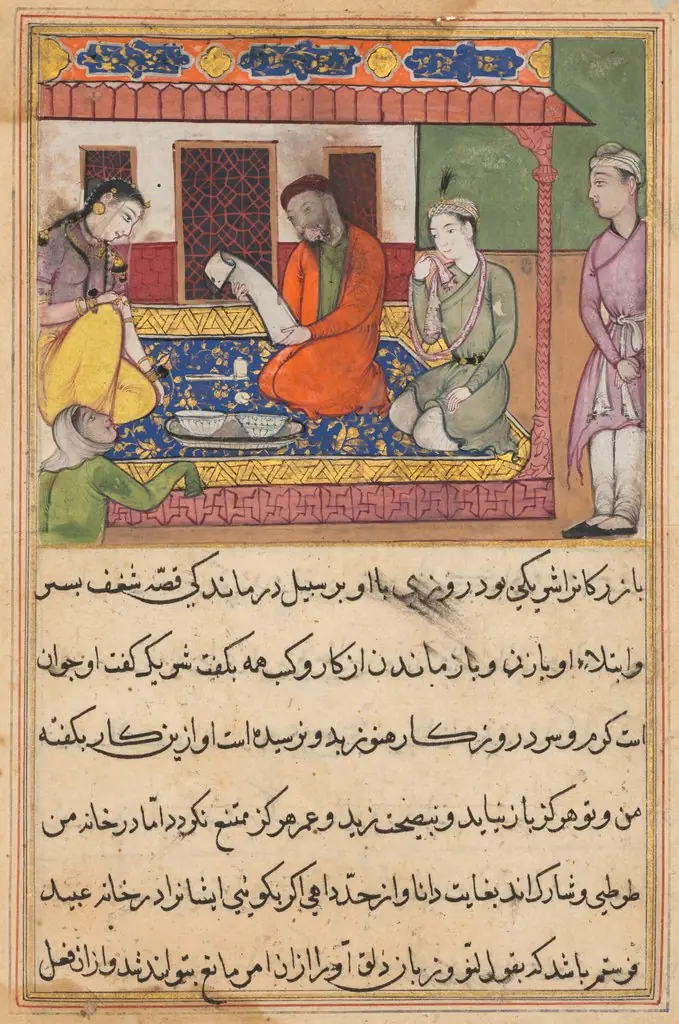 The marriage of ‘Ubaid, son of a merchant of Tirmiz, from a Tuti-nama (Tales of a Parrot): Forty-second Night
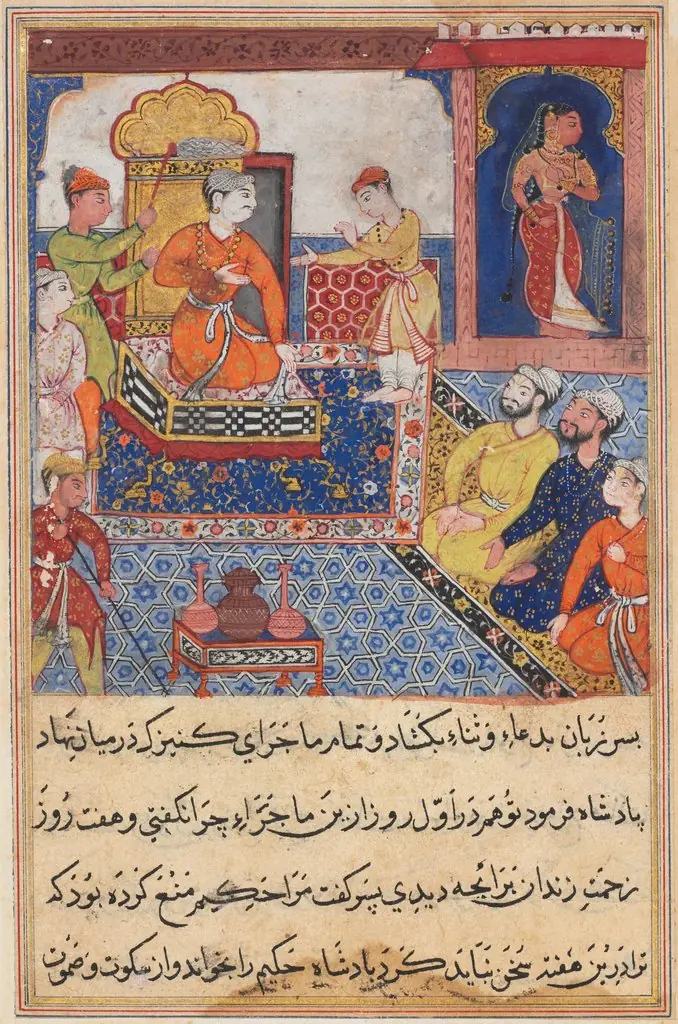 The young prince recounts his experiences to his father, the king, from a Tuti-nama (Tales of a Parrot): Eighth Night
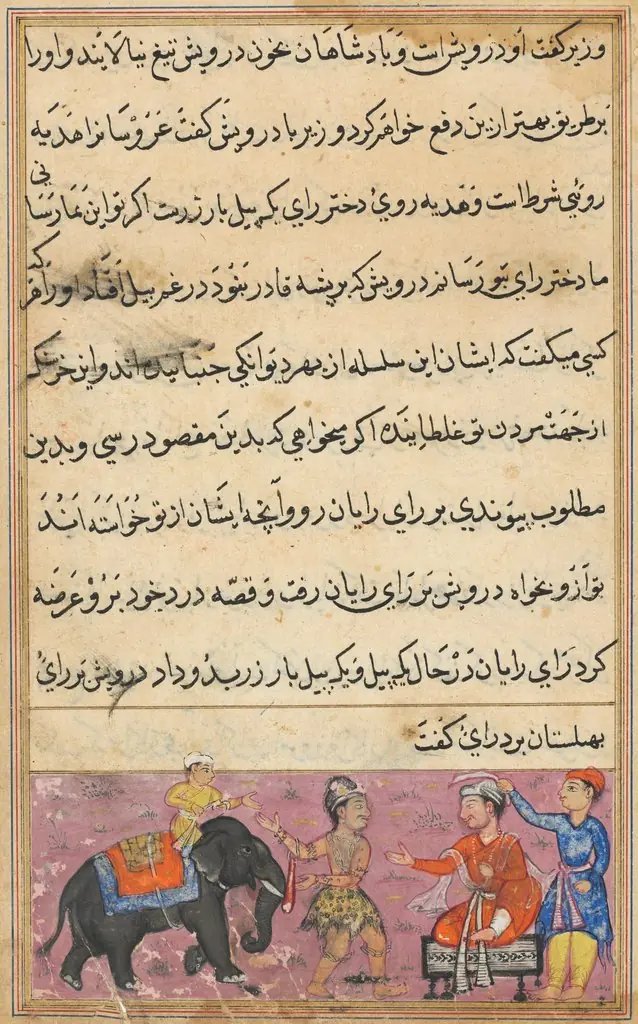 The dervish brings in as dowry an elephant laden with gold, from a Tuti-nama (Tales of a Parrot): Seventh Night
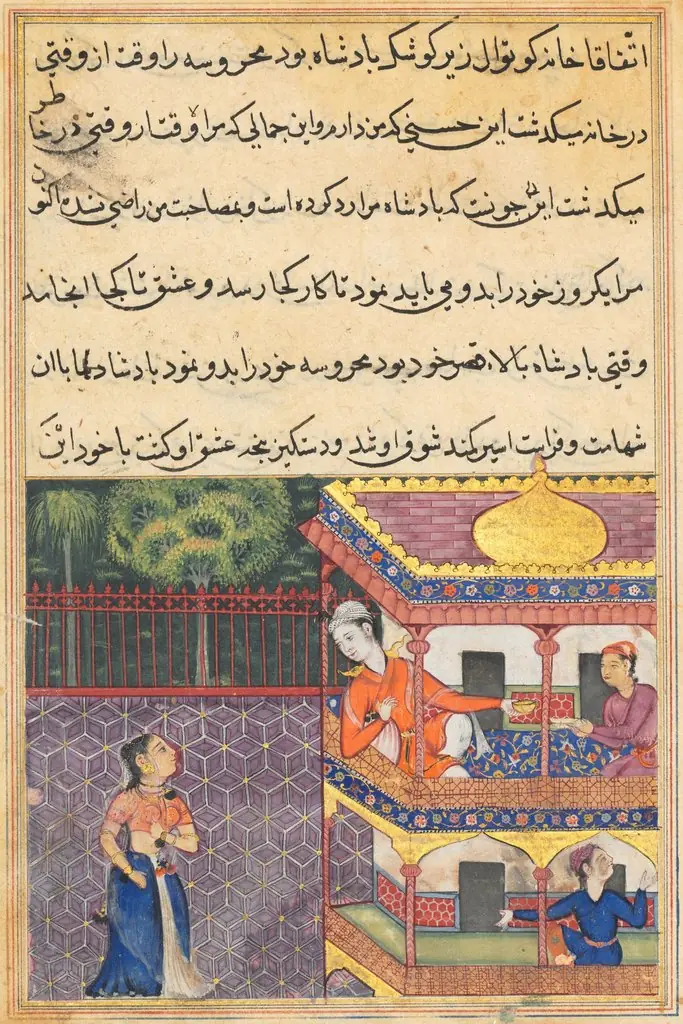 The king of Zabul sees Mahrusa from his palace balcony, from a Tuti-nama (Tales of a Parrot): Thirty-sixth Night
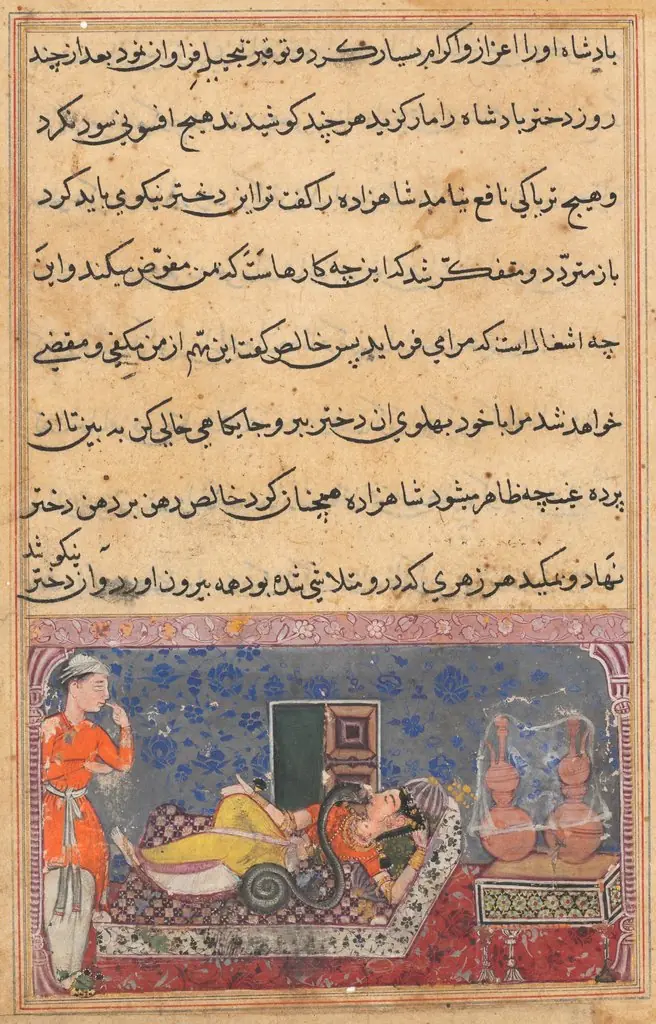 Khalis repays the prince for his kindness by changing into a snake and sucking the poison from the king’s daughter, from a Tuti-nama (Tales of a Parrot): Eighteenth Night