Artwork
Page from Tales of a Parrot (Tuti-nama): text page
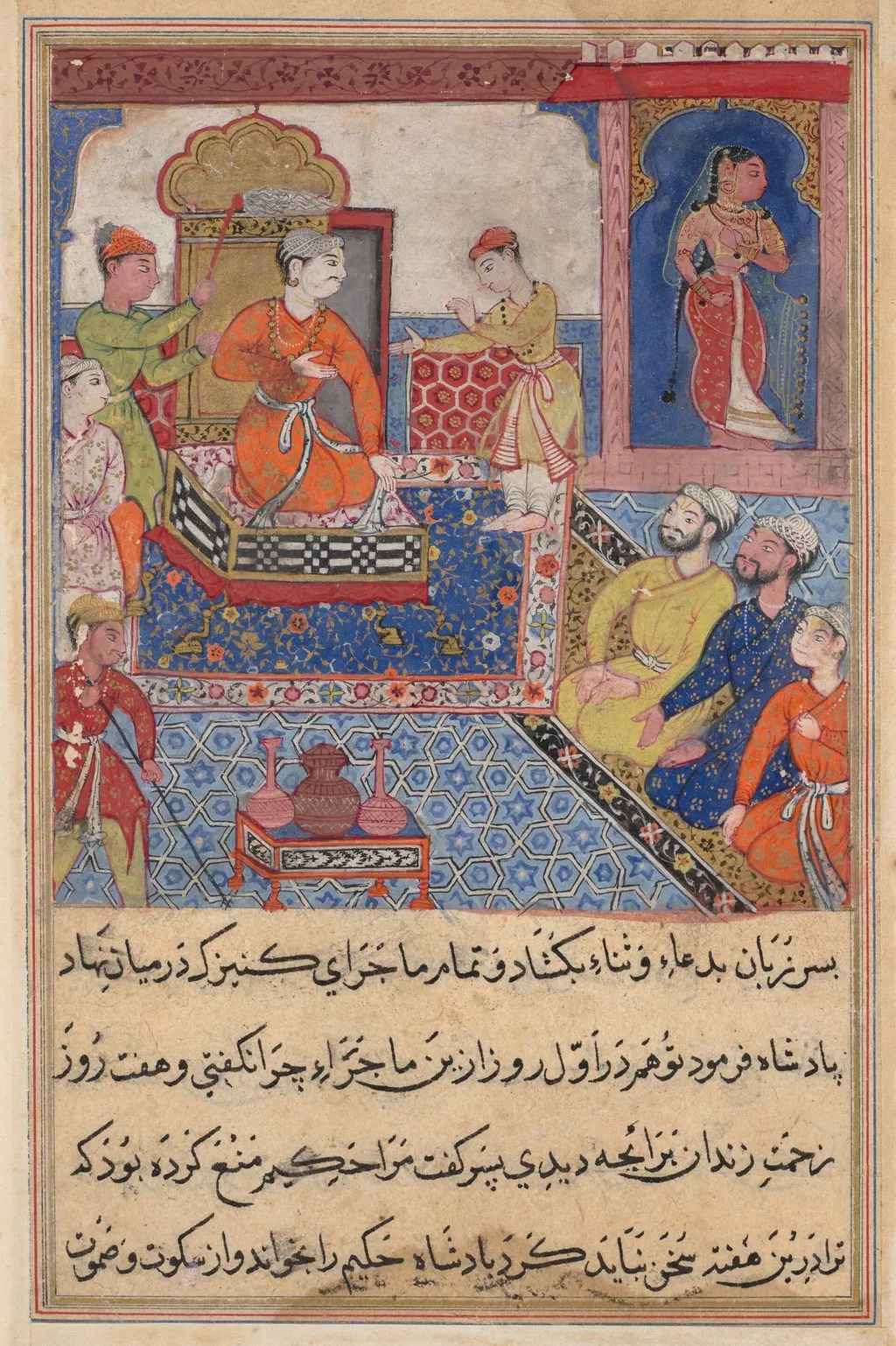
Page from Tales of a Parrot (Tuti-nama): text page is an unspecified painting. It dates from 1560 and is held in the collection of the Cleveland Museum of Art. The work is a painted folio from the illustrated manuscript known as Tales of a Parrot (Tuti‑nama).
About this work
Technique & Style
Stylistic analysis identifies Persianate influences blended with local regional aesthetics, evident in ornamental borders and narrative framing.
The painting technique employed in this work reflects Mughal artistic practice, with fine brushwork applied on paper support. Pigment application shows careful handling typical of manuscript illumination, preserving delicate tonal gradations. Formal qualities include intricate compositional balance and stylized figures rendered in muted earth tones, characteristic of 16th-century Indian manuscript painting.
The page exhibits minor handling marks consistent with archival display, though structural integrity remains stable. Stylistic analysis identifies Persianate influences blended with local regional aesthetics, evident in ornamental borders and narrative framing.
The support material is paper, and the medium consists of pigments used in manuscript illumination. The condition shows minor handling marks but structural integrity remains stable.
History & Provenance
This miniature page originates from a 1560 manuscript produced in the Mughal imperial workshop. It entered the collection of the Cleveland Museum of Art, where it remains on display.
The work was created as part of a Persian-language illustrated manuscript of the Tuti-nama, commissioned under the patronage of Mughal court culture. Its attribution to an anonymous artist reflects the collaborative nature of manuscript production in this period.
Overview
The work is a painted folio from the illustrated manuscript known as Tales of a Parrot (Tuti‑nama). Executed on paper, the page functions as both narrative illustration and decorative object, featuring a crowded interior scene rendered in vivid pigments and intricate ornamentation.
Subject & Meaning
The composition depicts a gathering of figures around a seated dignitary on an elevated chair. A standing attendant in a green robe flanks the central figure, while several participants recline on the floor in blue and yellow garments, suggesting a communal or ceremonial occasion recorded in the text.
Context
Tuti‑nama is a collection of moral tales narrated by a parrot, a popular genre in Persian literature that combined didactic storytelling with lavish visual accompaniment. The page reflects the manuscript’s function as both a teaching tool and a status object for elite patrons.
Legacy
As a surviving example of miniature painting on paper, the folio offers insight into the materials, aesthetic preferences, and narrative conventions of its cultural milieu, informing contemporary scholarship on Persian book arts.
Artist & collection

- Page from Tales of a Parrot (Tuti-nama): text page
 Page from Tales of a Parrot (Tuti-nama): text page
 Mahrusa’s marriage to the prefect of the city, from a Tuti-nama (Tales of a Parrot): Thirty-sixth Night
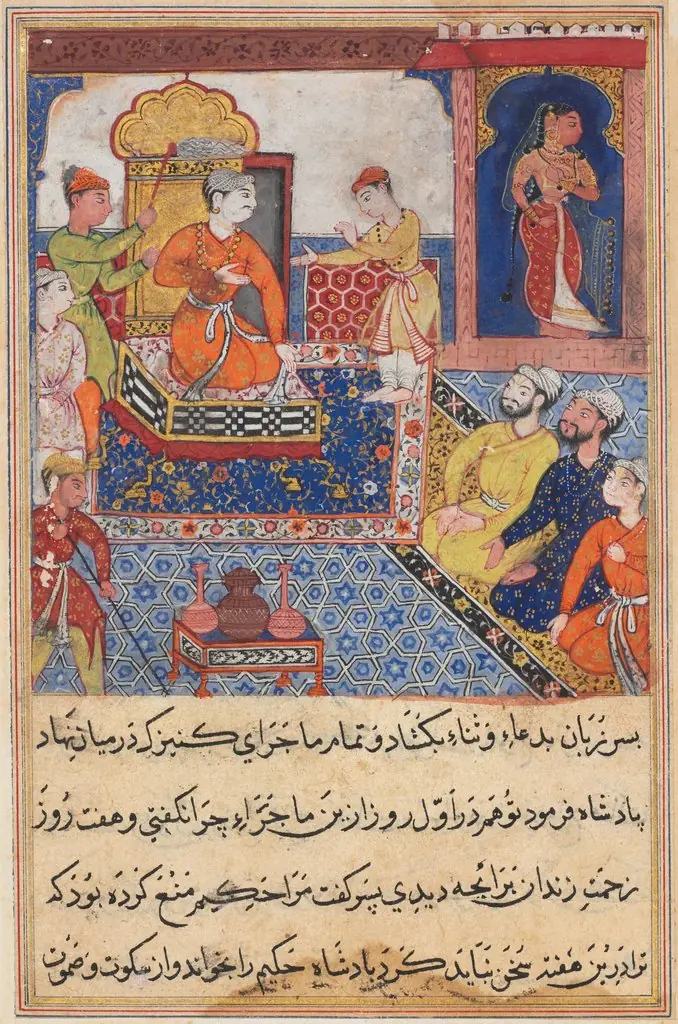 The young prince recounts his experiences to his father, the king, from a Tuti-nama (Tales of a Parrot): Eighth Night
 The young prince recounts his experiences to his father, the king, from a Tuti-nama (Tales of a Parrot): Eighth Night
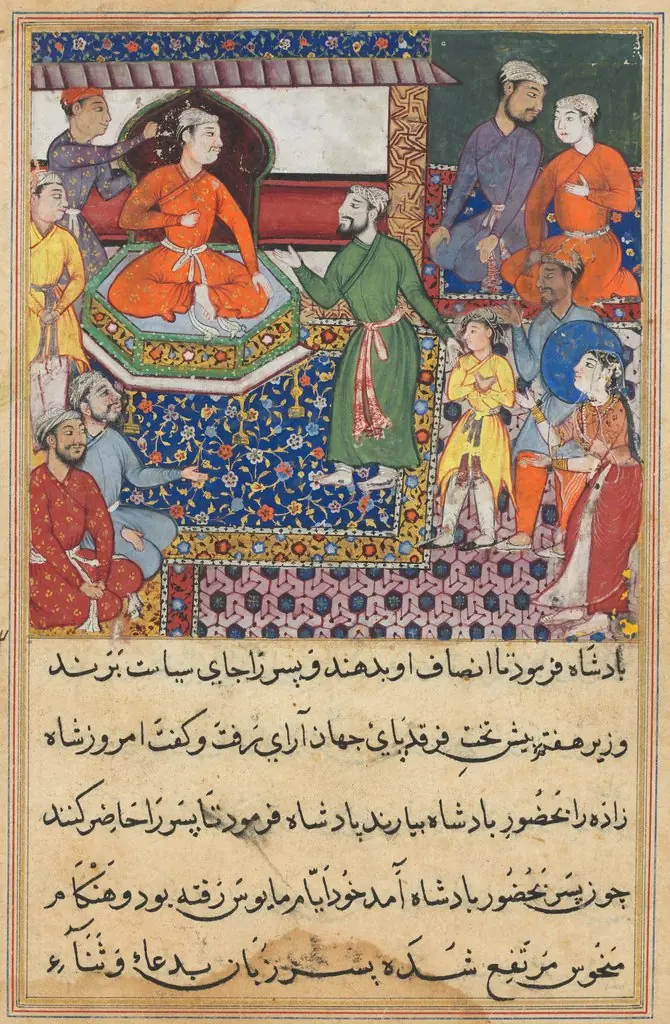 The handmaiden again pleads for the death of the prince, from a Tuti-nama (Tales of a Parrot): Eighth Night
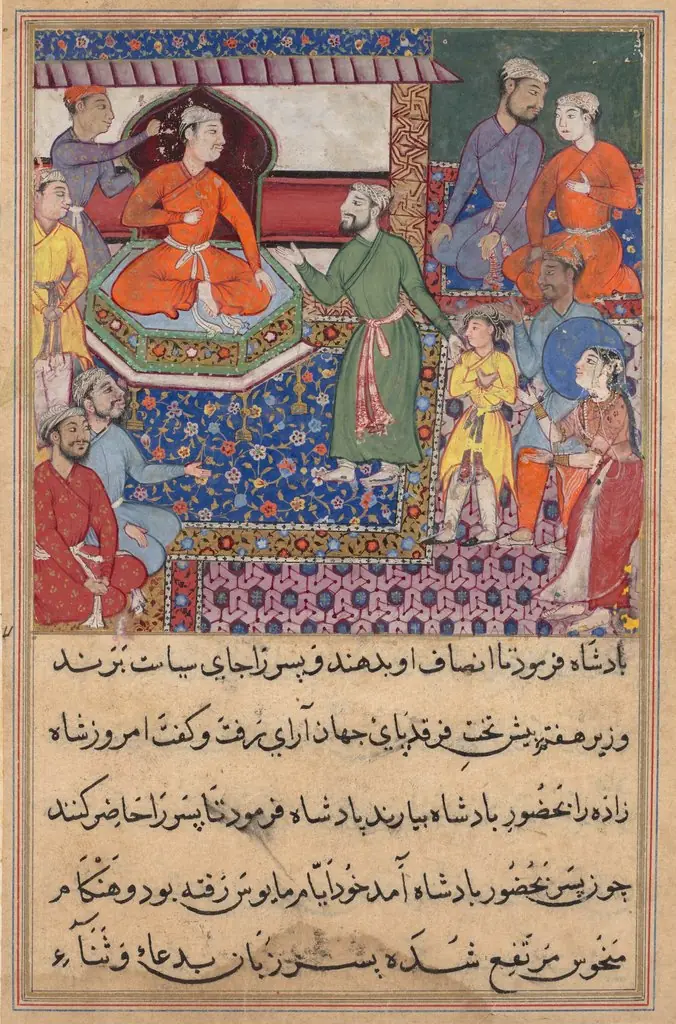 Page from Tales of a Parrot (Tuti-nama): text page
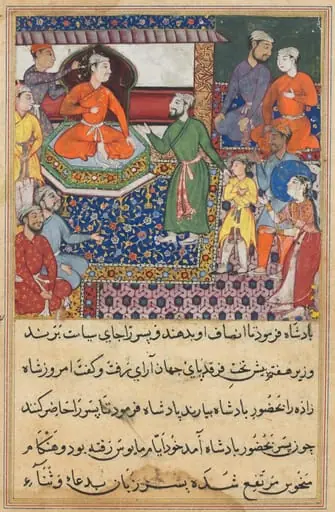 The handmaiden again pleads for the death of the prince, from a Tuti-nama (Tales of a Parrot): Eighth Night
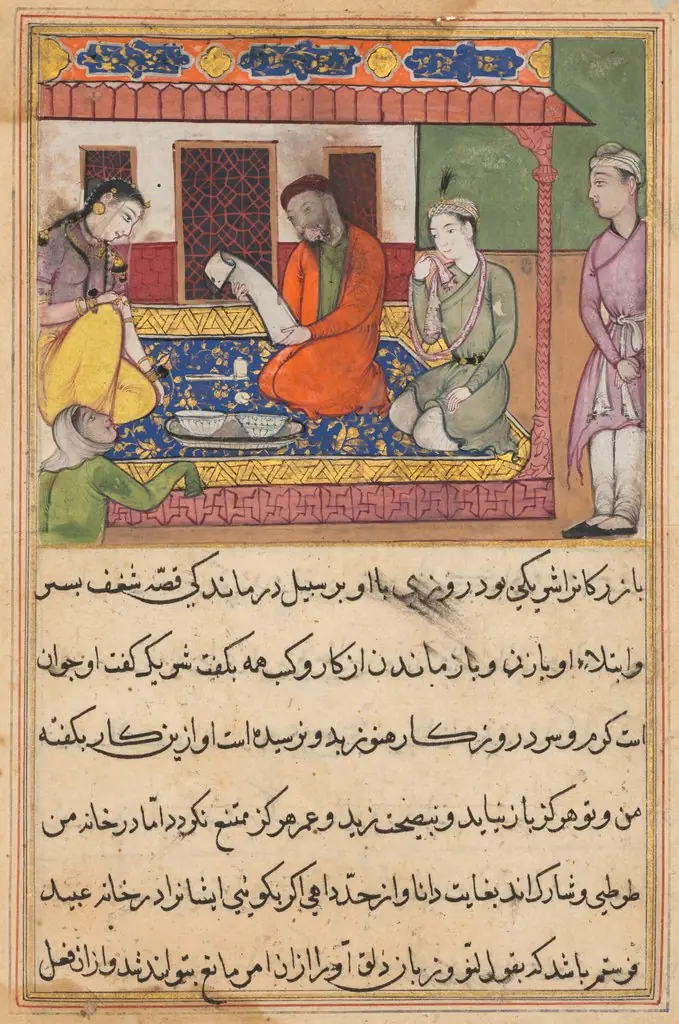 The marriage of ‘Ubaid, son of a merchant of Tirmiz, from a Tuti-nama (Tales of a Parrot): Forty-second Night
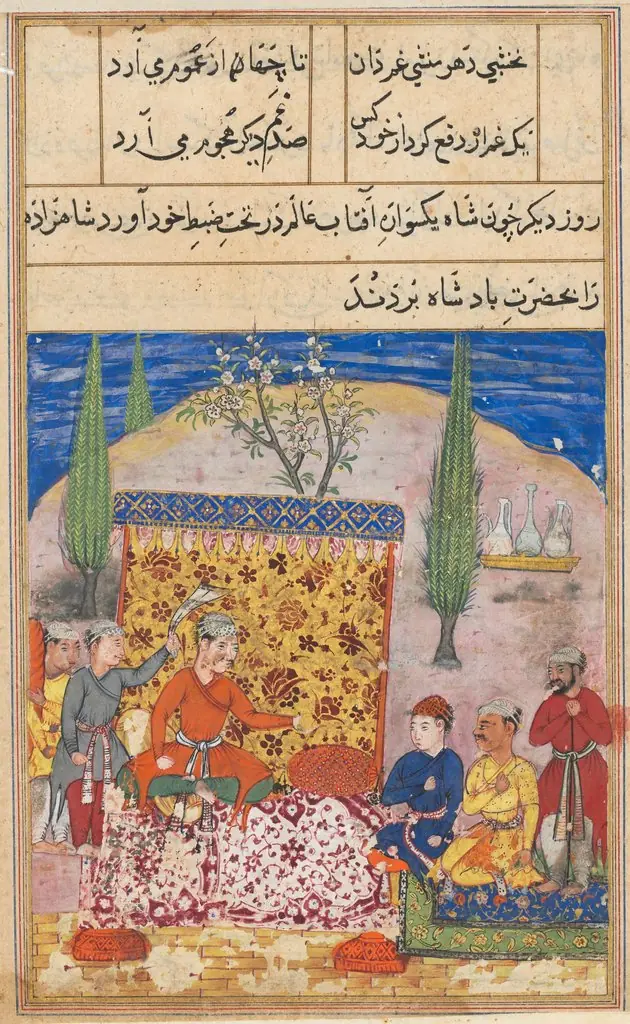 The young prince is presented to the king, his father, by his teacher, but refuses to speak, from a Tuti-nama (Tales of a Parrot): Eighth Night
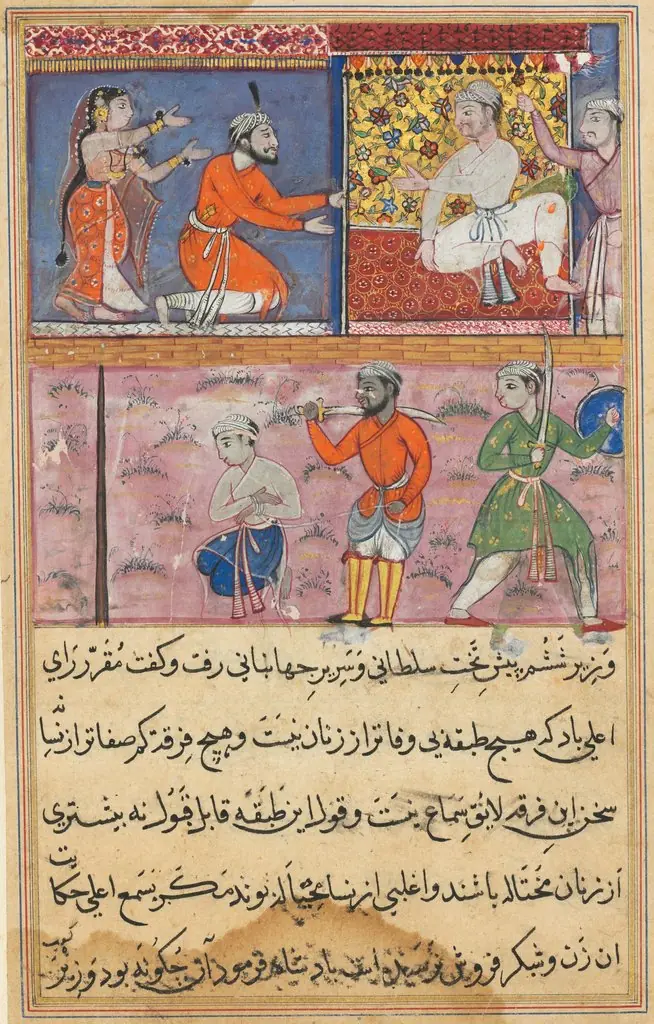 The prince sent back to the place of execution for the sixth time, from a Tuti-nama (Tales of a Parrot): Eighth Night
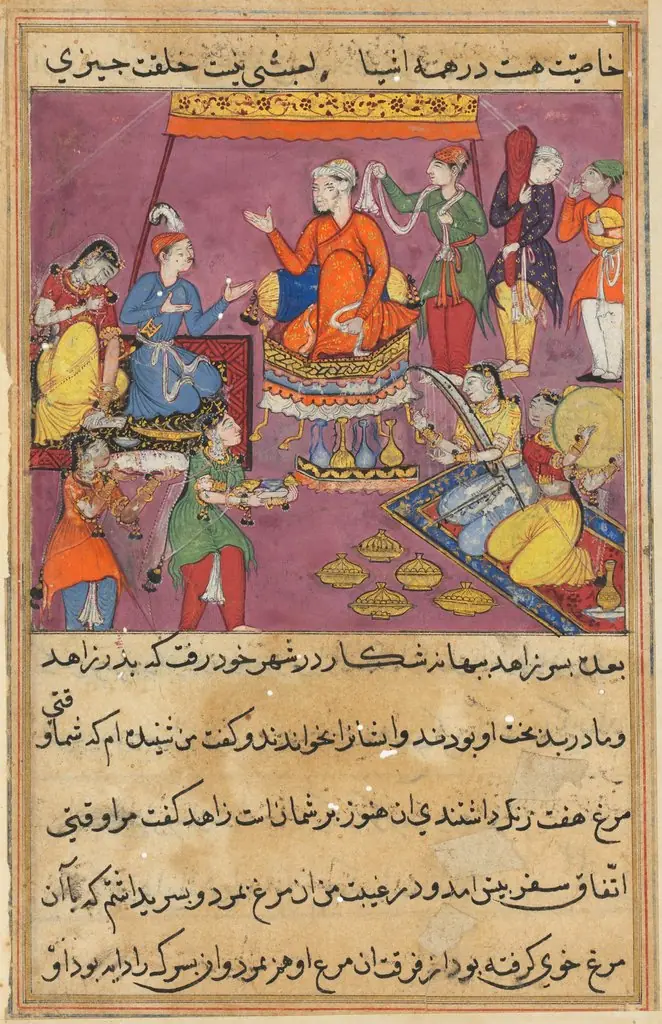 The king gives his daughter in marriage to the pious man’s son, from a Tuti-nama (Tales of a Parrot): Fifty-second Night