Artwork
The Monkeys and Bears Fight Ravana and His Demons (verso), from a Romance of Chandrabhanu and Lavanyavati of Upendra Bhanja (Indian, died 1740)
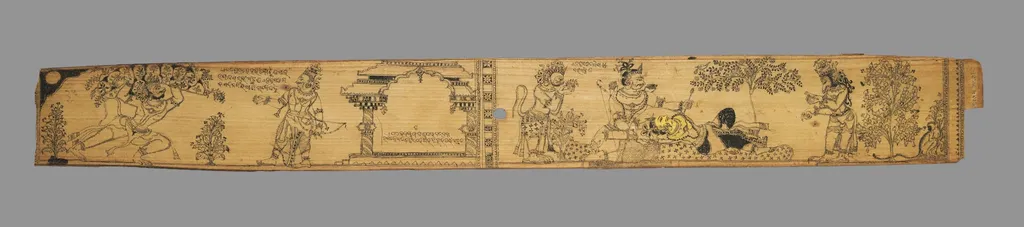
The Monkeys and Bears Fight Ravana and His Demons (verso), from a Romance of Chandrabhanu and Lavanyavati of Upendra Bhanja (Indian, died 1740) is an unspecified painting. It dates from 1774 and is held in the collection of the Cleveland Museum of Art.
About this work
Subject & Meaning
The composition reflects a synthesis of narrative illustration and symbolic warfare, typical of Indian miniature painting traditions.
The verso of this folio depicts a dynamic confrontation between monkeys and bears as they battle Ravana and his demonic entourage, drawn from the narrative of the Romance of Chandrabhanu and Lavanyavati. This scene illustrates a mythic episode in which Ravana, the ten-headed demon king of Lanka, engages in cosmic conflict, with animal forces opposing his tyranny. The composition reflects a synthesis of narrative illustration and symbolic warfare, typical of Indian miniature painting traditions.
The work is part of a manuscript cycle based on a poem by Upendra Bhanja, a poet active in the early 18th century, though the painting itself was executed later, in 1774.
History & Provenance
The painting is part of the Cleveland Museum of Art collection and was created in 1774. It is a verso page from an illustrated manuscript of the Romance of Chandrabhanu and Lavanyavati, a work by the poet Upendra Bhanja, who died in 1740. The painting itself, by an anonymous artist, was made decades after the poem and has remained in Cleveland since its acquisition.
Legacy
The verso of this 1774 painting entered the collection of the Cleveland Museum of Art, where it has been exhibited and studied as part of the museum's Indian miniature holdings. Its role in scholarly discussions of Indian narrative painting has contributed to renewed interest in Upendra Bhanja's literary sources and their visual adaptations.
Overview
This narrow, horizontally‑oriented painting forms the reverse side of an illustrated manuscript page from the 18th‑century Odia romance Romance of Chandrabhanu and Lavanyavati, attributed to the poet Upendra Bhanja (d. 1740). The composition is densely populated with miniature figures engaged in combat, architectural elements, and a landscape rendered in muted earth tones with occasional green foliage.
Technique & Style
Executed in a miniature painting tradition, the work employs fine brushwork to delineate intricate details within a confined space. The palette is dominated by browns, blacks, and subdued ochres, with limited highlights of green for foliage. The figures are stylized with exaggerated limbs and expressive faces, characteristic of courtly Indian manuscript illustration.
Context
Illustrated romances like this one were central to the visual culture of Indian courts, serving both literary and didactic purposes. The depiction of mythic battles with hybrid beings aligns with broader South Asian iconographic motifs, offering insight into the narrative aesthetics that influenced later regional art forms.

Artist & collection

- Hanuman Brings the Mountain of Healing Plants; Rama Extracts the Arrow from Lakshmana as Hanuman and a Bear Prepare to Treat Him (recto), from a Romance of Chandrabhanu and Lavanyavati of Upendra Bhanja (Indian, died 1740)
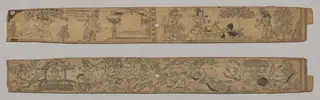 Leaf from a Romance of Chandrabhanu and Lavanyavati of Upendra Bhanja (Indian, died 1740)
 A Prince Performs Austerities (recto); Shiva and His Followers Return to Mount Kailash (verso), from a Romance of Chandrabhanu and Lavanyavati of Upendra Bhanja (1670–1740)
 The Monkeys and Bears Fight Ravana and His Demons (verso), from a Romance of Chandrabhanu and Lavanyavati of Upendra Bhanja (Indian, died 1740)
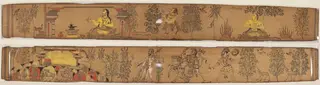 A Prince Performs Austerities (recto); Shiva and His Followers Return to Mount Kailash (verso), from a Romance of Chandrabhanu and Lavanyavati of Upendra Bhanja (1670–1740)
 Leaf from a Romance of Chandrabhanu and Lavanyavati of Upendra Bhanja (Indian, died 1740)
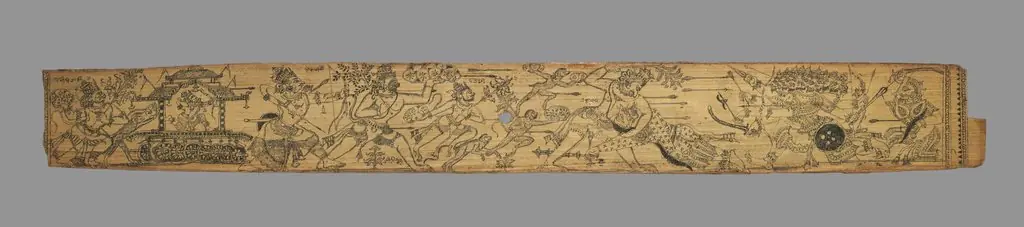 Hanuman Brings the Mountain of Healing Plants; Rama Extracts the Arrow from Lakshmana as Hanuman and a Bear Prepare to Treat Him (recto), from a Romance of Chandrabhanu and Lavanyavati of Upendra Bhanja (Indian, died 1740)
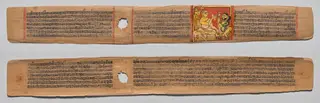 Folio 2, from a Great Poem about Twos (Dvyashraya Mahakavya) of Hemachandra with Commentary by Abhayatilaka
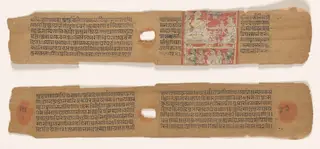 Folio 22 from a Yoga-shastra of Hemachandra: Jain Monk with disciple and two laymen, two Nuns, and a laywoman (recto); Text (verso)
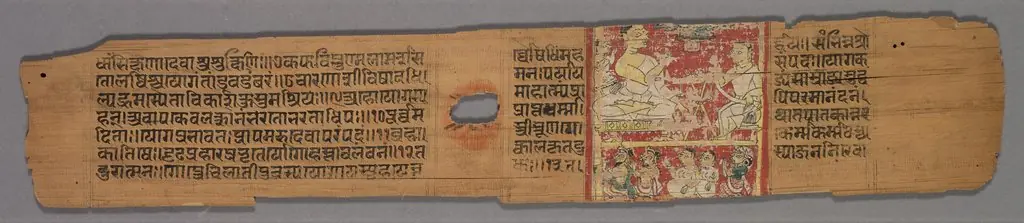 Leaf from a Jain Manuscript: Yoga-shastra: Jain monk with Disciple and Two Laymen, Two Nuns and a Laywoman below (verso)
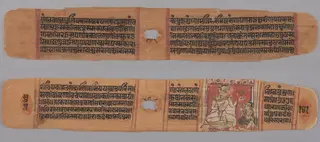 Folio 141, from a Kalpa-sutra and Story of Kalakacharya: Text (recto); Monk Holding a Flower Venerated by a Lay disciple (verso)
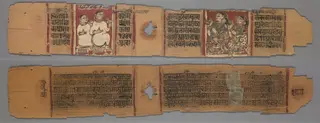 Folio 167, from a Kalpa-sutra and Story of Kalakacharya: two nuns teaching lay women (recto); genealogical text (verso)