Artwork
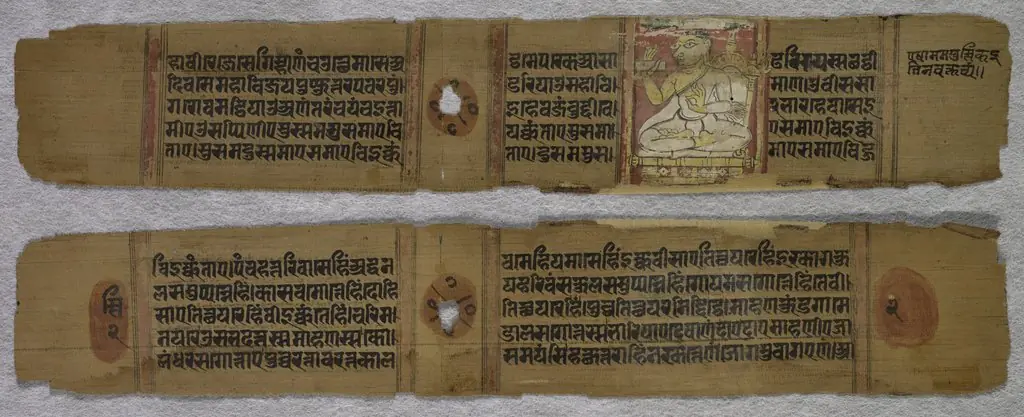
Folio 22 from a Yoga-shastra of Hemachandra: Jain Monk with disciple and two laymen, two Nuns, and a laywoman (recto); Text (verso)
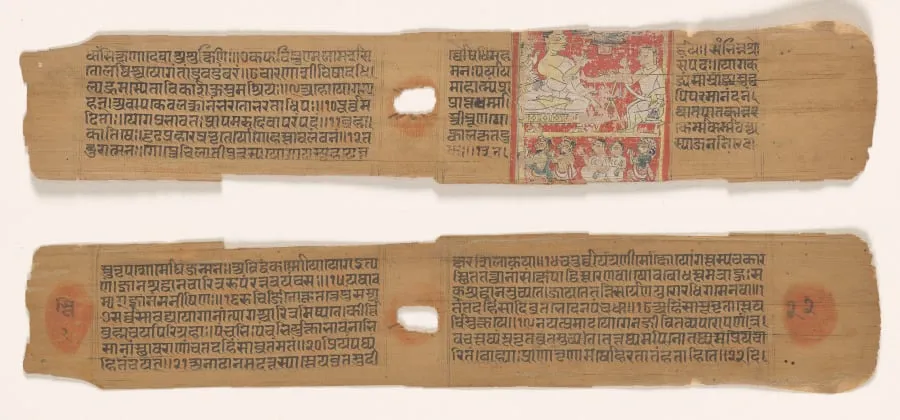
Folio 22 from a Yoga-shastra of Hemachandra: Jain Monk with disciple and two laymen, two Nuns, and a laywoman (recto); Text (verso) is an unspecified painting by the Yōga artist Unknown. It dates from 1275 and is held in the collection of the Cleveland Museum of Art. This painting is a folio from a 13th-century Sanskrit manuscript on yoga and meditation, known as the Yoga-shastra of Hemachandra.
- Accession no.
- 1971.129
- Credit line
- Purchase from the J. H. Wade Fund
About this work
You see a bright, flat page from an old book: a teacher on a throne, a student holding a book, and four listeners below, two men, two nuns, and one woman.
You see a bright, flat page from an old book: a teacher on a throne, a student holding a book, and four listeners below, two men, two nuns, and one woman.
The painting comes from a yoga manual written in the 1200s. It shows how knowledge was passed down in Jain communities. The colors are simple and bold, with no shading to make things look real.
To see more like this, look up western india, gujarat, 13th century.
Overview
This painting is a folio from a 13th-century Sanskrit manuscript on yoga and meditation, known as the Yoga-shastra of Hemachandra.
Subject & Meaning
The scene depicts a Jain monk seated on a throne, facing a disciple with a sacred text on a stand between them, while a group of lay followers and nuns observe from below, illustrating the transmission of teachings within a Jain community.
Technique & Style
Characterized by simple, bold colors and a flat, two-dimensional style, the painting lacks shading or attempts to create a realistic representation, reflecting the artistic conventions of its time and region.
Context
Produced in Western India, likely in the region of Gujarat, the work is representative of the art and spiritual practices of Jain communities during the 13th century.
Artist & collection









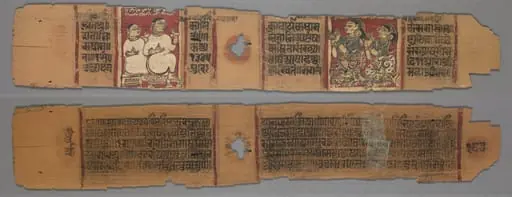
- Folio 167, from a Kalpa-sutra and Story of Kalakacharya: two nuns teaching lay women (recto); genealogical text (verso)
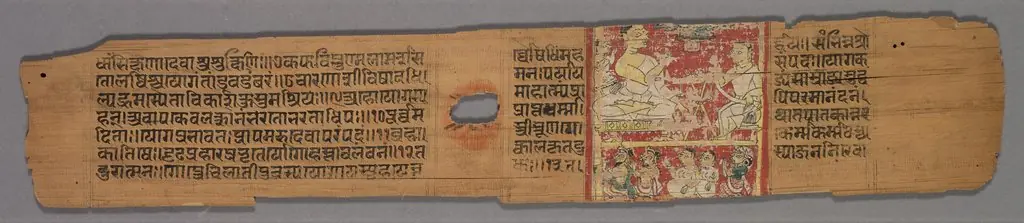 Leaf from a Jain Manuscript: Yoga-shastra: Jain monk with Disciple and Two Laymen, Two Nuns and a Laywoman below (verso)
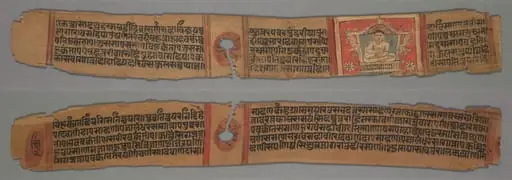 Folio 2, from a Kalpa-sutra and Story of Kalakacharya of Devachandra: Enthroned Monk Gautama (recto); Text (verso)
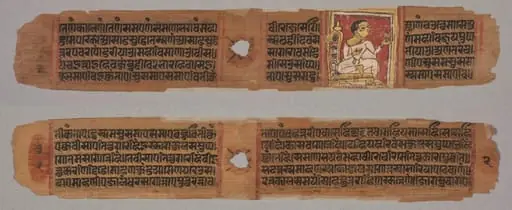 Folio 2, from a Kalpa-sutra and Story of Kalakacharya: Monk Holding a Flower (recto); text (verso)
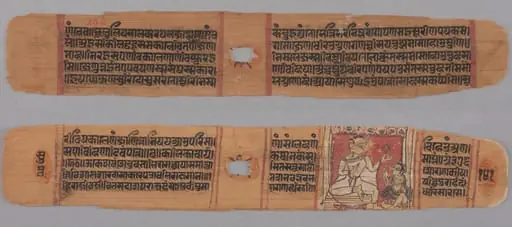 Folio 141, from a Kalpa-sutra and Story of Kalakacharya: Text (recto); Monk Holding a Flower Venerated by a Lay disciple (verso)
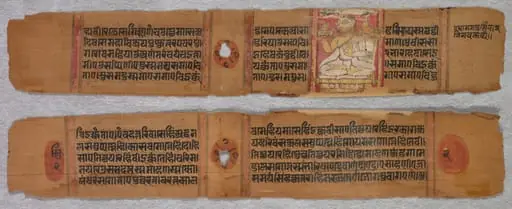 Folio 2, from a Kalpa-sutra: A Monk Preaching (recto); Text (verso)
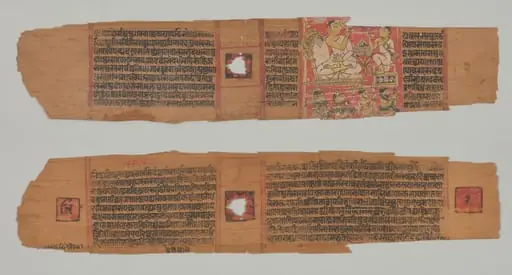 Folio 2 from a Parshvanatha Charitra (Life and Stories of Lord Parshva) of Bhavadeva-suri: Monk preaching to a disciple with a lay audience (recto); Text (verso)
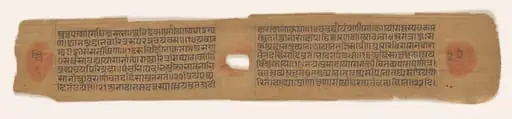 Text, folio 22 (verso) from a Yoga-shastra of Hemachandra
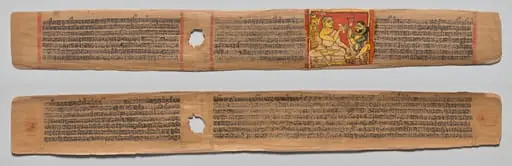 Folio 2, from a Great Poem about Twos (Dvyashraya Mahakavya) of Hemachandra with Commentary by Abhayatilaka
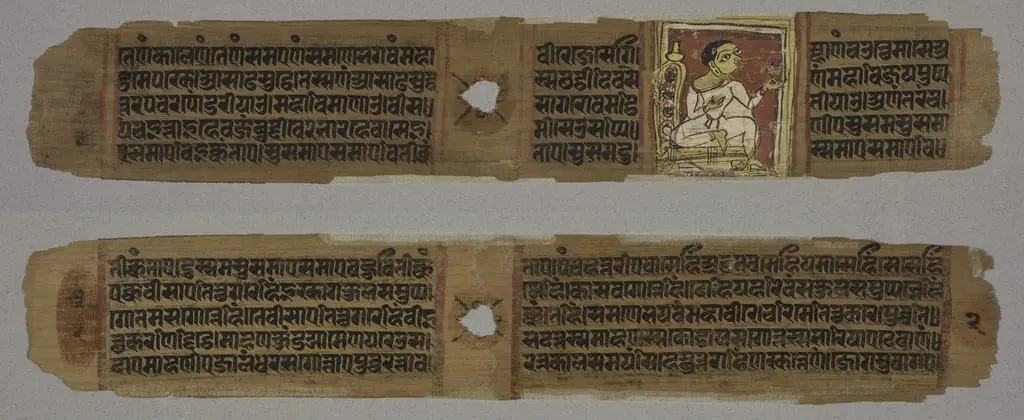 Folio 2, from a Kalpa-sutra and Story of Kalakacharya: Monk Holding a Flower (recto); text (verso)
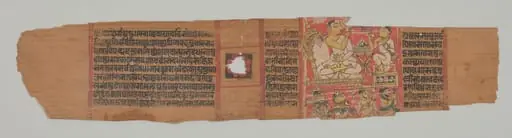 Monk preaching to a disciple with a lay audience, folio 2 (recto) from a Parshvanatha Charitra (Life and Stories of Lord Parshva) of Bhavadeva-suri
 Folio 2, from a Kalpa-sutra: A Monk Preaching (recto); Text (verso)