Artwork
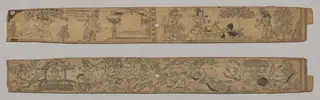
A Prince Performs Austerities (recto); Shiva and His Followers Return to Mount Kailash (verso), from a Romance of Chandrabhanu and Lavanyavati of Upendra Bhanja (1670–1740)

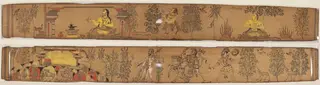
A Prince Performs Austerities (recto); Shiva and His Followers Return to Mount Kailash (verso), from a Romance of Chandrabhanu and Lavanyavati of Upendra Bhanja (1670–1740) is an unspecified painting. It dates from 1700 and is held in the collection of the Cleveland Museum of Art. This painting, featuring scenes on both its front (recto) and back (verso), illustrates a romance by the poet Upendra Bhanja (1670–1740).
About this work
History & Provenance
The painting is dated to circa 1700, as indicated by its internal catalog entry and its inception date in the Cleveland Museum of Art’s records.
The painting is dated to circa 1700, as indicated by its internal catalog entry and its inception date in the Cleveland Museum of Art’s records. It was created as part of a manuscript illustrating the Romance of Chandrabhanu and Lavanyavati by the poet Upendra Bhanja, though the artist remains unidentified and no specific commission is recorded. The work entered the Cleveland Museum of Art in 2018 under accession number 2018.175; earlier ownership history is not documented in the available sources.
The painting is held by the Cleveland Museum of Art in Cleveland, Ohio. It is accessioned under the number 2018.175, as recorded in the museum’s collection database. The work appears on the museum’s website and in the Wikidata entry for the object, which notes its provenance as part of the museum’s holdings.
No exhibition history is mentioned in the available documentation, and the object is listed as a painting from circa 1700.
Overview
This painting, featuring scenes on both its front (recto) and back (verso), illustrates a romance by the poet Upendra Bhanja (1670–1740). The recto depicts a prince engaged in ascetic practices, while the verso portrays Shiva's return to Mount Kailash with his retinue. The artwork is characterized by its elongated format, divided into distinct narrative segments.
Its palette emphasizes earthy tones, punctuated by vivid gold and red, creating a serene atmosphere around its composed figures.
Subject & Meaning
The recto of this painting visually interprets a prince's commitment to austerities, a common theme in Indian narratives signifying spiritual discipline or a quest for divine favor. On the verso, the artwork illustrates the Hindu deity Shiva's journey back to his celestial abode, Mount Kailash, accompanied by his devotees. Both scenes are integral episodes within Upendra Bhanja's literary work, "A Romance of Chandrabhanu and Lavanyavati," contributing to its overarching narrative of devotion and epic events.
Technique & Style
This painting employs a distinctive long and narrow format, segmenting the composition into two narrative fields. The artistic style features figures rendered with serene expressions, often depicted with long hair and simple attire, conveying a sense of introspection. The palette predominantly utilizes earthy hues, which are dynamically contrasted with striking applications of gold and red, particularly noticeable in architectural details and foliage. Intricate background elements, including flora and fauna, enrich the scene's visual texture.
Context
This painting serves as an illustration for "A Romance of Chandrabhanu and Lavanyavati," a significant literary work by the Odia poet Upendra Bhanja, active between 1670 and 1740. Such illustrated manuscripts were crucial in disseminating and preserving popular narratives and religious epics during this period. The artwork thus provides a visual interpretation of a celebrated text, reflecting the cultural and artistic practices associated with literary patronage and devotional storytelling in 17th-18th century India.

Artist & collection

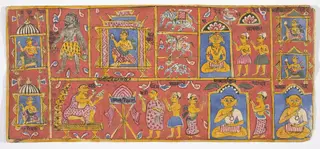
 Leaf from a Romance of Chandrabhanu and Lavanyavati of Upendra Bhanja (Indian, died 1740)
 Tantric Manuscript "Sangrahani Sutra"
 Rishabha enthroned, folio 1 (verso) from a Yoga-shastra of Hemachandra
 Jain monk with disciple and two laymen, two nuns, and a laywoman, folio 22 (recto) from a Yoga-shastra of Hemachandra
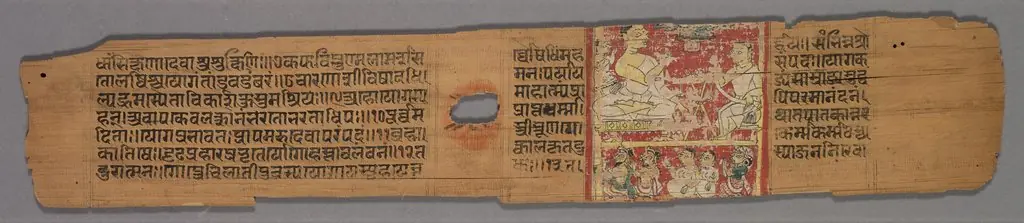 Leaf from a Jain Manuscript: Yoga-shastra: Jain monk with Disciple and Two Laymen, Two Nuns and a Laywoman below (verso)
 Untitled
 Untitled
 Folio 22 from a Yoga-shastra of Hemachandra: Jain Monk with disciple and two laymen, two Nuns, and a laywoman (recto); Text (verso)
- A Prince Performs Austerities (recto), from a Romance of Chandrabhanu and Lavanyavati of Upendra Bhanja (1670–1740)
 A Prince Performs Austerities (recto); Shiva and His Followers Return to Mount Kailash (verso), from a Romance of Chandrabhanu and Lavanyavati of Upendra Bhanja (1670–1740)
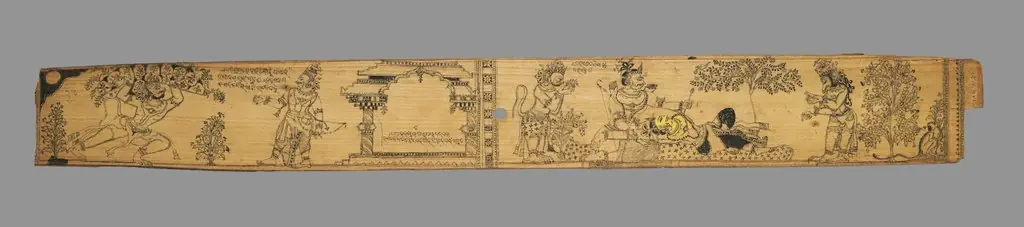 The Monkeys and Bears Fight Ravana and His Demons (verso), from a Romance of Chandrabhanu and Lavanyavati of Upendra Bhanja (Indian, died 1740)
 Hanuman Brings the Mountain of Healing Plants; Rama Extracts the Arrow from Lakshmana as Hanuman and a Bear Prepare to Treat Him (recto), from a Romance of Chandrabhanu and Lavanyavati of Upendra Bhanja (Indian, died 1740)