Artwork
A Prince Performs Austerities (recto); Shiva and His Followers Return to Mount Kailash (verso), from a Romance of Chandrabhanu and Lavanyavati of Upendra Bhanja (1670–1740)
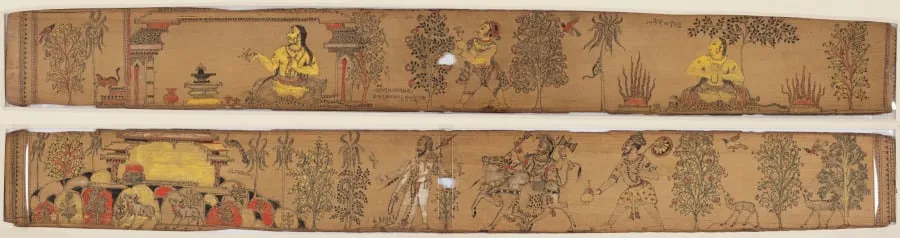
A Prince Performs Austerities (recto); Shiva and His Followers Return to Mount Kailash (verso), from a Romance of Chandrabhanu and Lavanyavati of Upendra Bhanja (1670–1740) is an unspecified painting by the Baroque artist Unknown. It dates from 1704 and is held in the collection of the Cleveland Museum of Art. This double-sided painting depicts two scenes from the Romance of Chandrabhanu and Lavanyavati, a narrative written by Upendra Bhanja.
- Accession no.
- 2018.175
- Credit line
- Purchase and partial gift from the Catherine and Ralph Benkaim Collection; Severance and Greta Millikin Purchase Fund
About this work
Overview
This double-sided painting depicts two scenes from the Romance of Chandrabhanu and Lavanyavati, a narrative written by Upendra Bhanja. The work originated from eastern India, specifically the region of Odisha (formerly Orissa), and dates to the 18th century.
Subject & Meaning
The recto shows a prince enduring intense austerities, practicing yoga amidst flames in summer and braving monsoon rains unsheltered, to win a divine woman through devotion to the Shiva linga. The verso illustrates the culmination: Shiva, moved by the prince’s devotion, returns to his Mount Kailash abode with followers, as indicated by the inscription.
Technique & Style
Characterized by bright, vibrant colors and flat, two-dimensional shapes, the painting employs a distinct visual language common in Odia illustrated manuscripts. Notably, the composition eschews shading in favor of clear, defined outlines.
History & Provenance
Part of a larger illustrated manuscript of the Romance of Chandrabhanu and Lavanyavati, this painting is attributed to the period of its author, Upendra Bhanja (1670–1740), though specific provenance details are not provided.
Context
This work reflects the artistic and literary traditions of 18th-century Odisha. The use of Odia language for the original text and the painting style are indicative of the region’s distinct cultural practices during this period.
Legacy
As part of the illustrated manuscripts from eastern India, this painting contributes to the understanding of regional storytelling methods and artistic techniques of the time, inviting comparison with other works from Odisha for a broader insight into its cultural context.

Artist & collection









 Hunting in the Hills and Pictorial
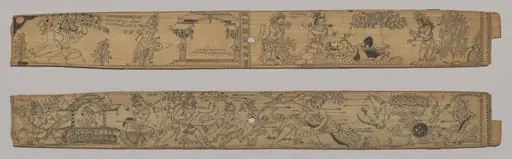 Leaf from a Romance of Chandrabhanu and Lavanyavati of Upendra Bhanja (Indian, died 1740)
 Buddhist Panel
 Untitled
 The Monkeys and Bears Fight Ravana and His Demons (verso), from a Romance of Chandrabhanu and Lavanyavati of Upendra Bhanja (Indian, died 1740)
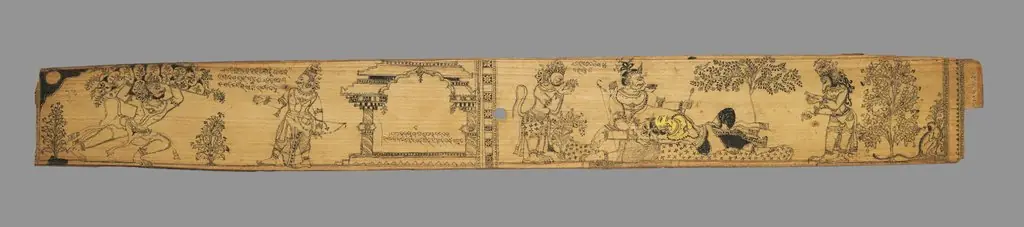 The Monkeys and Bears Fight Ravana and His Demons (verso), from a Romance of Chandrabhanu and Lavanyavati of Upendra Bhanja (Indian, died 1740)
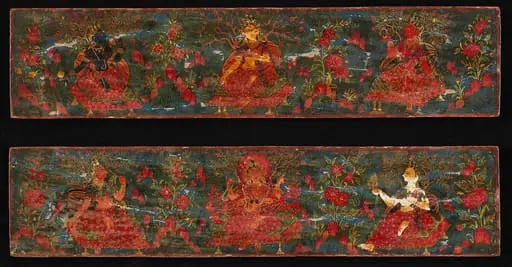 Untitled
- Shiva and His Followers Return to Mount Kailash (verso), from a Romance of Chandrabhanu and Lavanyavati of Upendra Bhanja (1670–1740)