Artwork
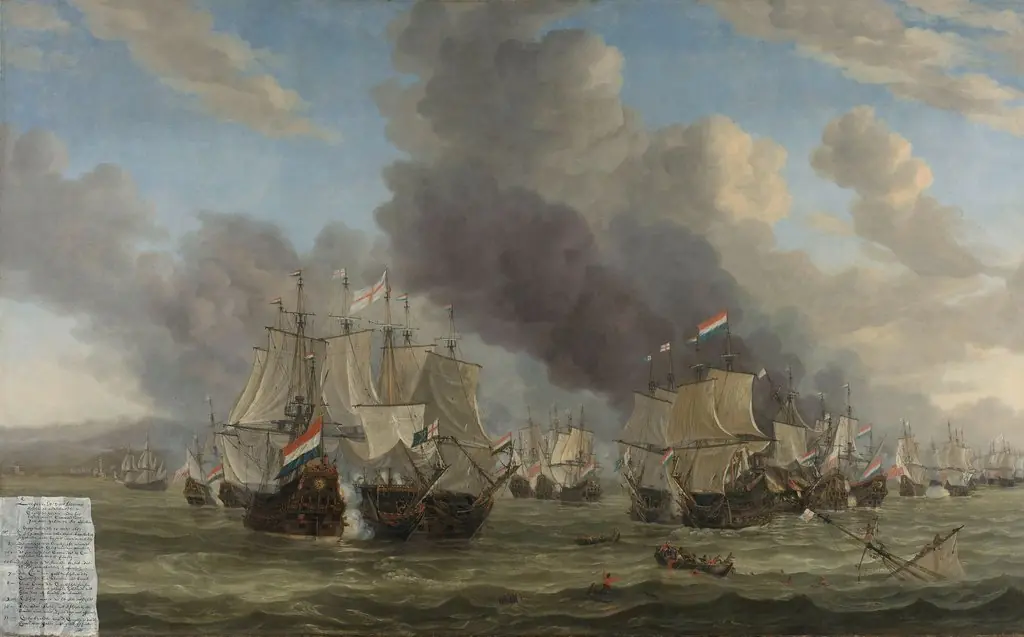
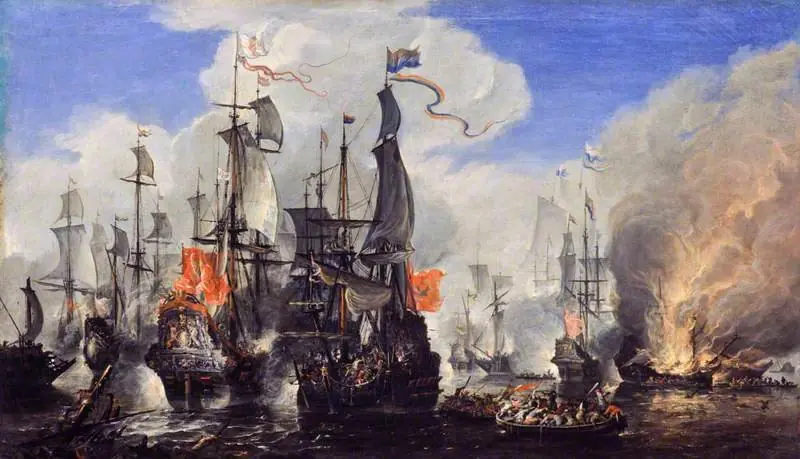
The naval battle near Livorno, 14 March 1653: incident of the first Anglo-Dutch War
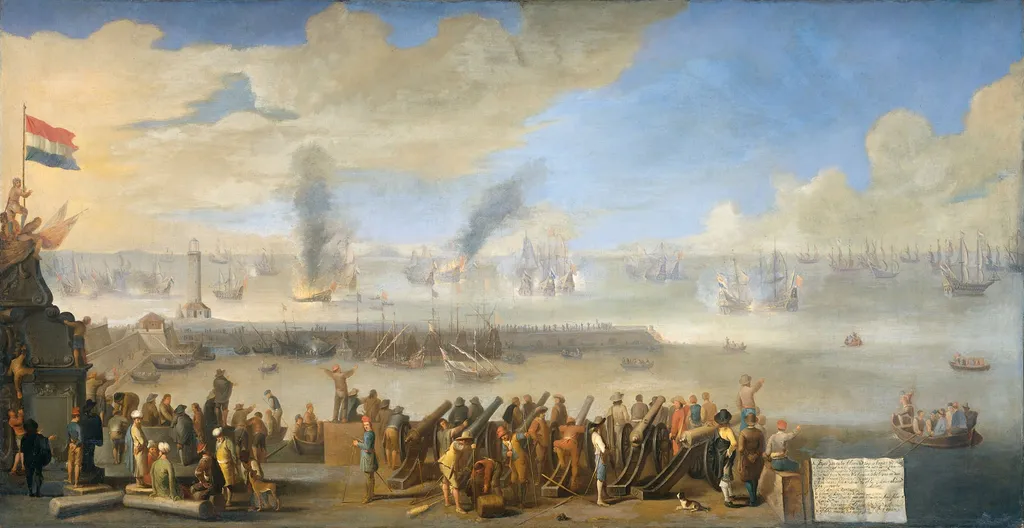
The naval battle near Livorno, 14 March 1653: incident of the first Anglo-Dutch War is an oil painting. It dates from 1656 and is held in the collection of the Rijksmuseum.
About this work
Subject & Meaning
The anonymous treatment of figures and vessels avoids individual heroism, emphasizing instead the collective effort that decided the outcome of the battle.
The painting depicts a pivotal clash during the First Anglo-Dutch War, when an English squadron attempted to intercept a Dutch merchant convoy near Livorno on 14 March 1653. The scene captures the moment when Dutch warships break through the English line, asserting control over the contested waters of the Mediterranean.
The composition centers on the decisive maneuver of the Dutch flagship, whose billowing flags signal victory and resolve. The churning sea and billowing smoke frame the action, underscoring the chaos and violence of early modern naval warfare. The anonymous treatment of figures and vessels avoids individual heroism, emphasizing instead the collective effort that decided the outcome of the battle.
Technique & Style
Created in 1656, this work is an oil painting executed on a canvas support. Classified as a marine and battle painting, the artwork measures 114 cm in height and 216.0 cm in width. The composition depicts a naval engagement featuring soldiers and boats, characteristic of the history painting genre associated with the first Anglo-Dutch War.
The piece is attributed to an anonymous artist and is currently held in the collection of the Rijksmuseum.
History & Provenance
The painting is held by the Rijksmuseum, Amsterdam, inventoried as SK-C-1876.
It was first recorded in the museum’s holdings in the late nineteenth century and has remained in its collection since accession. No later provenance details or exhibition history are recorded in the cited sources.
Overview
The oil painting depicts a bustling Mediterranean harbor on 14 March 1653, the day of a naval clash near Livorno during the first Anglo‑Dutch War. In the foreground, laborers load cannon onto a vessel while a dog watches from the quay. The harbor is filled with ships, some under sail, others engaged in combat, while distant smoke and an orange‑white‑blue striped flag mark the conflict’s presence.
Context
The scene is set against the backdrop of the first Anglo‑Dutch War (1652‑1654), a period of intense maritime rivalry between England and the Dutch Republic. Livorno, a key Tuscan port, was strategically important for trade routes, making it a frequent arena for naval engagements that threatened regional commerce.
Artist & collection

- Slag bij Livorno
 The Battle of Livorno
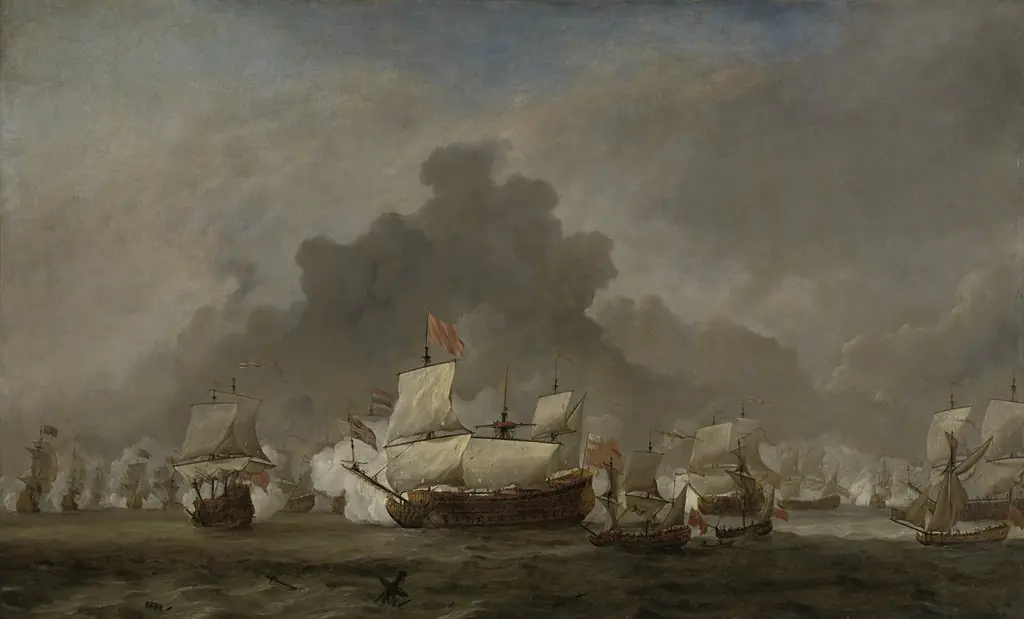 The skirmish of Michiel Adriaensz de Ruyter against the duke of York, commanding the 'Royal Prince'during the Battle of Solebay, 7 June 1672: episode from the Third Anglo-Dutch War (1672-74)
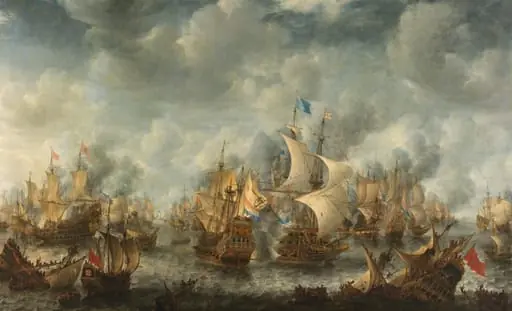 Slag bij Terheide
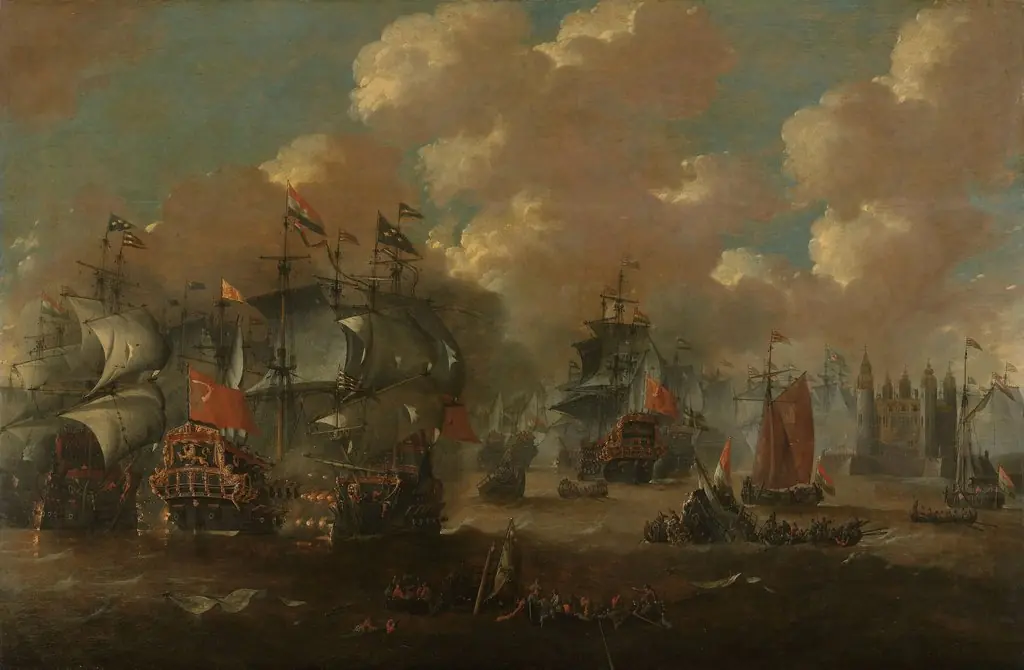 Naval battle near Elseneur in the Sound between the Dutch and the Swedish fleets, 8 November 1658
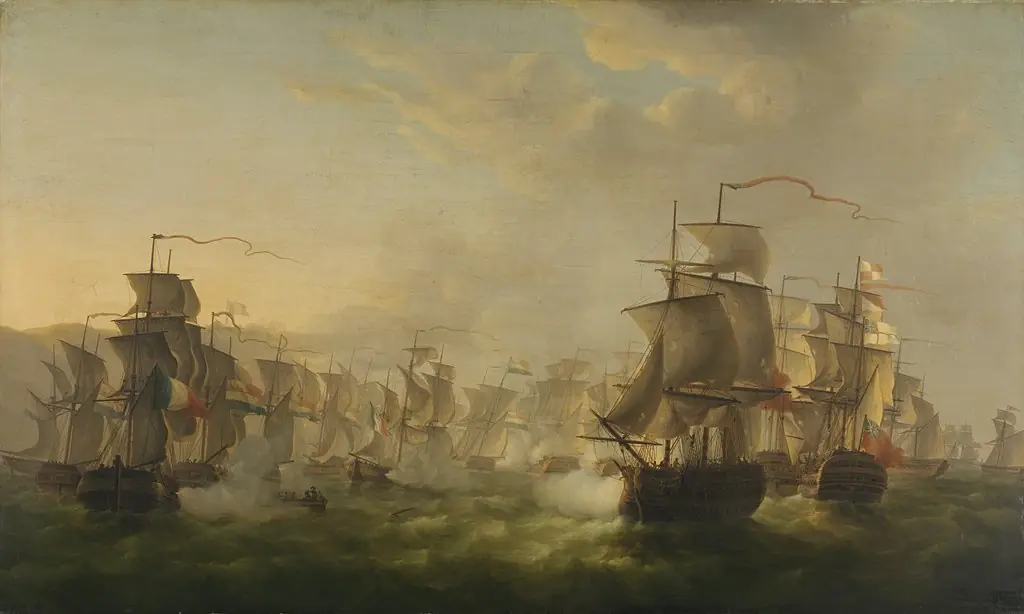 The Encounter of the Dutch and the English Fleet during the Voyage of the Dutch Flotilla to Boulogne, 1805
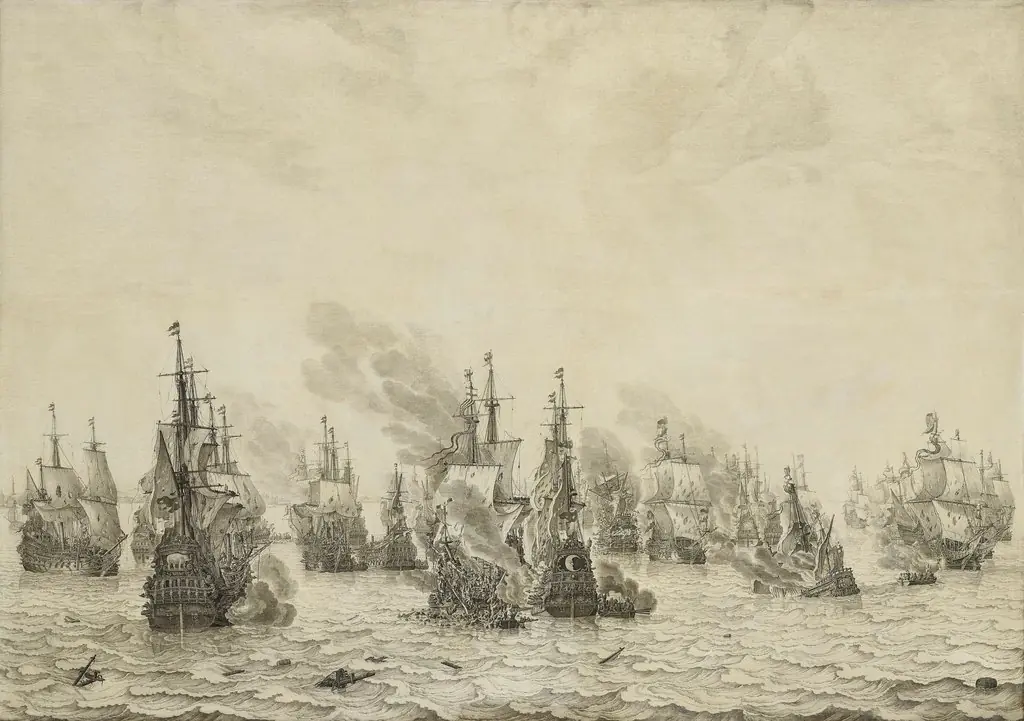 The Batlle of Livorno, 14 March 1653: episode from the First Anglo-Dutch War (1652-54)
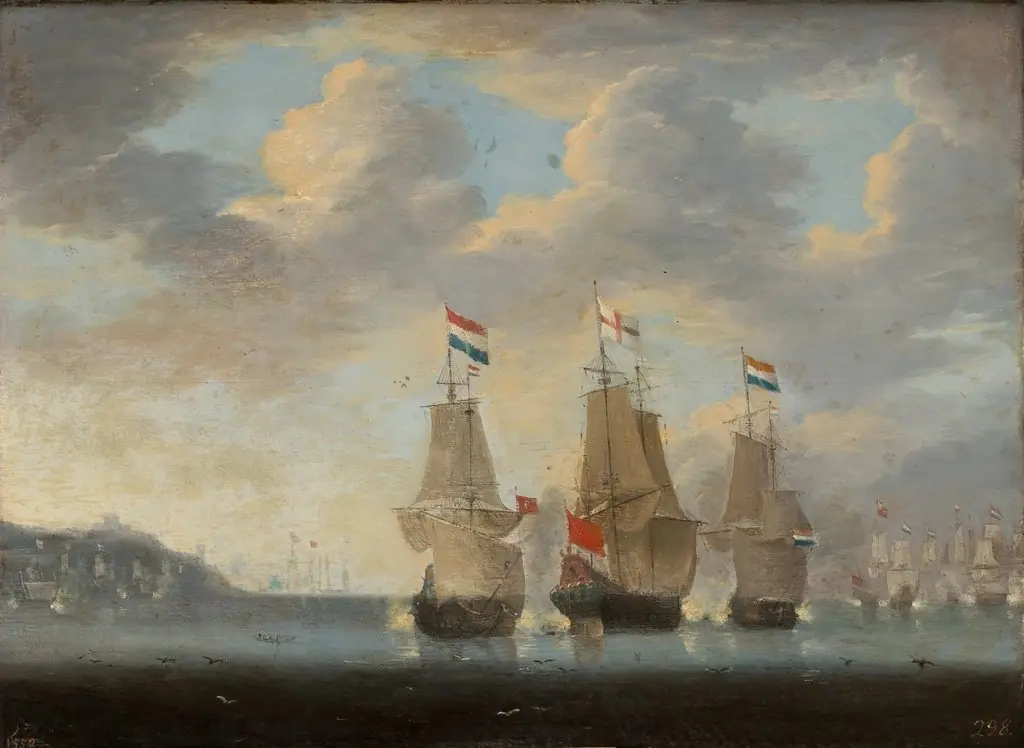 Naval Battle
 An Engagement between the English and the Dutch Fleets