Artwork
The painting made by the vizier of the emperor of China for the queen of Rum, from a Tuti-nama (Tales of a Parrot): Thirty-ninth Night
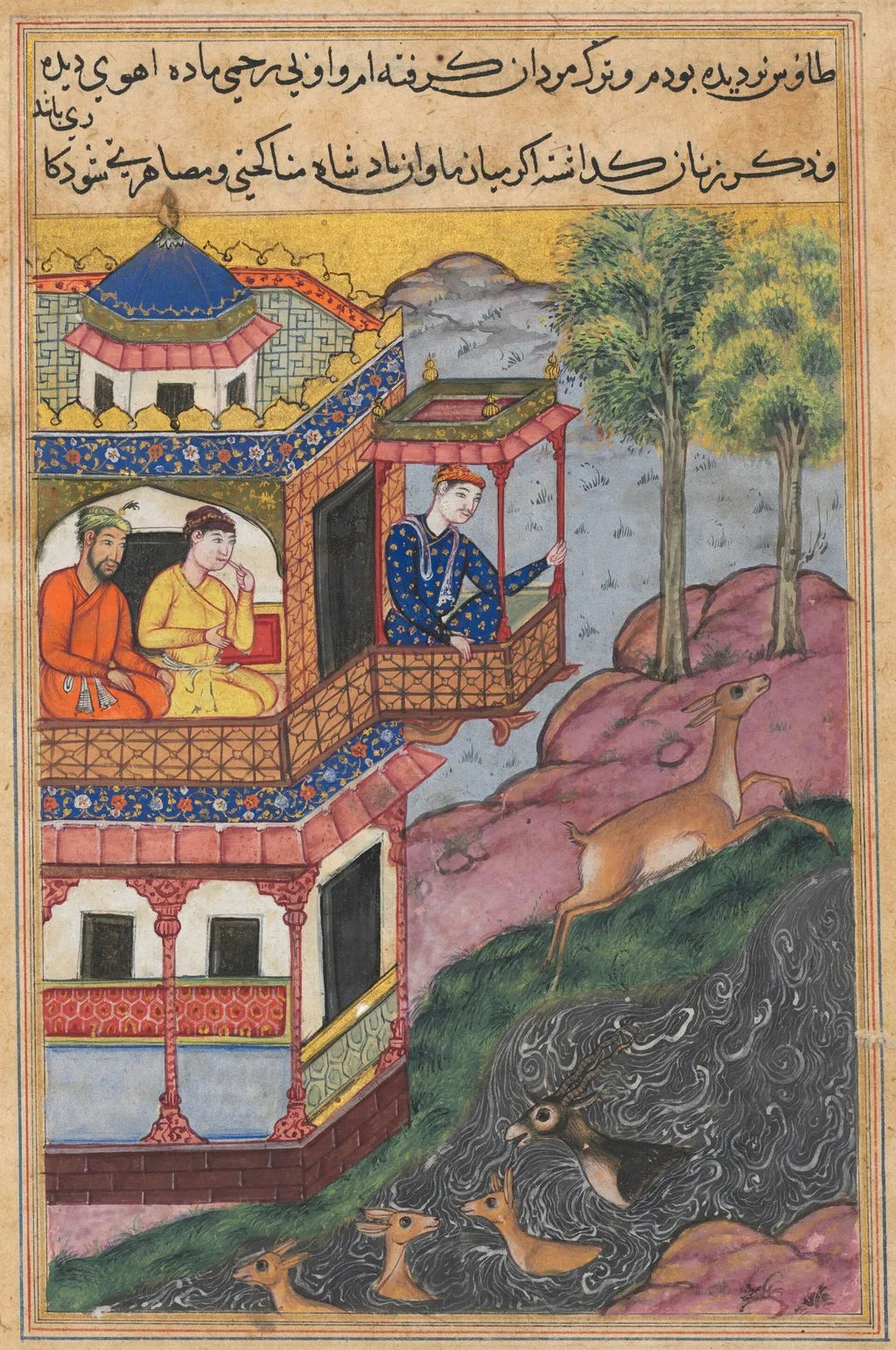
The painting made by the vizier of the emperor of China for the queen of Rum, from a Tuti-nama (Tales of a Parrot): Thirty-ninth Night is an unspecified painting. It dates from 1560 and is held in the collection of the Cleveland Museum of Art.
About this work
Technique & Style
It functions as an illustration for the Thirty-ninth Night of the Tuti-nama (Tales of a Parrot).
Created in 1560 within the Mughal Empire, this work is classified as a painting. It functions as an illustration for the Thirty-ninth Night of the Tuti-nama (Tales of a Parrot). The piece is attributed to an unknown artist.
As a manuscript illumination from this period and region, the work represents the visual narrative tradition of the Mughal court, depicting a scene where the vizier of the emperor of China creates a painting for the queen of Rum. The specific materials, support, and current physical condition are not detailed in the available records, though the work is held in the Cleveland Museum of Art.
History & Provenance
Created in 1560 within the Mughal Empire, this painting illustrates the thirty-ninth night of the Tuti-nama (Tales of a Parrot), depicting the vizier of the Chinese emperor presenting a gift to the Queen of Rum. The specific artist responsible for the work remains unknown. The manuscript leaf eventually entered the collection of the Cleveland Museum of Art, where it is cataloged under the accession number 1962.279.256.b.
Overview
The work, titled “The painting made by the vizier of the emperor of China for the queen of Rum, from a Tuti‑nama (Tales of a Parrot): Thirty‑ninth Night,” is an oil painting in the collection of the Cleveland Museum of Art. It presents a layered composition of architectural balconies, figures in vivid robes, and a natural foreground of deer and a solitary tree, rendered in a bright palette of blues, yellows, oranges and greens.
Subject & Meaning
At the center of the scene two men, one clothed in orange, the other in yellow, are seated on a richly ornamented balcony, their gazes directed toward a third figure in a blue robe who gestures from an opposite balcony. Below, a herd of deer ascends a slope, while a lone tree rises in the distance, suggesting a juxtaposition of courtly interaction and untamed landscape, a motif common in narrative illustrations of the Tuti‑nama.
Context
The piece reflects a period of cultural exchange between the Song‑Dynasty court and the Seljuk realms, where literary works were often visualized for elite audiences. Its narrative content aligns with the tradition of illustrated manuscripts that blended courtly etiquette with moral storytelling, while the inclusion of wildlife underscores the era’s appreciation for natural symbolism within artistic commissions.
Artist & collection

- The painting made by the vizier of the emperor of China for the queen of Rum, from a Tuti-nama (Tales of a Parrot): Thirty-ninth Night
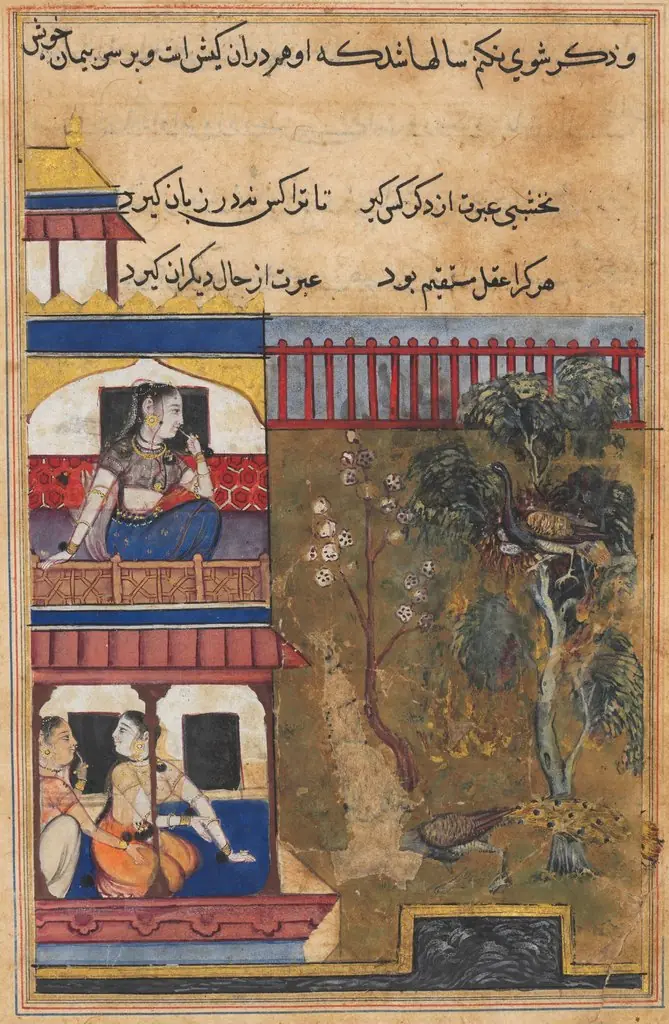 The queen of Rum watches the peahen prefer to burn rather than abandon her eggs while the peacock flees the nest, from a Tuti-nama (Tales of a Parrot): Thirty-ninth Night
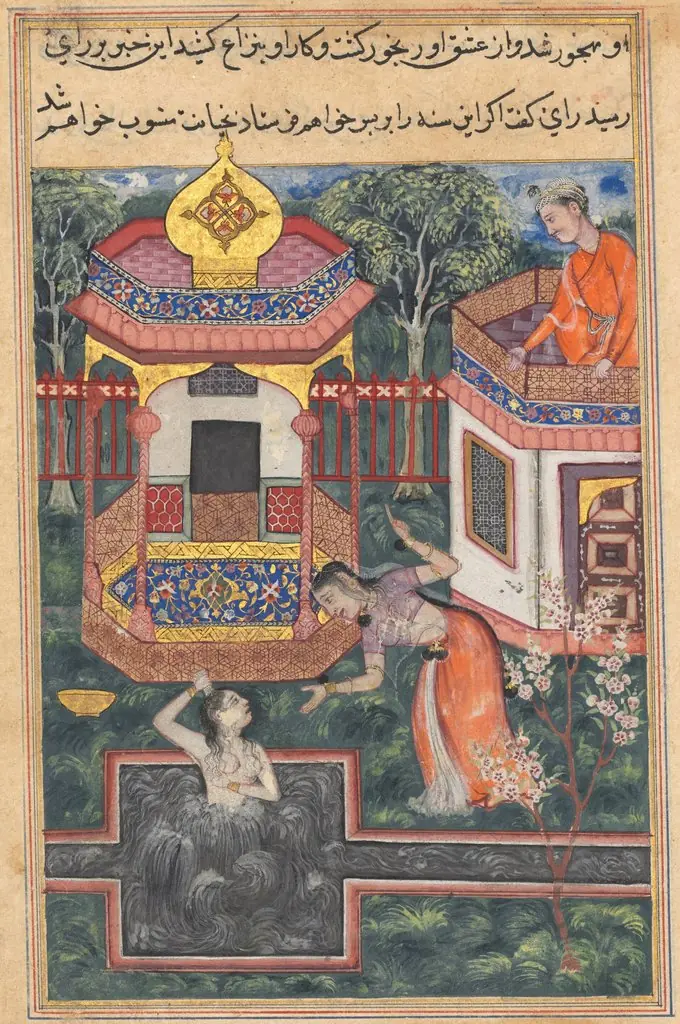 The son of the king of Babylon sees the Brahman transformed into a woman bathing and falls in love with her, from a Tuti-nama (Tales of a Parrot): Thirty-fifth Night
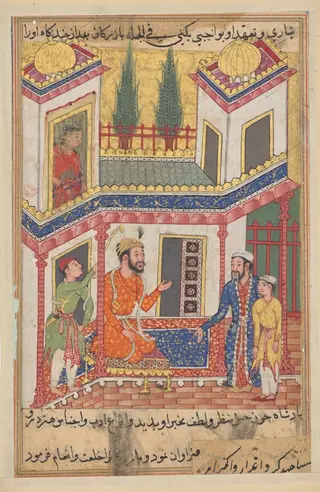 The merchant returns bringing a young slave who is really the son of the princess of Rum, now married to the king, from a Tuti-nama (Tales of a Parrot): Fiftieth Night
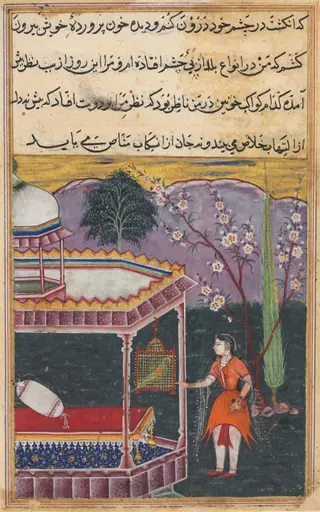 The Parrot Addresses Khujasta at the Beginning of the Eighth Night, from a Tuti-nama (Tales of a Parrot)
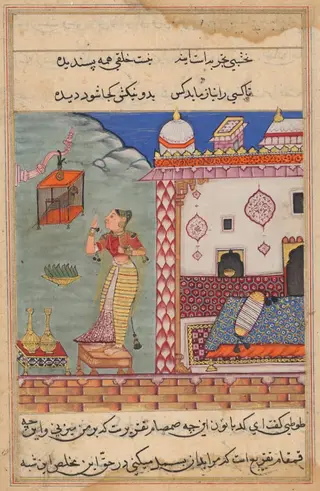 The Parrot Addresses Khujasta at the Beginning of the Twenty-seventh Night, form a Tuti-nama (Tales of a Parrot)
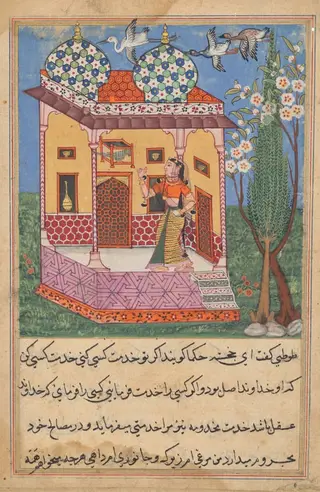 The Parrot Addresses Khujasta at the Beginning of the Twenty-sixth Night, from a Tuti-nama (Tales of a Parrot)
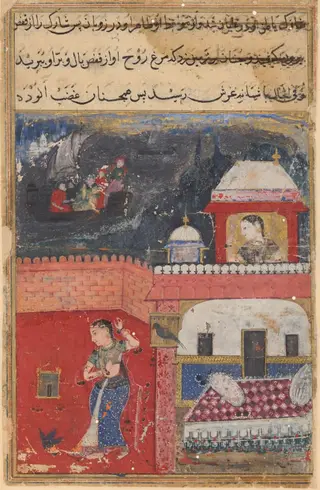 Khujasta kills the pet mynah who advises her not to be unfaithful to Maymun, her husband, from a Tuti-nama (Tales of the Parrot): First Night
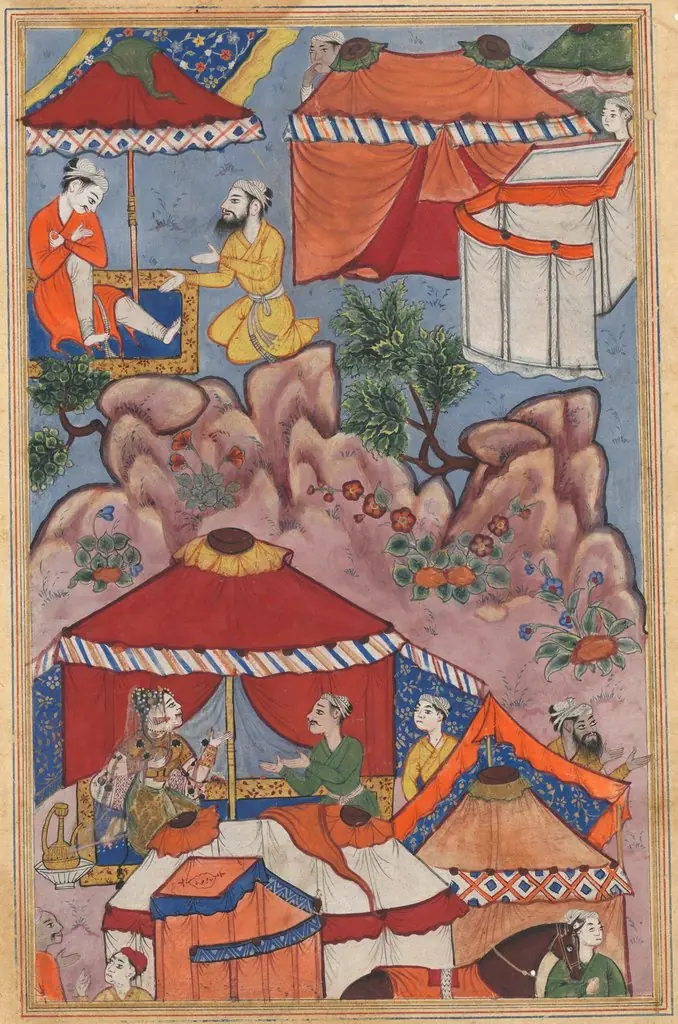 Bashir confides his love for Habbaza to an Arab friend, and sends him to her with a message, from a Tuti-nama (Tales of a Parrot): Twenty-fourth Night
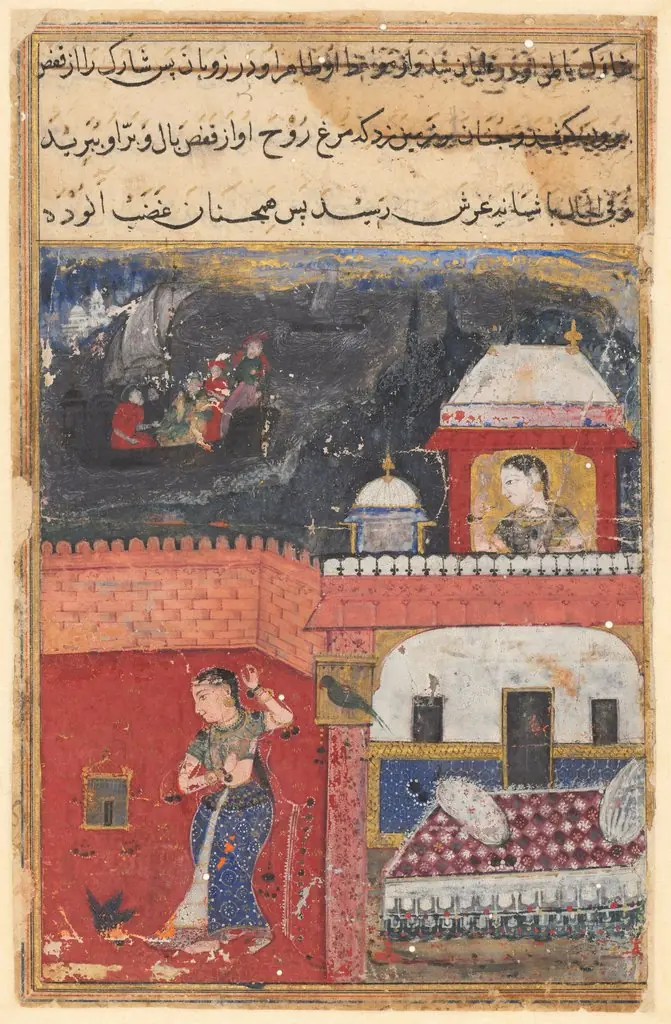 Khujasta kills the pet mynah who advises her not to be unfaithful to Maymun, her husband, from a Tuti-nama (Tales of the Parrot): First Night
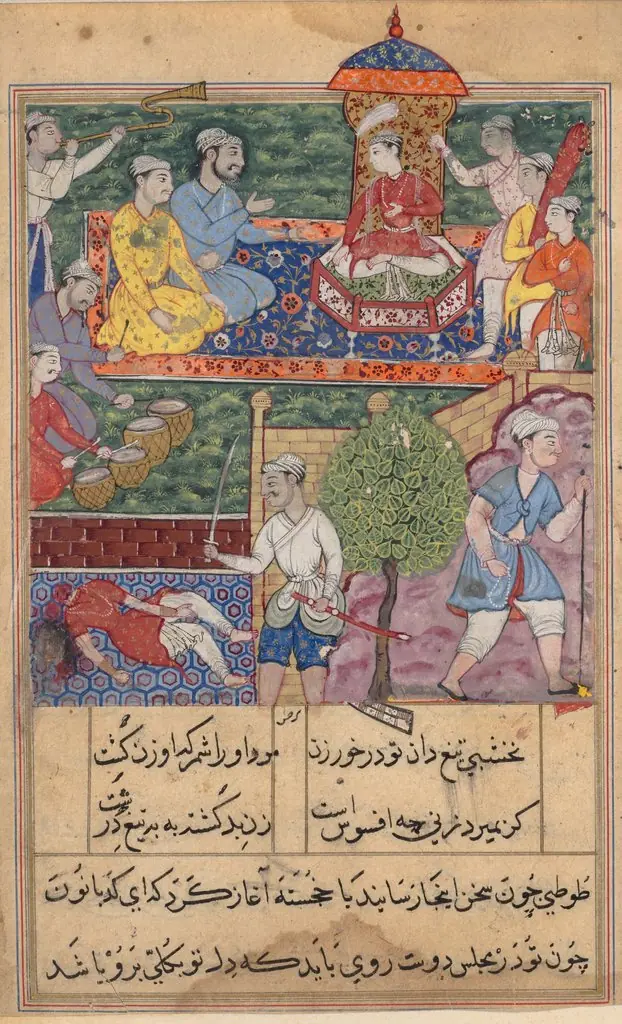 Page from Tales of a Parrot (Tuti-nama): text page
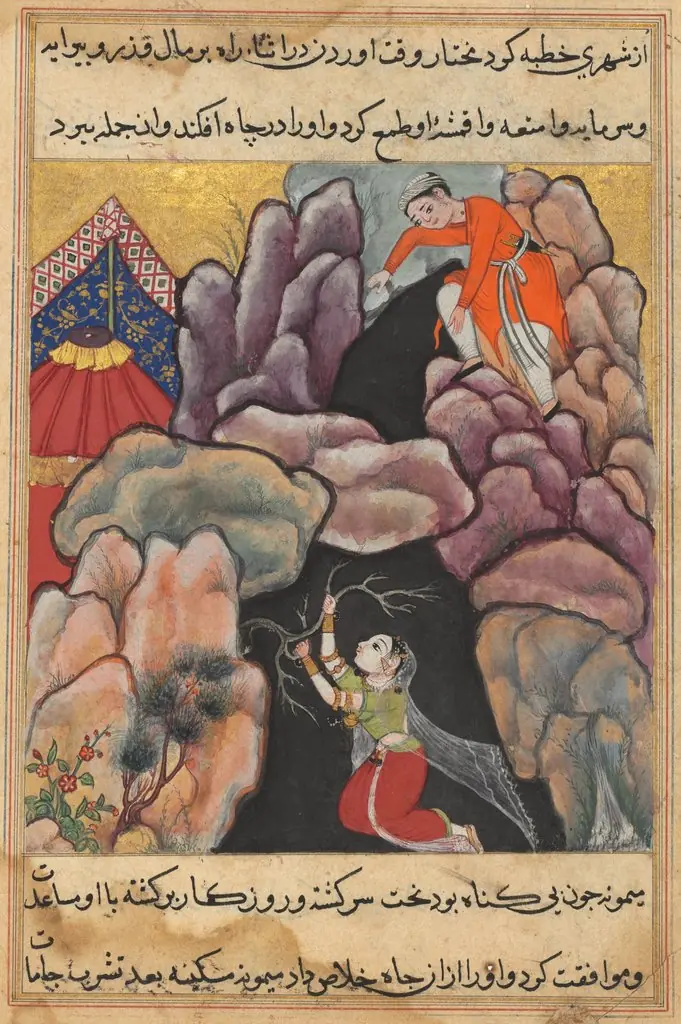 Mukhtar throws his wife Maimuna into the pit, but she saves herself, from a Tuti-nama (Tales of a Parrot): Twenty-fifth Night