Artwork
The painting made by the vizier of the emperor of China for the queen of Rum, from a Tuti-nama (Tales of a Parrot): Thirty-ninth Night
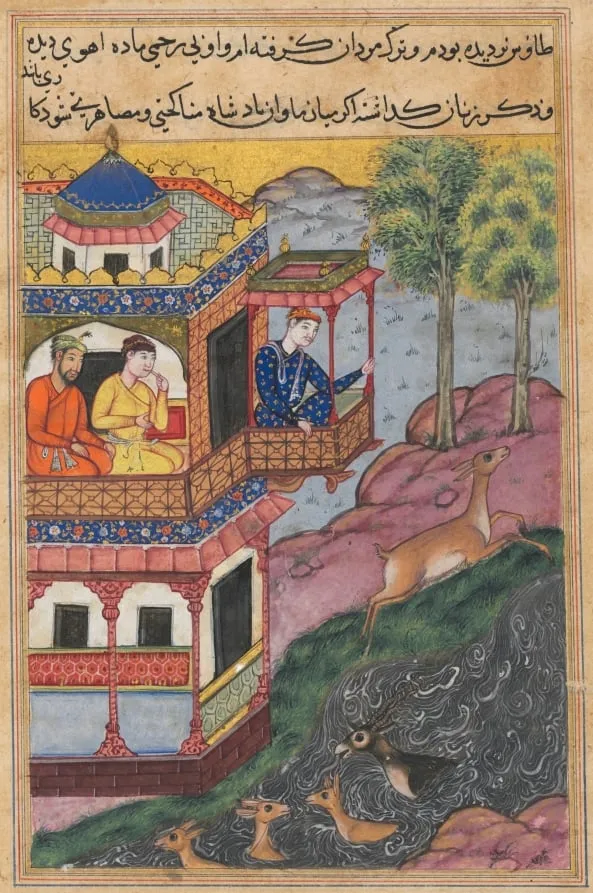
The painting made by the vizier of the emperor of China for the queen of Rum, from a Tuti-nama (Tales of a Parrot): Thirty-ninth Night is an unspecified painting by the Mughal Painting artist Unknown. It dates from 1560 and is held in the collection of the Cleveland Museum of Art. This painting, attributed to the vizier of the Chinese emperor, is a self-referential artwork within a Tuti-nama manuscript.
- Accession no.
- 1962.279.256.b
- Credit line
- Gift of Mrs. A. Dean Perry
About this work
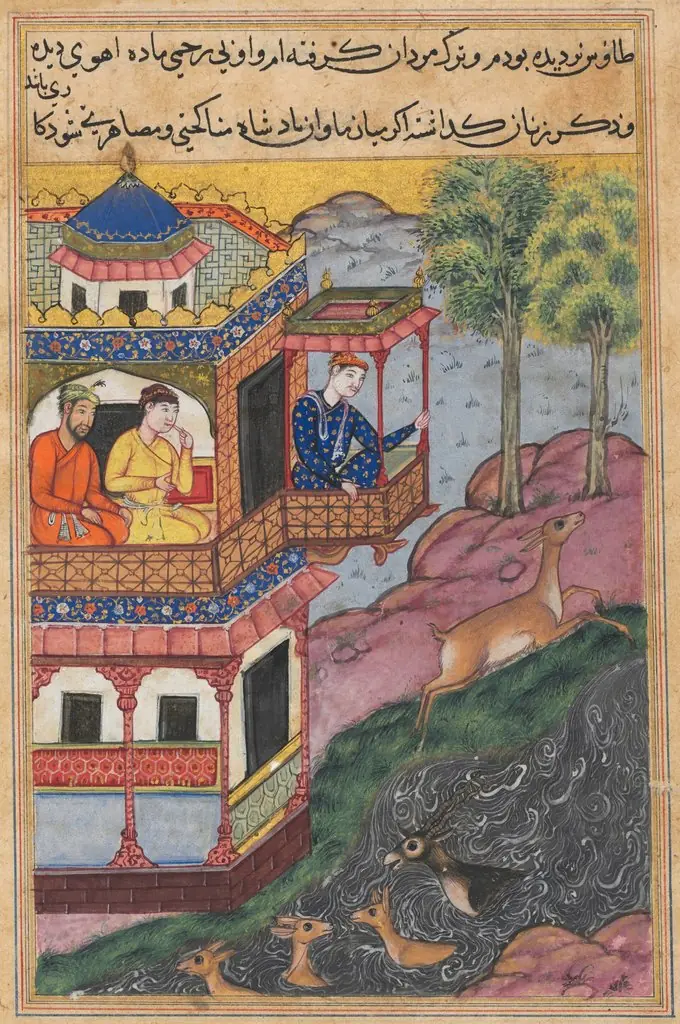
You see a small, busy painting: a Chinese emperor watches from his palace as floodwaters sweep away a stag and its young.
You see a small, busy painting: a Chinese emperor watches from his palace as floodwaters sweep away a stag and its young. A doe flees beside the rushing river. Tiny figures and animals fill the scene in bright colors.
This isn’t from the parrot’s story, it’s a painting about a painting. The vizier made this image to impress the queen of Rum, and it worked. The queen agreed to marry the emperor after seeing it. It’s like a story within a story, tucked into a book of tales.
Look up Mughal India, court of Akbar (reigned 1556–1605) to see more of these layered, lively scenes.
Overview
This painting, attributed to the vizier of the Chinese emperor, is a self-referential artwork within a Tuti-nama manuscript. It deviates from illustrating a narrative from the Tales of a Parrot, instead depicting the vizier's own creation: a scene of the Chinese emperor observing a dramatic flood from his palace.
Subject & Meaning
The subject is twofold: the depicted scene of a flood sweeping away a stag and its young, with a doe fleeing alongside the rushing water, and the meta-context of the emperor's viewing of this scene. The artwork's purpose was to persuade the queen of Rum to marry the emperor, which it successfully achieved.
Technique & Style
Characterized by a small, densely populated composition with tiny figures and animals, the painting utilizes bright colors. Its style reflects the layered, lively aesthetic commonly found in illustrated manuscripts from Mughal India during the reign of Akbar (1556–1605).
History & Provenance
Created by the vizier for a specific diplomatic or romantic objective, the painting's success led to the queen of Rum's agreement to marry the Chinese emperor. Originating from a Tuti-nama, its production context suggests ties to the Mughal court's artistic traditions.
Context
Embedded within a Tuti-nama (Tales of a Parrot), this painting intersects narrative literature with courtly diplomacy. Its creation and placement reflect the sophisticated, layered storytelling and artistic exchange characteristic of Mughal India under Akbar.
Legacy
As part of a Tuti-nama, the painting contributes to the broader legacy of Mughal manuscript illustration, known for its intricate, vibrant depictions. Its self-referential nature adds a unique layer to the understanding of narrative and artistic persuasion in Mughal art.
Artist & collection









- The painting made by the vizier of the emperor of China for the queen of Rum, from a Tuti-nama (Tales of a Parrot): Thirty-ninth Night
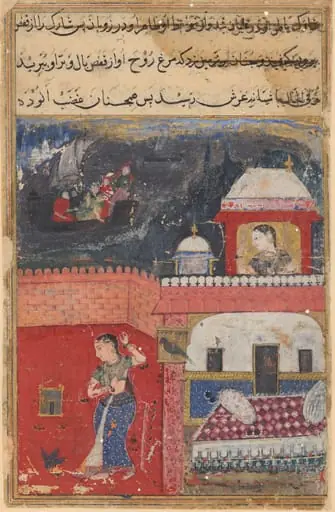 Khujasta kills the pet mynah who advises her not to be unfaithful to Maymun, her husband, from a Tuti-nama (Tales of the Parrot): First Night
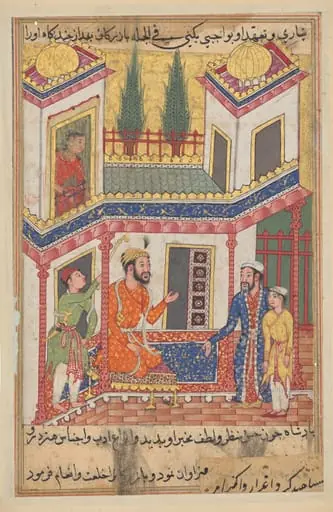 The merchant returns bringing a young slave who is really the son of the princess of Rum, now married to the king, from a Tuti-nama (Tales of a Parrot): Fiftieth Night
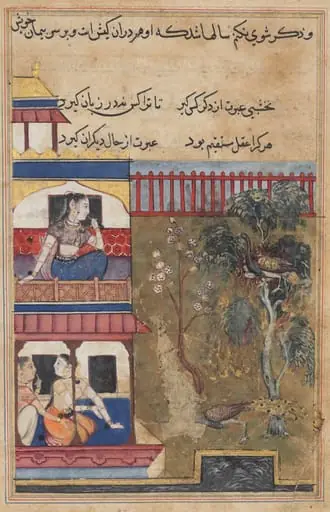 The queen of Rum watches the peahen prefer to burn rather than abandon her eggs while the peacock flees the nest, from a Tuti-nama (Tales of a Parrot): Thirty-ninth Night
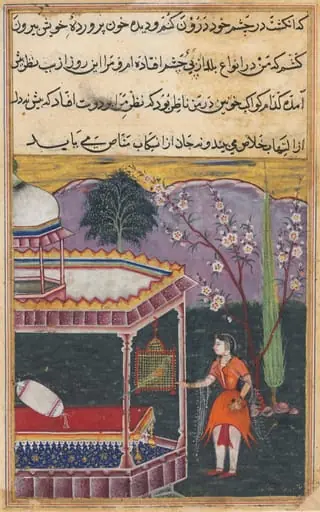 The Parrot Addresses Khujasta at the Beginning of the Eighth Night, from a Tuti-nama (Tales of a Parrot)
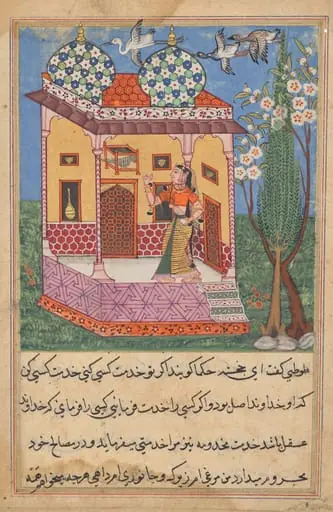 The Parrot Addresses Khujasta at the Beginning of the Twenty-sixth Night, from a Tuti-nama (Tales of a Parrot)
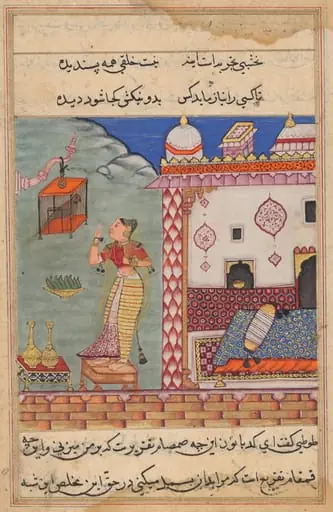 The Parrot Addresses Khujasta at the Beginning of the Twenty-seventh Night, form a Tuti-nama (Tales of a Parrot)