Artwork
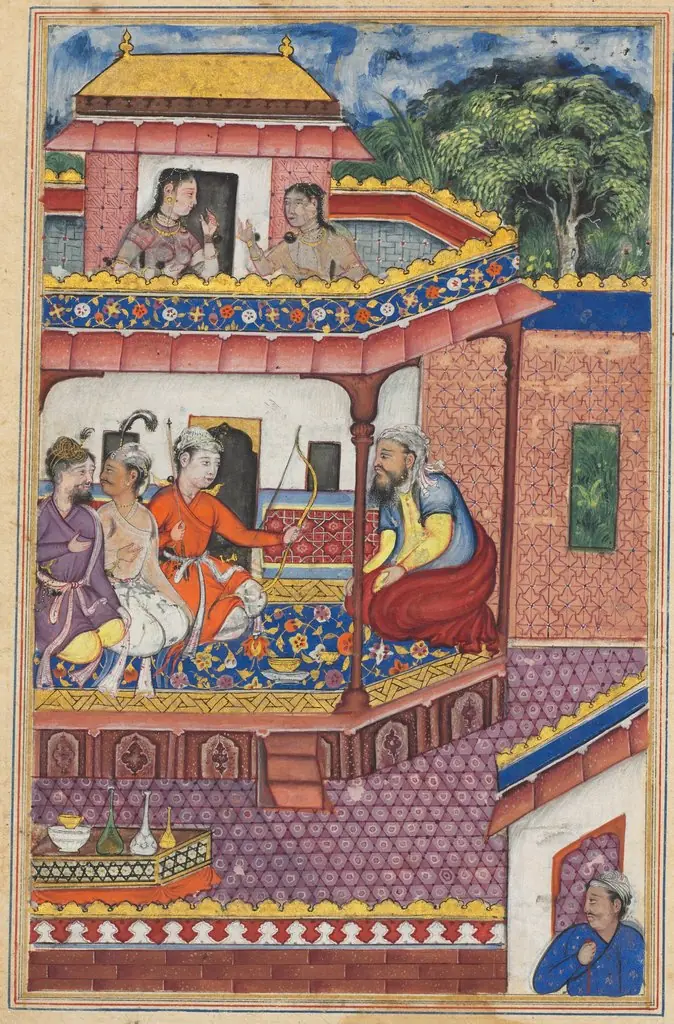
The son of the king of Babylon sees the Brahman transformed into a woman bathing and falls in love with her, from a Tuti-nama (Tales of a Parrot): Thirty-fifth Night
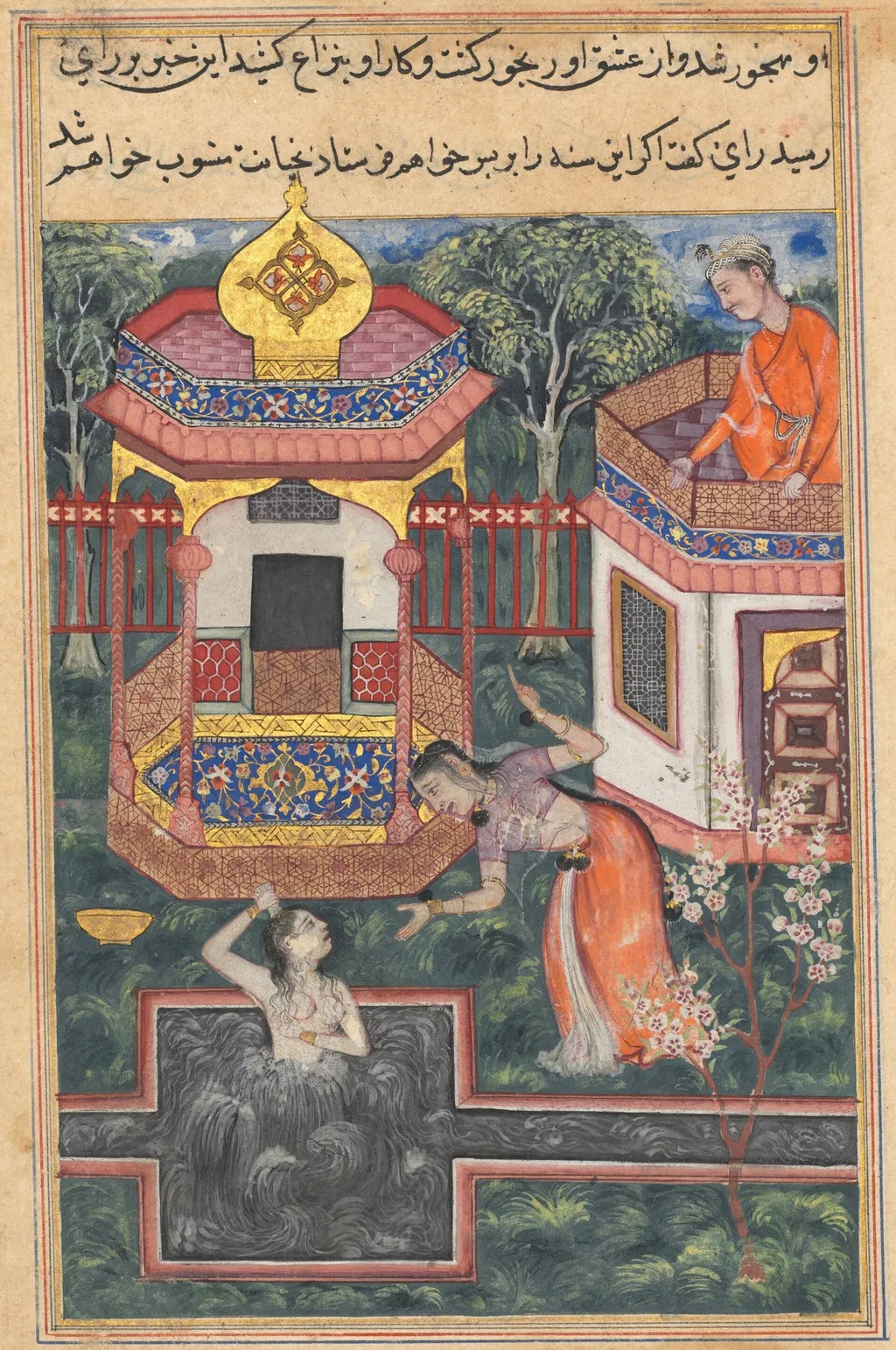
The son of the king of Babylon sees the Brahman transformed into a woman bathing and falls in love with her, from a Tuti-nama (Tales of a Parrot): Thirty-fifth Night is an unspecified painting. It dates from 1560 and is held in the collection of the Cleveland Museum of Art. The work illustrates a narrative episode from the Persian collection of tales known as the Tuti‑nama.
About this work
Subject & Meaning
The thirty-fifth night miniature illustrates a scene from the Tuti-nama in which the son of the Babylonian king unexpectedly sees a brahman who has magically transformed into a woman bathing; upon witnessing her, he falls in love with her. The composition centers on the bathing figure, whose form is rendered with idealized contours and delicate modeling, while the prince appears as a partial onlooker whose desire is sparked by the vision. The episode belongs to the frame-tale cycle in which a parrot recounts moralizing stories to its mistress, and the scene’s inclusion underscores themes of illusion and the transformative power of desire within the manuscript’s narrative arc.
History & Provenance
The object later entered the collection of the Cleveland Museum of Art, where it is cataloged under the accession number 1962.
Created in 1560 within the Mughal Empire, this painting originates from a manuscript of the Tuti-nama (Tales of a Parrot). The work was produced by an artist whose specific identity remains unrecorded in available documentation.
The object later entered the collection of the Cleveland Museum of Art, where it is cataloged under the accession number 1962.279.234.a. No further details regarding its commission, intermediate ownership history, or specific circumstances of creation prior to its museum acquisition are provided in the current records.
The miniature depicting the son of the Babylonian king falling in love with a Brahman transformed into a woman appears in the Cleveland Museum of Art collection. It is accessioned under the identifier 1962.279.234.a. The work was created in 1560 within the Mughal Empire and is part of the museum's Indian miniature paintings holdings.
Context
The painting depicts a narrative from the Tuti-nama where a Babylonian prince falls in love with a Brahman transformed into a woman, reflecting Mughal artistic synthesis of Persian storytelling and Indian sensibilities. Executed circa 1560, it exemplifies the era's integration of literary themes within miniature painting traditions. The work is housed in the Cleveland Museum of Art, which holds it as part of its Mughal collection (1962.279.234.a).
Scholarly attention has focused on its role in understanding cross-cultural exchanges during the Akbar period, particularly how Hindu subjects were rendered within Islamic artistic frameworks.
Legacy
The painting entered the Cleveland Museum of Art collection and is cataloged as 1962.279.234.a, reflecting its attribution to the Mughal period circa 1560. Its subject, depicting a royal figure’s romantic fascination with a transformed sage, has been cited in scholarship on cross-cultural narrative transmission in Persianate manuscript traditions, illustrating how indigenous Indian stories were adapted within Islamic artistic contexts. The work’s visual rendering of erotic longing within a spiritual allegory contributed to later interpretations of gender fluidity in devotional art, influencing studies of narrative empathy in early modern South Asian visual culture.
Overview
The work illustrates a narrative episode from the Persian collection of tales known as the Tuti‑nama. In the composition a woman is depicted bathing in a pool, her dark hair cascading as she arches backward with raised arms. A male figure, dressed in vivid orange robes, watches from a pavilion adorned with red and gold motifs and a golden dome, his expression one of startled surprise.
Technique & Style
Executed in a miniature painting tradition, the piece employs fine brushwork to render intricate foliage, flowering shrubs, and architectural details. A decorative border of interlaced red and blue patterns frames the scene, while Arabic calligraphic text crowns the composition, integrating literary and visual elements typical of Persian illustrated manuscripts.
Artist & collection

- The son of the king of Babylon sees the Brahman transformed into a woman bathing and falls in love with her, from a Tuti-nama (Tales of a Parrot): Thirty-fifth Night
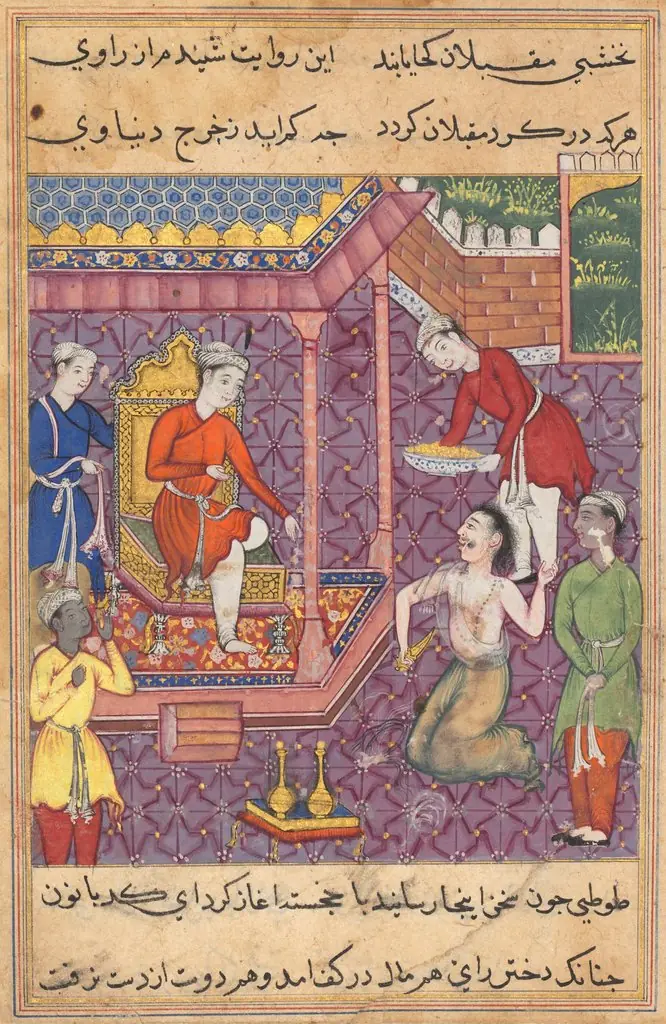 The magician disguised as a Brahman returns to claim his “daughter-in-law,” from a Tuti-nama (Tales of a Parrot): Thirty-fifth Night
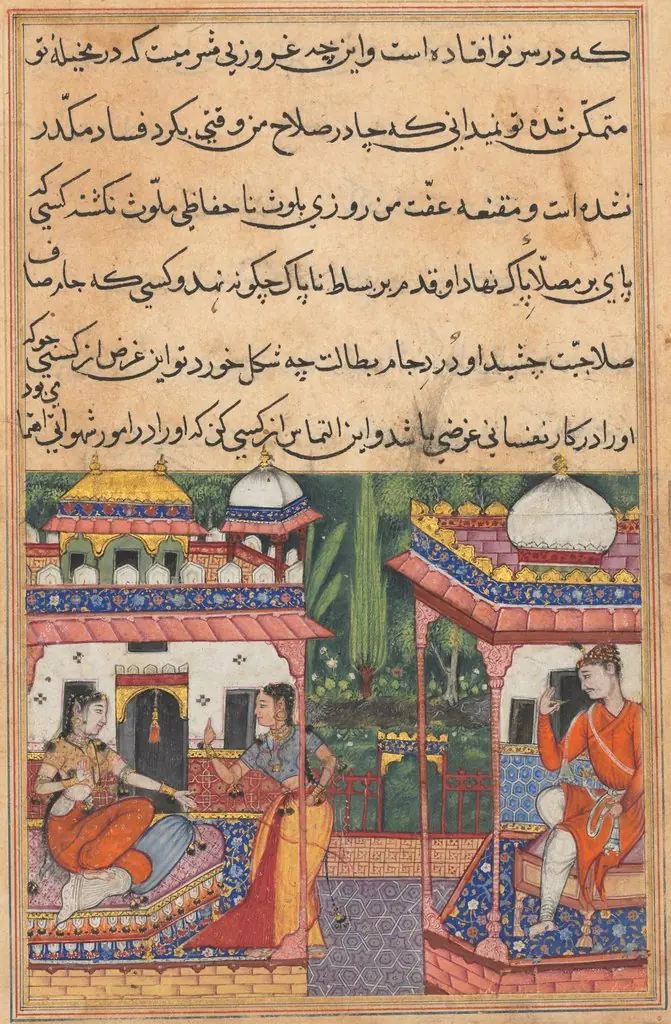 Kaiwan sends a message of love to Khurshid, wife of his brother Utarid who is away on a journey, from a Tuti-nama (Tales of a Parrot): Thirty-second Night
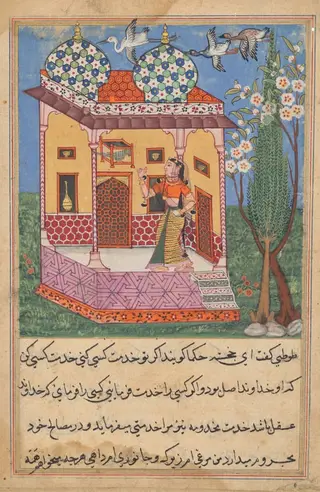 The Parrot Addresses Khujasta at the Beginning of the Twenty-sixth Night, from a Tuti-nama (Tales of a Parrot)
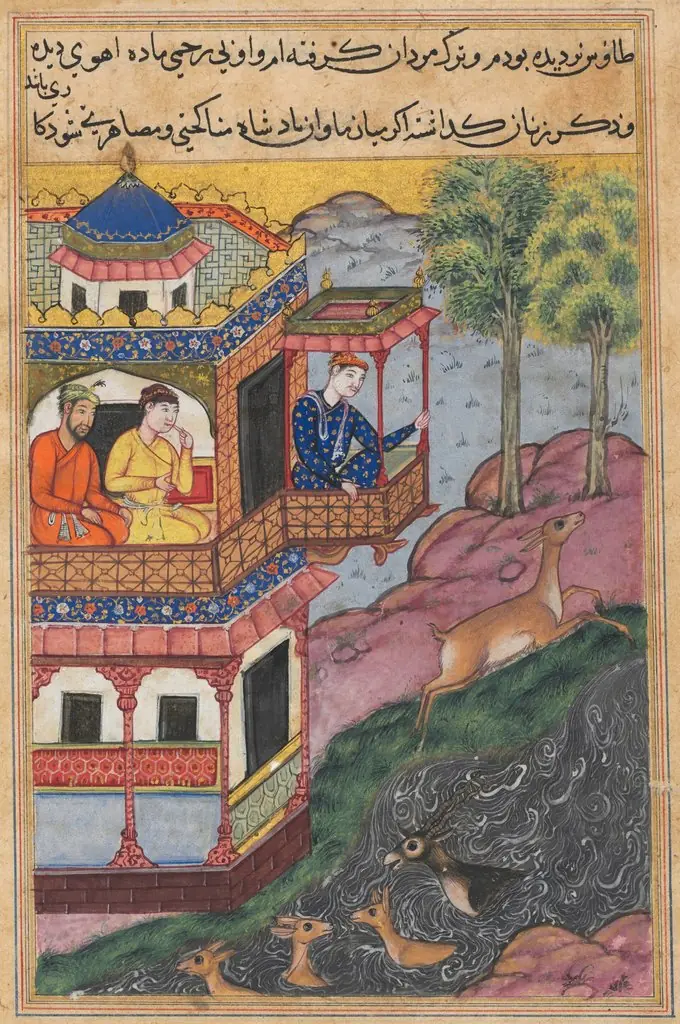 The painting made by the vizier of the emperor of China for the queen of Rum, from a Tuti-nama (Tales of a Parrot): Thirty-ninth Night
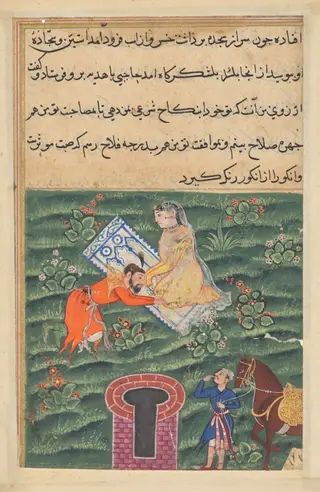 Khusrau, the King of Kings, pays homage to the pious daughter of Khassa, from a Tuti-nama (Tales of a Parrot): Fifty-first Night
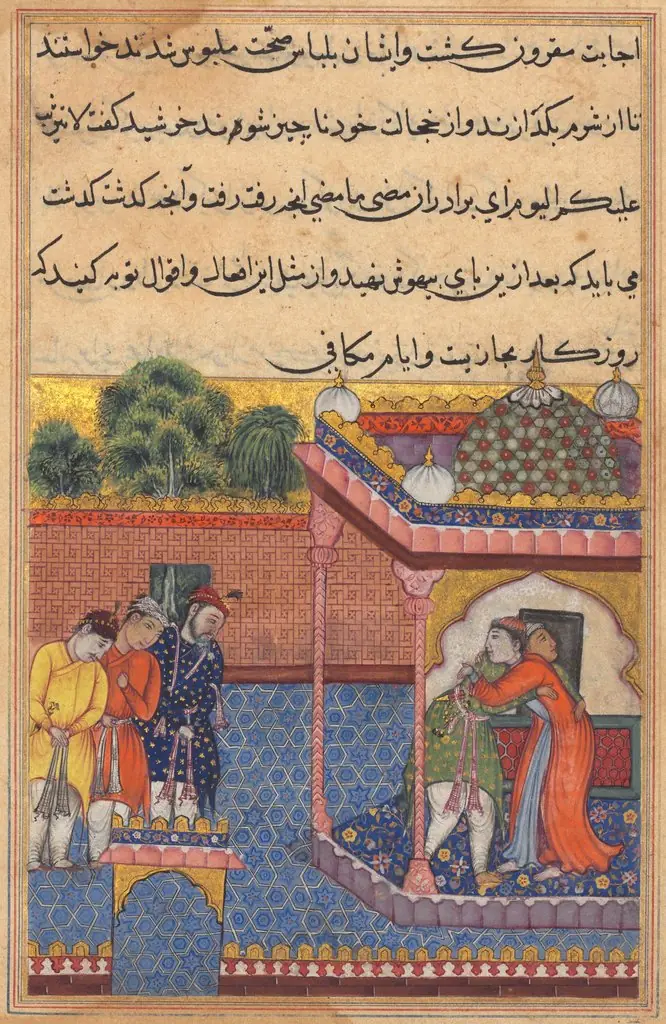 Khurshid reunited with her husband Utarid, from a Tuti-nama (Tales of a Parrot): Thirty-second Night
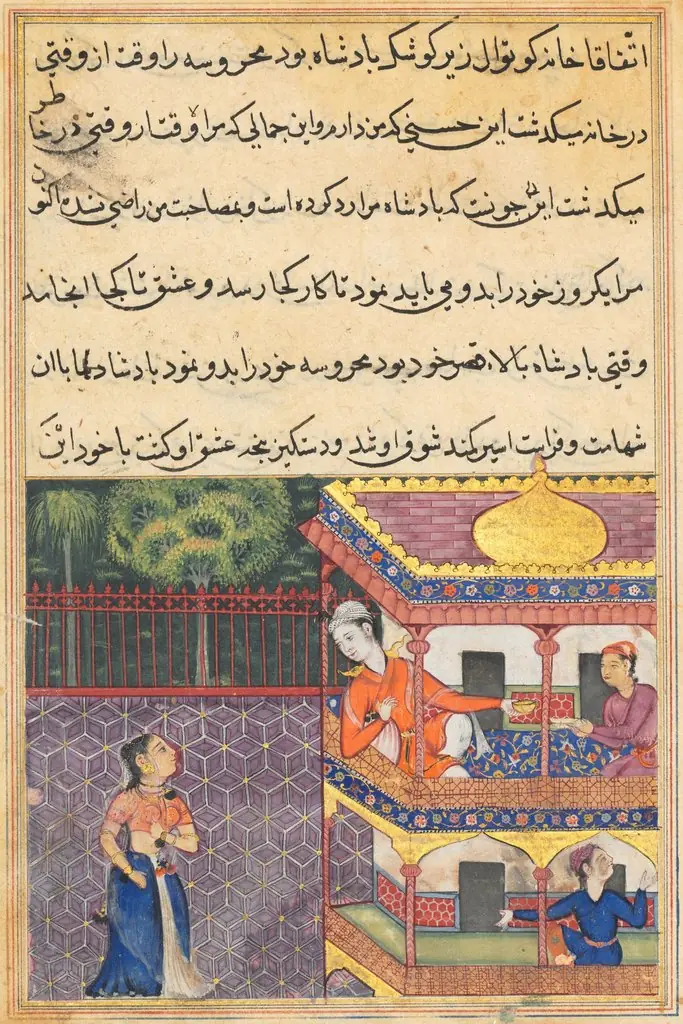 The king of Zabul sees Mahrusa from his palace balcony, from a Tuti-nama (Tales of a Parrot): Thirty-sixth Night
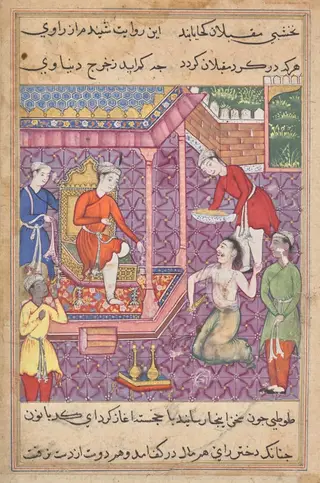 The magician disguised as a Brahman returns to claim his “daughter-in-law,” from a Tuti-nama (Tales of a Parrot): Thirty-fifth Night
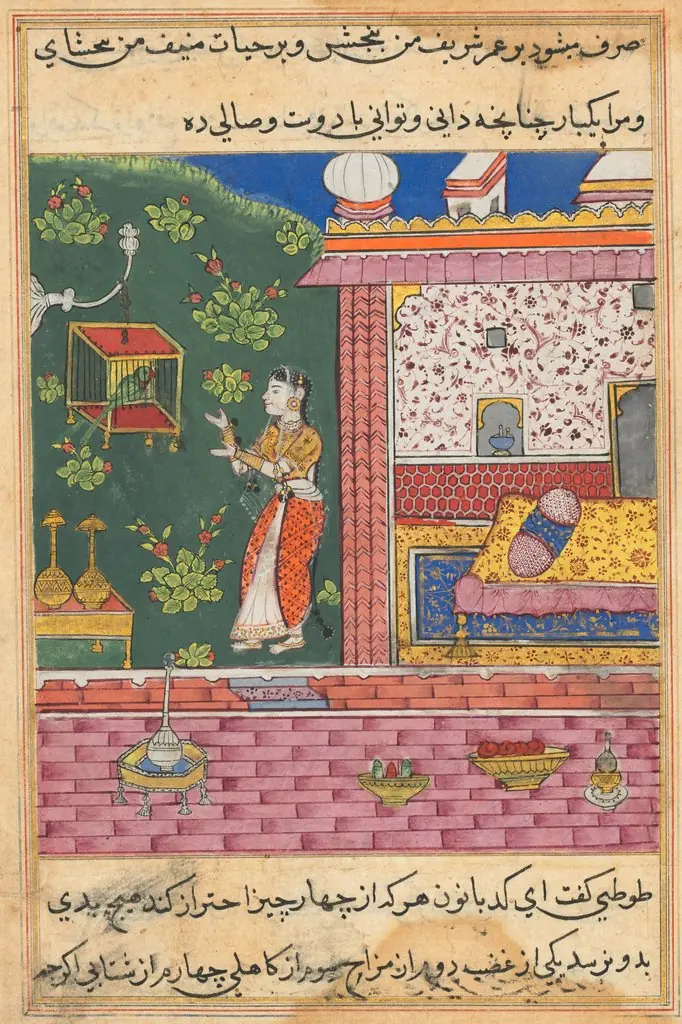 The Parrot Addresses Khujasta at the Beginning of the Thirtieth Night, from a Tuti-nama (Tales of a Parrot)
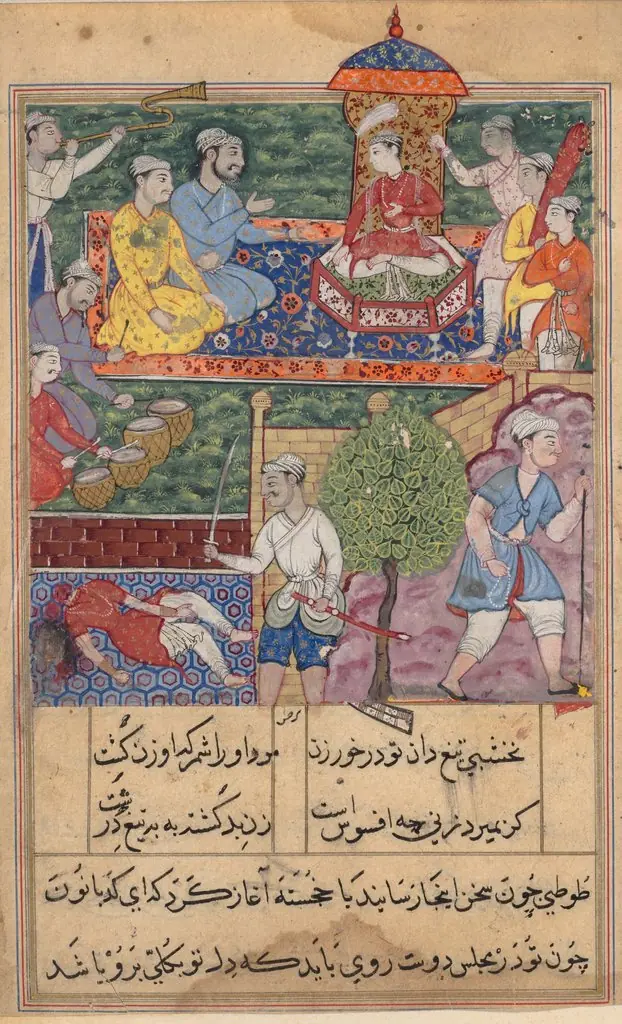 Page from Tales of a Parrot (Tuti-nama): text page
 The three young men present themselves as suitors for the hand of Zuhra, the daughter of the merchant of Kabul, from a Tuti-nama (Tales of a Parrot): Thirty-fourth Night