Artwork
『過去現在絵因果経』 断簡 (松永本)|The Illustrated Sutra of Past and Present Karma (Kako genzai inga kyō emaki)
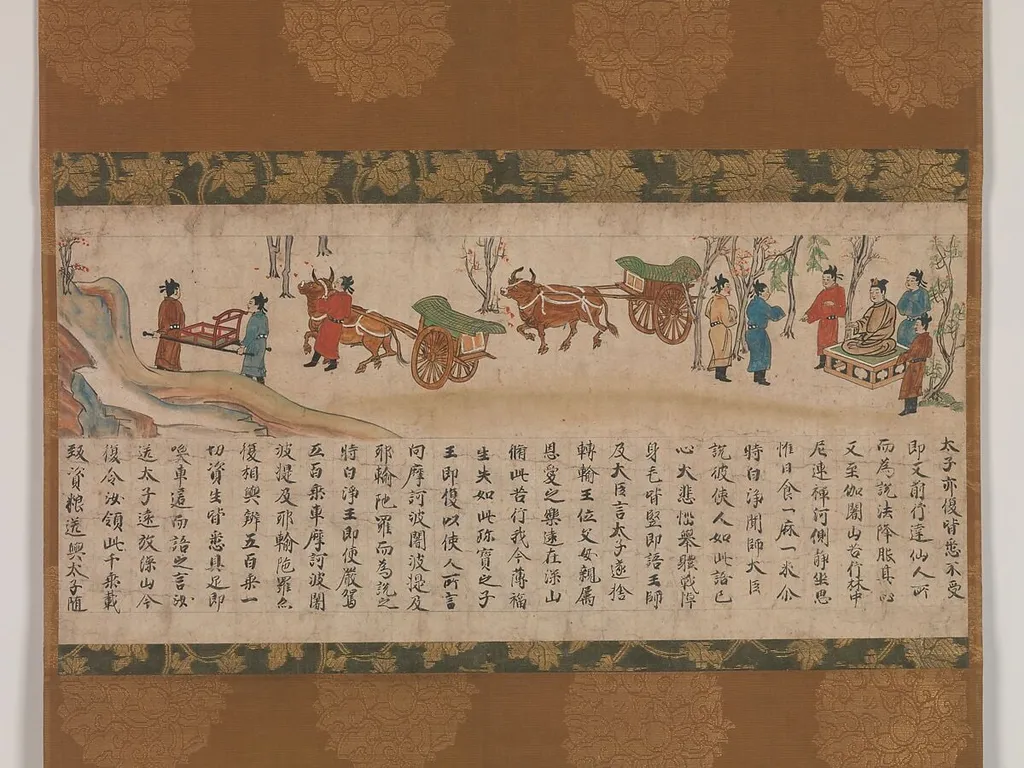
『過去現在絵因果経』 断簡 (松永本)|The Illustrated Sutra of Past and Present Karma (Kako genzai inga kyō emaki) is an ink painting. It dates from 1283 and is held in the collection of the Metropolitan Museum of Art. This hanging scroll, titled The Illustrated Sutra of Past and Present Karma, is a painting executed with ink and color on paper.
- Accession no.
- 2012.249
- Credit line
- Purchase, several members of The Chairman's Council Gifts, Miriam and Ira D. Wallach Foundation and Mary and James G. Wallach Foundation Gifts, 2012
About this work
Subject & Meaning
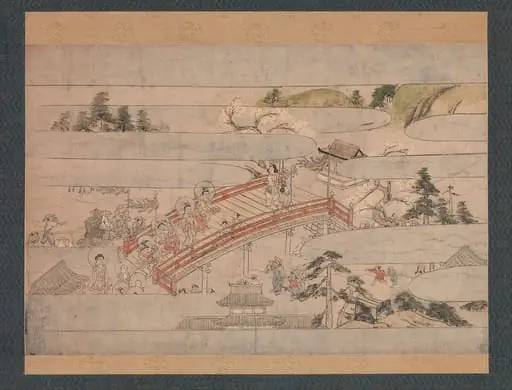
The fragment depicts a Buddhist narrative scene from the Illustrated Sutra of Past and Present Karma, showing a cart drawn by oxen with a man nearby.
The fragment depicts a Buddhist narrative scene from the Illustrated Sutra of Past and Present Karma, showing a cart drawn by oxen with a man nearby. This imagery illustrates a karmic episode in which actions and their consequences are visualized through everyday symbols: the cart and oxen convey the burden of deeds, while the human figure represents the agent whose past actions shape present outcomes. As part of the sutra’s didactic program, the scene serves to make abstract Buddhist teachings on cause and effect tangible for viewers.
Technique & Style
The work is a 13th‑century Japanese hanging scroll painted in ink and polychrome on paper. It belongs to the religious painting genre and portrays a Buddhist narrative featuring a cart, a man and oxen. Executed in the emaki format, the composition employs linear perspective and layered narrative scenes typical of Heian‑Kamakura emaki, with delicate brushwork and muted pigments.
The piece is preserved in the Metropolitan Museum of Art collection; its current condition has not been publicly documented.
History & Provenance
The illustrated sutra 『過去現在絵因果経』, known as the Kako genzai inga kyō emaki, is a 1283 hanging scroll painted in ink and color on paper. The work, classified as religious painting, was produced in Japan by an anonymous artist and depicts a Buddhist scene featuring a cart, a man, and oxen. It is presently housed in the Metropolitan Museum of Art, which lists the piece as part of its collection and records its inception in 1283.
The scroll’s provenance traces from its creation in 13th‑century Japan to its acquisition by the museum, where it remains on display.
The illustrated handscroll 『過去現在絵因果経』断簡 (松永本), dated 1283, is housed in the collection of the Metropolitan Museum of Art in New York. The work is classified as a religious painting within the museum's Asian art department and is recorded under the genre of religious art, depicting Buddhist narrative scenes that include a cart, a man, and oxen. No specific accession or inventory number is listed in the available documentation, and no exhibition history for this piece is documented in the sources consulted.
Overview
This hanging scroll, titled The Illustrated Sutra of Past and Present Karma, is a painting executed with ink and color on paper. It depicts a narrative scene featuring a monk instructing a group of men. A wooden cart, drawn by two oxen, is also visible within the composition. The artwork serves as a visual interpretation of Buddhist teachings.
Context
This fragment belongs to a larger body of work, as evidenced by the existence of comparable sections. For instance, a related scene from The Illustrated Sutra of Past and Present Karma is preserved in the collection of The Metropolitan Museum of Art. Such multiple renditions highlight the significance and widespread dissemination of this particular Buddhist narrative.
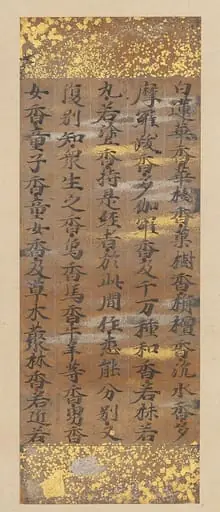
Artist & collection

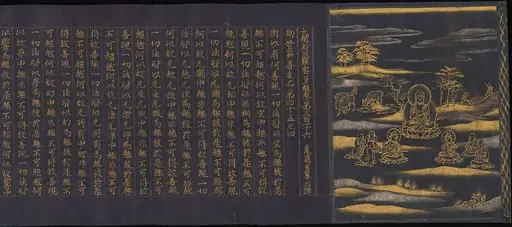 大般若経(中尊寺経)|Great Wisdom Sutra (Daihannya-kyō), from the Chūsonji Temple Sutra Collection (Chūsonji-kyō)
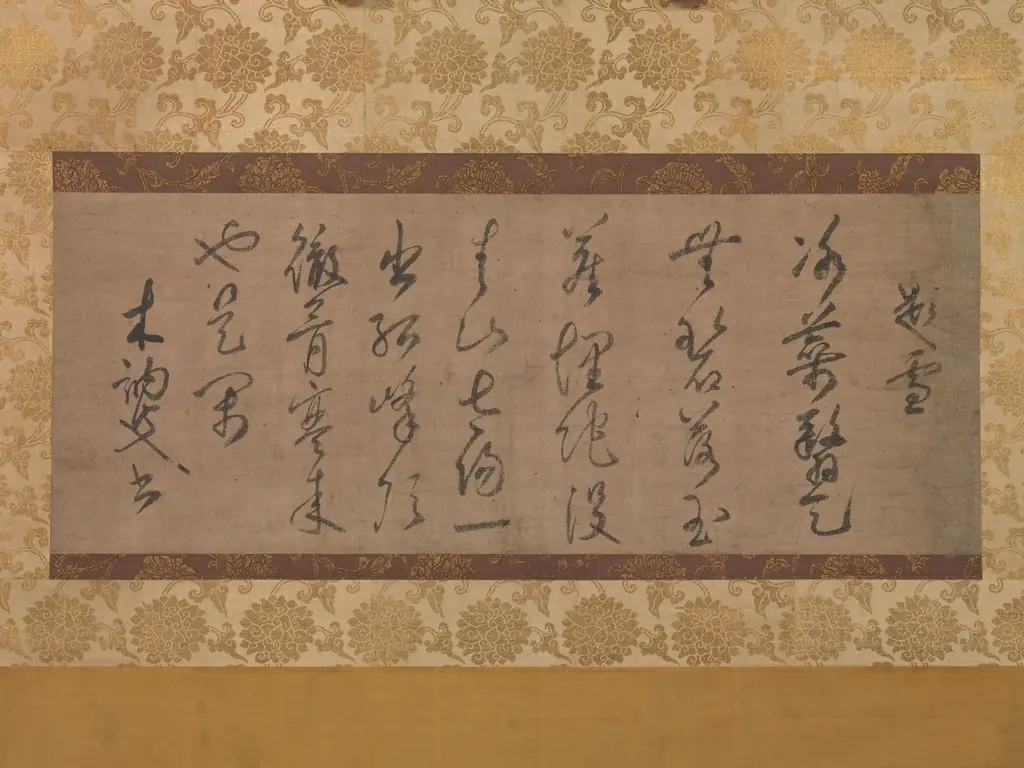 Poem on the Theme of Snow
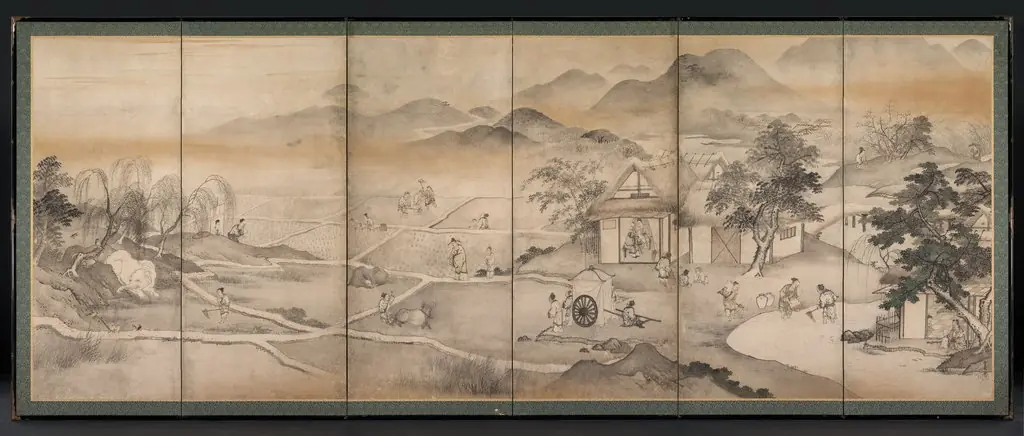 Emperor Yao Visiting Yu Chonghua
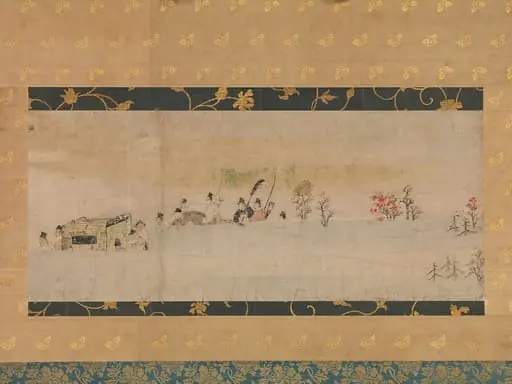 住吉物語絵巻 詞書断簡|The Tale of Sumiyoshi
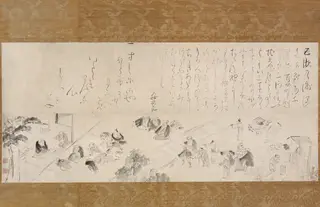 Group Pilgrimage to the Jizo Nun
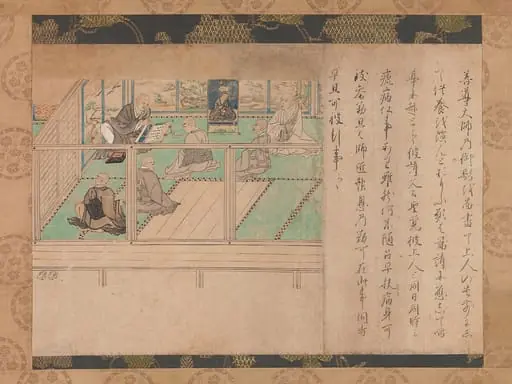 拾遺古徳伝絵断簡|Illustrated Biography of Hōnen (Shūikotokūden-e)
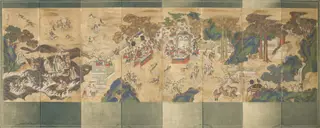 The Banquet of Seowangmo (Xiwangmu), Queen Mother of the West
 秋夜長物語絵巻断簡|The Final Scene from A Long Tale for an Autumn Night (Aki no yonaga monogatari)
 Pastimes and Pleasures in the Eastern Hills of Kyoto
 Untitled