Artwork
Three Apostles
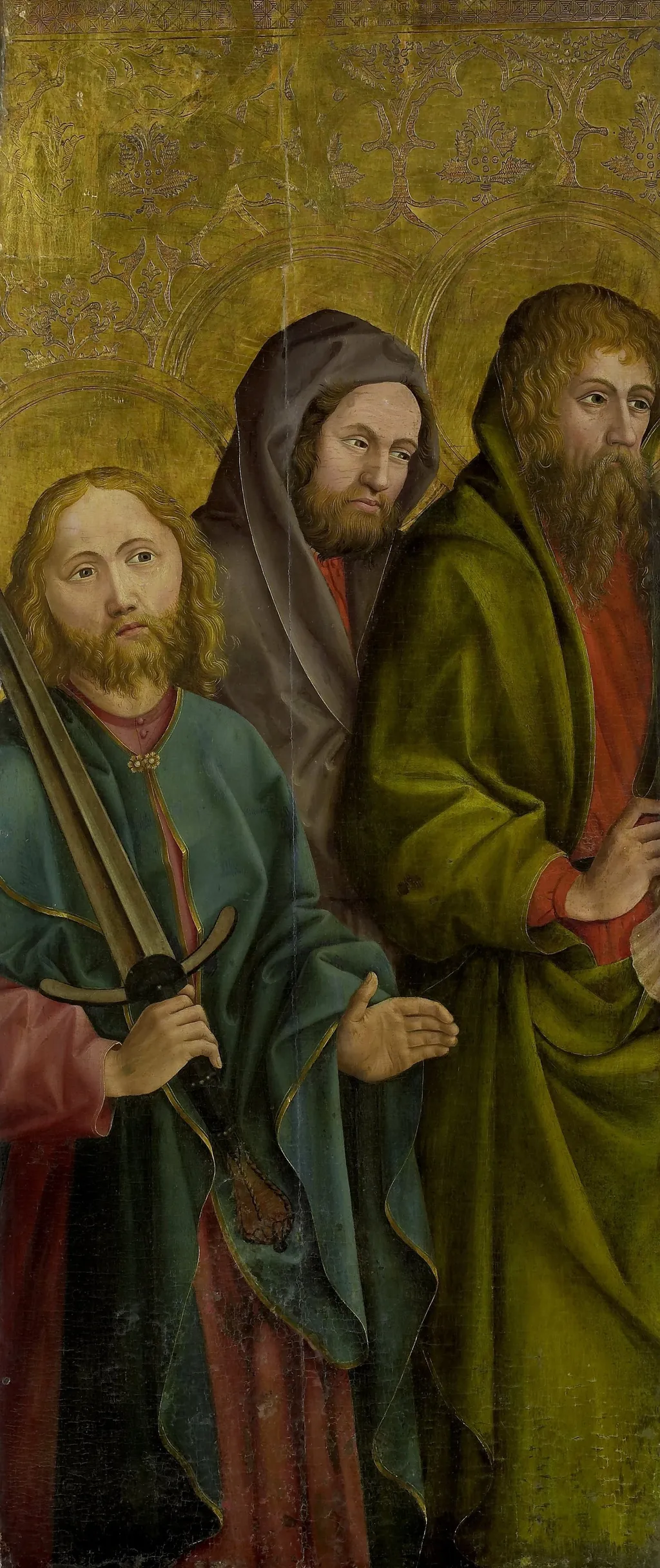
Three Apostles is an oil painting. It dates from 1500 and is held in the collection of the Rijksmuseum. Three bearded figures stand side by side, each cloaked in deep‑hued robes of green, red or blue, their hoods drawn over their heads.
About this work
Subject & Meaning
Three Apostles is a religious painting that depicts apostles, the immediate companions of Jesus Christ who figure centrally in early Christian tradition.
Three Apostles is a religious painting that depicts apostles, the immediate companions of Jesus Christ who figure centrally in early Christian tradition. As a work of religious art from around 1500, executed in oil on panel, it belongs to the devotional genre that flourished in the late medieval and early modern Low Countries, where small-scale images of sacred figures were produced for private contemplation and liturgical use.
The narrow vertical format of the panel, measuring 134 by 57 centimetres, is consistent with the depiction of standing holy figures arranged in a row, a compositional scheme commonly used for apostle panels in this period. By presenting three apostles together, the work functions both as a portrait of foundational Church figures and as a symbolic affirmation of faith, with each apostle serving as an exemplar of discipleship and witness to Christ.
The painting's religious subject matter places it within a long iconographic tradition in which apostles are identified through individual attributes and serve as intercessors and models of Christian virtue.
Technique & Style
Three Apostles is executed in oil paint on a wooden panel support. The dimensions of the panel measure 134 cm in height by 57 cm in width. As an early sixteenth-century work, it reflects the techniques typical of Netherlandish painting of the period, including meticulous glazing and fine brushwork to achieve detailed textures and luminous surfaces.
Stylistically, the painting exhibits characteristics of late Gothic religious art, with an emphasis on linear precision and symbolic clarity. The figures are rendered with careful attention to anatomical detail and drapery folds, suggesting the influence of devotional imagery intended for private contemplation or ecclesiastical settings. The condition of the work, while not detailed in available sources, would likely show signs of age-related wear consistent with panel paintings of this era, such as craquelure or minor losses.
History & Provenance
The anonymous oil-on-panel painting known as Three Apostles was created in 1500. This religious work, measuring 134 cm in height and 57 cm in width, is currently held in the collection of the Rijksmuseum. Historical records indicate that the artwork was previously owned by Cornelis Hoogendijk, establishing a specific point in its ownership chain. The piece depicts apostles and remains attributed to an unknown artist.
The painting Three Apostles is held in the collection of the Rijksmuseum in Amsterdam. The artwork, created around 1500, is cataloged within the museum's holdings as an anonymous religious panel painting. Historical records indicate that the work was previously owned by Cornelis Hoogendijk before entering the public collection.
Specific inventory or accession numbers for the piece are not provided in the available documentation, nor are details regarding a public exhibition history listed.
Overview
Three bearded figures stand side by side, each cloaked in deep‑hued robes of green, red or blue, their hoods drawn over their heads. The central figure holds a dark object in his right hand, while the companions keep their hands relaxed at their sides. A backdrop of gold and darker patterned tones frames the group, creating a weighty visual field.
Artist & collection

- The Mocking of Christ
 Saint Paul
 Christ among the Doctors
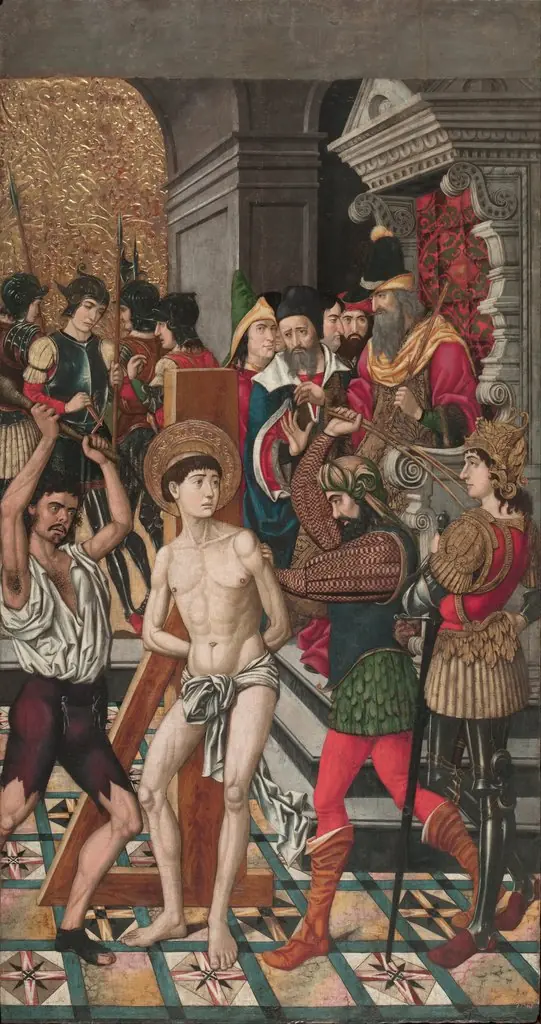 Flagellation of Saint Vincent
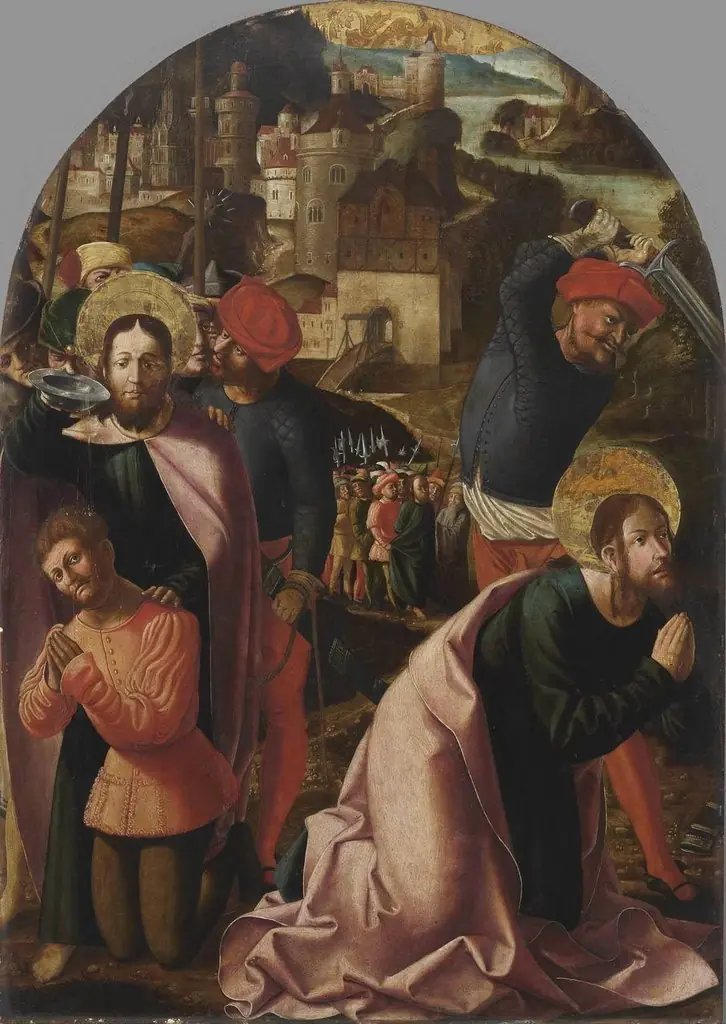 Jakobus-Stephanus-Altar: Der hl. Jakobus tauft Josias und Hinrichtung des Jakobus
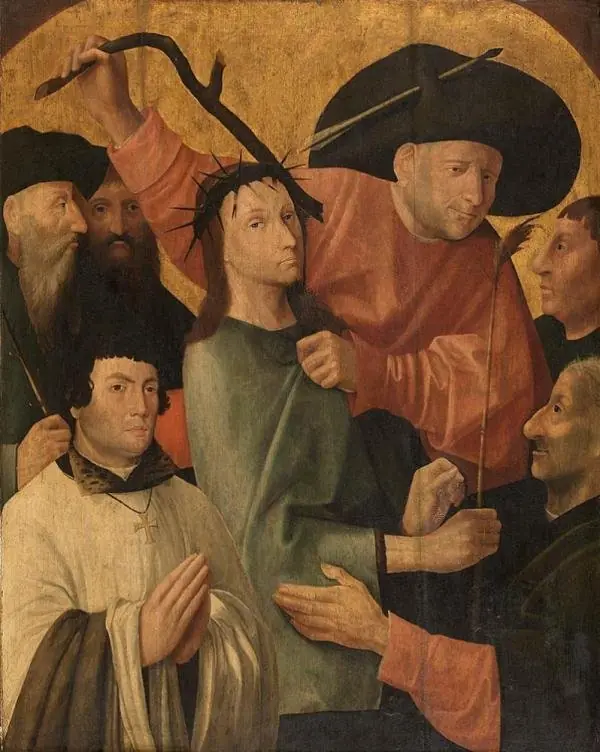 Christ Mocked
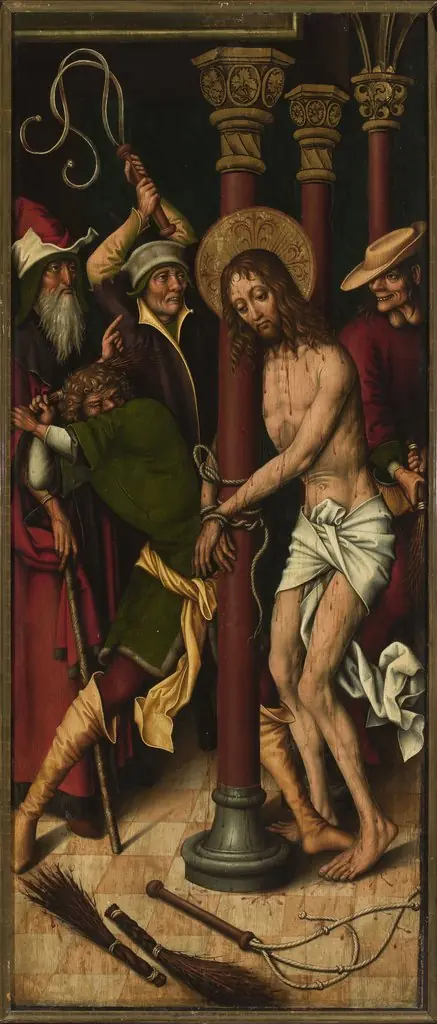 Flagellation of Christ
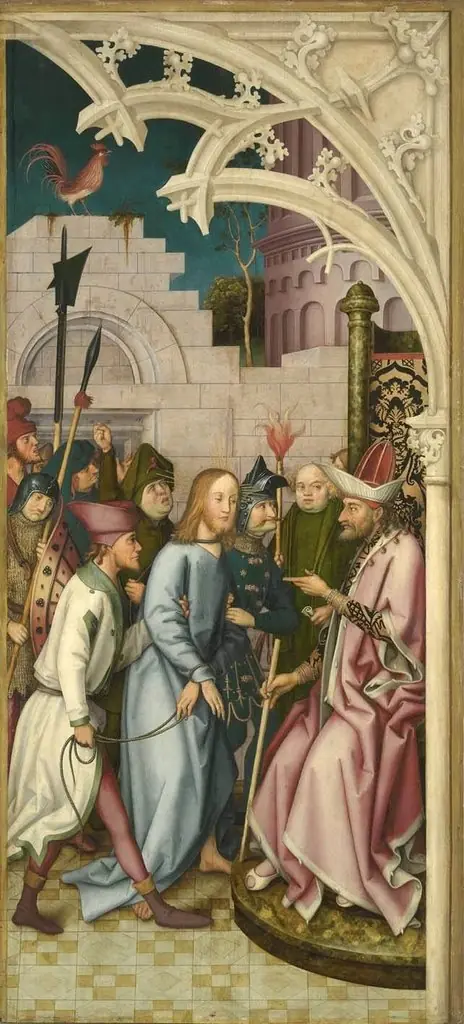 Kaisheimer Altar: Christus vor Pilatus
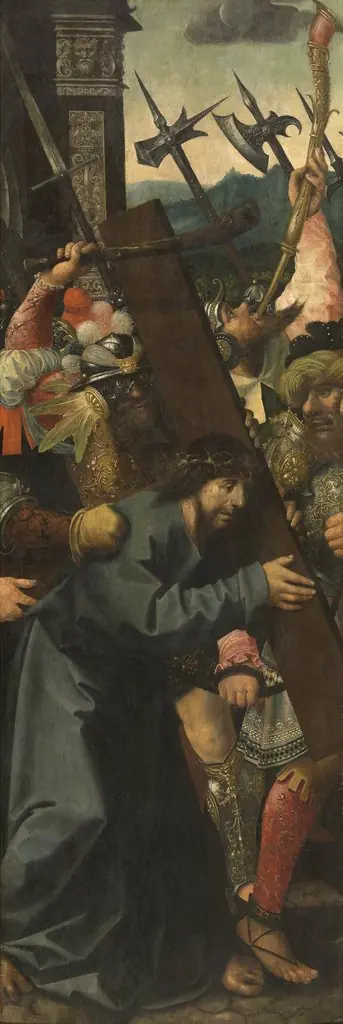 The Bearing of the Cross
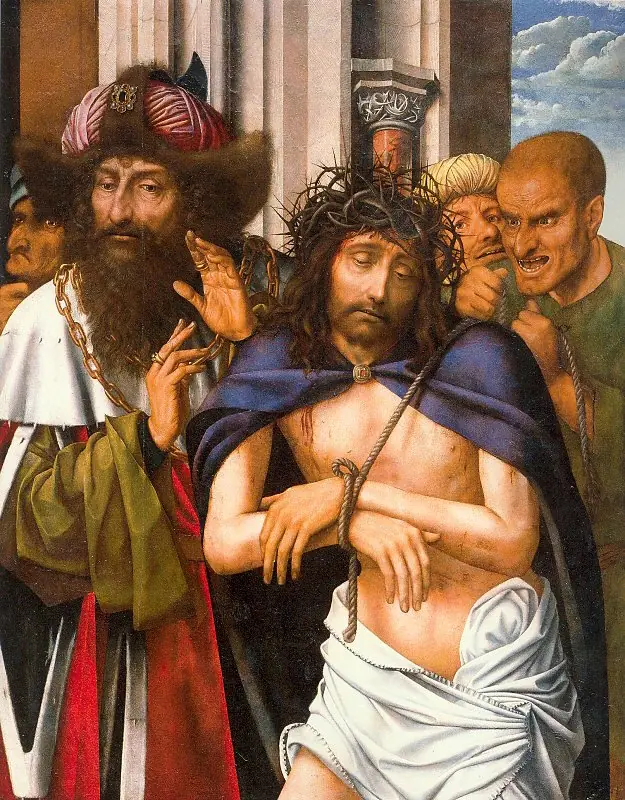 Ecce Homo
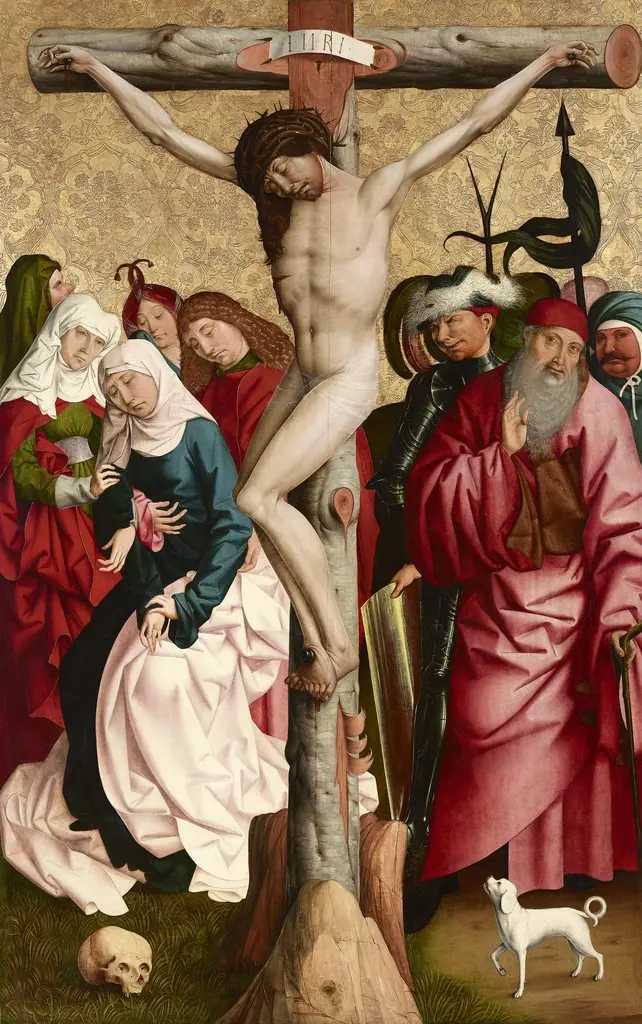 Kreuzigung Christi
 Saint Julian