Artwork
Dragon; Tiger
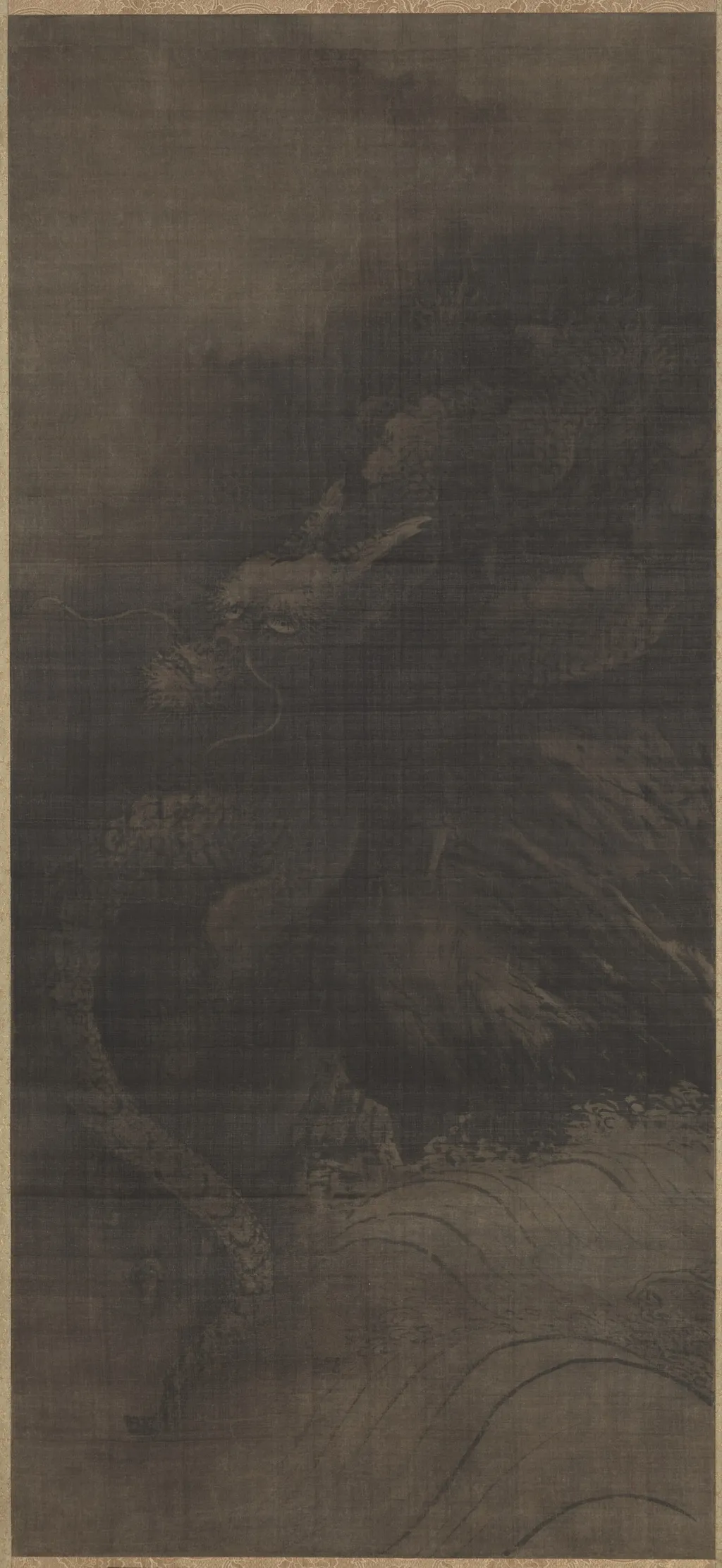
Dragon; Tiger is an unspecified painting by the Song dynasty landscape artist Muqi. It dates from 1262 and is held in the collection of the Cleveland Museum of Art.
About this work
The works traveled to Japan after they were made and stayed there for centuries under the Ashikaga shogunate before landing in Cleveland.
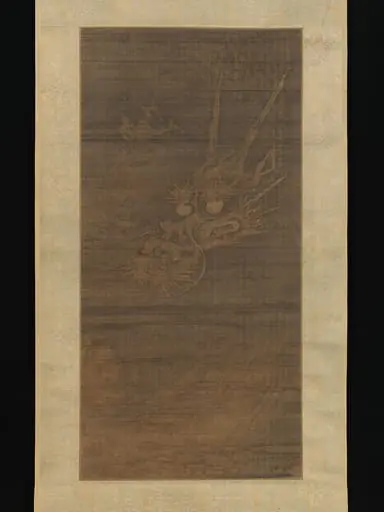
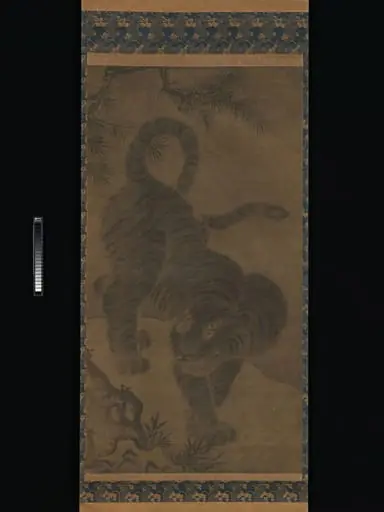
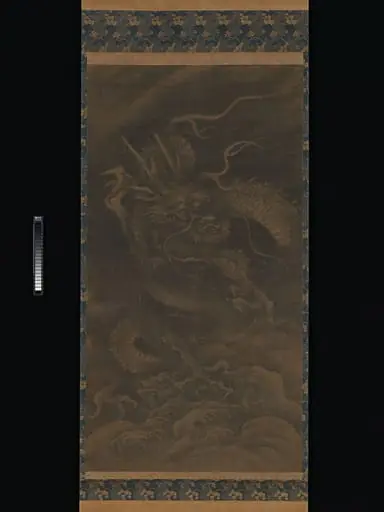
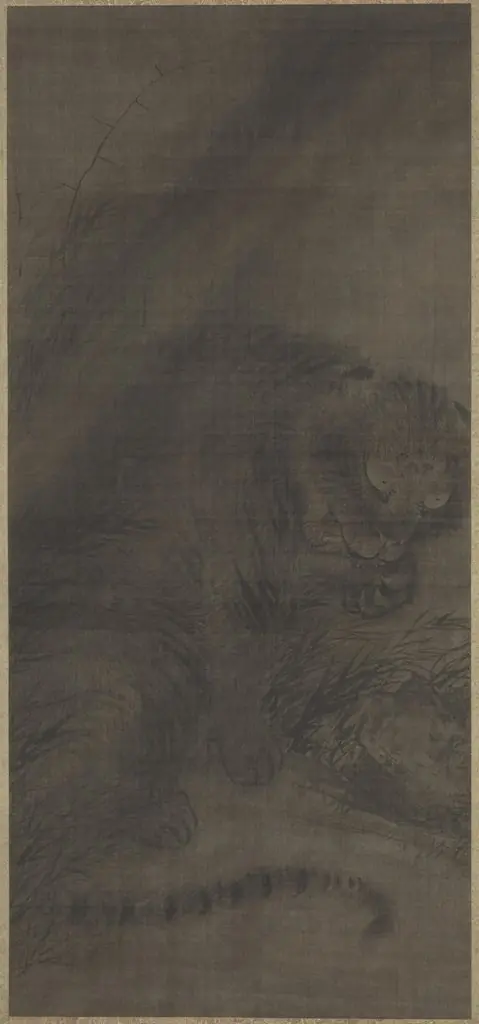
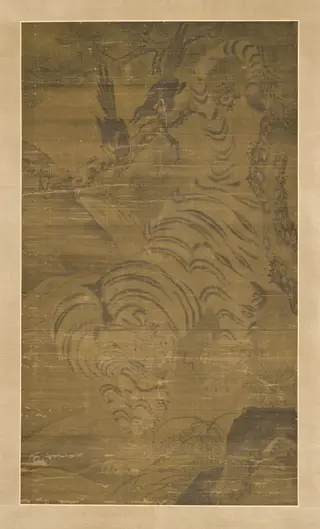
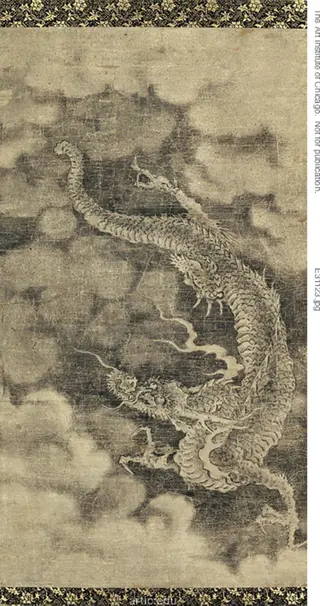
This pair of hanging scrolls shows a dragon and a tiger side by side. They were painted in 1262 by Muqi, a Chan (Zen) artist from China’s Southern Song dynasty. The works traveled to Japan after they were made and stayed there for centuries under the Ashikaga shogunate before landing in Cleveland.
The dragon and tiger were popular symbols in East Asian art. Muqi used simple brushwork to suggest strength and spirit rather than detailed realism.
Look next at the artist Muqi.
Subject & Meaning
The work features a dragon and a tiger, two iconic creatures in Chinese visual culture that embody yin and yang, the complementary forces of cosmic energy. In the painting the dragon occupies a darker field, its head emerging from swirling clouds, while the tiger appears on a lighter background, poised to pounce, its tail curled and paw raised. This contrast visualizes the dynamic balance between the aggressive yang energy of the tiger and the serene, expansive yin energy of the dragon.
The motif reflects traditional philosophical concepts of duality and harmony, a theme that resonated with the Japanese Zen patrons who collected the work.
Technique & Style
Dragon; Tiger is a set of two hanging scroll paintings executed on silk by the Chan (Zen) artist Muqi Fachang during the Southern Song dynasty. The diptych employs ink and red pigment, though the red ink applied to the tiger's nose and tongue has faded over time along with the silk support. The dragon is rendered against a darker background with its head emerging dynamically, while the tiger occupies a lighter ground, taking up a substantial portion of its scroll, licking its paw with its tail curled.
The composition pairs the two animals as complementary yin and yang energies, a recurring motif in Muqi's oeuvre. Contemporary Yuan-dynasty critics described his brushwork as done with sketchy strokes and dots of ink, with simple, undecorated conceptions. Originally displayed as part of a triptych in a temple setting, the work is now presented as a diptych at the Cleveland Museum of Art.
History & Provenance
Dragon; Tiger was painted by the Chan (Zen) artist Muqi Fachang in 1262 during the Southern Song dynasty, executed on silk as a pair of hanging scrolls. Soon after its creation, the work was exported from China to Japan, where it entered the holdings of the Ashikaga shogunate. The earliest datable ownership is marked by the seal inscription Dōyū, identifying Ashikaga Yoshimitsu (1358–1408) as a possessor.
Subsequent seals on the painting record ownership by Ashikaga Yoshinori and Tokugawa Iemitsu. In the 19th century, the scrolls passed to the Sakai clan, who held them from the late Edo period into the early Meiji era. The painting was later brought to the United States, where on 20 July 1959 it was acquired by Howard C. Hollis, a former Far Eastern and Near Eastern art curator and Monuments Men veteran who had established his own art dealership in 1949. The work is now housed at the Cleveland Museum of Art.
Following its creation in China during the Southern Song dynasty, the painting was exported to Japan, where it remained for centuries, before eventually traveling to the United States and entering the Cleveland Museum of Art's collection in 1959.
Legacy
Muqi's Dragon; Tiger played a pivotal role in shaping the Japanese Zen painting tradition known as Zenga, a legacy that persisted through subsequent artists. The work was exported to Japan shortly after its creation and entered the collection of the Ashikaga shogunate, establishing early appreciation there. Its stylistic impact is evident in the oeuvre of later painters such as Sesson Shukei and Nagasawa Rosetsu, who drew on Muqi's bold brushwork and motif of complementary forces. Scholarly re-evaluations underscore the broader sphere of influence he exerted within East Asian art circles.
Overview
Muqi Fachang's Dragon; Tiger is a pair of hanging scrolls from 1262, created during China's Southern Song dynasty. These silk paintings, now held by the Cleveland Museum of Art, exemplify the artist's Chan (Zen) Buddhist aesthetic. The two works depict powerful mythical and real creatures, serving as a significant example of East Asian scroll painting from a period contemporary with Japan's Kamakura era.
Own this work as a print
Artist & collection