Artwork
Toba-e (Comic Picture)
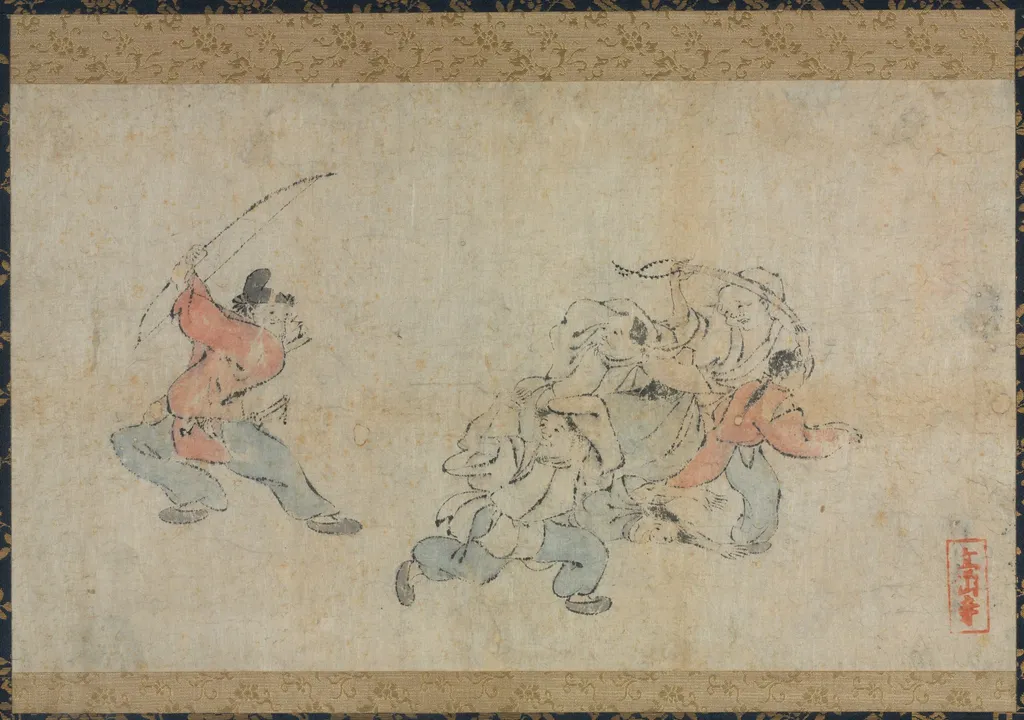
Toba-e (Comic Picture) is an unspecified painting. It dates from 1649 and is held in the collection of the Cleveland Museum of Art.
About this work
Technique & Style
The formal classification identifies it as a single-sheet or scroll painting, consistent with the Toba-e genre's focus on humorous or satirical subjects.
Created in 1649, the work titled Toba-e (Comic Picture) is classified as a painting originating from Japan. The piece is attributed to an unknown artist and is currently held in the collection of the Cleveland Museum of Art. As a painting from this period and region, the work represents a specific tradition of comic imagery, though the provided sources do not specify the exact pigments, brush techniques, or support materials used in its creation.
The formal classification identifies it as a single-sheet or scroll painting, consistent with the Toba-e genre's focus on humorous or satirical subjects.
History & Provenance
Created in Japan in 1649, this painting is attributed to an unknown artist. The work, identified as a comic picture (Toba-e), entered the collection of the Cleveland Museum of Art, where it is currently housed. Its accession number within the museum is 1917.100, indicating the year it was acquired by the institution.
No further details regarding its specific commission, earlier ownership history, or the circumstances of its creation are provided in the available records.
The Toba-e (Comic Picture) is held in the collection of the Cleveland Museum of Art, where it is catalogued under accession number 1917.100. The work is a painting dated to 1649 and originated in Japan. While the Cleveland Museum of Art record confirms the object's location and inventory number, the provided sources do not contain any information regarding past exhibitions of this piece. Therefore, its exhibition record remains unknown based on the current sources.
Overview
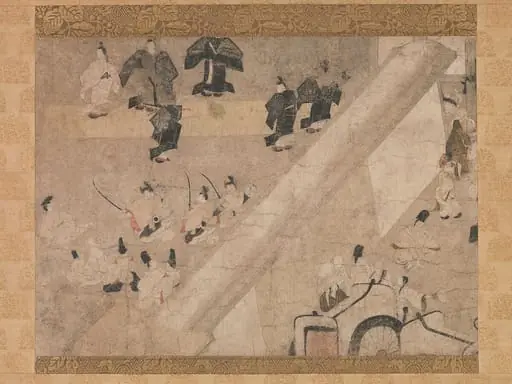
Toba‑e is a Japanese painting that depicts a dynamic composition centered on a standing figure in a red robe and blue trousers, holding a fan and gazing downward. Beneath this figure lies a tangled mass of smaller, oversized‑headed characters rendered in alternating blue and red hues. The work’s surface shows age‑related wear, with softened edges and faded coloration that suggest its historic origin.
Subject & Meaning
The central standing figure appears to observe a chaotic crowd of diminutive beings, perhaps alluding to themes of authority overseeing disorder or a narrative scene involving a deity and attendants. The exaggerated heads of the lower figures emphasize individuality within the crowd, a visual device common in Japanese narrative art to convey character and action.
Context
Toba‑e emerged as a popular visual form for storytelling, often illustrating folklore, theatrical scenes, or satirical episodes. This piece reflects the genre’s emphasis on lively composition and exaggerated characters, aligning with contemporaneous woodblock prints that conveyed humor and social commentary to a broad audience.
Legacy
As an example of early narrative painting, the work informs modern understandings of Edo‑period visual culture and its approaches to character depiction. Its preservation allows scholars to trace stylistic developments that later influenced ukiyo‑e printmakers and the broader trajectory of Japanese popular art.
Artist & collection

 Ebisu
Ebisu Chinese Boys at Play
 Album of Daoist and Buddhist Themes: Search the Mountain: Leaf 43
 Winter Scene from the Romance of the Three Kingdoms
 The Story of Fukutomi
 Daoist Immortal
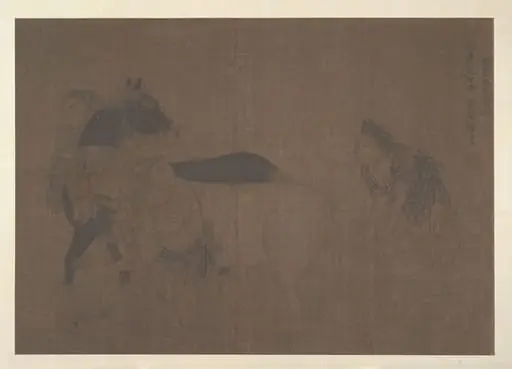 明/清 佚名 舊傳陸青 洗馬圖 冊頁|Washing a Horse
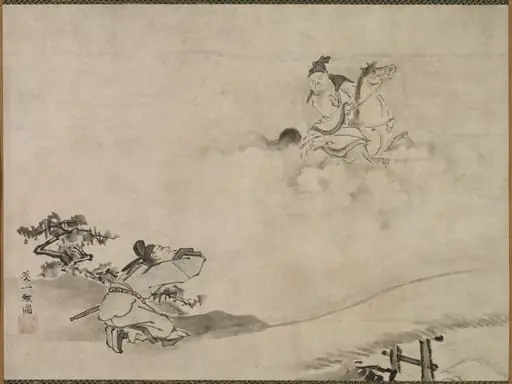 Daoist Immortal
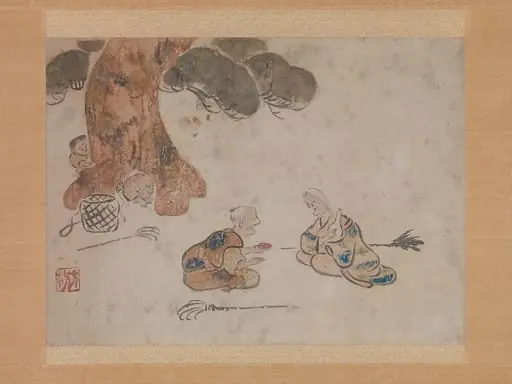 Untitled
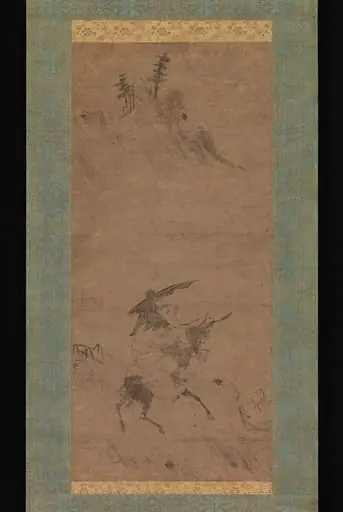 朴堂祖淳筆 蘇軾騎驢図|Su Shi Riding a Donkey
 「高陽院駒競行幸絵巻」『栄花物語』 断簡|"Imperial Visit to the Great Horse Race at the Kaya-no-in Mansion" from the Tale of Flowering Fortunes
- Toba-e (Comic Picture)