Artwork
Daoist Immortal
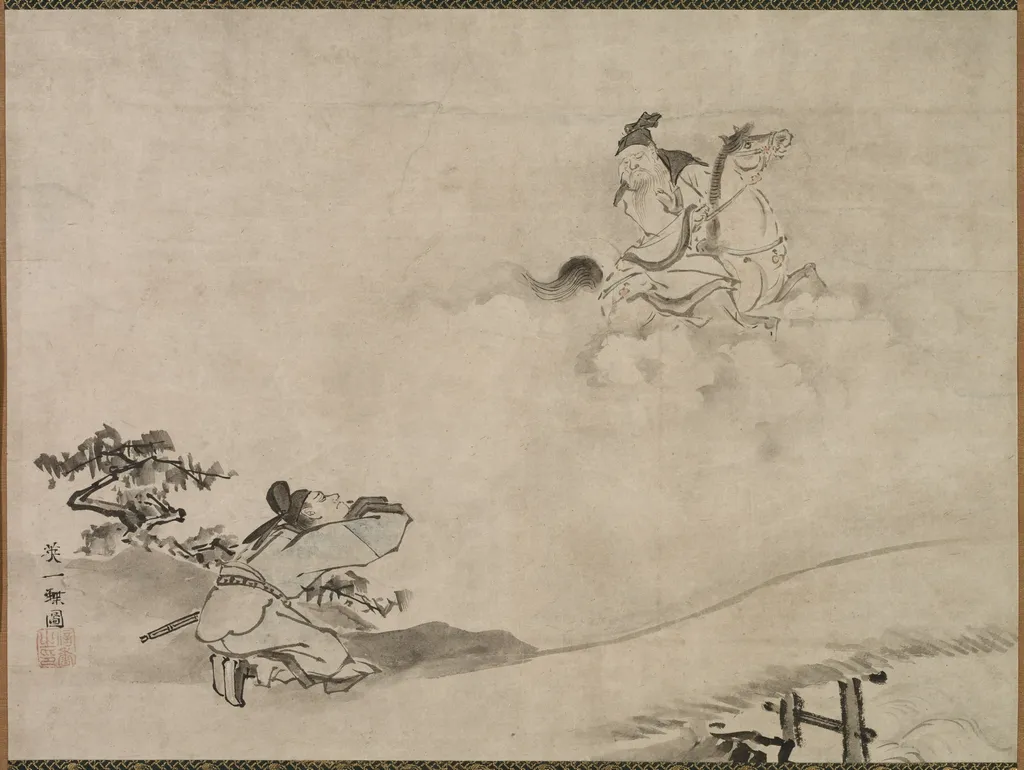
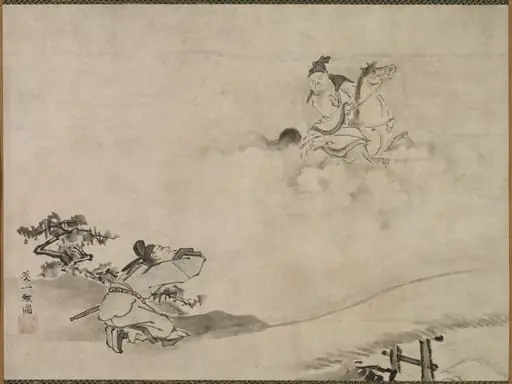
Daoist Immortal is an unspecified painting by the Nanga artist Hanabusa Itchō. It is held in the collection of the Cleveland Museum of Art.
About this work
Technique & Style
5 cm, maintaining proportions typical of Japanese hanging scrolls from the early 18th century.
Hanabusa Itchō employed ink and color on silk as the support for Daoist Immortal, creating a delicate brushwork composition that balances fluid line with subtle tonal gradation. The painting’s handling of space emphasizes the figure’s ethereal presence through layered washes and restrained detail, reflecting Edo-period stylistic conventions.
The work measures 158.5 cm × 89.5 cm, maintaining proportions typical of Japanese hanging scrolls from the early 18th century. Its condition remains stable, with no recorded interventions noted in the provenance record.
The formal qualities demonstrate controlled spontaneity, where ink contours suggest movement while restrained color application preserves a meditative stillness characteristic of Daoist themes.
History & Provenance
The painting Daoist Immortal was created in 1741 in Japan by Hanabusa Itchō. It entered the collection of the Cleveland Museum of Art at an unspecified date, where it remains on view.
The work was commissioned as a painting and has been part of the museum's holdings since at least 1998, when it was catalogued under accession number 1998.293.
Daoist Immortal is held in the collection of the Cleveland Museum of Art. The work is catalogued under the accession number 1998.293 and was created in 1741 in Japan by Hanabusa Itchō.
The provided sources do not document any exhibition history or prior provenance for the painting beyond its current placement at the Cleveland Museum of Art.
Legacy
Hanabusa Itchō’s Daoist Immortal, painted in 1741, has been recognized as a significant work within the corpus of Japanese Edo-period painting. Its presence in the Cleveland Museum of Art’s collection since 1998 has contributed to renewed scholarly attention to Itchō’s role in shaping visual narratives of Daoist themes in early modern Japan. The work continues to be referenced in studies of religious iconography and artistic exchange between Japan and East Asian cultural centers.
Overview
Hanabusa Itchō’s 1741 painting “Daoist Immortal” is part of the collection at the Cleveland Museum of Art. The work depicts a bearded figure on horseback, robed and crowned, moving through a sky filled with clouds, while a kneeling attendant looks upward. The composition is set against a subdued landscape of hills and trees, rendered in muted browns and grays that convey a calm atmosphere.
Subject & Meaning
The central rider is presented as a Daoist sage, identifiable by his long beard, ceremonial hat and staff, symbols of spiritual authority in Chinese tradition. The attendant’s posture of kneeling and gazing upward suggests reverence or supplication, reinforcing the theme of divine ascent and the transmission of wisdom from the immortal to the mortal realm.
Own this work as a print
Artist & collection

 明/清 佚名 舊傳李公麟 法海靈山圖 冊|Procession of Arhats
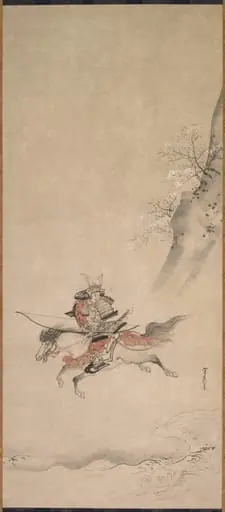 A Samurai on Horseback
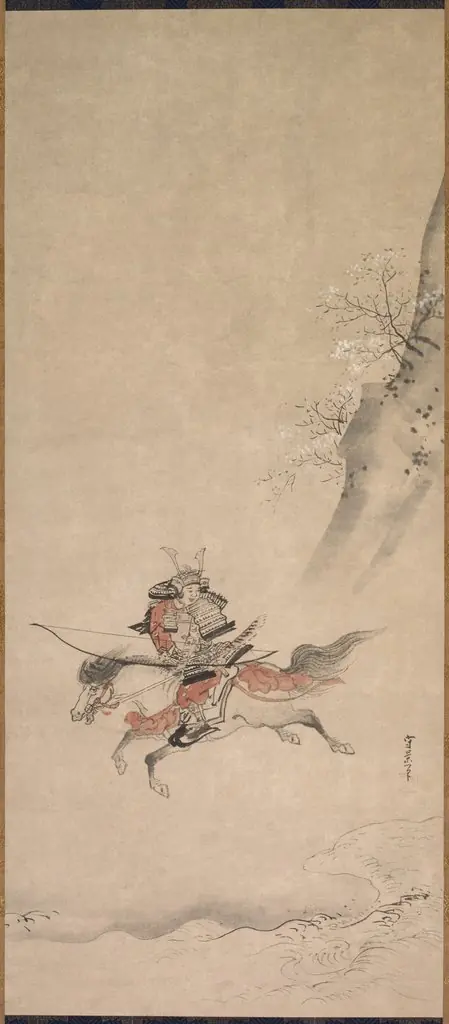 A Samurai on Horseback
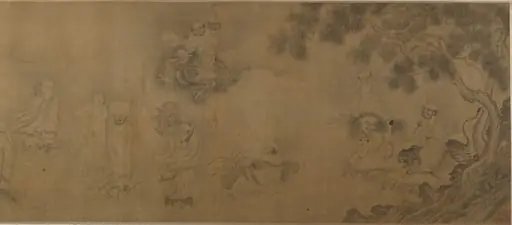 明 /清 佚名 李公麟 偽款 龍王請齋圖 卷|Buddhist luohans crossing the sea to the palace of the dragon king
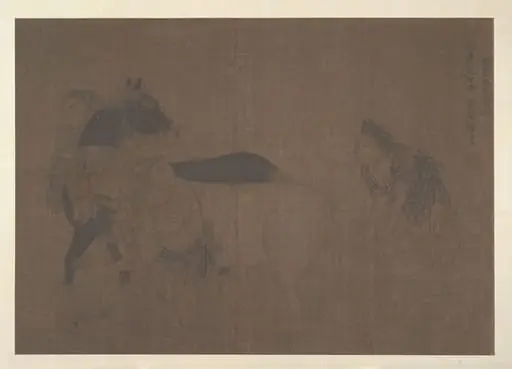 明/清 佚名 舊傳陸青 洗馬圖 冊頁|Washing a Horse
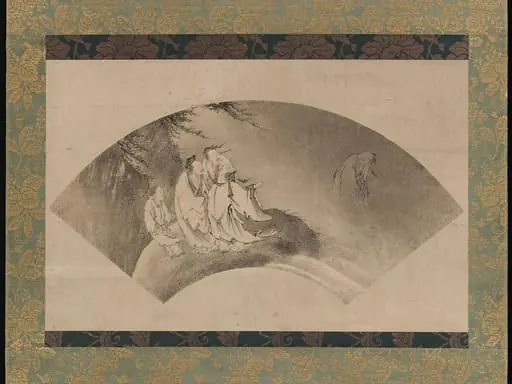 列子御風図扇面 (Resshi gyofū zu senmen)|The Daoist Immortal Liezi Flying on a Cloud
 壺天聚樂圖|Merry Gatherings in the Magic Jar
 Chinese Sages