Artwork
Chinese Boys at Play
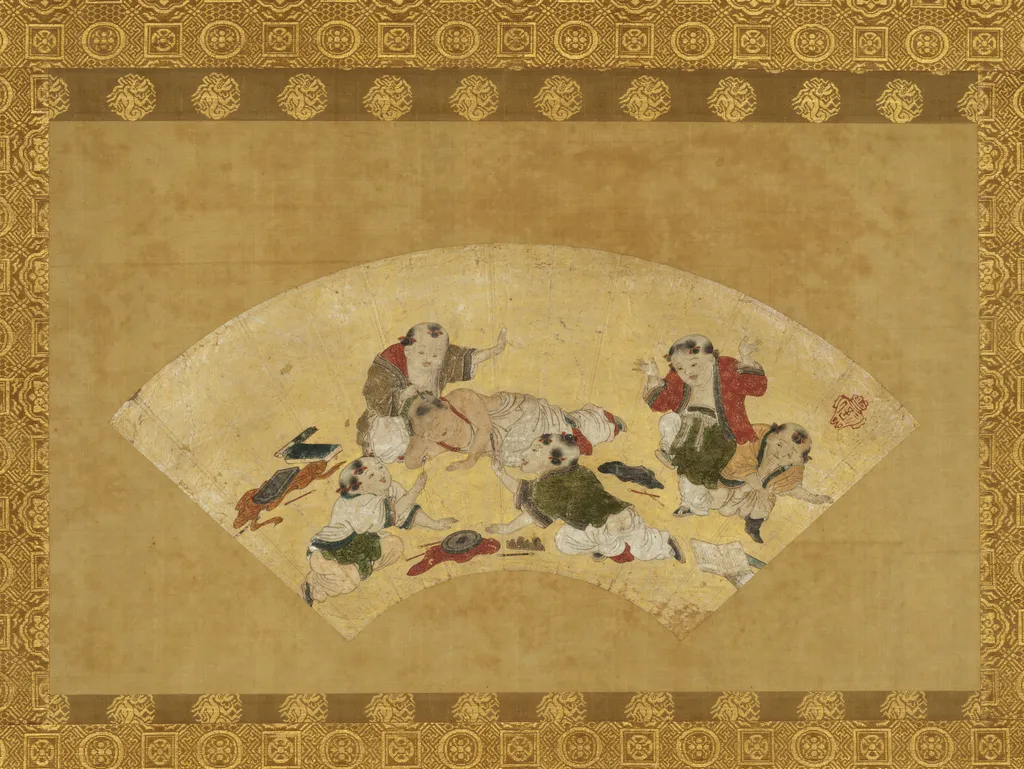
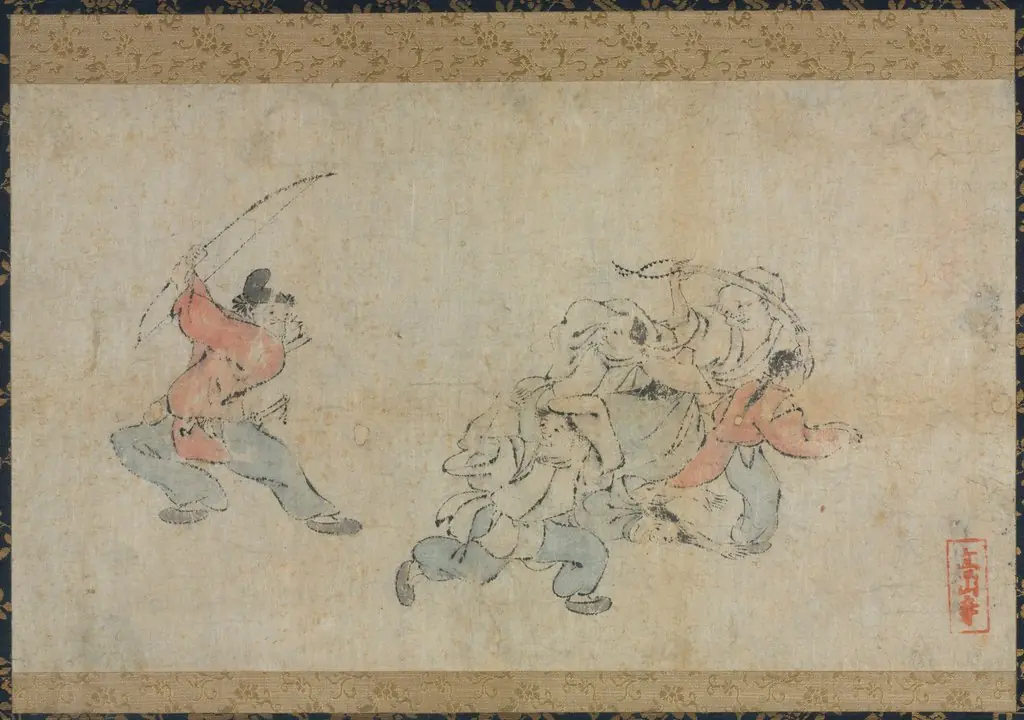
Chinese Boys at Play is an unspecified painting by the Kanō school artist Kano Motonobu. It dates from 1524 and is held in the collection of the Metropolitan Museum of Art. Created in 1524 by Kanō Motonobu, a leading figure of the Japanese Kanō school, this hanging scroll portrays a group of children at leisure.
About this work
Overview
Created in 1524 by Kanō Motonobu, a leading figure of the Japanese Kanō school, this hanging scroll portrays a group of children at leisure. The composition is framed by a light background and a patterned gold border, emphasizing the informal scene without elaborate setting.
Subject & Meaning
The work captures several youngsters in simple attire, some wearing caps, engaged in various playful actions such as sitting, crawling, and reaching. Their expressions are rendered with minimal detail, suggesting a focus on the universal activity of play rather than individual characterization.
Technique & Style
Motonobu employs the Kanō school’s blend of Japanese brushwork and Chinese aesthetic influences, using restrained yet expressive strokes. The palette combines bright yet muted tones, and the figures are outlined with flat, understated faces, reflecting the school’s refined approach to narrative scenes.
History & Provenance
The painting is part of the collection of the Metropolitan Museum of Art, where it entered through acquisition in the early 20th century. Its attribution to Motonobu aligns with documented works from his prolific period of expanding the school’s reach across Japan.
Context
During the early 16th century, the Kanō school was consolidating its position as the dominant artistic institution, integrating Chinese motifs while serving Japanese patrons. This piece exemplifies the school’s educational role, illustrating everyday life with a dignified yet accessible visual language.
Own this work as a print
Artist & collection

 Toba-e (Comic Picture)
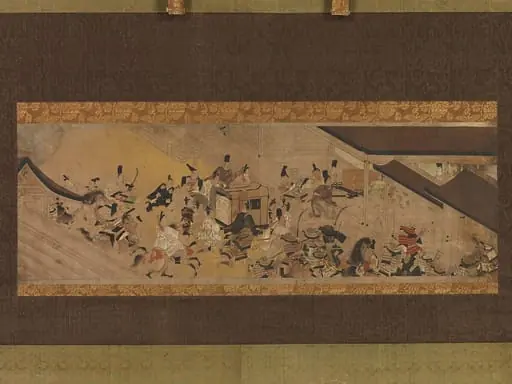 「六波羅行幸」 平治物語絵巻 断簡|Scene from “Imperial Visit to Rokuhara,” from The Tale of the Heiji Rebellion (Heiji monogatari)
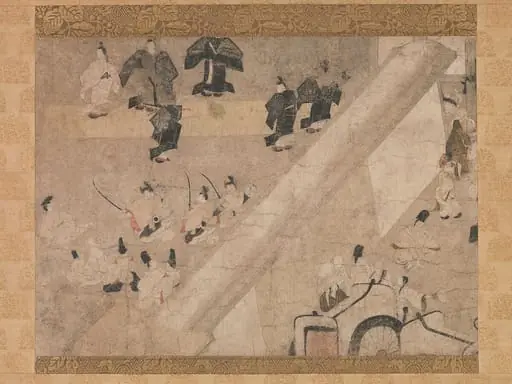 「高陽院駒競行幸絵巻」『栄花物語』 断簡|"Imperial Visit to the Great Horse Race at the Kaya-no-in Mansion" from the Tale of Flowering Fortunes
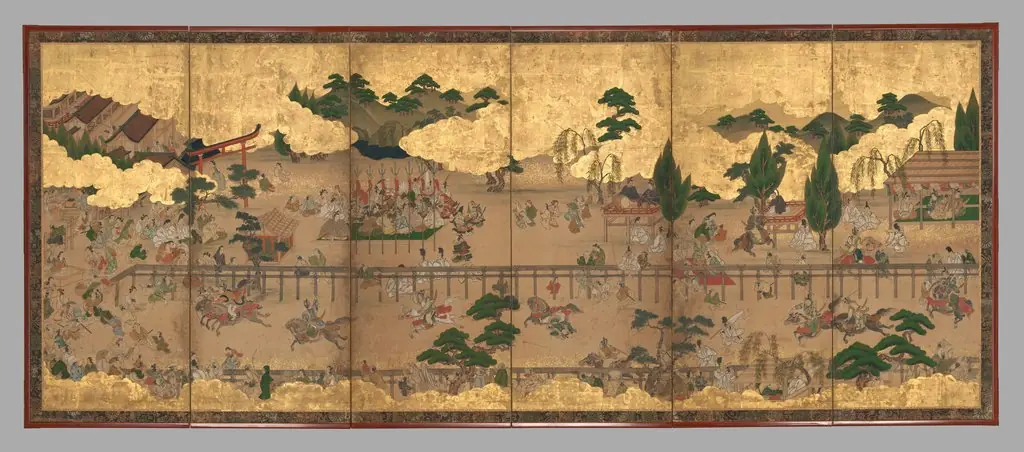 Horse Racing at Kamo Shrine
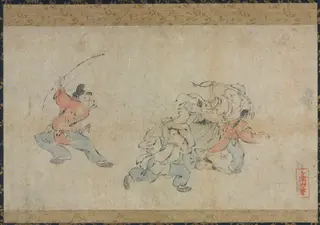 Toba-e (Comic Picture)
 Bugaku Dancers
 Genre Scenes (Fuzoku byobu)
 The Emperor's Attendance at the Horse Race: Episode from the Tale of Eiga (Eiga Monogatari)
 Scenes from the Tales of Ise
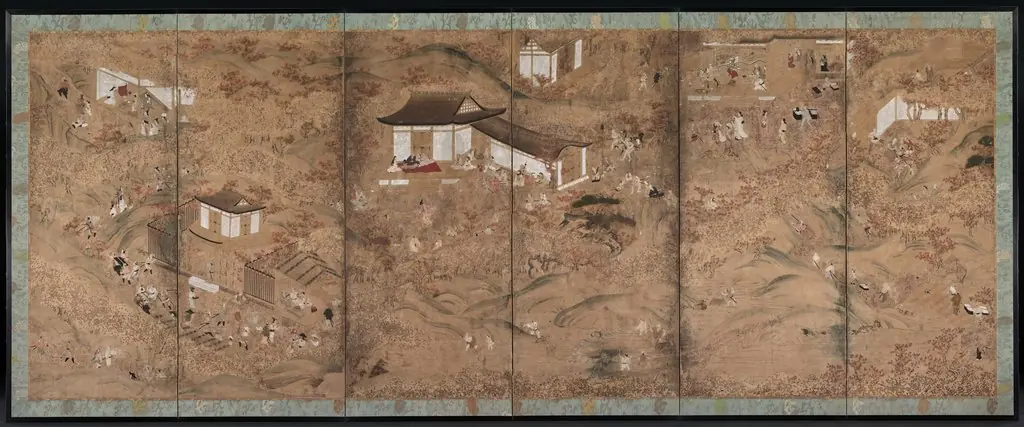 Autumn in the Mountains
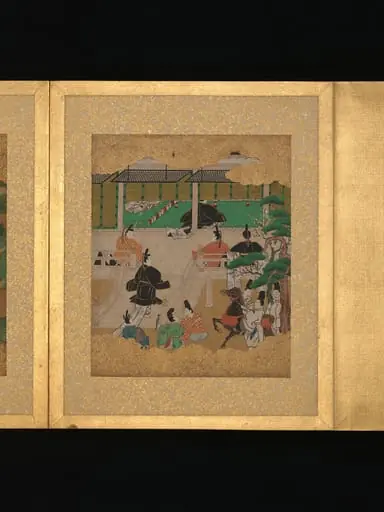 Untitled
- One Hundred Chinese Boys