Artwork
Tuti-Nama (Tales of a Parrot)
Tuti-Nama (Tales of a Parrot) is an unspecified painting. It dates from 1560 and is held in the collection of the Cleveland Museum of Art.
About this work
Technique & Style
The delicate handling of line and form reflects the high level of craftsmanship achieved in 16th-century Persianate manuscript production.
The manuscript is a miniature painting created with pigments on paper, depicting a scene from the Tuti-Nama. The work shows fine brushwork with intricate details and vibrant colors characteristic of Mughal artistic conventions. Its composition employs balanced spatial arrangement and subtle gradation of tones to convey narrative depth.
The delicate handling of line and form reflects the high level of craftsmanship achieved in 16th-century Persianate manuscript production.
History & Provenance
The artwork known as Tuti-Nama (Tales of a Parrot) is a painting created in 1560 within the Mughal Empire. While the specific individual who commissioned the work remains unidentified, the piece is attributed to an unknown artist. The painting currently resides in the collection of the Cleveland Museum of Art, where it is cataloged under the accession number 1962.279.193.b. This institutional ownership indicates the work entered the museum's holdings in 1962, though details regarding its provenance prior to this acquisition are not specified in the available records.
Overview
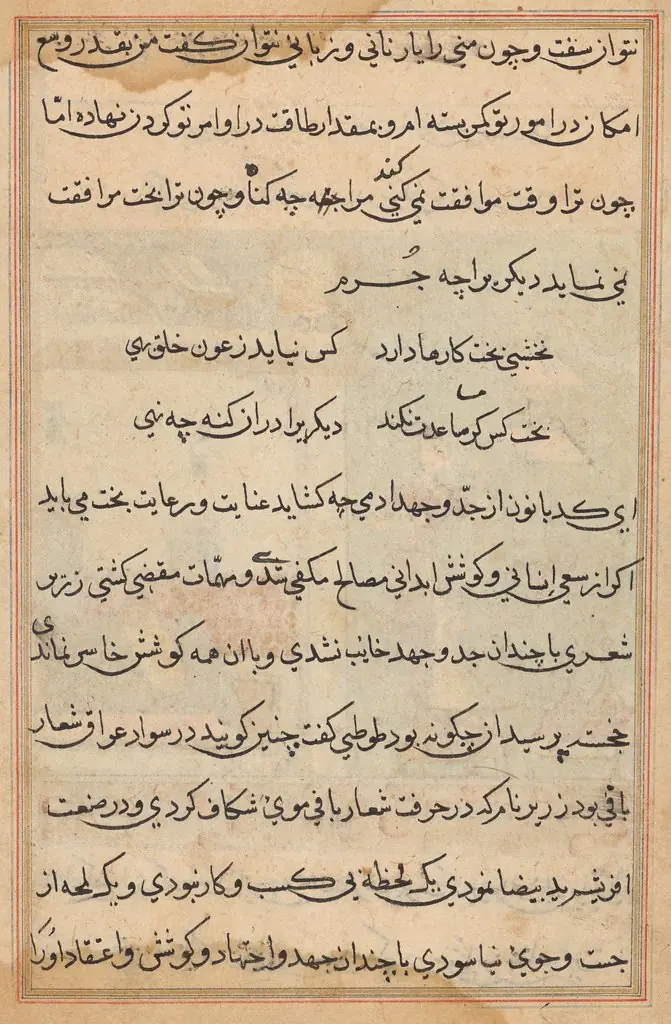
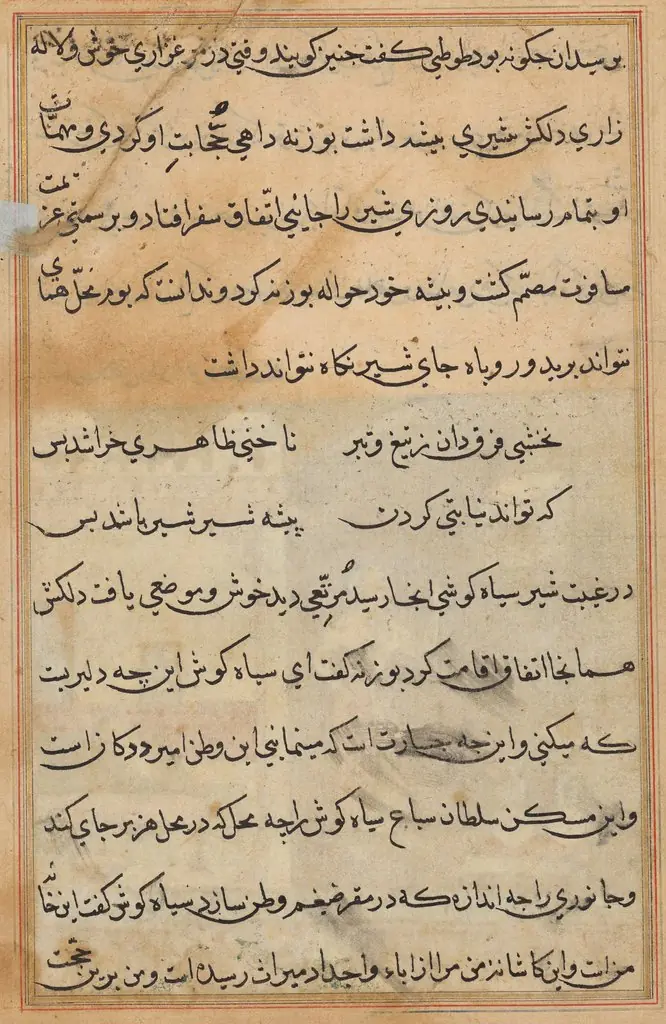
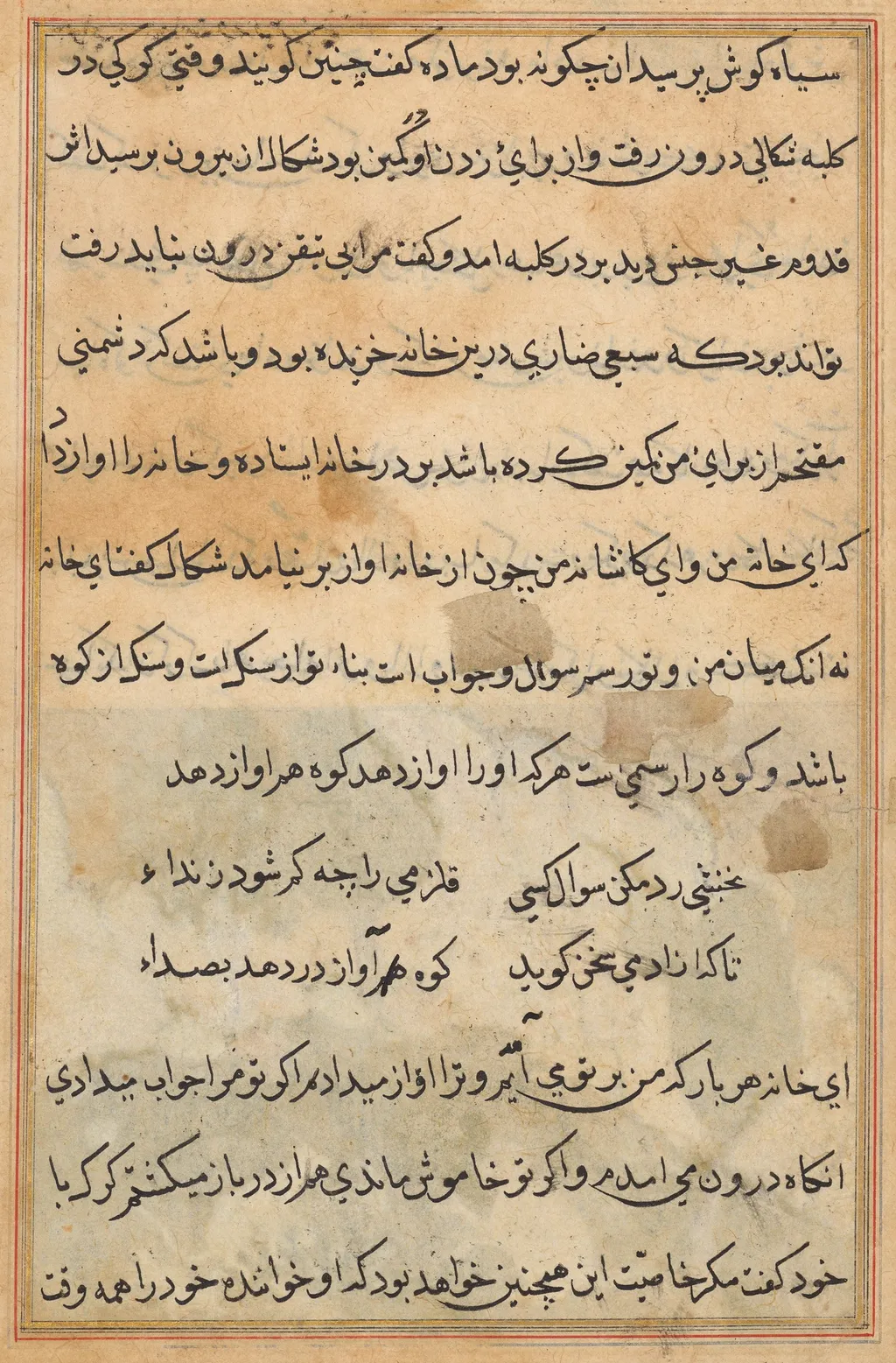
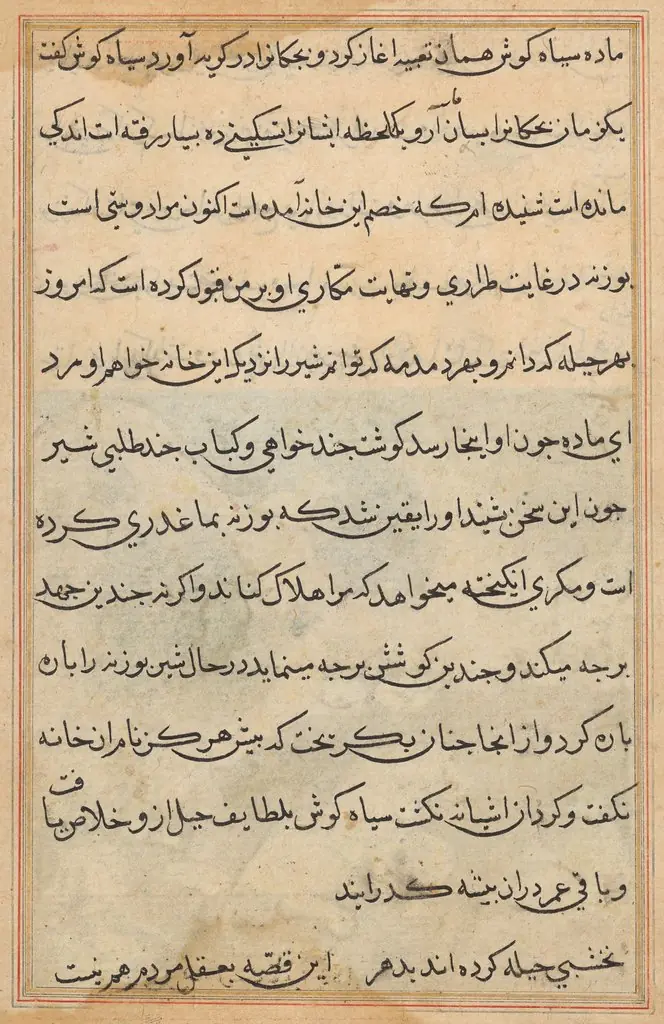
Tuti‑Nama, translated as “Tales of a Parrot,” is a painted manuscript page composed of dense black calligraphy set against a warm, antiqued paper background. The sheet is bordered by a thin red line and bears subtle blue‑green discolorations that suggest age. The text occupies the surface almost entirely, leaving only a narrow margin at the edge.
Subject & Meaning
The work consists solely of prose intended for Prince Salim, a member of the Mughal court. Though the title references a parrot, the page contains no illustrative imagery; its purpose appears to be literary, perhaps a collection of stories or moral anecdotes conveyed through the script itself.
Context
Within the Mughal tradition, illuminated manuscripts often combined text and ornamentation; however, Tuti‑Nama’s emphasis on script over illustration highlights a variant practice where literary content was prioritized. The work exemplifies the courtly culture of the early 17th‑century Indian subcontinent, where princes commissioned personalized texts for education or entertainment.
Artist & collection

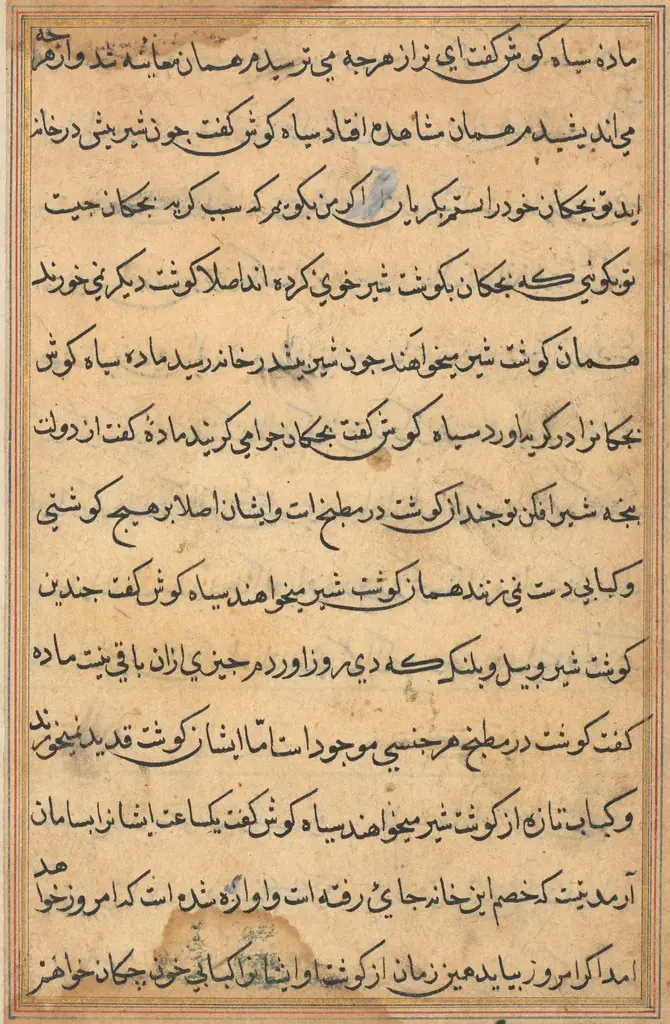 Page from Tales of a Parrot (Tuti-nama): text page
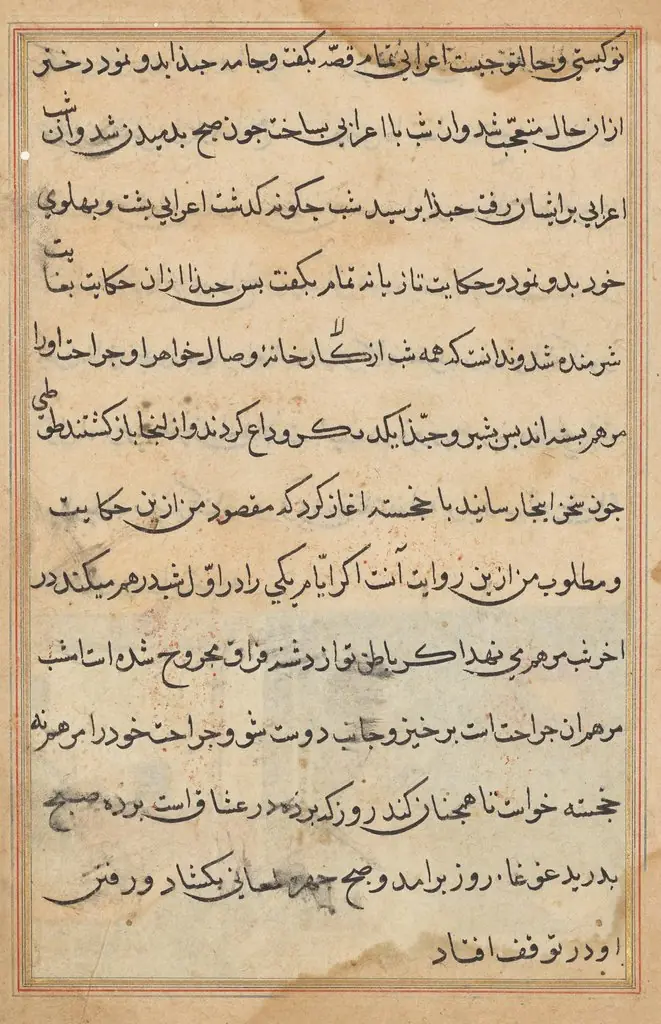 Page from Tales of a Parrot (Tuti-nama): text page
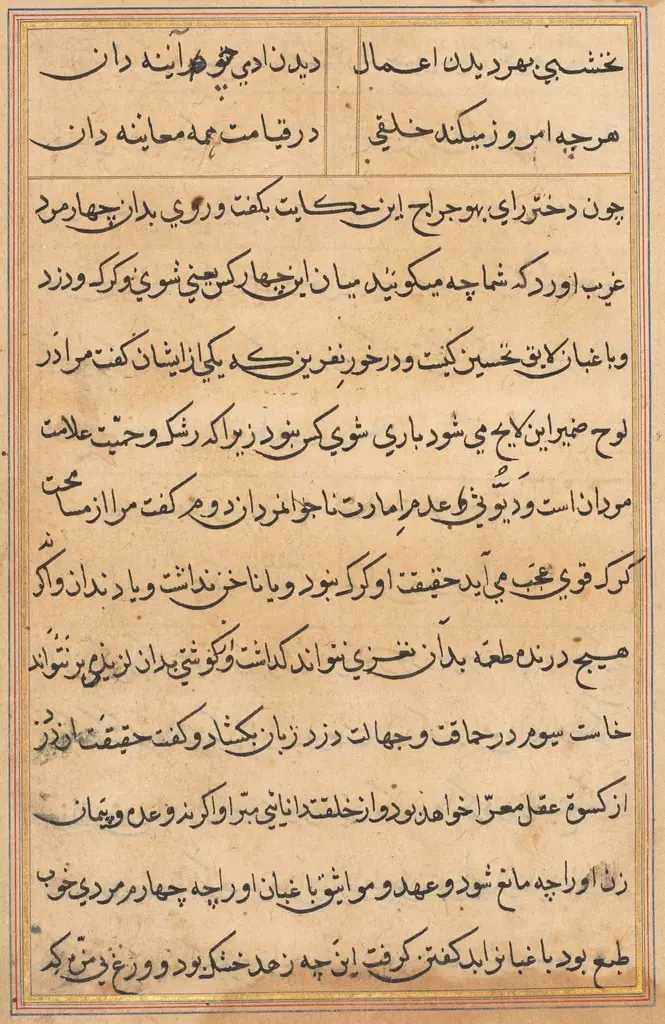 Page from Tales of a Parrot (Tuti-nama): text page
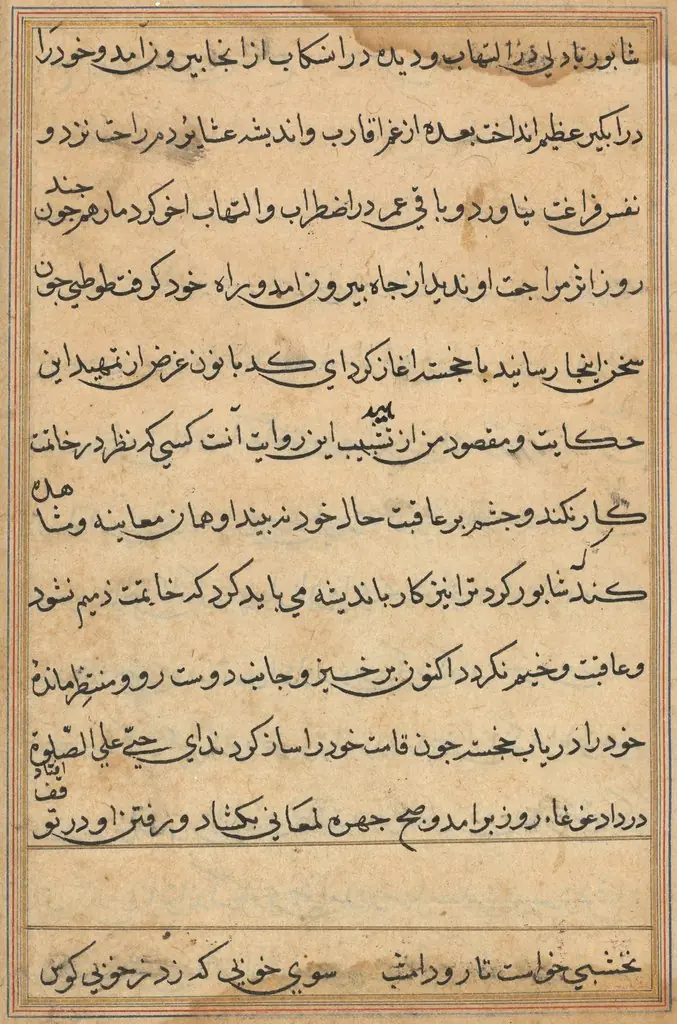 Page from Tales of a Parrot (Tuti-nama): text page
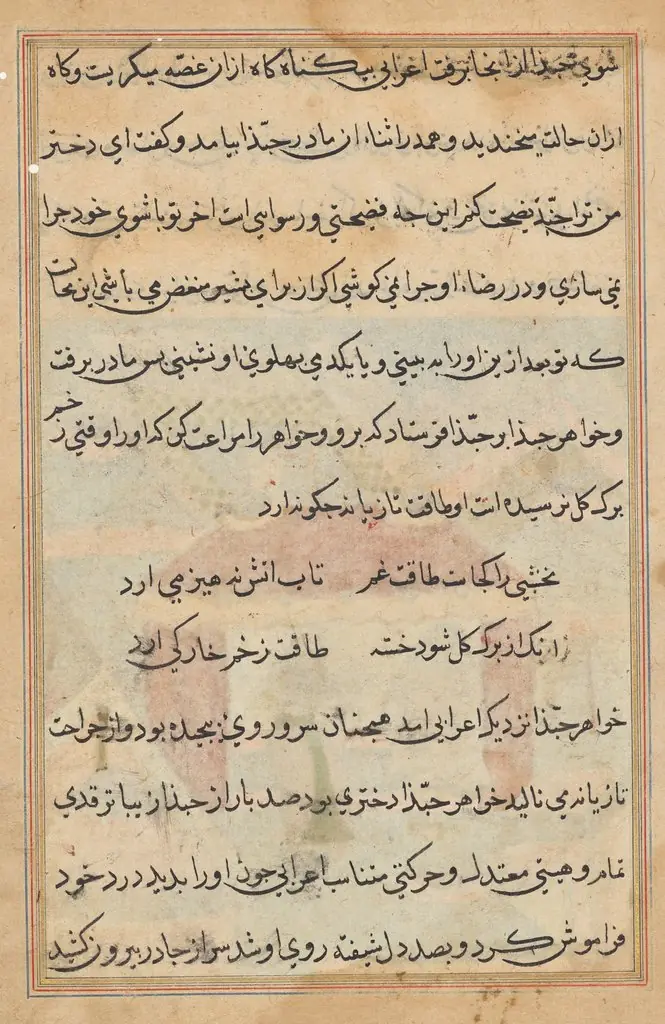 Page from Tales of a Parrot (Tuti-nama): text page
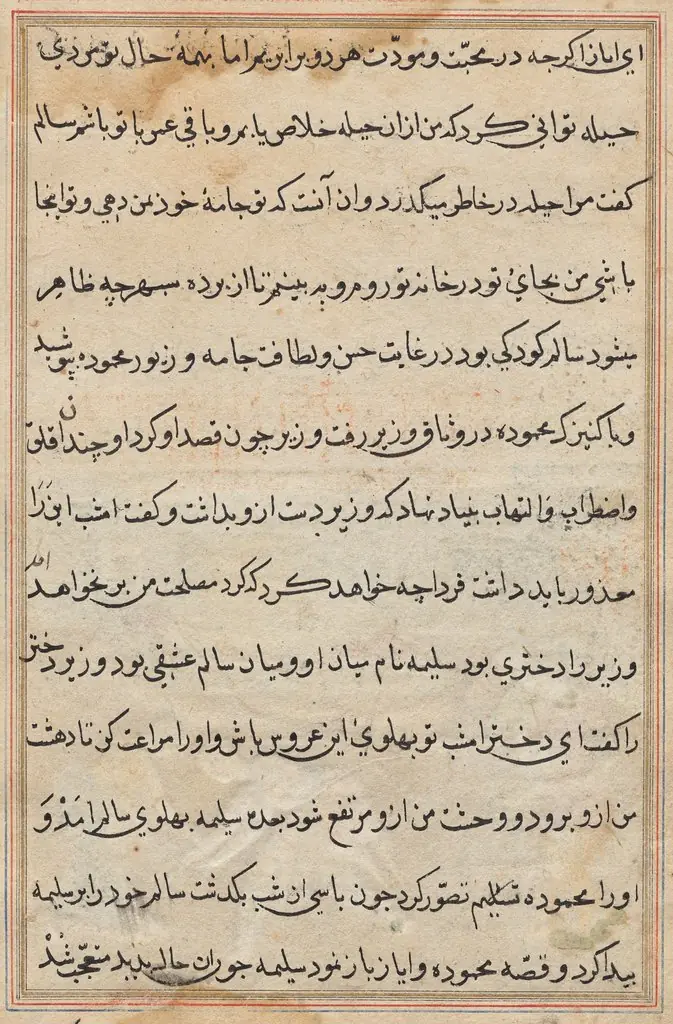 Page from Tales of a Parrot (Tuti-nama): text page
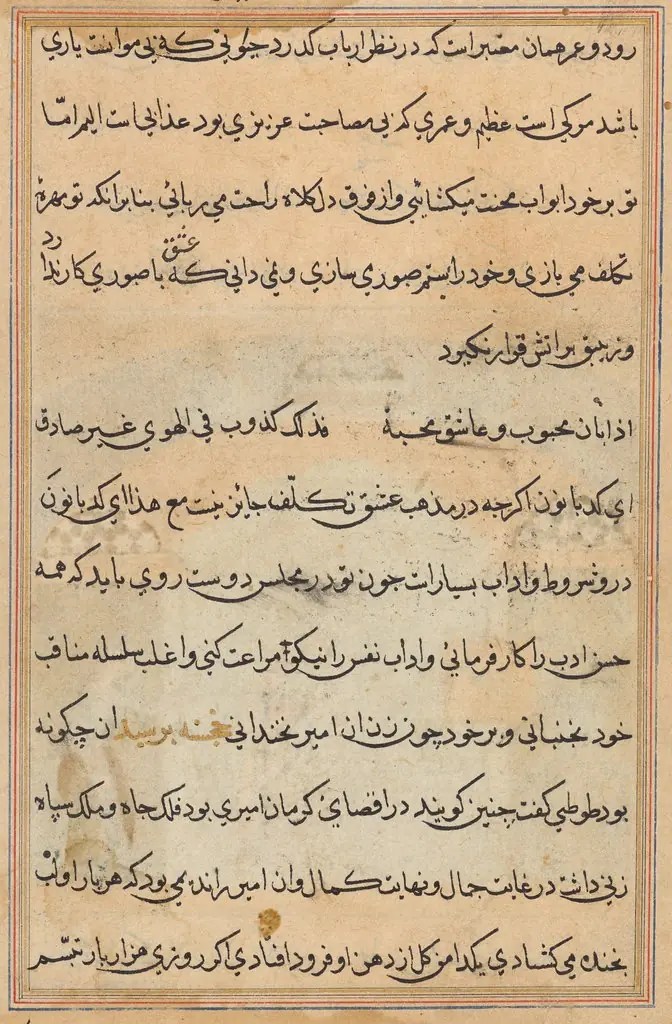 Page from Tales of a Parrot (Tuti-nama): text page
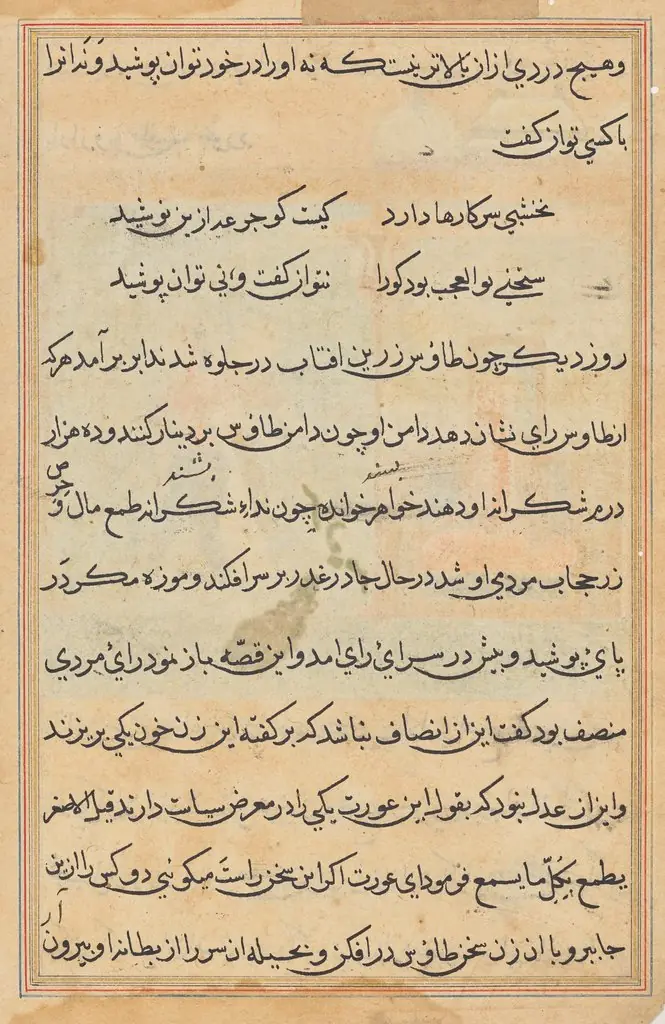 Page from Tales of a Parrot (Tuti-nama): text page
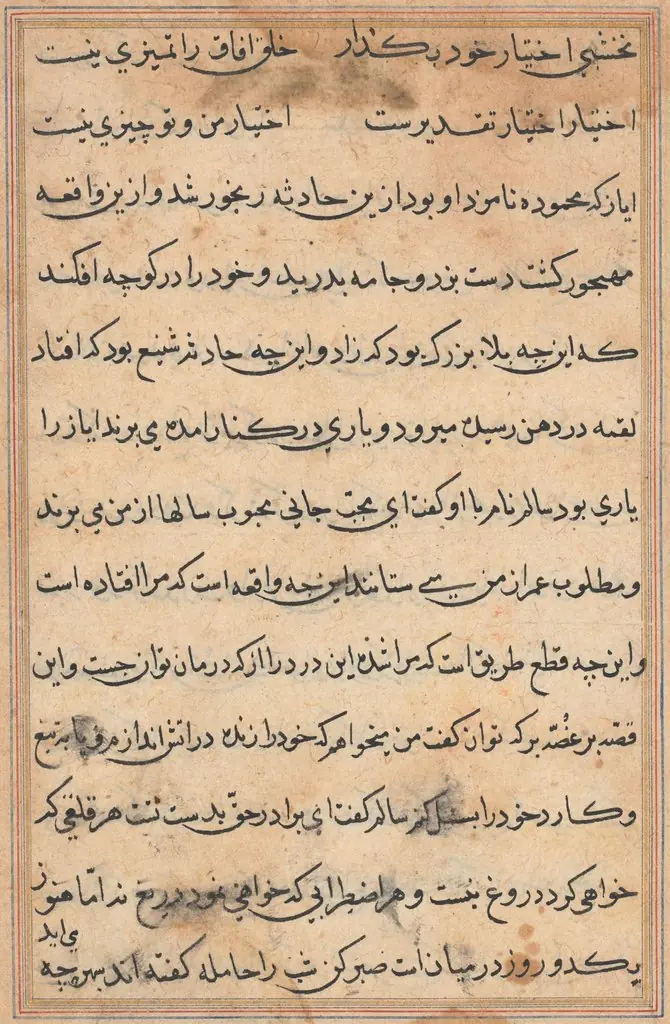 Page from Tales of a Parrot (Tuti-nama): text page