Artwork
Page from Tales of a Parrot (Tuti-nama): text page
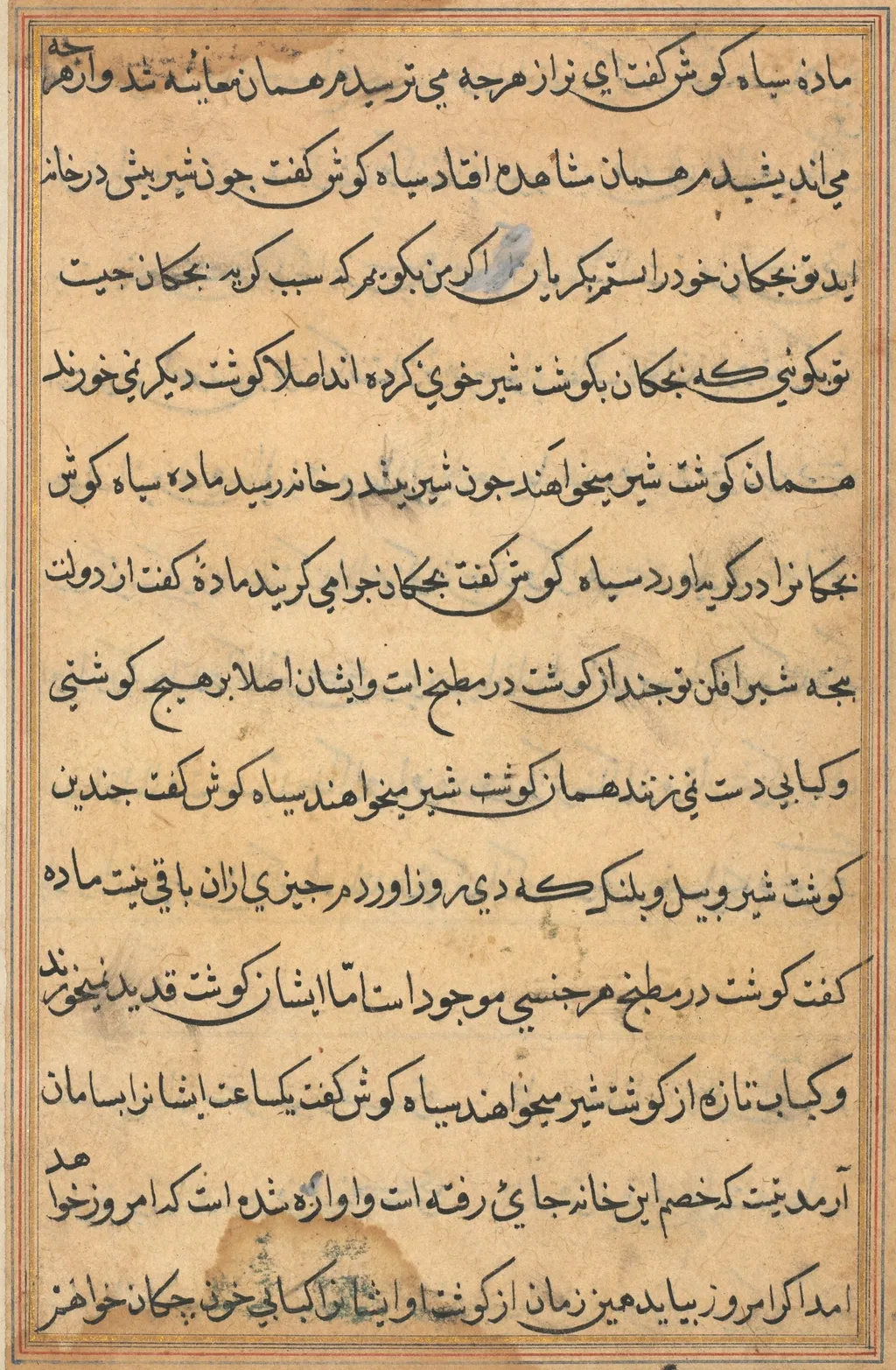
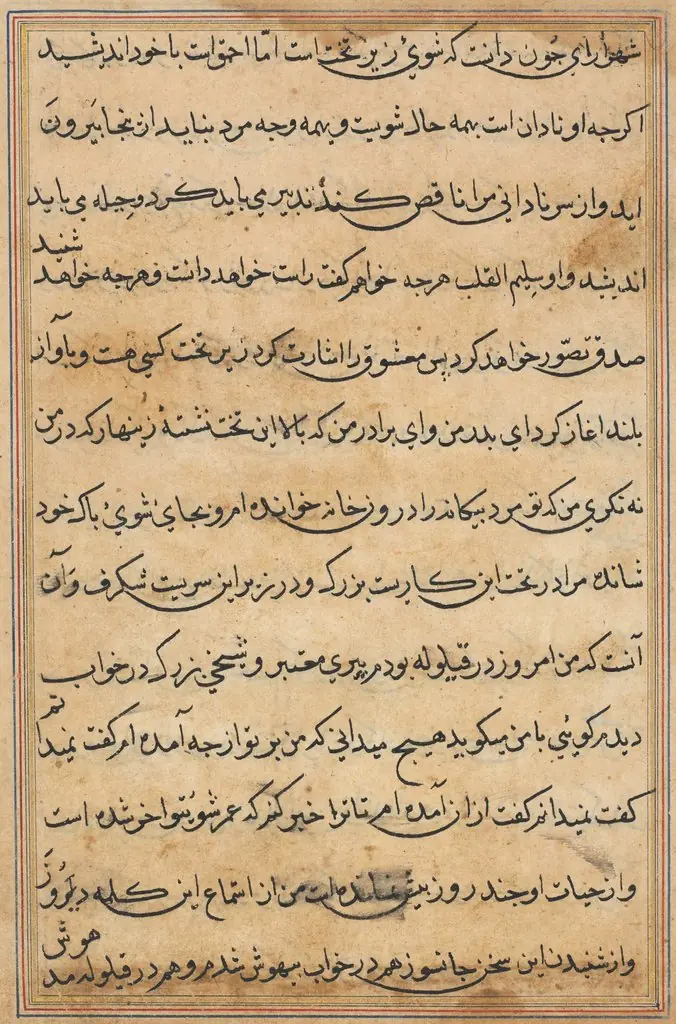
Page from Tales of a Parrot (Tuti-nama): text page is an unspecified painting. It dates from 1560 and is held in the collection of the Cleveland Museum of Art. This object is a painted page from the Persian manuscript Tuti‑nama (also known as Tales of a Parrot).
About this work
Subject & Meaning
The page depicts a narrative scene drawn from the Persian poetic collection Tuti-nama, illustrating a parrot’s moral lesson within a Mughal courtly setting.
The page depicts a narrative scene drawn from the Persian poetic collection Tuti-nama, illustrating a parrot’s moral lesson within a Mughal courtly setting. The text page combines calligraphic script with miniature illustration, symbolizing wisdom conveyed through allegory. Its meaning lies in the didactic function of the tale, reflecting Sufi themes of guidance and moral instruction.
The work belongs to the Mughal artistic tradition of the 16th century, produced in the imperial atelier of the Mughal Empire.
History & Provenance
The text page originates from a Mughal manuscript produced circa 1560 in the Mughal Empire. It was created as part of the Tuti-nama series and attributed to an anonymous artist. The work entered the collection of the Cleveland Museum of Art, where it remains on view.
The manuscript page was acquired by the museum in 1962, catalogued under accession number 1962.279.195.b, and is classified as a miniature painting from the mid-sixteenth century.
Overview
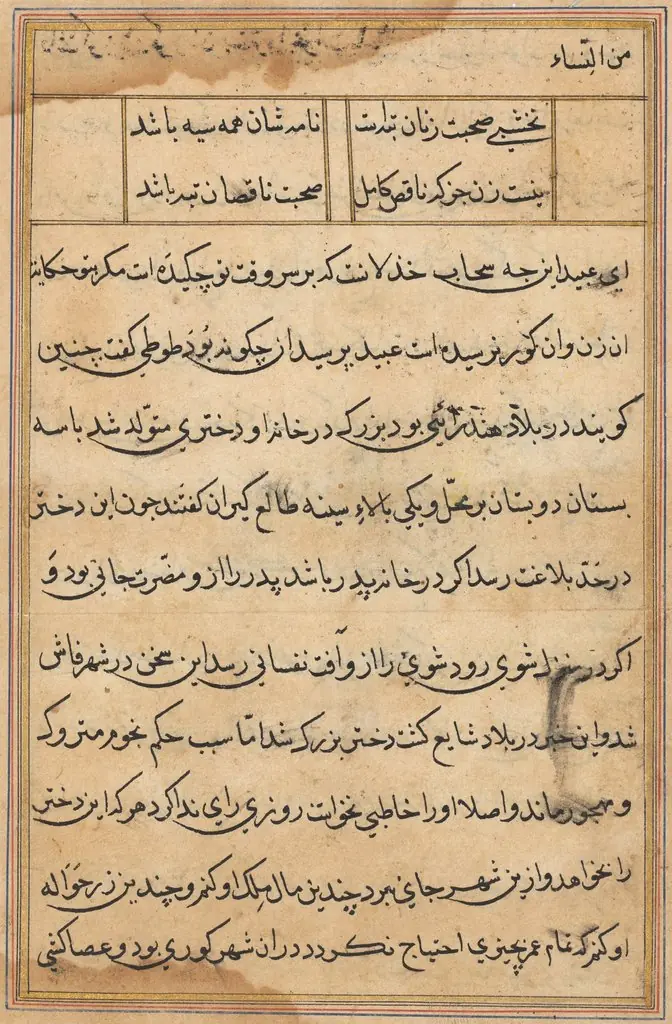
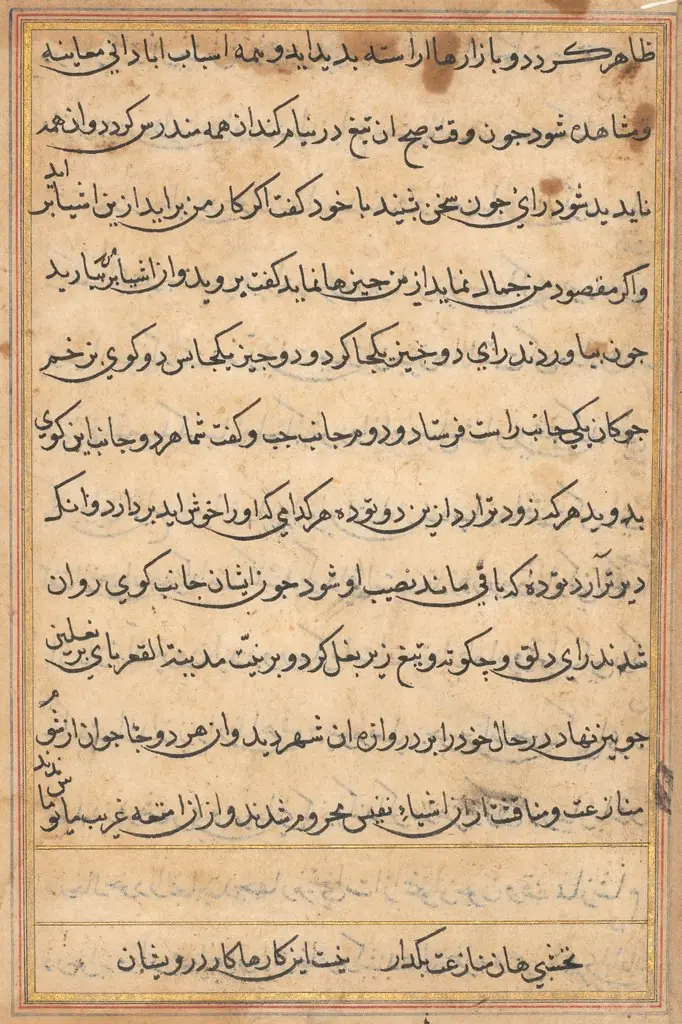
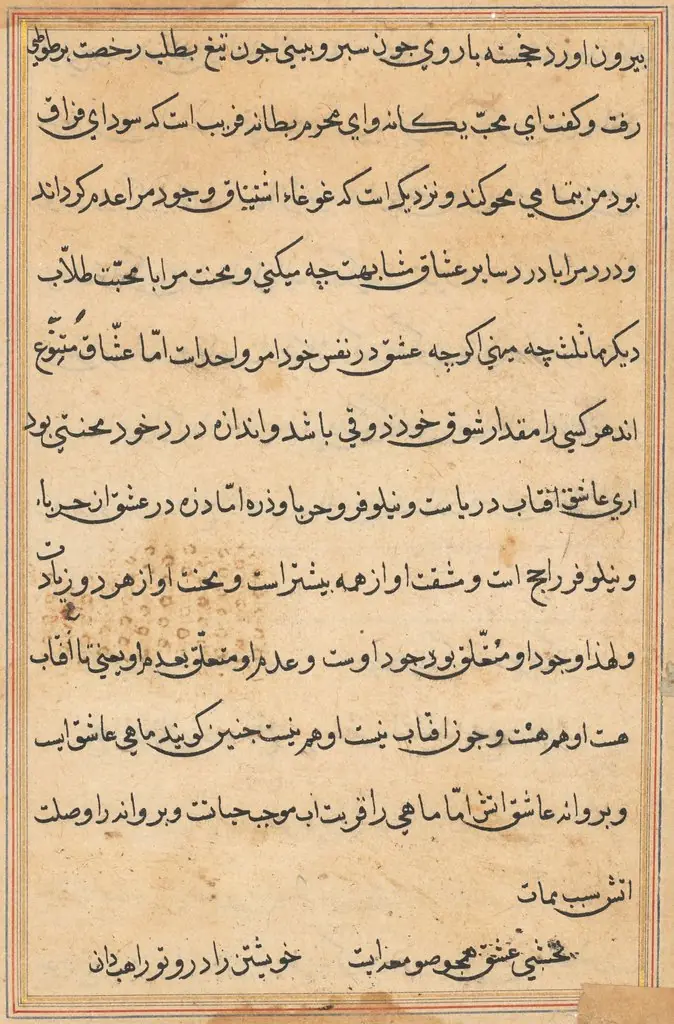
This object is a painted page from the Persian manuscript Tuti‑nama (also known as Tales of a Parrot). The surface is a warm‑toned sheet of paper that shows the patina of age, with faint stains and a thin red border outlining its margins. The page functions as a visual document of literary art rather than a conventional image.
Technique & Style
The script is rendered in dense, flowing black calligraphy, with each letter meticulously shaped and interconnected, creating a compact block of text. The hand‑drawn quality of the letters demonstrates a high level of precision typical of Persian miniature manuscript illumination, while the red marginal line provides a subtle decorative contrast.
Context
Tuti‑nama belongs to a broader genre of didactic literature in the Islamic world, where animal protagonists convey moral lessons. The manuscript’s visual presentation reflects the integration of literary and artistic practices in Persian culture, where calligraphy itself was regarded as an art form.
Legacy
Pages like this exemplify the convergence of narrative and visual artistry that influenced later Persian and South Asian manuscript production. Their study informs contemporary understanding of calligraphic aesthetics, textual transmission, and the pedagogical role of illustrated books in pre‑modern societies.
Artist & collection

 Page from Tales of a Parrot (Tuti-nama): text page
 Page from Tales of a Parrot (Tuti-nama): text page
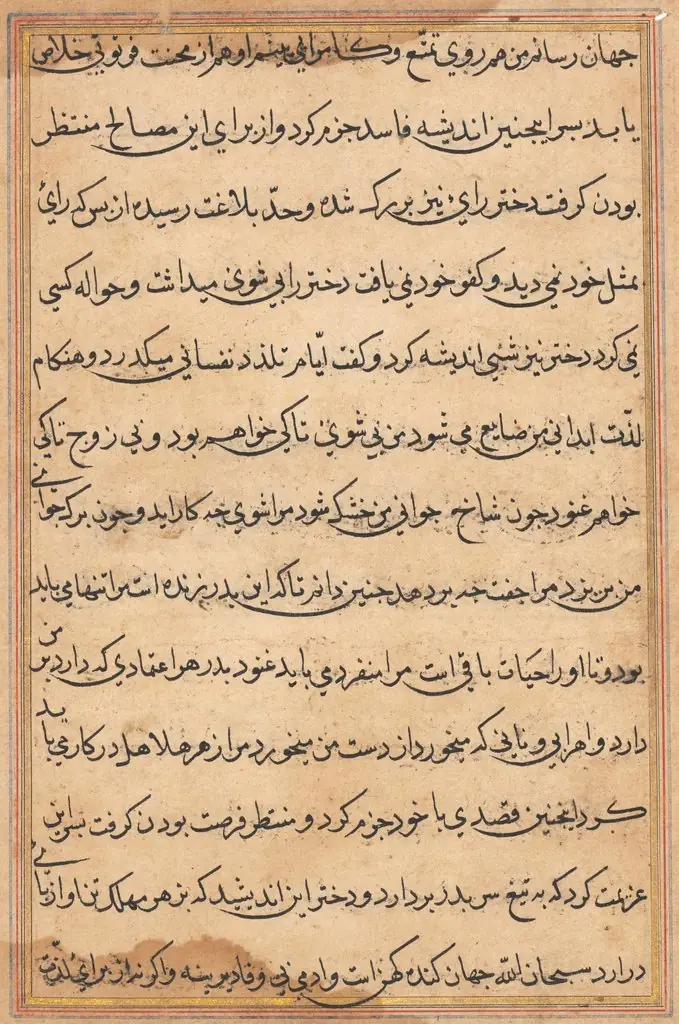 Page from Tales of a Parrot (Tuti-nama): text page
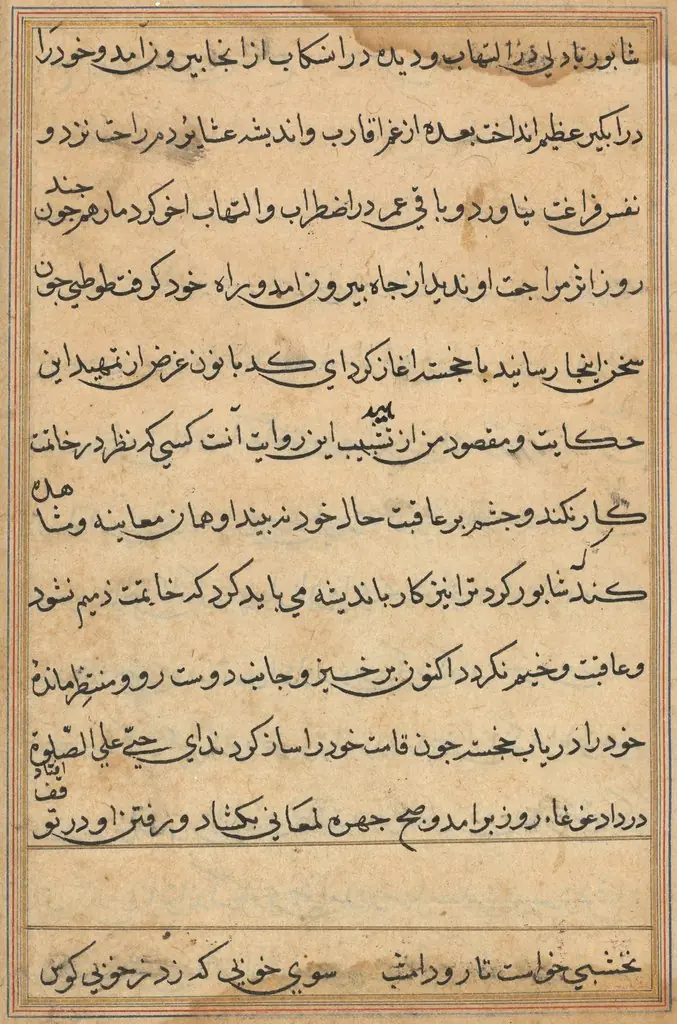 Page from Tales of a Parrot (Tuti-nama): text page
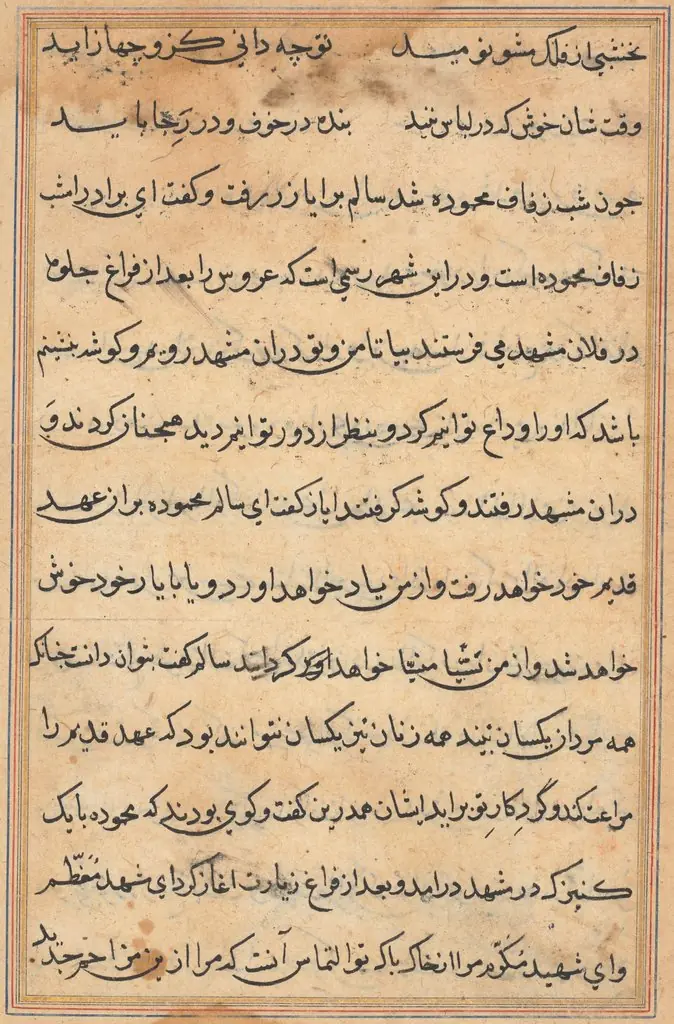 Page from Tales of a Parrot (Tuti-nama): text page
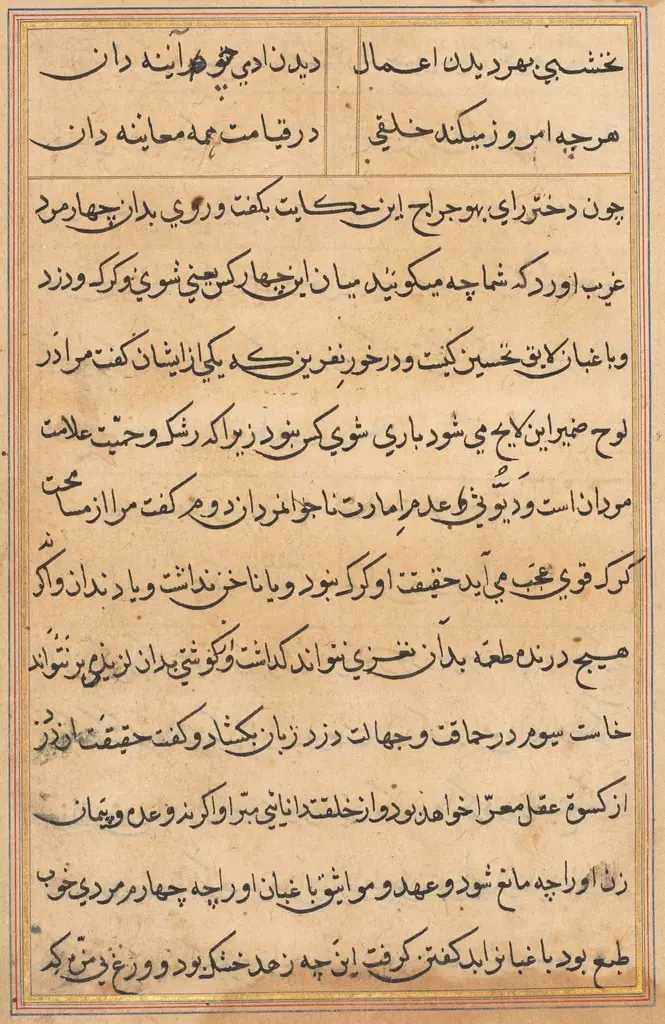 Page from Tales of a Parrot (Tuti-nama): text page
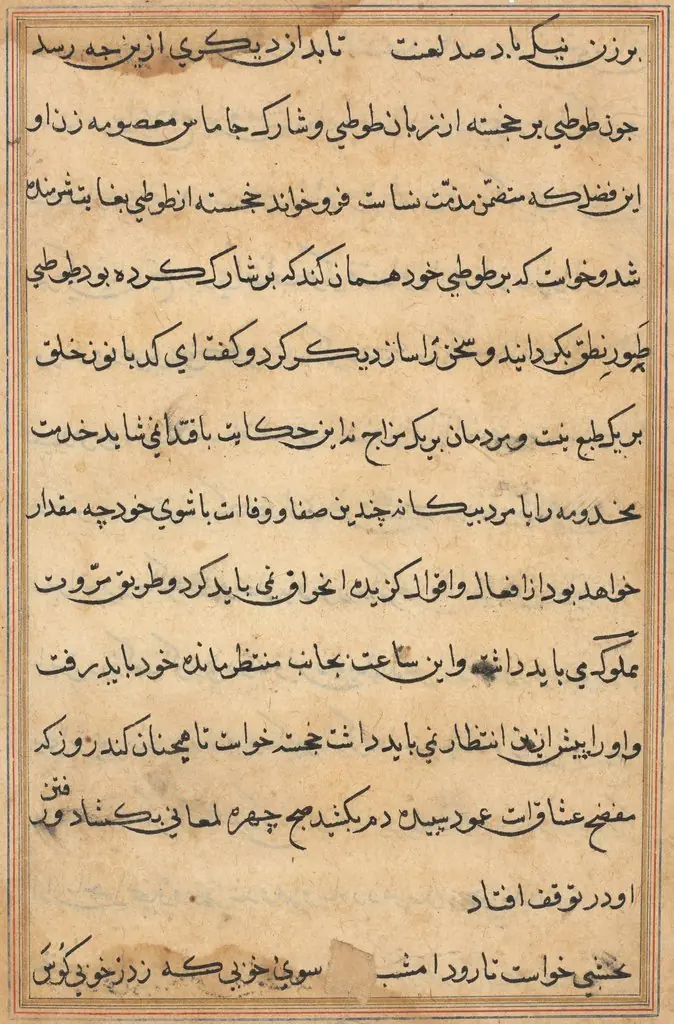 Page from Tales of a Parrot (Tuti-nama): text page
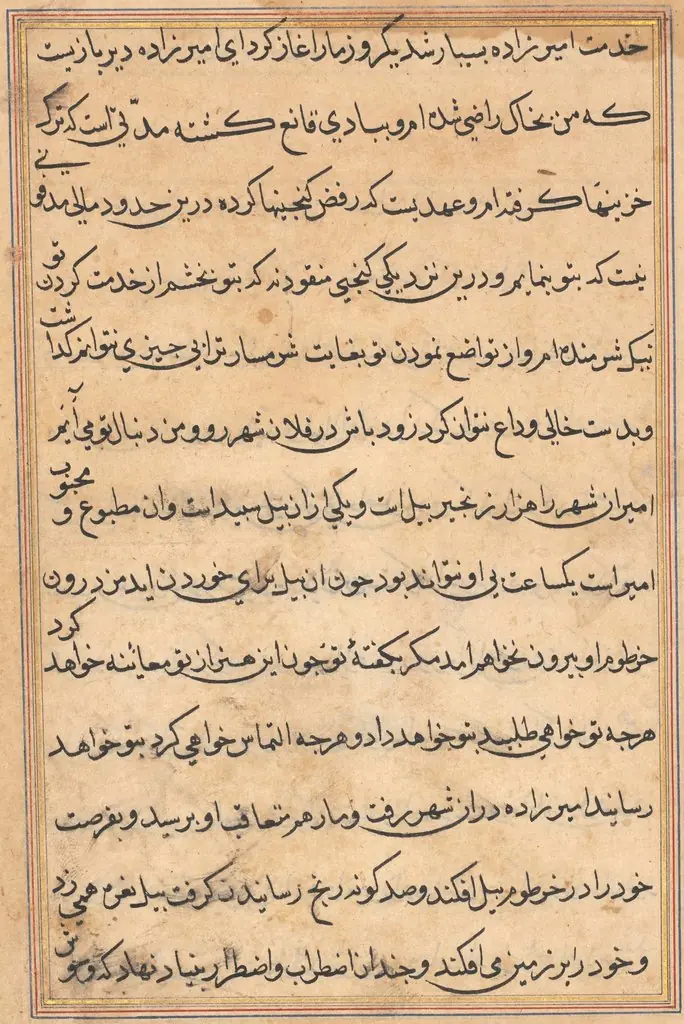 Page from Tales of a Parrot (Tuti-nama): text page
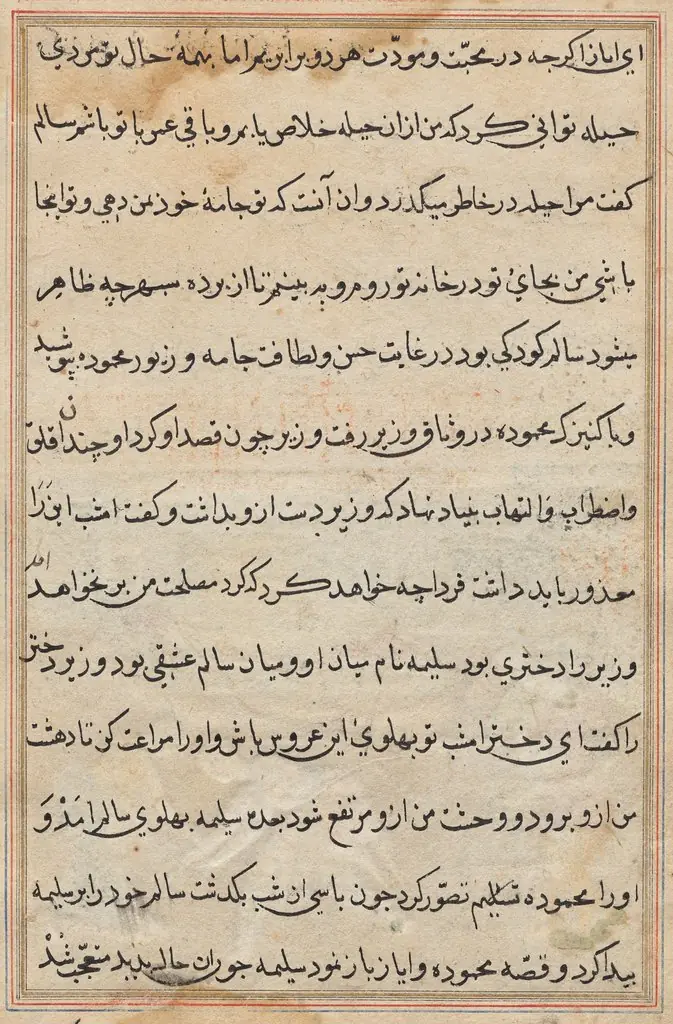 Page from Tales of a Parrot (Tuti-nama): text page
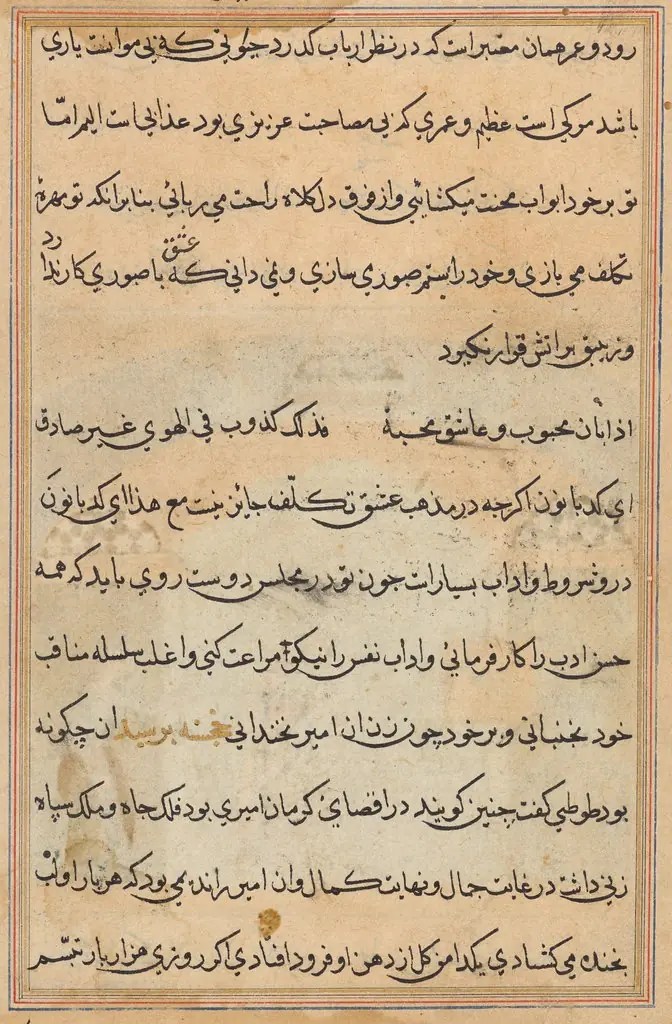 Page from Tales of a Parrot (Tuti-nama): text page
 Page from Tales of a Parrot (Tuti-nama): text page
- Page from Tales of a Parrot (Tuti-nama): text page