Artwork
Tuti-Nama (Tales of a Parrot)
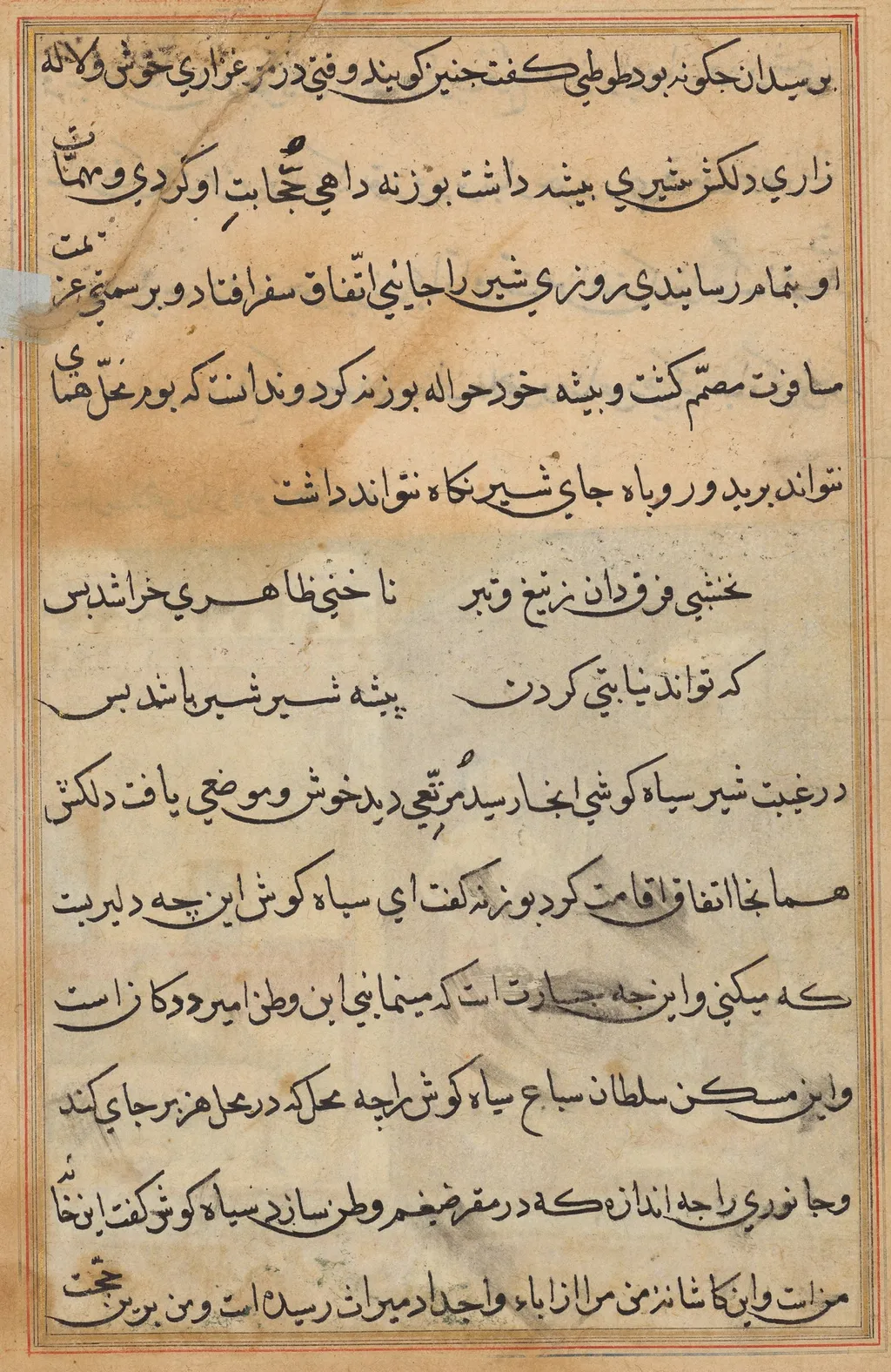
Tuti-Nama (Tales of a Parrot) is an unspecified painting. It dates from 1560 and is held in the collection of the Cleveland Museum of Art. Tuti-Nama, translated as “Tales of a Parrot,” is a painted work whose surface is dominated by dense black calligraphy.
About this work
History & Provenance
The manuscript known as Tuti-Nama (Tales of a Parrot) is dated to 1560 and was produced within the Mughal Empire. It is attributed to an unknown artist and is part of the collection held by the Cleveland Museum of Art.
The work was commissioned as part of a Persian illustrated manuscript tradition and reflects the cultural milieu of 16th-century Mughal artistic patronage.
Context
The Tuti-Nama (Tales of a Parrot) is a 1560 Mughal miniature painting held in the Cleveland Museum of Art, exemplifying the narrative illustration style of 16th-century Persian-influenced Indian art.
Scholarly attention focuses on its role within the broader Tuti-Nama manuscript tradition, where the work demonstrates compositional innovations in depicting sequential storytelling across single pictorial spaces.
Its attribution to an anonymous Mughal workshop reflects the collaborative production model of imperial ateliers, situating it within the artistic milieu of Akbar's reign when Persianate narrative forms were systematically adapted into Indian visual culture.
The painting's stylistic features, including its flattened perspective and intricate detail work, have been analyzed as indicative of cross-cultural exchanges between Safavid and Mughal artistic practices during the mid-16th century.
Overview
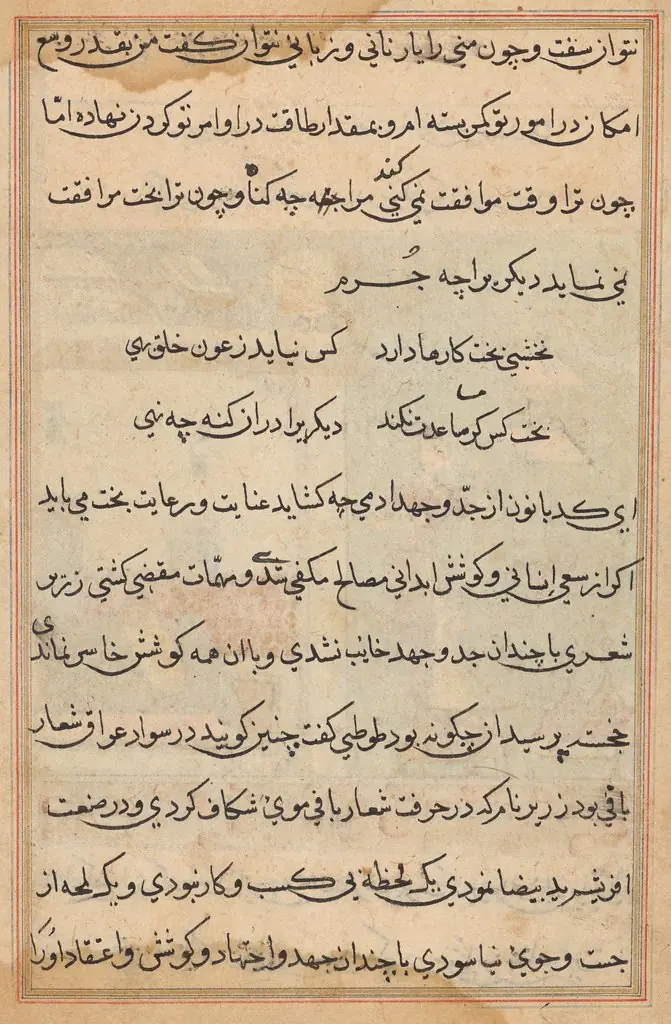
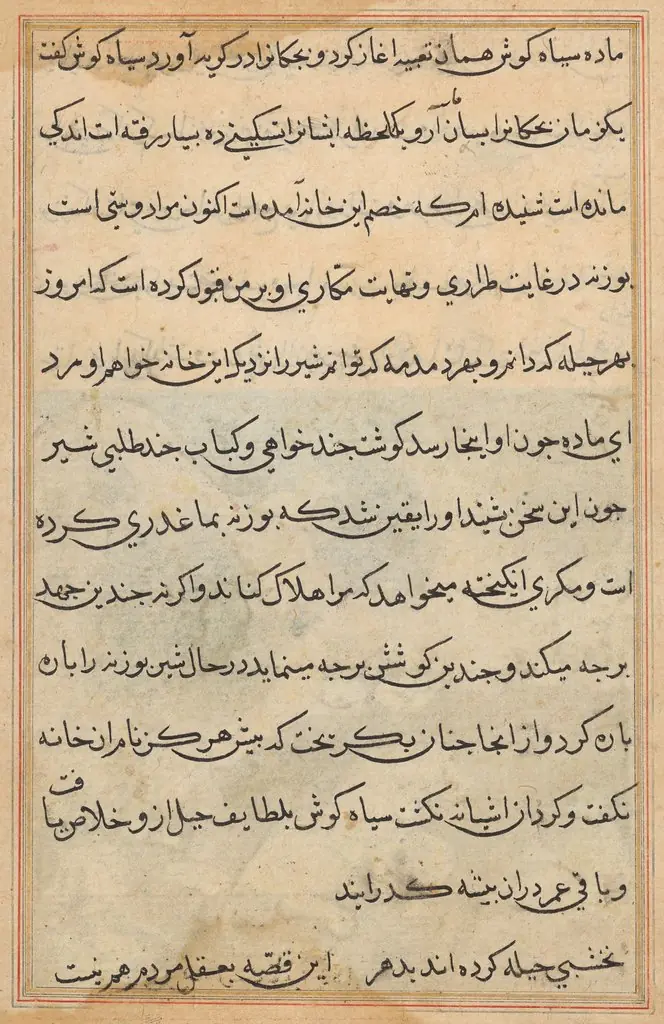
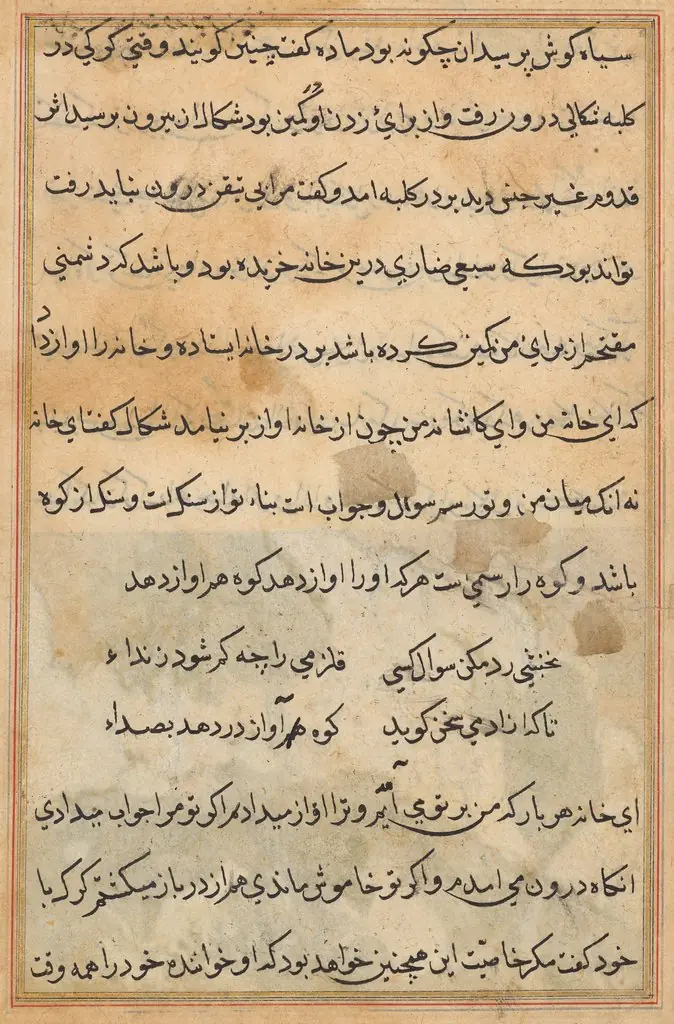
Tuti-Nama, translated as “Tales of a Parrot,” is a painted work whose surface is dominated by dense black calligraphy. The text occupies the entire field, arranged in orderly rows across a warm, light‑tan sheet that is edged with a subtle reddish border.
Technique & Style
The script appears hand‑drawn, each character rendered with slight variations in line weight that convey a deliberate, measured hand. Small dots and dashes link the letters, producing a visual rhythm that suggests a musical quality to the writing. The overall effect is a tightly packed yet legible composition, emphasizing precision and control.
Artist & collection

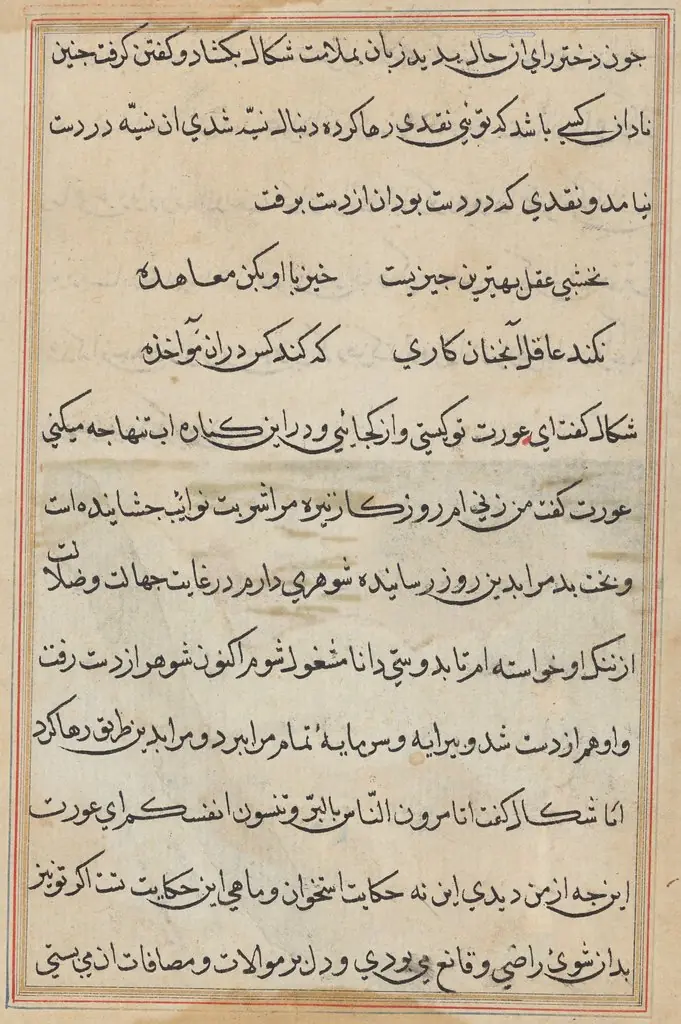 Page from Tales of a Parrot (Tuti-nama): text page
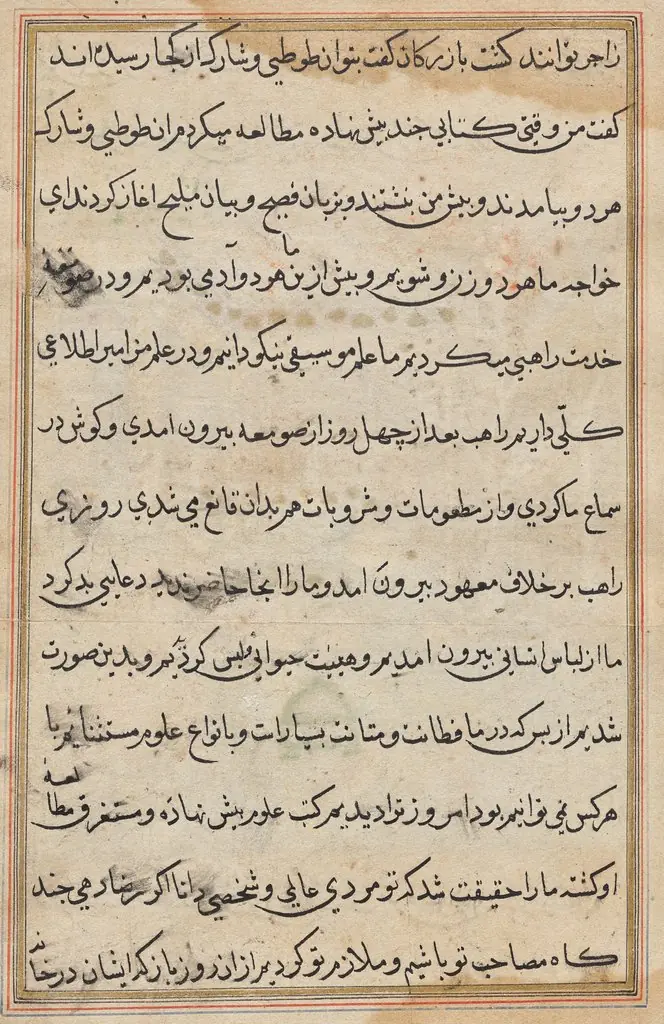 Page from Tales of a Parrot (Tuti-nama): text page
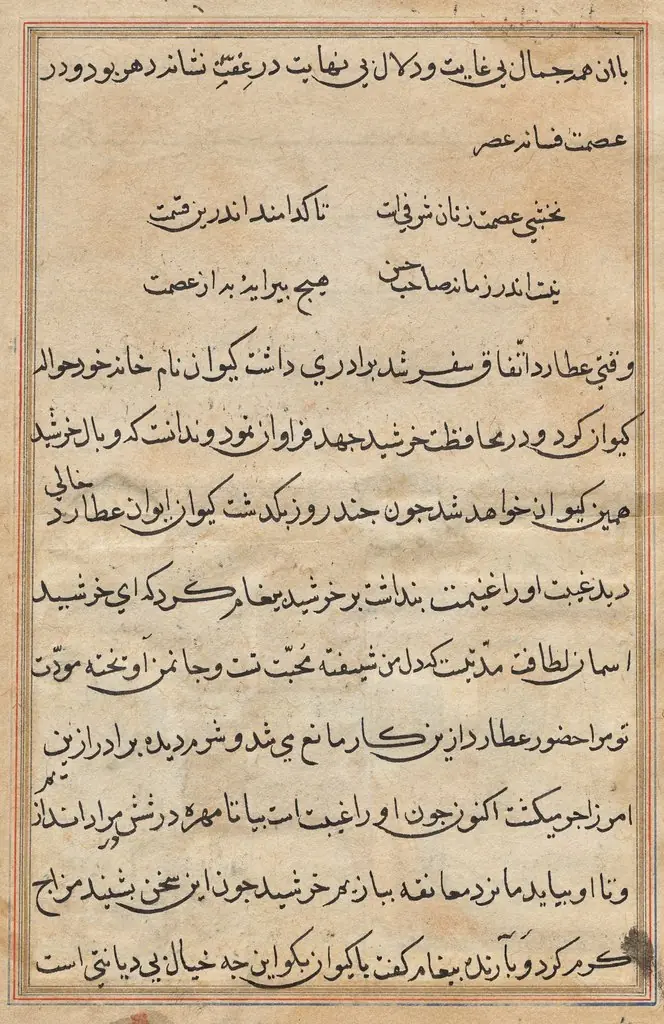 Page from Tales of a Parrot (Tuti-nama): text page
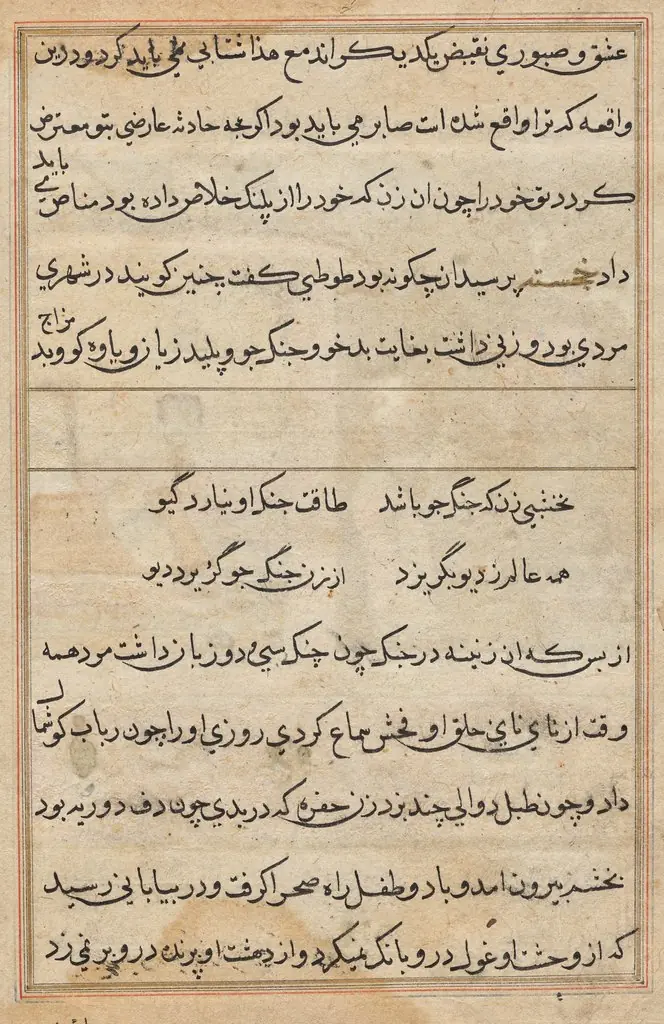 Page from Tales of a Parrot (Tuti-nama): text page
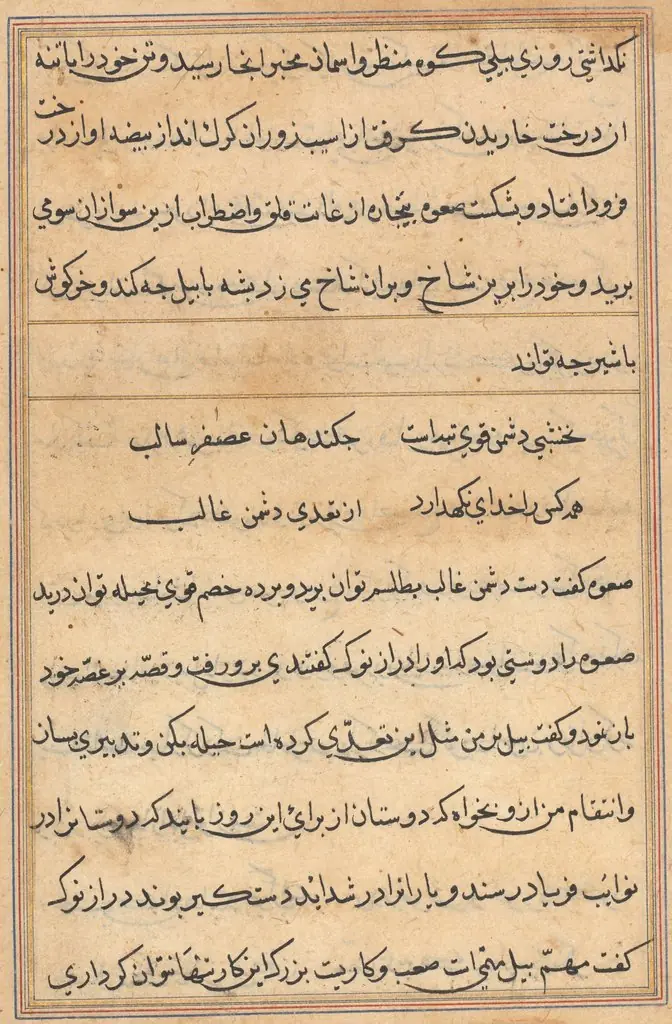 Page from Tales of a Parrot (Tuti-nama): text page
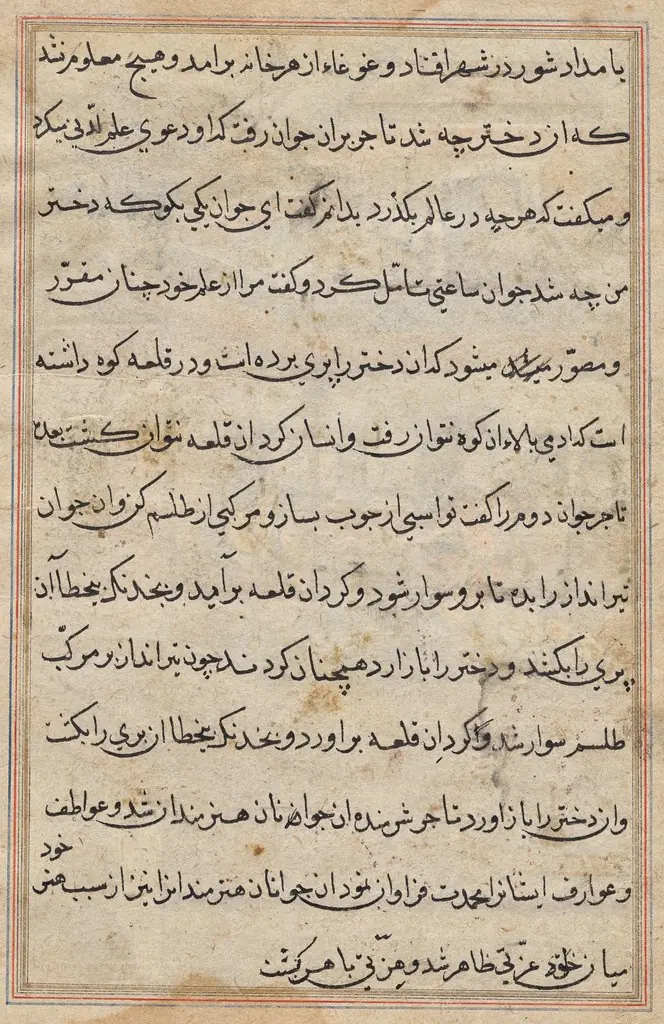 Page from Tales of a Parrot (Tuti-nama): text page
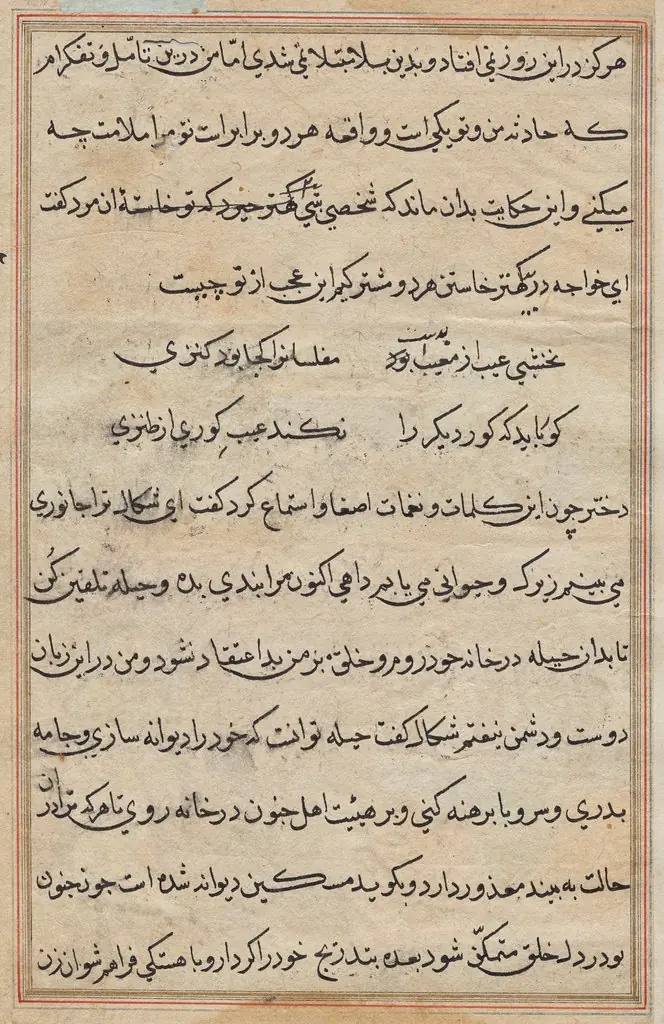 Page from Tales of a Parrot (Tuti-nama): text page
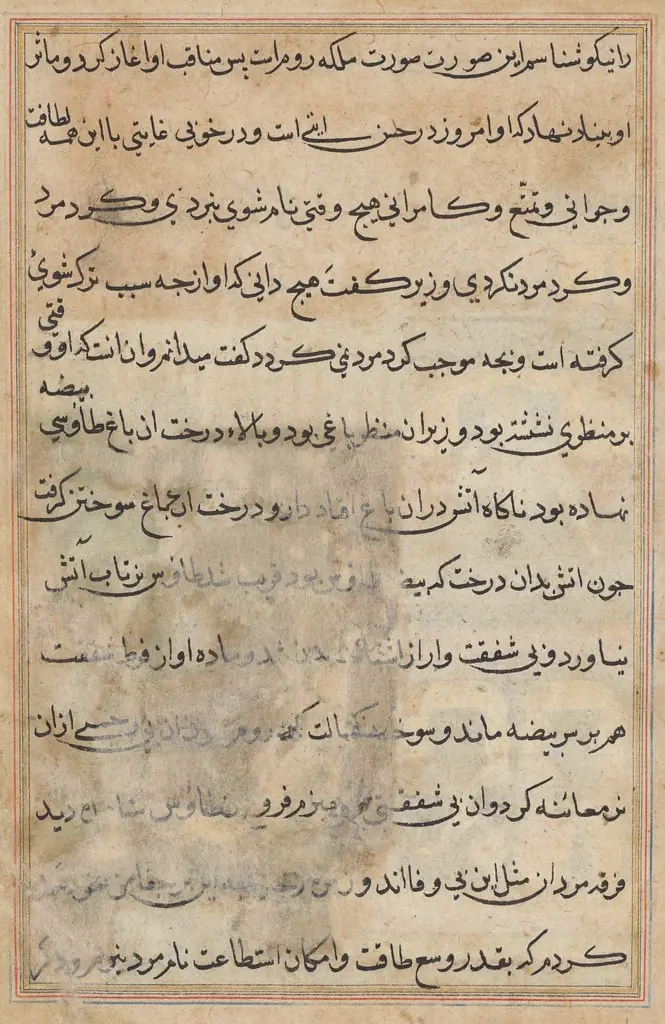 Page from Tales of a Parrot (Tuti-nama): text page
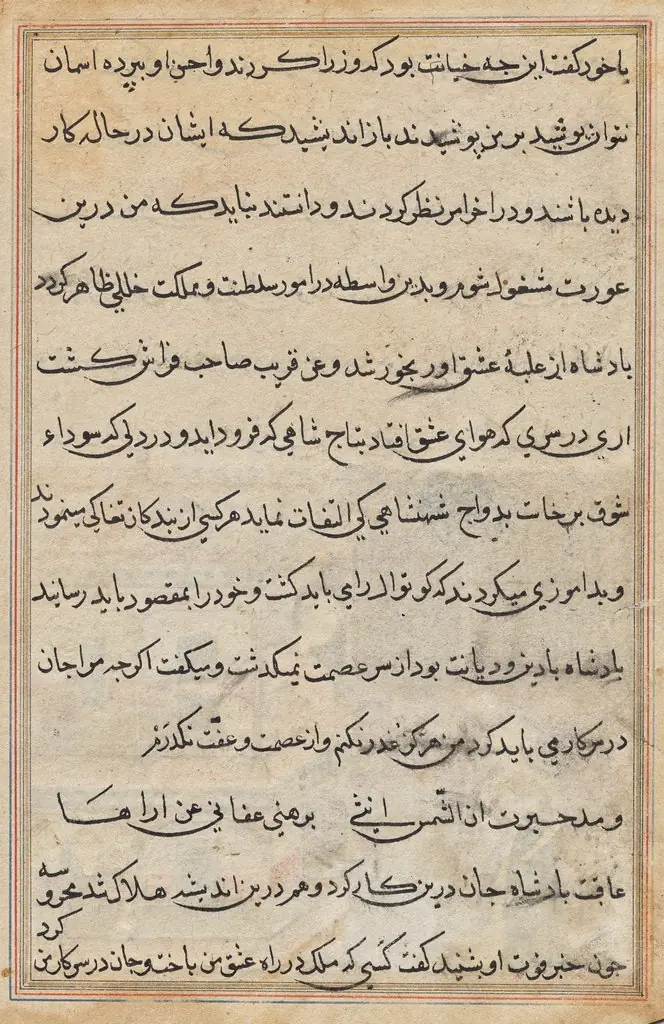 Page from Tales of a Parrot (Tuti-nama): text page