Artwork
Untitled
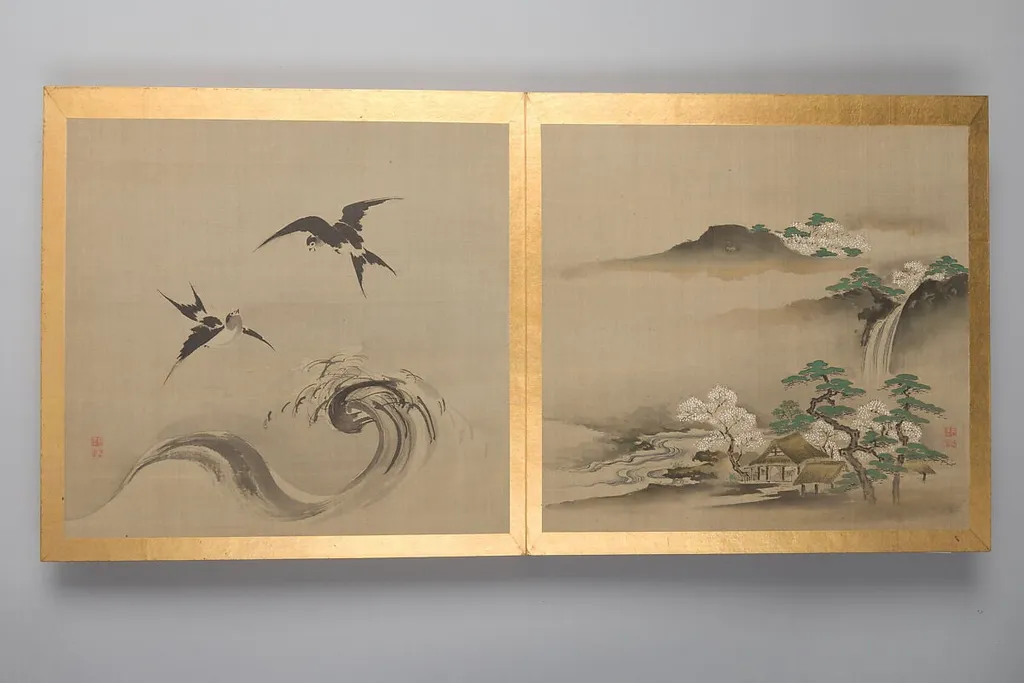
Untitled is an unspecified painting. It dates from 1785 and is held in the collection of the Metropolitan Museum of Art. The work consists of a silk album panel set within a gold frame, divided into two distinct scenes.
- Accession no.
- 29.100.1399
- Credit line
- H. O. Havemeyer Collection, Bequest of Mrs. H. O. Havemeyer, 1929
About this work
Technique & Style
As an example of Japanese painting from the late eighteenth century, the piece utilizes traditional materials characteristic of the region's album formats.
Created in Japan in 1785, this portrait is executed as an album leaf on a silk support. The work presents a square format, measuring 28.6 by 28.6 centimeters. As an example of Japanese painting from the late eighteenth century, the piece utilizes traditional materials characteristic of the region's album formats.
The specific handling of the medium and the current condition of the silk surface are not detailed in the available records, though the object is classified within the broader category of paintings.
History & Provenance
The painting Untitled is a silk album created in Japan in 1785, classified as a portrait painting. It is held in the collection of the Metropolitan Museum of Art. The work is attributed to an anonymous painter and measures 28.6 cm in both height and width.
The work is held in the collection of the Metropolitan Museum of Art. Its inception is recorded as 1785, and it was made in Japan, executed as an album on silk in the genre of portraiture.
No inventory/accession number or exhibition history is documented in the available sources.
Overview
The work consists of a silk album panel set within a gold frame, divided into two distinct scenes. The left panel portrays two birds soaring above a rolling wave, while the right panel presents a tranquil mountain vista punctuated by trees and a modest house. The juxtaposition of dynamic and calm elements creates a balanced visual narrative across the silk surface.
Subject & Meaning
In the first scene, the birds and wave convey motion and vitality, suggesting a celebration of natural forces. The second scene offers a peaceful landscape, inviting contemplation of humanity’s place within a serene environment. Together, the panels contrast energetic freedom with settled repose, reflecting Romantic interests in emotion, the sublime, and the interplay between nature and human habitation.
Context
Created within the Romantic period, the piece embodies the era’s fascination with dramatic natural scenes and the emotional resonance of landscape. The duality of vigorous sky and calm terrain mirrors contemporary literary themes that explored the tension between the untamed and the cultivated. Such works often served both decorative and contemplative functions in private collections.
Artist & collection

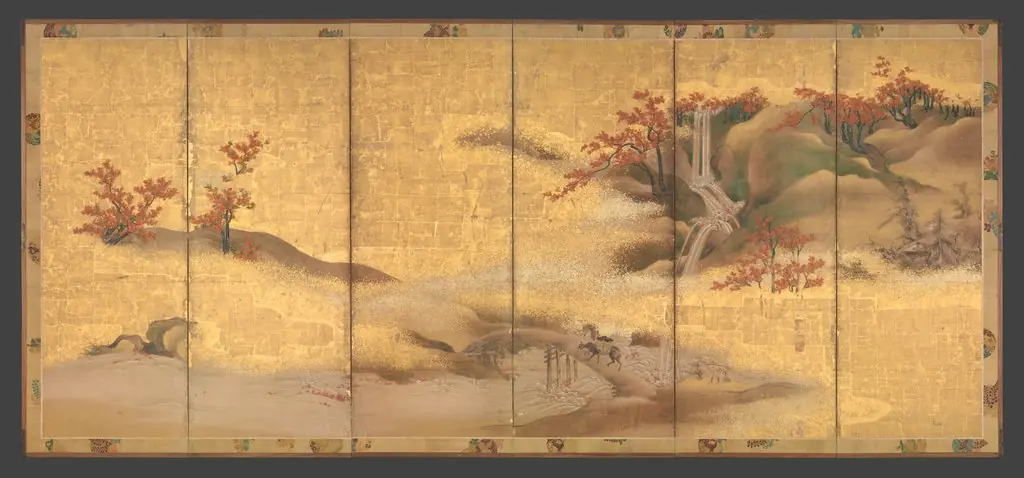 Mountains and Rivers in Autumn
 Flowers and Birds
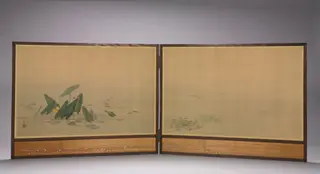 Fish in a Lotus Pond
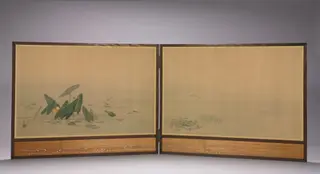 Fish in a Lotus Pond
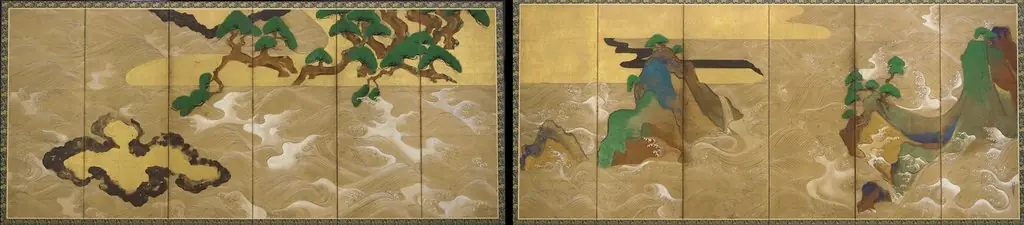 Waves at Matsushima
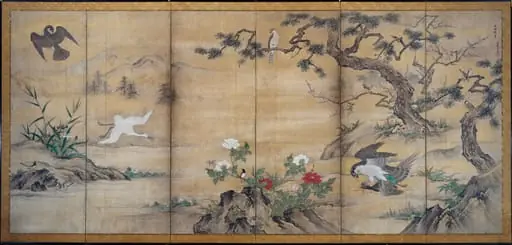 Birds and Flowers
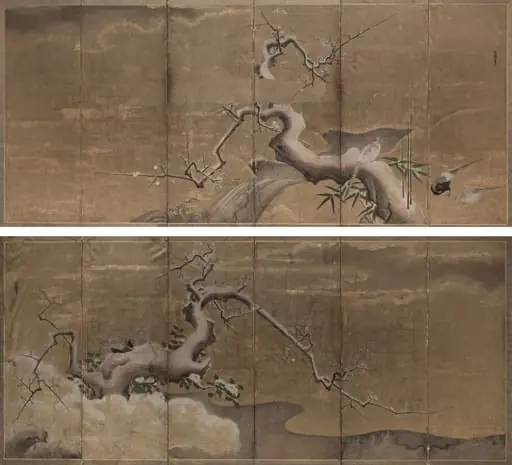 Winter Scene with Plum Trees and Pheasants
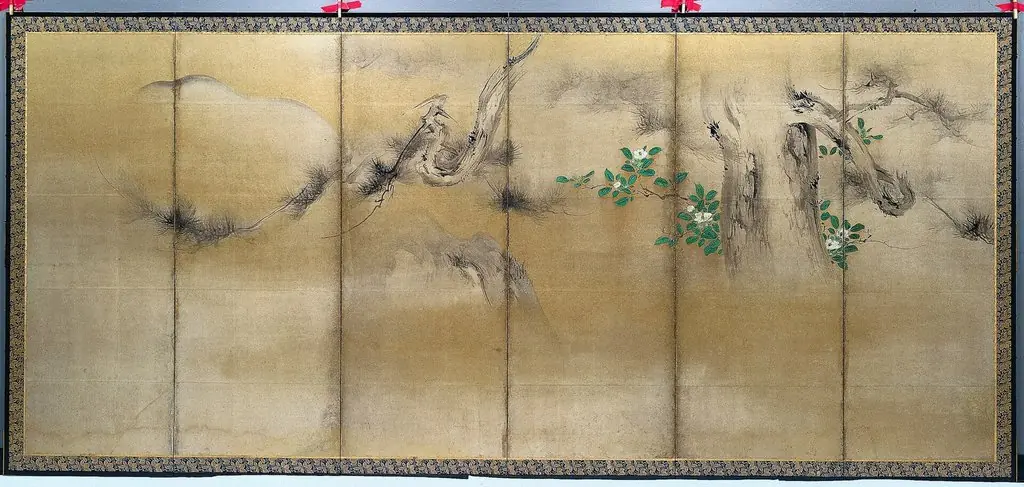 Winter and Summer Flowers
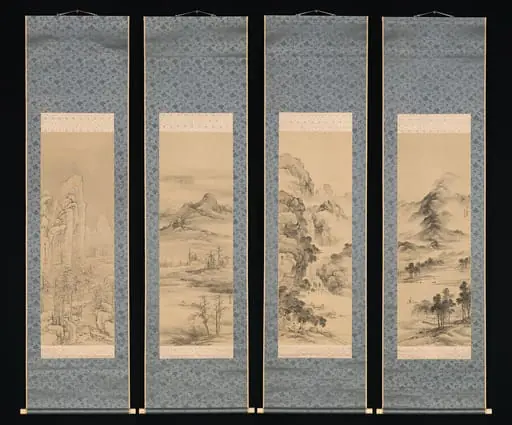 山本梅逸筆 四季山水図|Landscapes of the Four Seasons
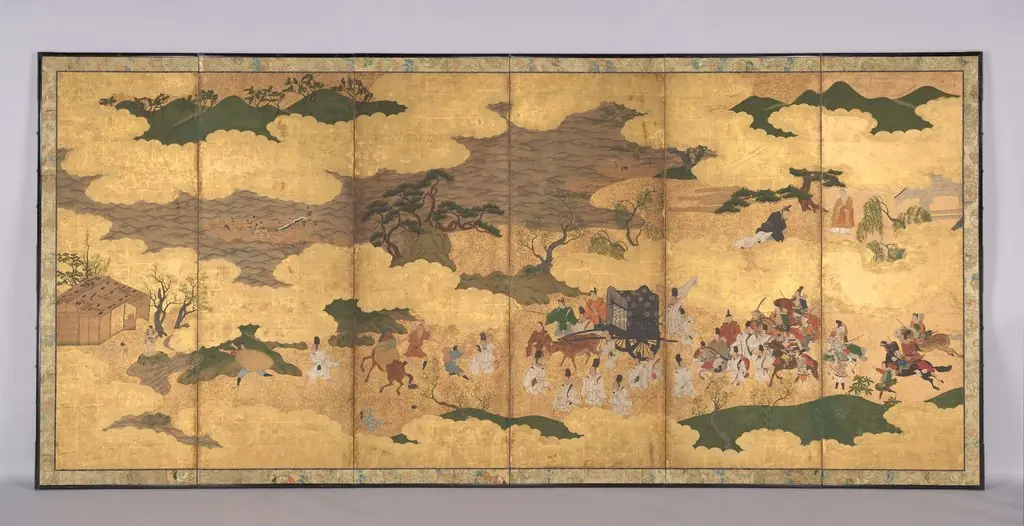 Sugawara Michizane Traveling to Dazaifu
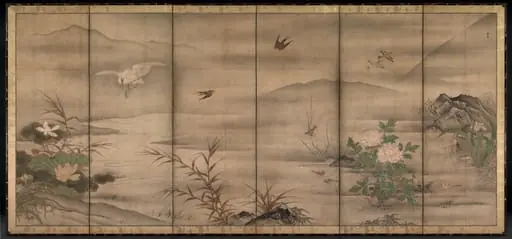 Birds and Flowers in a Landscape of the Four Seasons
- 平家物語図屏風 「小督」 「大原御幸」|"Kogō" and "The Imperial Procession to Ōhara", from The Tale of the Heike (Heike monogatari)