Artwork
Untitled
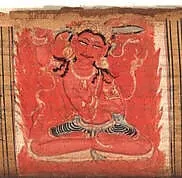
Untitled is an ink painting. It dates from 1149 and is held in the collection of the Metropolitan Museum of Art.
About this work
Subject & Meaning
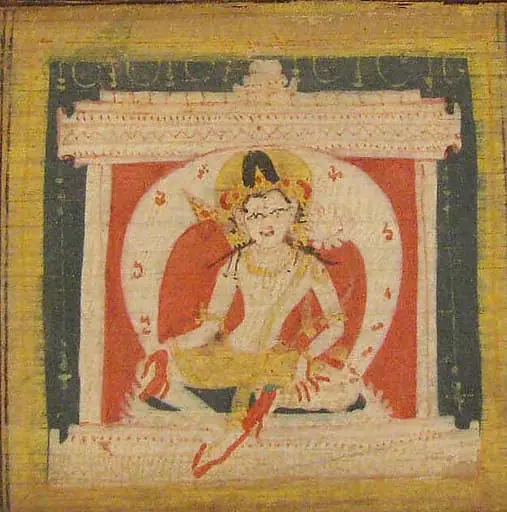
Created in 1149 in India, this anonymous painting on palm leaf depicts the Buddhist bodhisattva Mañjuśrī. Executed in ink and color, the work represents the figure within a devotional context, serving as a sacred image intended for veneration or meditation and reflecting the Buddhist religious practices of its time and place of origin.
Technique & Style
The piece dates to 1149 and was produced in India before entering the collection of the Metropolitan Museum of Art.
The work is executed in ink and color on a palm-leaf support, a technique typical of twelfth-century Indian manuscript painting, in which pigment is applied to a thin, cured leaf to produce a compact, matte surface that retains fine linear detail. The figure of Mañjuśrī is rendered with delicate line work and subtle tonal modulation. The piece dates to 1149 and was produced in India before entering the collection of the Metropolitan Museum of Art. Its current condition is not documented in the available sources.
History & Provenance
Created in 1149, this anonymous religious painting depicts Mañjuśrī in ink and color on palm leaf and originated in India as a Buddhist devotional object. The identity of the original patron is unrecorded, the work being attributed to an unknown painter active in the mid-twelfth century. It is held in the collection of the Metropolitan Museum of Art; the available records do not assign a specific accession number or document an exhibition history for the piece.
Overview
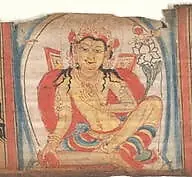
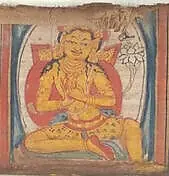
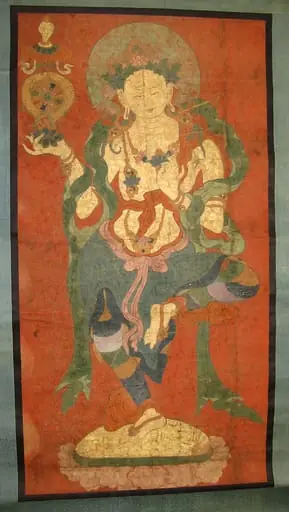
This untitled painting, created over eight centuries ago, utilizes ink and color on a slim palm leaf. It depicts a radiant golden figure seated upon a lotus blossom. The figure holds both a book and a sword, elements that often carry symbolic significance within religious iconography.
This delicate work exemplifies the artistic practices of its time and region, offering a glimpse into ancient manuscript illumination.
Context
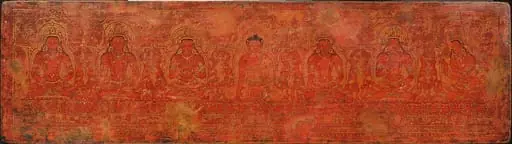
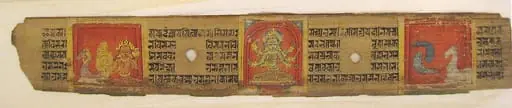
Originating from eastern India over eight centuries ago, this artwork reflects the material constraints and artistic ingenuity of its period. Palm leaves served as the primary writing and painting surface in the region, predating the widespread introduction of paper. Each individual leaf formed a page, which was then carefully stitched with others to create compact, hand-held books, facilitating the dissemination of religious texts and imagery.
Artist & collection

 Untitled
 Untitled
 Untitled
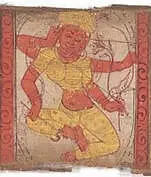
 Samantabhadra spinning clouds of things, folio 22 (recto) from a Gandavyuha-sutra (Scripture of the Supreme Array)
 Untitled
 Untitled
 Samantabhadra spinning clouds of things, folio 22 (recto) from a Gandavyuha-sutra (Scripture of the Supreme Array)
 Untitled
 Untitled
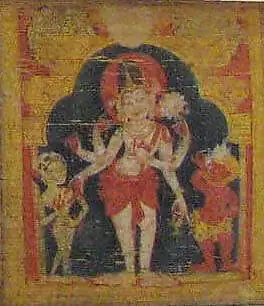
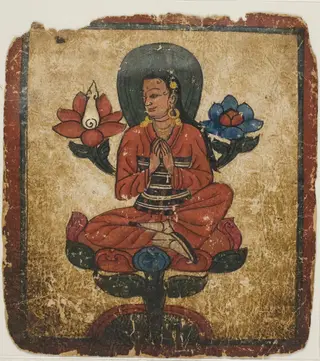 Figure Seated on Lotus, from a Set of Initiation Cards (Tsakali)