Artwork
Untitled
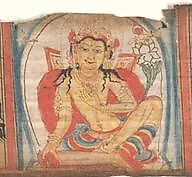
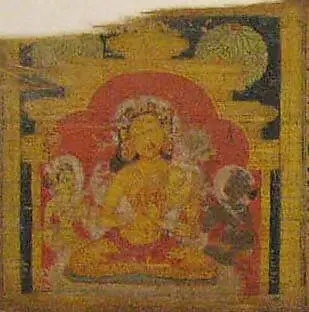
Untitled is an ink painting. It dates from 1149 and is held in the collection of the Metropolitan Museum of Art. This small painting, rendered in ink and color on a palm leaf, depicts the Bodhisattva Avalokiteshvara.
About this work
A jeweled Bodhisattva Avalokiteshvara sits in royal ease on a narrow palm-leaf folio from a dispersed Ashtasahasrika Prajnaparamita manuscript, painted in eastern India's Pala tradition in the twelfth century. Just two inches tall, the ink-and-color leaf entered the Met in 1985 as an anonymous gift. It preserves the portable sacred art made in the monastic scriptoria of Bihar or West Bengal.
Subject & Meaning
Created in India in 1149, the work functioned as a devotional image within a religious context, likely intended to aid meditation or veneration.
The painting depicts Avalokiteśvara, the bodhisattva of compassion in Mahayana Buddhism, seated upon a lotus throne. The lotus, a common Buddhist symbol, represents purity, spiritual awakening, and the transcendence of worldly defilements. Created in India in 1149, the work functioned as a devotional image within a religious context, likely intended to aid meditation or veneration.
The iconography, the serene posture, the lotus pedestal, and the figure's identification as a bodhisattva, conveys the ideal of enlightened compassion guiding sentient beings toward liberation, a central tenet of Buddhist practice.
Technique & Style
Executed in ink and color on palm leaf, this work utilizes a support typical of 12th-century Indian Buddhist manuscript painting. The medium consists of traditional pigments applied with ink, adhering to the conventions of the period. Stylistically, it belongs to the genre of religious art, depicting the Bodhisattva Avalokiteśvara, which situates it within formal iconographic traditions. No further details regarding handling or condition are provided in the available sources.
History & Provenance
Dating to 1149, this palm-leaf painting was created in India by an unknown artist. Its subject is the bodhisattva Avalokiteśvara, and it falls within the genre of religious Buddhist art. The work is currently housed at the Metropolitan Museum of Art. No information about its original commission or prior ownership chain is available in the cited sources.
Overview
This small painting, rendered in ink and color on a palm leaf, depicts the Bodhisattva Avalokiteshvara. Created in the 12th century during the Pala period in eastern India, it originally formed part of a larger manuscript. The folio, measuring only two inches in height, is a surviving fragment from a significant Buddhist text and was acquired by The Metropolitan Museum of Art in 1985.
Context
Produced in monastic scriptoria of present-day Bihar or West Bengal during the 12th-century Pala period, this manuscript leaf reflects the sophisticated visual culture of medieval Indian Buddhism. Such works were created under monastic patronage, with their intricate illustrations believed to safeguard both the sacred text and its reader, imbuing the physical object with spiritual significance.
Artist & collection

- Untitled
 Untitled
 Untitled
 Untitled
 Untitled
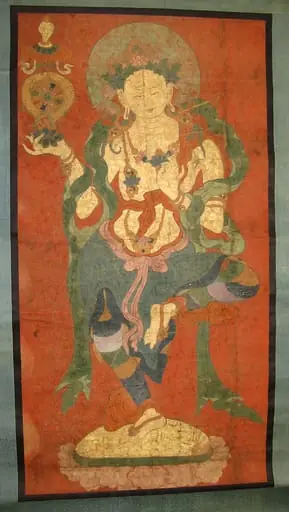
 Samantabhadra spinning clouds of things, folio 22 (recto) from a Gandavyuha-sutra (Scripture of the Supreme Array)
 Samantabhadra spinning clouds of things, folio 22 (recto) from a Gandavyuha-sutra (Scripture of the Supreme Array)
 Untitled
 Folio 22 from a Gandavyuha-sutra (Scripture of the Supreme Array): Samantabhadra spinning clouds of things (recto); Text (verso)
 Untitled
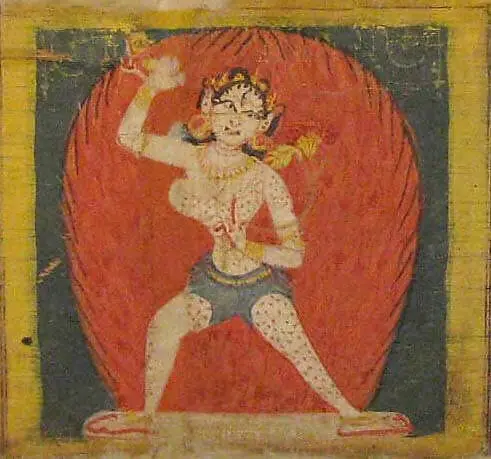
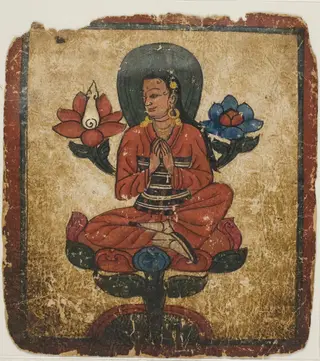 Figure Seated on Lotus, from a Set of Initiation Cards (Tsakali)
 Untitled