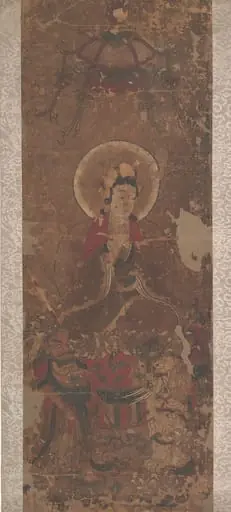
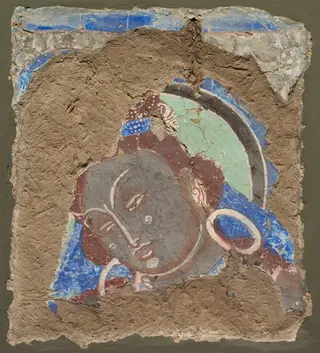
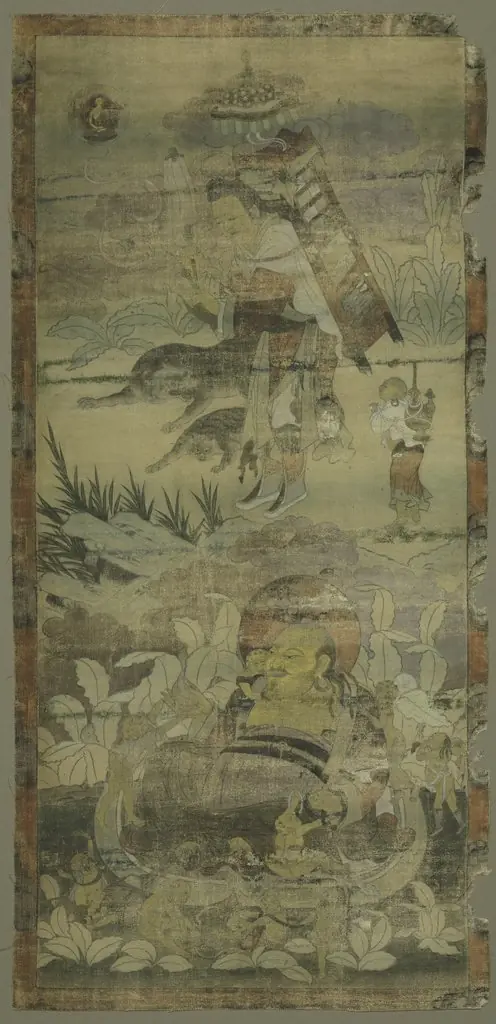
Artwork
Untitled
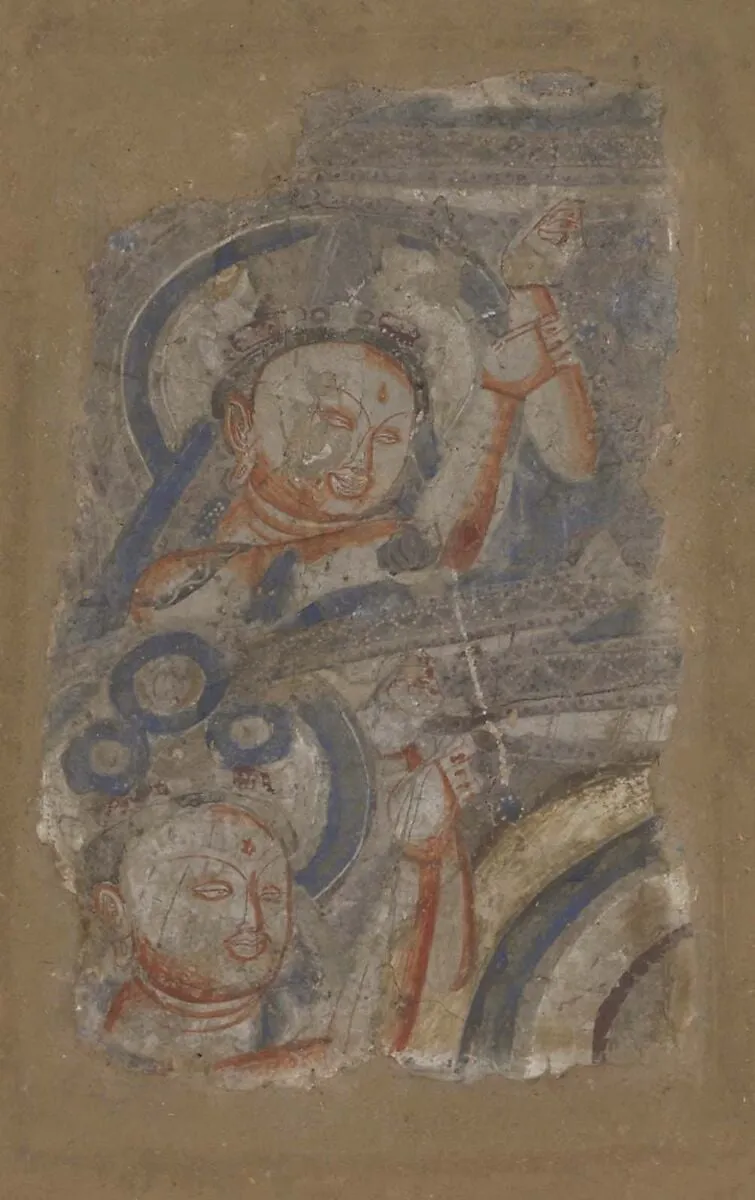
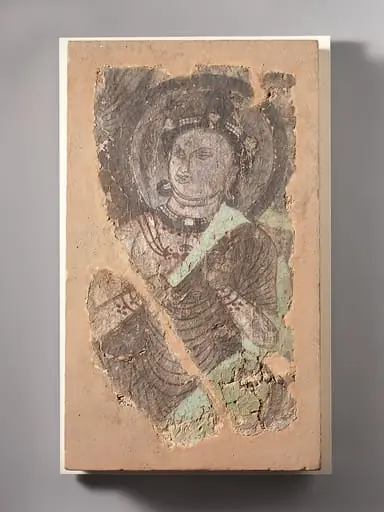
Untitled is an unspecified painting. It dates from 600 and is held in the collection of the Metropolitan Museum of Art.
About this work
Subject & Meaning
Its iconography aligns with Mahayana traditions that emphasize the intercessory role of bodhisattvas in guiding devotees toward enlightenment.
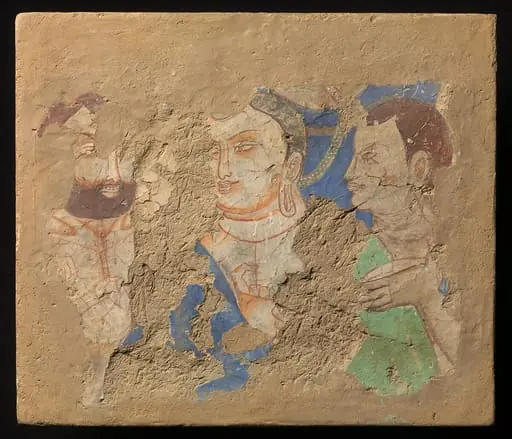
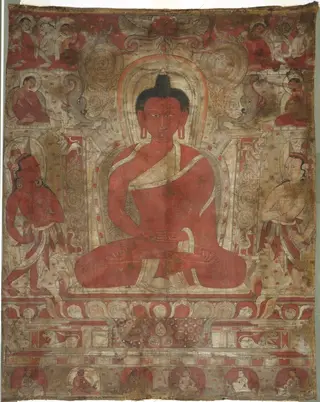
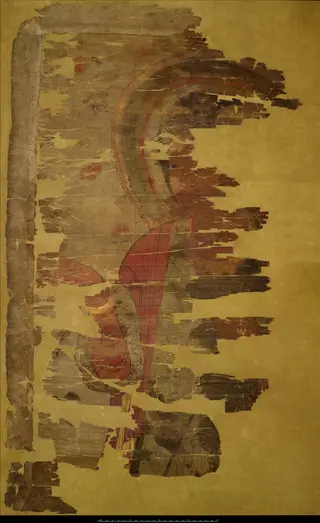
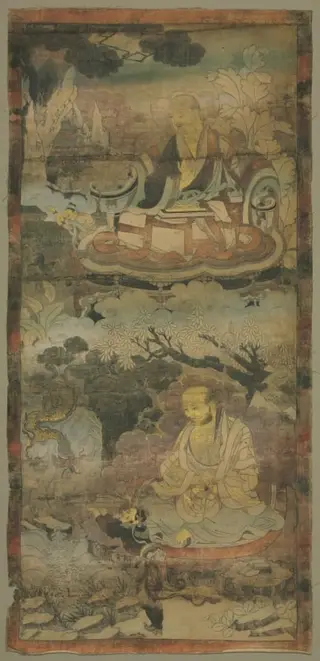
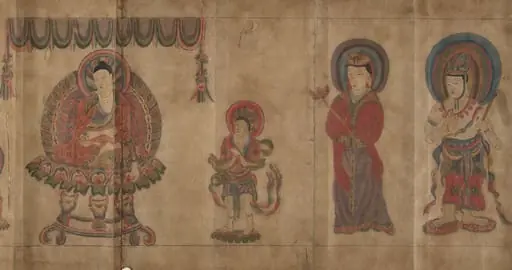
The work portrays a Bodhisattva, a celestial being embodying compassion within early Chinese Buddhist visual culture. Rendered in pigments on mud plaster, the figure combines flowing drapery with a serene facial expression, signifying spiritual benevolence and the promise of salvation. Its iconography aligns with Mahayana traditions that emphasize the intercessory role of bodhisattvas in guiding devotees toward enlightenment.
The painting’s composition, with elongated limbs and delicate ornamentation, reflects regional artistic conventions of the sixth to seventh centuries, when Buddhist motifs were integrated into domestic and monastic interiors across China.
Technique & Style
The work is executed in pigments applied directly to mud plaster, a medium characteristic of early Buddhist devotional painting in China. Its narrow vertical format, measuring 41.6 cm in height by 24.8 cm in width, is consistent with mural-scale imagery produced for sacred architectural settings. The subject is a Bodhisattva, rendered in a religious idiom associated with Chinese painting of the 6th–7th century. The piece is held in the collection of the Metropolitan Museum of Art.
History & Provenance
The untitled painting, dating to approximately the 6th–7th century and attributed to an anonymous artist, is held in the collection of the Metropolitan Museum of Art in New York. The work, which depicts a Bodhisattva rendered in pigments on mud plaster, measures 41.6 cm in height and 24.8 cm in width. While the source confirms its current location and physical dimensions, no specific accession number or detailed exhibition history is provided in the available records.
Overview
This untitled painting, rendered with pigments on mud plaster, depicts a serene holy figure. Originating from a cave wall in what is now western China, the artwork showcases enduring colors despite its age. The technique involved applying water-based pigments to wet plaster, allowing the colors to deeply penetrate the surface and contribute to its remarkable preservation over centuries. The artist responsible for this ancient work remains anonymous.
Artist & collection