Artwork
Untitled
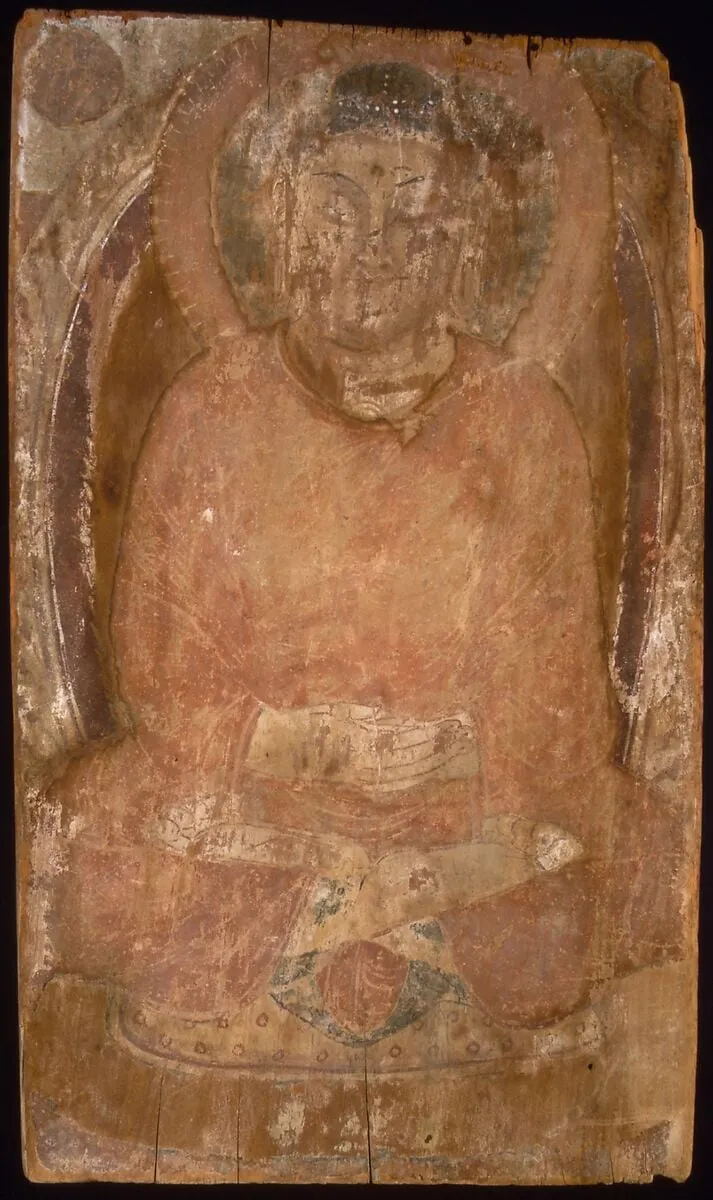
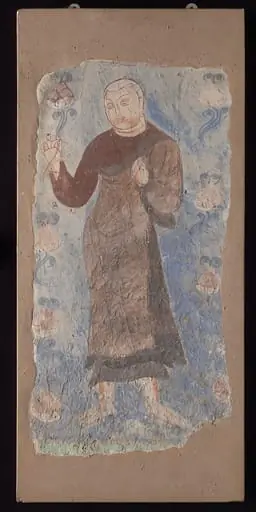
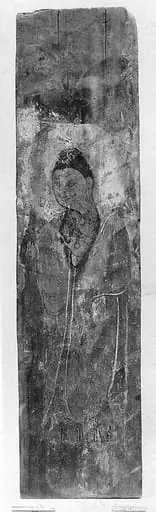
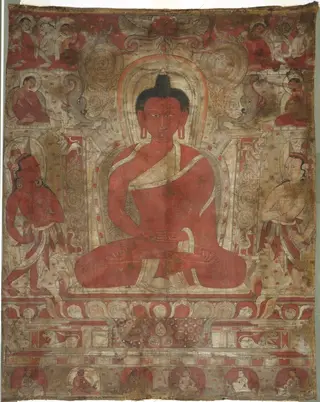
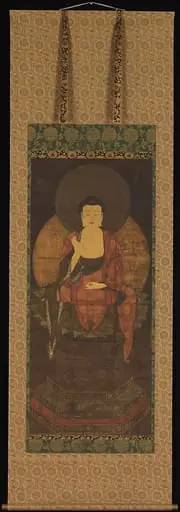
Untitled is a wood painting. It dates from 600 and is held in the collection of the Metropolitan Museum of Art.
About this work
Subject & Meaning
Its creation in China and inclusion in the Metropolitan Museum of Art's collection underscore its role as a devotional object within early Buddhist art.
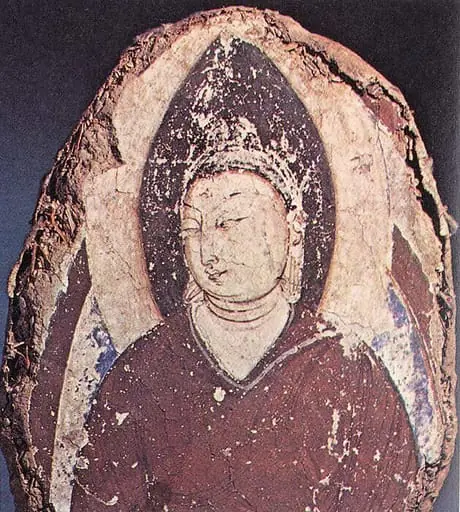
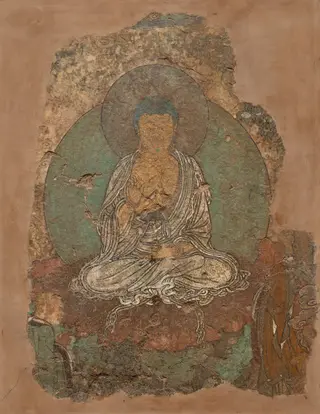
Untitled, a sixth–seventh century Chinese religious painting on wood, portrays the Buddha, the historical figure whose teachings form the foundation of Buddhism, as its central subject. The work belongs to the Buddhist iconographic tradition, employing conventional attributes such as the ushnisha and elongated earlobes that signify spiritual wisdom. Its creation in China and inclusion in the Metropolitan Museum of Art's collection underscore its role as a devotional object within early Buddhist art.
The anonymous execution reflects the common practice of anonymous production of sacred images in this period, where the focus rests on the symbolic representation of enlightenment and the transmission of Buddhist doctrine.
Technique & Style
The work is a painting created with water-based pigments on a wooden support, a technique typical of early Chinese Buddhist art. The pigments were layered to render a religious image of the Buddha. Executed in China between the sixth and seventh centuries by an anonymous artist, the piece belongs to the religious genre and is now part of the Metropolitan Museum of Art's collection.
Its formal qualities reflect the stylized, devotional aesthetic characteristic of Buddhist paintings of the period, though detailed stylistic analysis is limited by the available documentation.
History & Provenance
The work is a religious painting from sixth–seventh century China, executed in water-based pigments on wood. Created by an anonymous artist, the piece depicts the Buddha and serves as an artifact of Buddhist devotion. While the specific commissioning context remains undocumented, the work eventually entered the collection of the Metropolitan Museum of Art, which currently houses it as an example of early Chinese religious art.
No further details regarding the original patron, the precise year of completion, or the chain of ownership prior to its acquisition are provided in the available records.
Overview
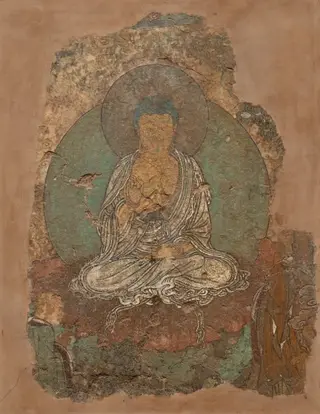
This untitled painting, rendered with water-based pigments on a small wooden panel, depicts a golden Buddha seated in a cross-legged posture upon a lotus flower. Dating back approximately 1,400 years, the artwork retains a subtle luminosity, particularly in the figure's face. It represents an enduring example of devotional art from a distant past, offering a glimpse into ancient spiritual practices.
Artist & collection