Artwork
Untitled
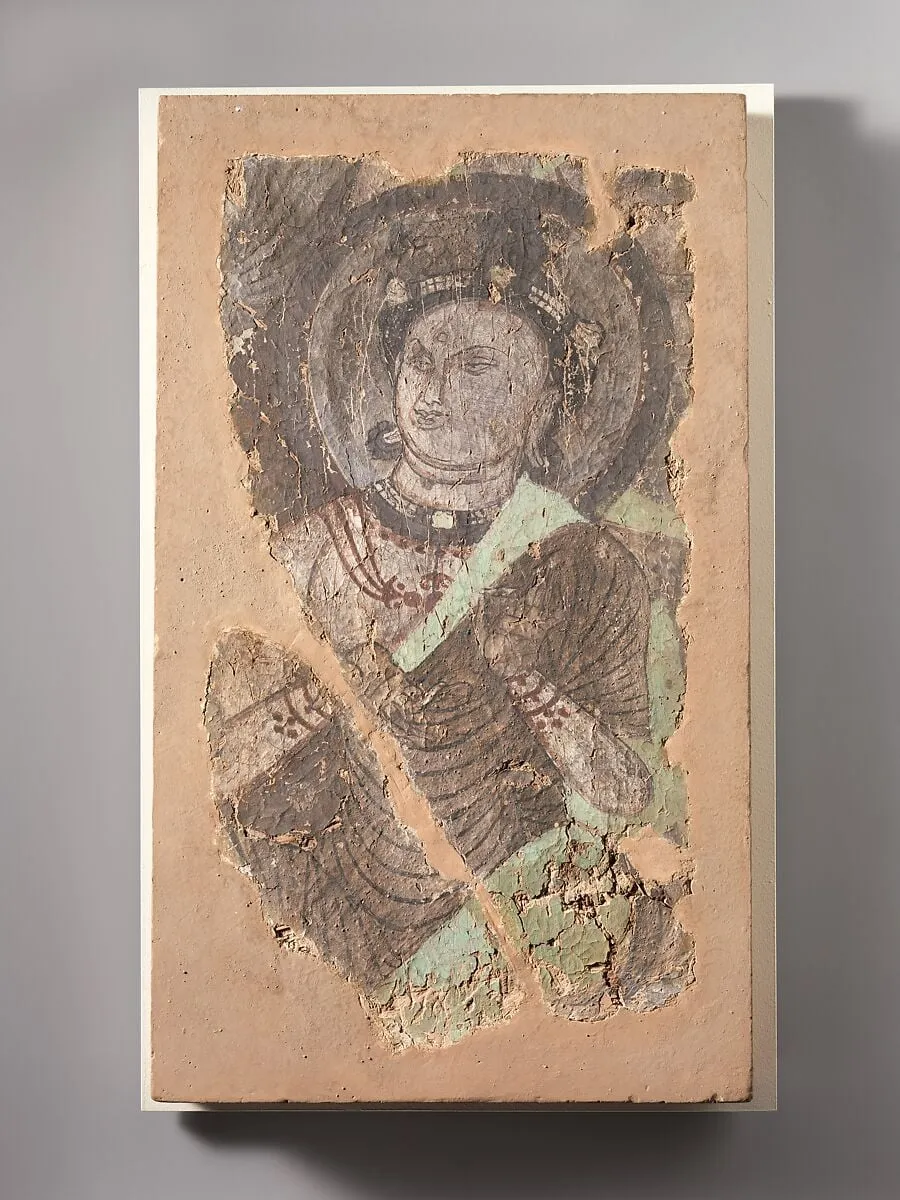
Untitled is an unspecified painting. It dates from 600 and is held in the collection of the Metropolitan Museum of Art.
About this work
Subject & Meaning
The work functions as a religious icon, using pigments applied to mud plaster to render the sacred subject.
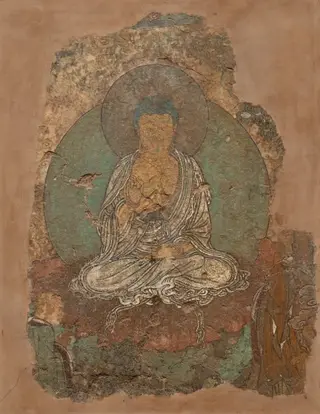
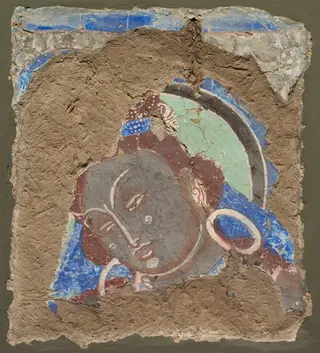
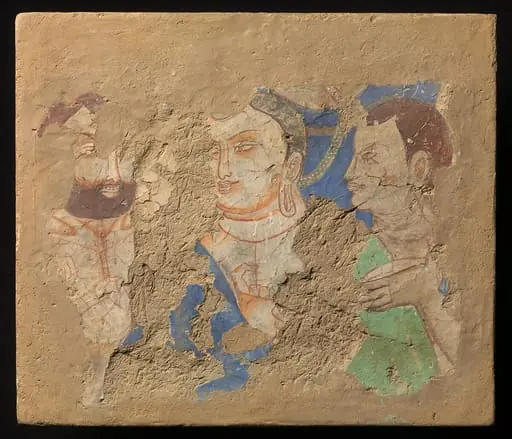
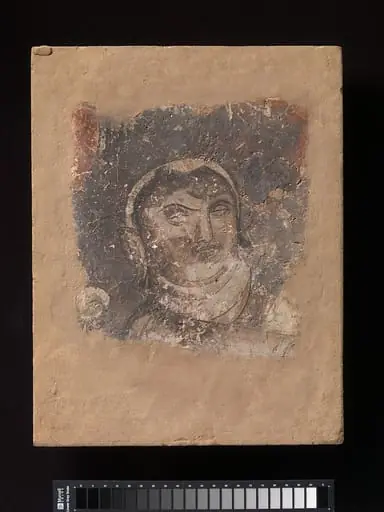
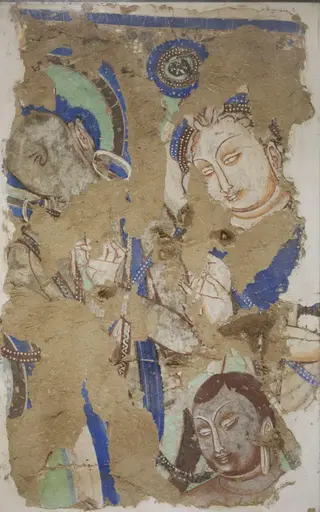
Created in China during the sixth or seventh century, this mural fragment depicts a Bodhisattva, a central figure in Buddhist theology representing an enlightened being who delays nirvana to assist others. The work functions as a religious icon, using pigments applied to mud plaster to render the sacred subject. As an example of early Buddhist art, the image served a devotional purpose, likely originally adorning a temple or cave shrine to facilitate worship and meditation on the path to enlightenment.
The specific identity of the Bodhisattva is not detailed in the available records, but the presence of such a figure underscores the artwork’s role within the spiritual practices of the period.
Technique & Style
The work is a sixth-to-seventh-century wall painting created with pigments applied to a mud-plaster support. Executed in China, the piece measures 49.2 cm in height by 29.2 cm in width and belongs to the religious genre, portraying a Bodhisattva. As a painting on plaster, the surface bears the texture typical of early Buddhist murals, while the composition follows conventional iconography of the Bodhisattva figure.
The medium remains pigment on mud plaster, and the work is presently housed in the Metropolitan Museum of Art.
History & Provenance
Untitled is a ca. 6th–7th century Chinese painting executed in pigments on mud plaster. The work, attributed to an anonymous artist, portrays a Bodhisattva and measures 49.2 cm in height by 29.2 cm in width. It was produced in China as a religious artwork and later entered the collection of the Metropolitan Museum of Art, where it remains.
The piece is classified as a painting within the genre of religious art, and its creation dates to the early medieval period.
Overview
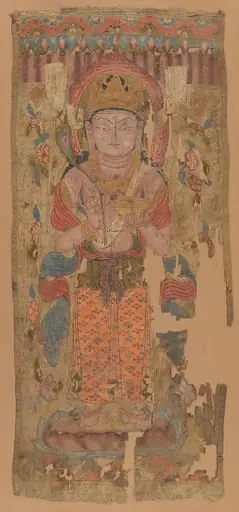
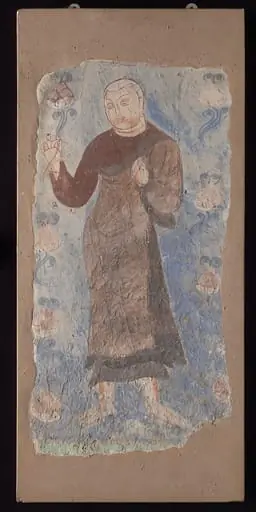
This untitled painting depicts a Buddhist bodhisattva, a figure dedicated to achieving enlightenment for the benefit of all beings. The figure stands upon a lotus flower, a symbol of purity, with one hand raised in a gesture of blessing. Though the pigments have faded over time, the distinct halo behind the head and the flowing drapery of the robes remain discernible, conveying a sense of spiritual grace.
Artist & collection