Artwork
Untitled
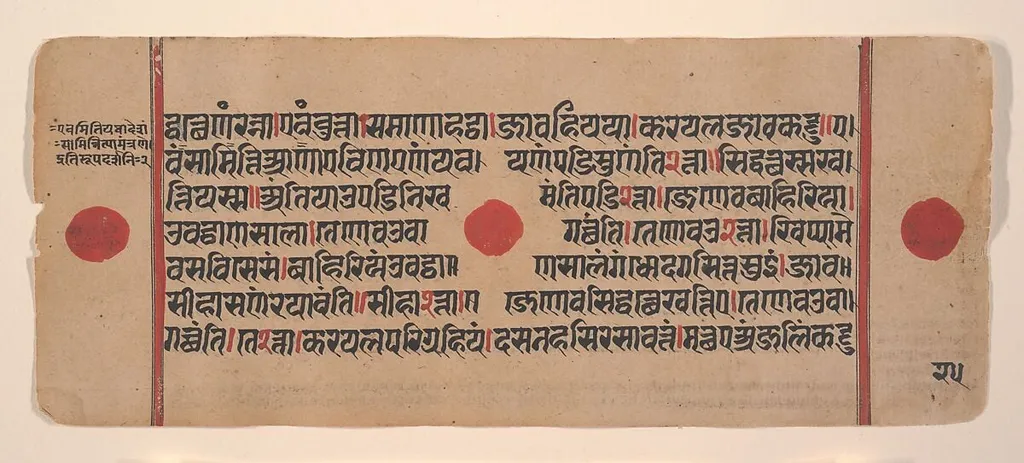
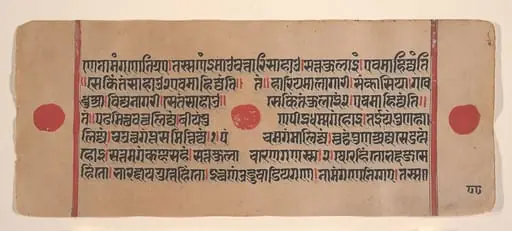
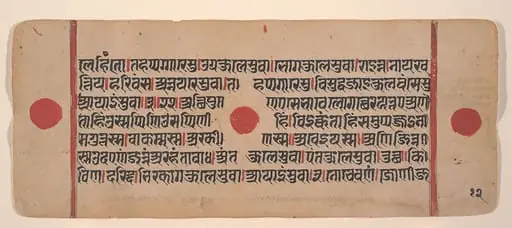
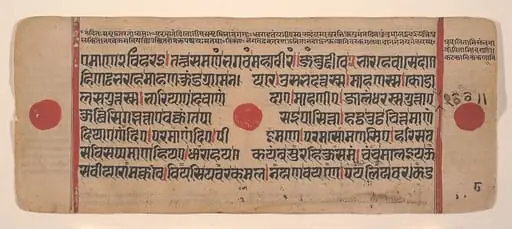
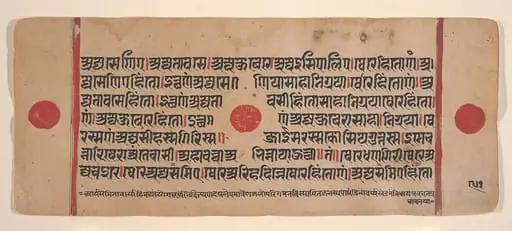
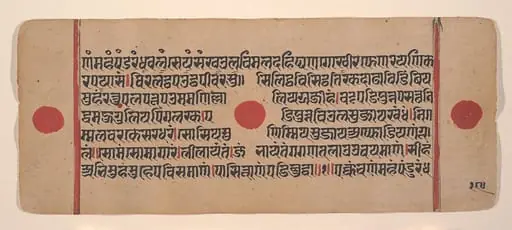
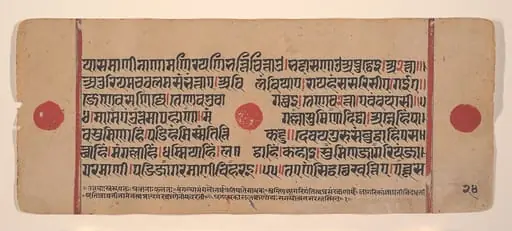
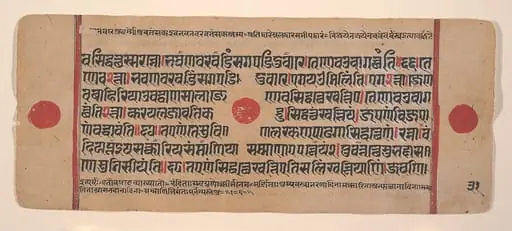
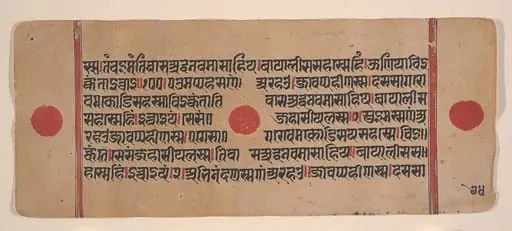
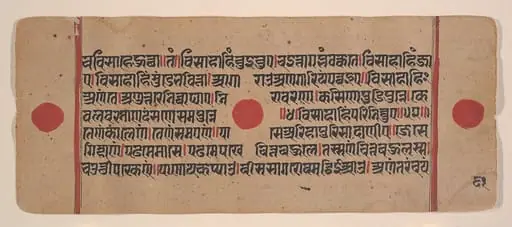
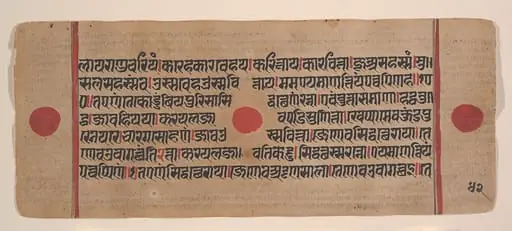
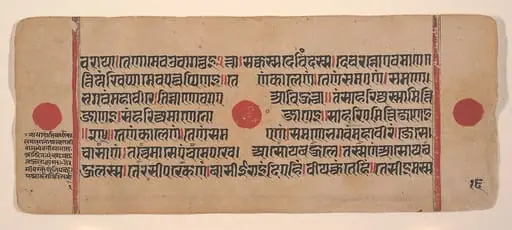
Untitled is a watercolor painting. It dates from 1449 and is held in the collection of the Metropolitan Museum of Art.
About this work
Technique & Style
1 cm in height by 27 cm in width, consistent with the palm-leaf or paper formats used for Jain manuscript leaves of the period.
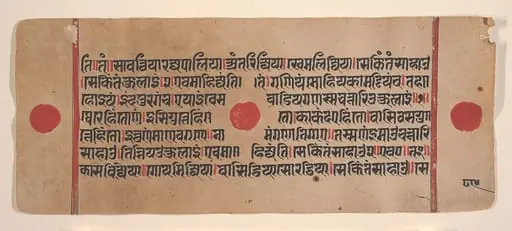
Executed in 1449, the work is a miniature painting on paper employing ink and opaque watercolor heightened with gold. The support is a single sheet of paper, sized at 11.1 cm in height by 27 cm in width, consistent with the palm-leaf or paper formats used for Jain manuscript leaves of the period. Handling shows fine, controlled brushwork typical of the fifteenth-century Gujarat or Rajasthan schools, with delicate line work defining the figures and ornamental details.
The palette relies on mineral pigments and organic dyes, applied in thin, layered washes to build up luminous areas, while gold is reserved for halos, jewelry, and architectural motifs to signal sacred status. Stylistic traits include hieratic scale, linear rhythm, and a restrained palette dominated by earth tones and lapis lazuli blue, aligning with contemporaneous Jain manuscript traditions.
History & Provenance
The untitled work, dated 1449, was produced in India by an anonymous painter using ink, opaque watercolor and gold on paper. It belongs to the Jain religious tradition and measures 11.1 × 27 cm. The painting entered the collection of the Metropolitan Museum of Art, where it is catalogued as accession number 55.121.38.41 and displayed in the museum’s South Asian art galleries. No records indicate a specific commission or patron; the artist remains unidentified, and the work’s early ownership prior to museum acquisition is undocumented. Its creation history is defined by the materials and technique noted in the contemporaneous record.
Overview
This untitled painting, rendered with ink, opaque watercolor, and gold on paper, originates from a Jain manuscript created in Gujarat, India. It portrays a woman in a vibrant red sari seated beneath a tree heavy with fruit. Smaller figures are depicted climbing the branches to harvest mangoes, while others find repose in the shade below. This work exemplifies the distinctive artistic traditions associated with Jain religious texts.
Subject & Meaning
The painting's central figure, a woman in a red sari, holds a book, suggesting a connection to learning or scripture, typical for a Jain manuscript. The surrounding scene of mango harvesting and rest beneath the tree evokes a sense of abundance and tranquility. While the specific narrative remains untitled, such imagery often served to illustrate religious texts, with the inclusion of gold leaf underscoring reverence for the sacred content it accompanied.
Context
This painting is an example of the rich tradition of manuscript illustration within Jainism, a religion originating in ancient India. Produced in the Gujarat region, it reflects the cultural and artistic practices prevalent there. The use of precious materials like gold in these works was not merely decorative; it conveyed honor and devotion towards the religious narratives and teachings contained within the illuminated texts, highlighting their spiritual significance.
Artist & collection