Artwork
Untitled
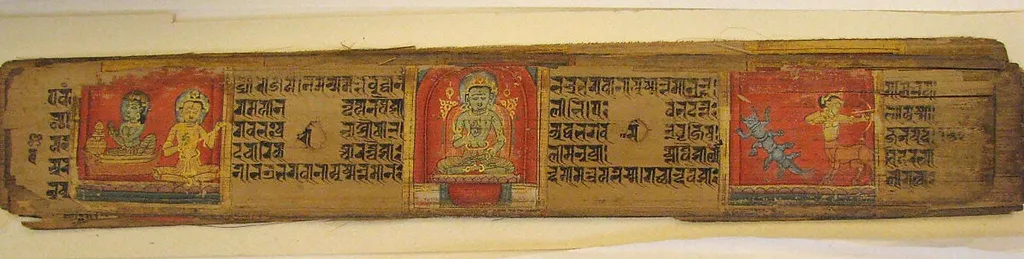
Untitled is an ink painting. It dates from 1349 and is held in the collection of the Metropolitan Museum of Art.
About this work
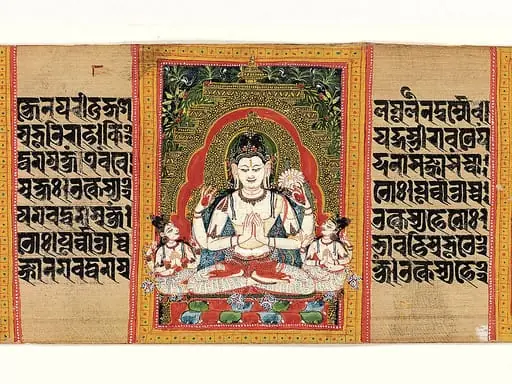
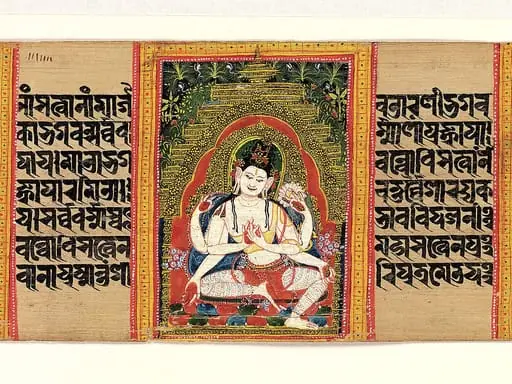
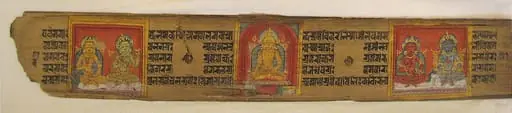
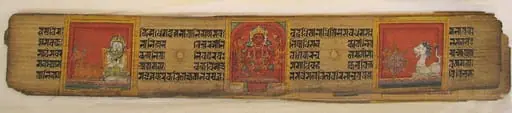
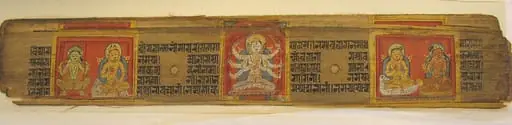
A small, bright painting on palm leaves: a blue-skinned deity with four arms seated on a lotus. Made in Nepal around 1349, when artists used palm leaves because paper was scarce. The thin lines and flat colors have lasted, and the gold details still shine. The maker is unknown, the work likely meant for worship.
History & Provenance
The painting entered the collection of the Metropolitan Museum of Art in 1955 as accession number 55.
The painting entered the collection of the Metropolitan Museum of Art in 1955 as accession number 55.121.37.7, where it is recorded as an anonymous work. Technical and stylistic analysis situates its creation in the fourteenth century, specifically 1349, aligning with documented Nepalese Buddhist production of the period. The palm-leaf support and ink-and-color medium accord with Nepalese devotional practices of the time, and its subject, a Buddhist deity, indicates a ritual or votive function, likely made for a temple or monastic setting rather than a private patron.
The museum classifies the piece as a religious work within its paintings collection. No earlier provenance prior to its mid-twentieth-century acquisition is publicly documented.
Overview
This untitled painting, created in Nepal approximately seven centuries ago, is rendered with ink and color on palm leaves. The small, vibrant artwork depicts a blue-skinned, four-armed deity seated upon a lotus flower. Its creation reflects a period when paper was a scarce commodity, making palm leaves a common surface for such intricate religious illustrations.
Subject & Meaning
The central figure of this painting is a blue-skinned deity, identifiable by its four arms and serene posture atop a lotus blossom. This iconography is characteristic of Buddhist and Hindu traditions, suggesting the artwork served a devotional purpose. Such depictions often embody specific spiritual concepts or divine attributes, intended to aid meditation or prayer within a sacred setting.
Technique & Style
The artwork's enduring quality is partly attributable to its meticulous technique. Artists of this era in Nepal frequently utilized palm leaves as a painting surface due to the scarcity of paper. The composition employs fine lines and areas of flat color, a style that contributes to its longevity. Even after centuries, the delicate gold accents retain their luminosity, highlighting key features of the divine figure.
Artist & collection

 Untitled
 Untitled
 Untitled
 Untitled
 Text, Folio 146 (recto), from a Manuscript of the Perfection of Wisdom in Eight Thousand Lines (Ashtasahasrika Prajnaparamita-sutra)
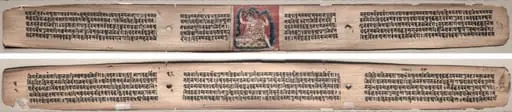 Folio 22 from a Gandavyuha-sutra (Scripture of the Supreme Array): Samantabhadra spinning clouds of things (recto); Text (verso)
 Text, Folio 103 (verso), from a Manuscript of the Perfection of Wisdom in Eight Thousand Lines (Ashtasahasrika Prajnaparamita-sutra)
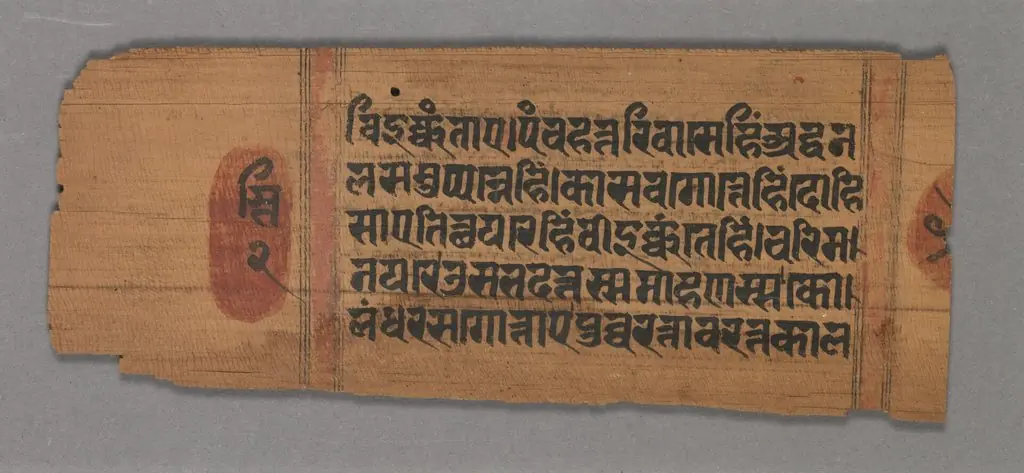 Kalpa-sutra
 Text, Folio 142 (recto), from a Manuscript of the Perfection of Wisdom in Eight Thousand Lines (Ashtasahasrika Prajnaparamita-sutra)