Artwork
Untitled
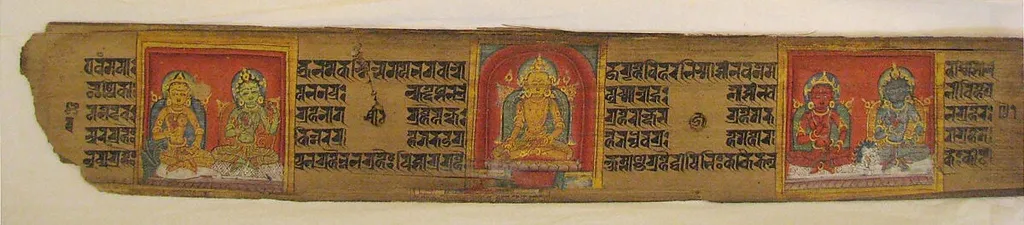
Untitled is an ink painting. It dates from 1349 and is held in the collection of the Metropolitan Museum of Art.
About this work
Subject & Meaning
As a piece of religious art, its primary subject is the divine figure itself, intended to facilitate spiritual connection or veneration.
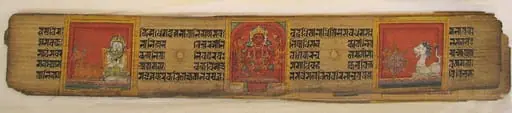
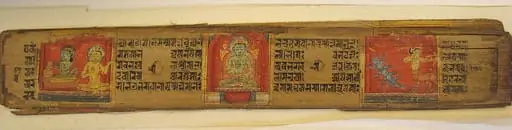
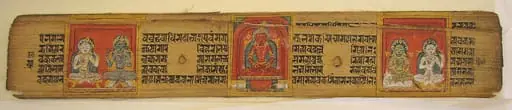
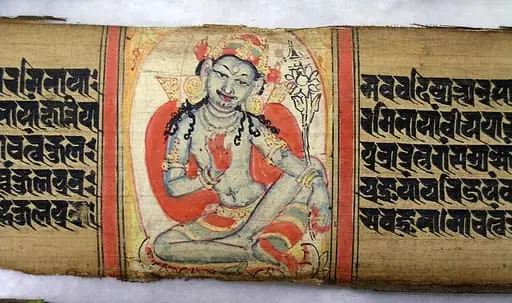
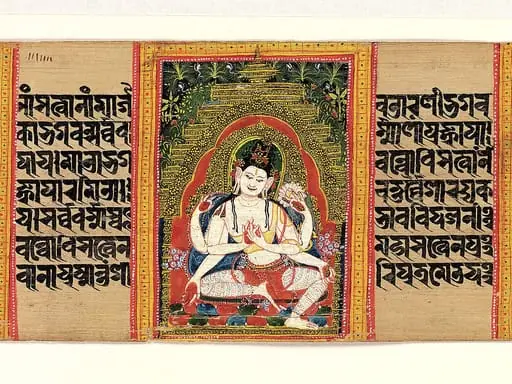
Created in 1349 in Nepal, this anonymous painting on palm leaves serves as a vehicle for Buddhist religious devotion. The work depicts a specific deity, functioning as a central icon within the Buddhist tradition. As a piece of religious art, its primary subject is the divine figure itself, intended to facilitate spiritual connection or veneration.
The use of ink and color on palm leaves reflects the material culture of the region during the mid-14th century. While the specific identity of the deity is not detailed in the available records, the classification confirms the image represents a sacred entity within the Buddhist pantheon, embodying the spiritual themes characteristic of Nepalese religious painting from this period.
Technique & Style
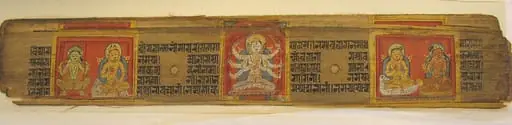
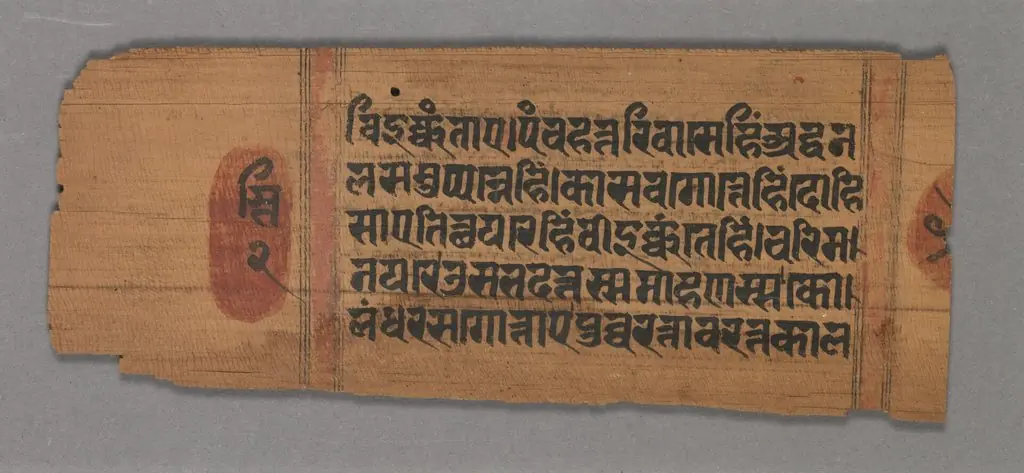
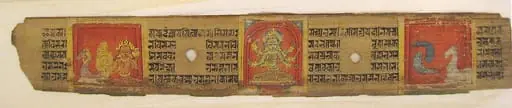
The work is an ink and color painting on palm leaf, a support typical of 14th‑century Nepalese Buddhist manuscripts. Its dimensions measure roughly 5.4 cm in height by 32.7 cm in width, as recorded in the Metropolitan Museum of Art catalogue. The composition portrays a Buddhist deity within a religious narrative, situating the piece within the religious painting genre.
The medium’s flat, linear outlines and muted color fields reflect the stylistic conventions of Nepalese manuscript painting of the period. No specific information regarding its current condition or handling history is provided in the available documentation.
History & Provenance
The work, an anonymous religious painting created in 1349, originated in Nepal. Executed in ink and color on palm leaves, it depicts Buddhist deities and belongs to the genre of religious art. The piece is currently held in the collection of the Metropolitan Museum of Art, where it is cataloged under the accession number 55.121.37.2.
While the specific artist remains unknown, the work's dimensions are recorded as 5.4 units in height and 32.7 units in width. The creation date is established as January 1, 1349, marking its inception in the mid-fourteenth century. No further details regarding the original commission or the specific chain of ownership prior to its arrival at the museum are provided in the available records.
The work titled Untitled, dated 1349, is housed in the Metropolitan Museum of Art in New York. Its accession number recorded in the museum’s catalogue is 55.121.37.2. The painting is part of the museum’s Asian religious art collection and is displayed in the permanent Asian Art galleries.
No record of a dedicated exhibition of this work outside the museum appears in the available sources. The work remains accessible to researchers by appointment, according to the museum’s access policy.
Legacy
The painting’s attribution to an anonymous 14th‑century Nepali master and its inclusion in the Metropolitan Museum of Art’s collection have established it as a key reference for the study of early Himalayan Buddhist art. Scholars cite its distinctive composition and iconography when examining the development of Buddhist deity representation in medieval Asian painting. Its presence in a major Western museum has prompted exhibitions that contextualize the work within broader narratives of trans‑regional religious art, influencing both academic discourse and public perception of the period’s visual culture.
Overview
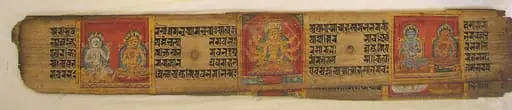
This untitled painting, rendered in ink and color on a palm leaf, presents a multi-armed, seated figure holding various objects. Such delicate works were typically created for religious texts in Nepal. Its vibrant palette and intricate details suggest a devotional or instructional purpose, reflecting the spiritual traditions it served. The fragility of the medium makes surviving examples like this particularly uncommon.
Artist & collection