Artwork
Untitled
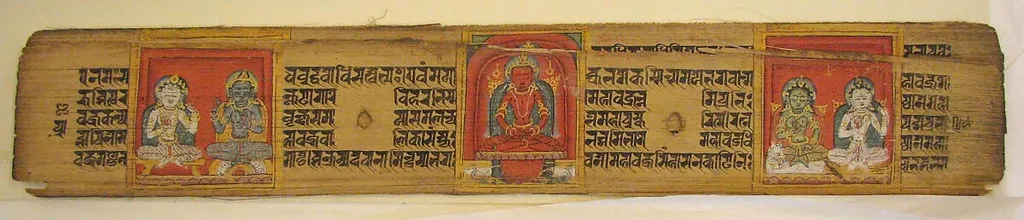
Untitled is an ink painting. It dates from 1349 and is held in the collection of the Metropolitan Museum of Art.
About this work
Technique & Style
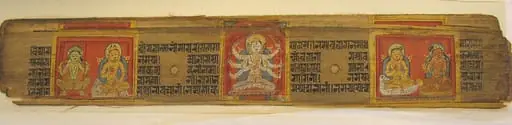
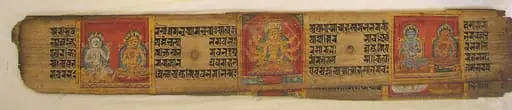
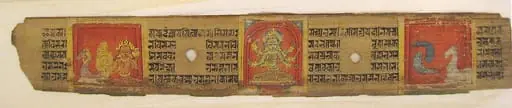
Created in 1349 in Nepal, this anonymous religious painting is executed in ink and color on palm leaves.
Created in 1349 in Nepal, this anonymous religious painting is executed in ink and color on palm leaves. The work functions as a devotional image within the Buddhist tradition, depicting a deity. Physically, the support consists of palm leaves, a material choice characteristic of the region and period, which constrains the composition to a narrow, horizontal format measuring 5.1 by 33.5 centimeters.
The artist employed ink outlines and colored pigments to render the figure, adhering to the stylistic conventions of Nepalese religious art from the mid-14th century. The piece is currently held in the collection of the Metropolitan Museum of Art.
History & Provenance
Created in 1349 in Nepal, this religious painting on palm leaves depicts Buddhist deities. The work was executed by an anonymous artist, with no specific patron or commissioning individual recorded in the available documentation. It is now held in the collection of the Metropolitan Museum of Art in New York, catalogued under the accession number 55.121.37.4.
While the date of inception is firmly established as 1349, the specific history of ownership prior to its acquisition by the museum remains unrecorded, and the sources list no past exhibitions. The piece is classified as a painting within the genre of religious art, executed in ink and color on its organic palm-leaf support.
Overview
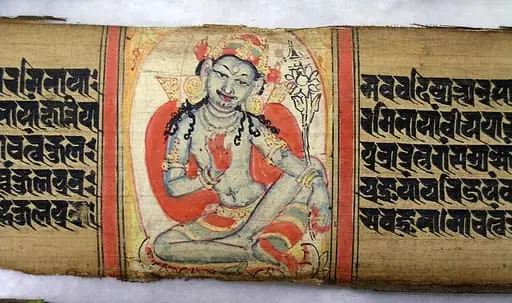
This untitled painting, rendered in ink and color on palm leaves, originates from Nepal's Kathmandu Valley during the 14th century. The small-scale work depicts a multi-armed, blue-skinned deity seated upon a lotus blossom, adorned with a jeweled crown. Its vibrant palette and intricate details exemplify the artistic practices of the period, demonstrating the careful craftsmanship applied to this durable, portable medium.
Subject & Meaning
The central figure of this painting is a blue-skinned deity, characterized by four arms and a jeweled crown, positioned atop a lotus flower. Such iconography is frequently associated with Buddhist traditions, where specific colors, gestures, and attributes convey distinct spiritual meanings and identities. The presence of these elements suggests the artwork served a devotional or instructional purpose within a Buddhist context.
Context
Created in the Kathmandu Valley during the 1300s, this artwork belongs to a period when palm leaves served as a primary surface for painting and manuscript illumination. Their inherent toughness and portability made them a practical alternative to paper, which had not yet become common in the region. This material choice, combined with the Buddhist subject matter, places the piece within a rich tradition of religious art and textual production.
Artist & collection

 Untitled
 Untitled
 Untitled
 Untitled
 Untitled
 Untitled
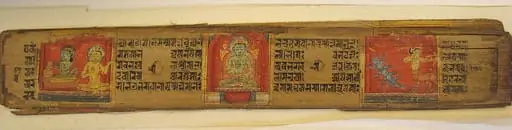
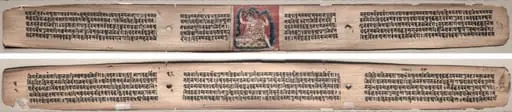 Folio 22 from a Gandavyuha-sutra (Scripture of the Supreme Array): Samantabhadra spinning clouds of things (recto); Text (verso)
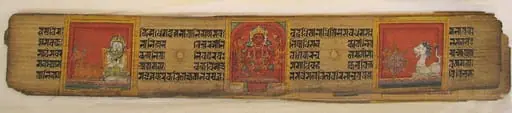
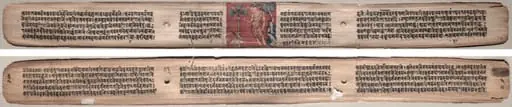 Folio 73 from a Gandavyuha-sutra (Scripture of the Supreme Array): Sudhana and an antelope (recto); text (verso)
 Untitled
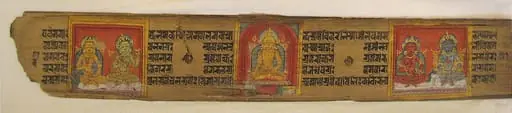
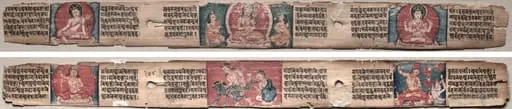 Folio 348 from a Gandavyuha-sutra (Scripture of the Supreme Array): Bodhisattva Manjushri with two forms of Avalokiteshvara (recto); Bodhisattva Samantabhadra purifies the path to enlightenment, with Manjushri (verso)