Artwork
Untitled
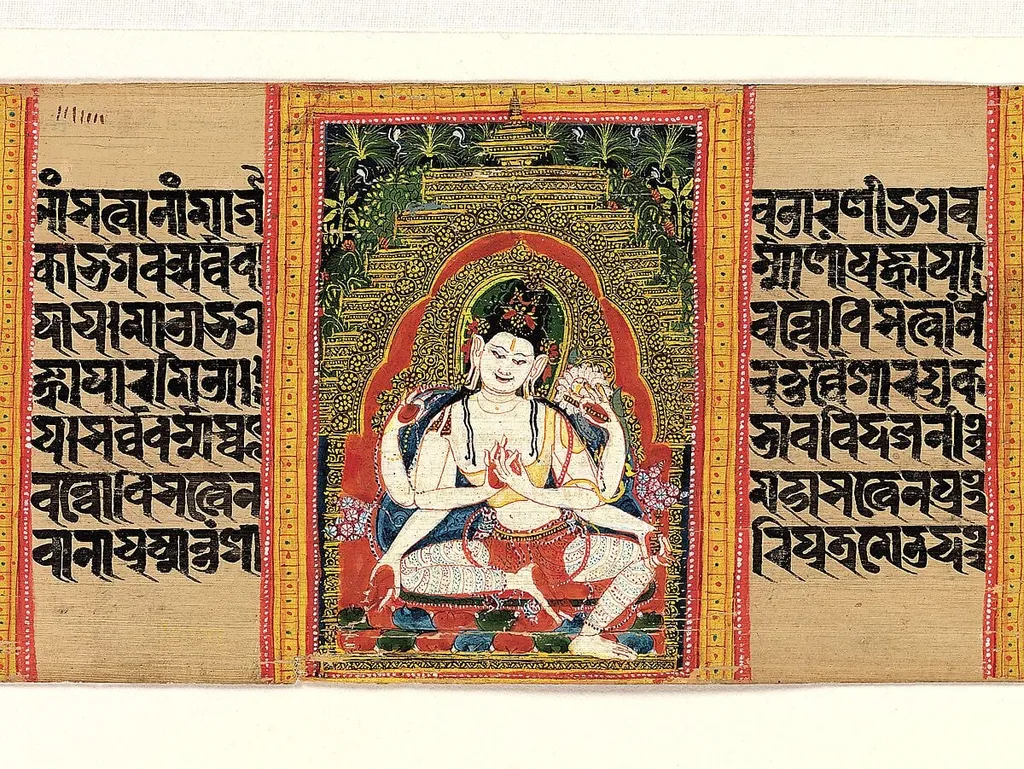
Untitled is a watercolor painting. It dates from 1116 and is held in the collection of the Metropolitan Museum of Art.
About this work
Subject & Meaning
As a central figure of Buddhist devotional art, Avalokiteśvara embodies the ideal of boundless mercy and the aspiration to alleviate suffering.
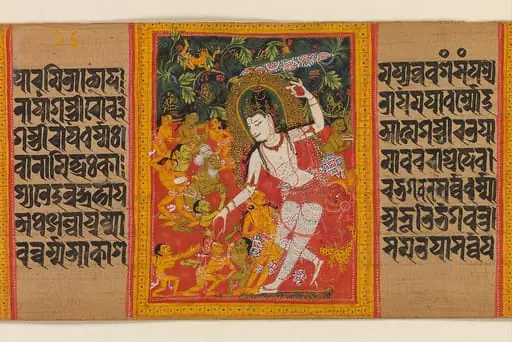
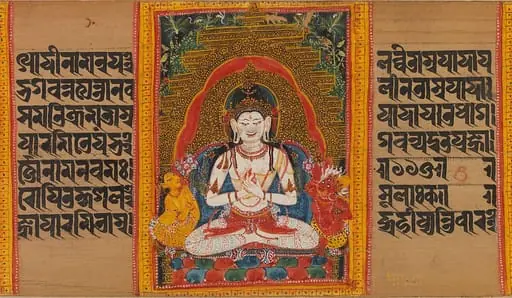
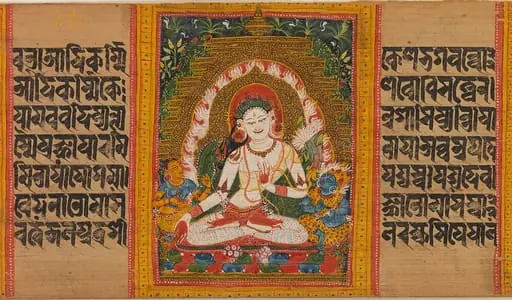
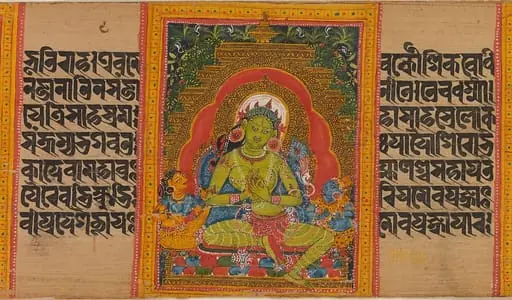
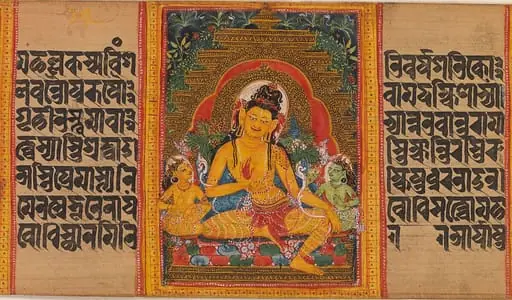
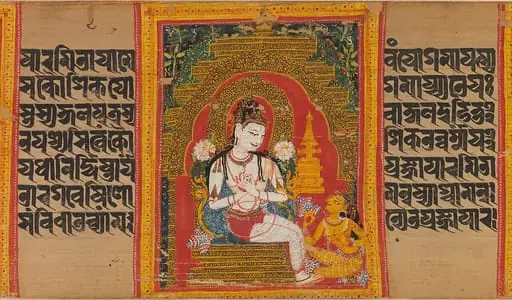
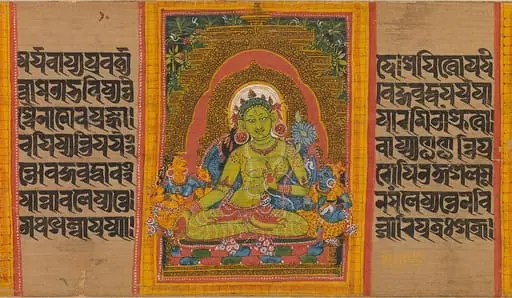
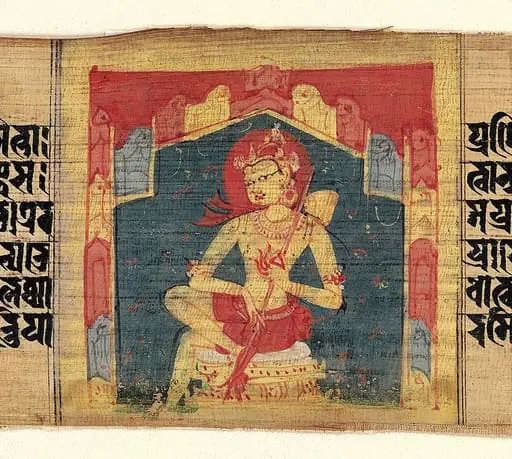
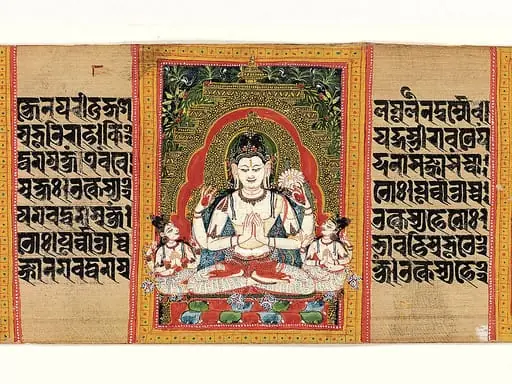
The work portrays Avalokiteśvara, the bodhisattva of compassion in Mahayana Buddhism. As a central figure of Buddhist devotional art, Avalokiteśvara embodies the ideal of boundless mercy and the aspiration to alleviate suffering. The painting’s religious genre and its depiction of this benevolent deity convey a symbolic message of compassion and spiritual guidance, reflecting the devotional context in which such images were created and venerated.
Technique & Style
The artwork is executed in opaque watercolor applied to a palm leaf support, a medium and substrate typical of Indian manuscript painting. Dated to 1116 and originating from India, the piece is classified as a religious painting depicting Avalokiteśvara, reflecting the iconographic conventions of Buddhist devotional art. The use of opaque watercolor allows for solid, flat areas of color that define the figure’s form and attire, while the narrow, elongated palm leaf format dictates a horizontal composition. Sources do not provide information on the work’s handling or current condition.
History & Provenance
Created in 1116 in India, this opaque watercolor on palm leaf depicts the Buddhist figure Avalokiteśvara. The work was produced by an anonymous artist, with no specific commissioning patron or detailed creation narrative recorded in available documentation. Following its production, the painting eventually entered the collection of the Metropolitan Museum of Art, where it is currently housed.
The object measures 7 units in height and 41.9 units in width. While the precise chain of ownership between its 12th-century creation and its acquisition by the museum remains unspecified in the provided records, its classification as a religious painting from this period is well-established.
This opaque watercolor on palm leaf, dated 1116, is held in the collection of the Metropolitan Museum of Art. The work is catalogued as a religious painting depicting Avalokiteśvara and Buddhist subject matter, and was produced in India. It measures 7 by 41.9 centimeters. No accession number or exhibition history is recorded in the available documentation.
Overview
This untitled work is a small, delicate painting rendered in opaque watercolor on a palm leaf. It depicts Avalokiteshvara, a significant Buddhist deity embodying compassion, seated serenely on a lotus. The artwork exemplifies the traditional practice of illustrating sacred figures on natural materials, offering a glimpse into early Indian religious art.
Context
Palm-leaf paintings like this untitled work were a common format for sacred manuscripts in early India. These delicate artworks often served to illustrate religious texts, making them integral components of Buddhist devotional and scholarly practices. Their creation on readily available natural materials reflects the artistic traditions of the period.
Artist & collection