Artwork
Untitled
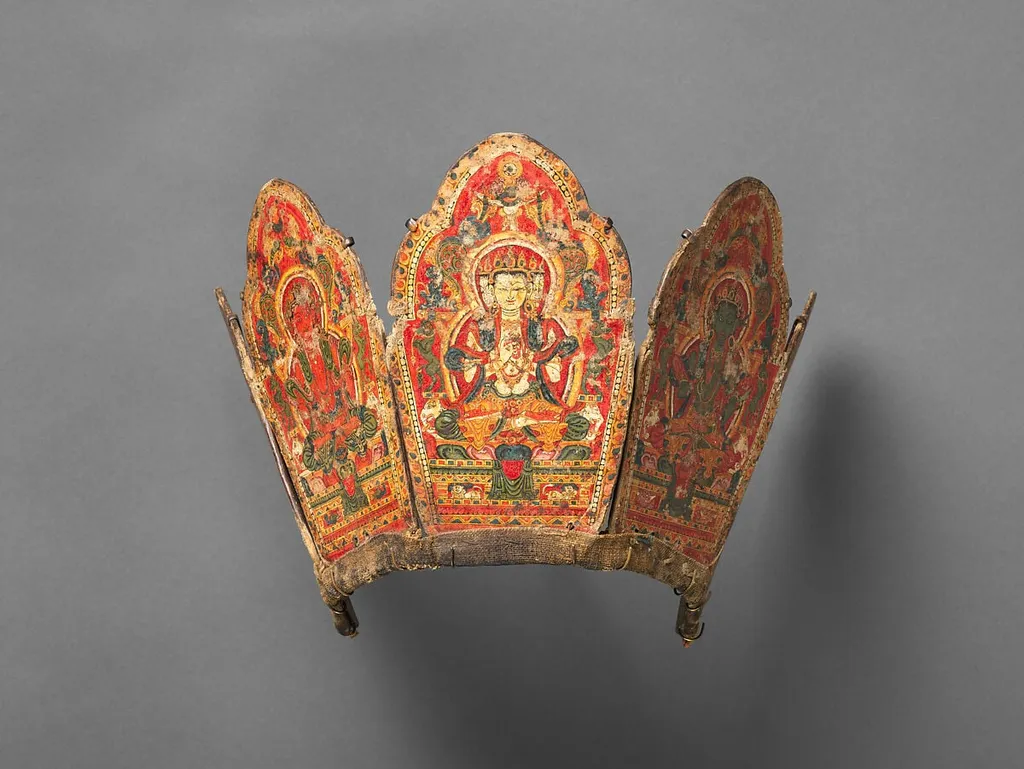
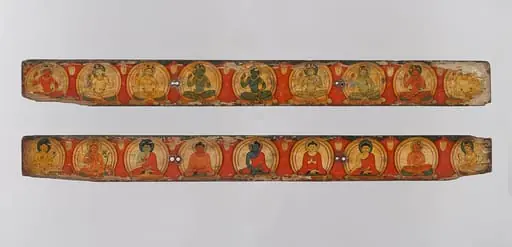
Untitled is a watercolor painting. It dates from 1400 and is held in the collection of the Metropolitan Museum of Art.
About this work
Subject & Meaning
As a religious artwork, its primary subject is the veneration of the Buddha, representing a focal point for worship rather than a narrative scene.
The work depicts the Buddha as a cult image, serving a specific religious function within its genre. Created around the year 1400 by an anonymous artist, the painting utilizes opaque watercolor and gold on board to render this sacred figure. As a religious artwork, its primary subject is the veneration of the Buddha, representing a focal point for worship rather than a narrative scene.
The inclusion of gold and the formal presentation of the deity underscore its status as an object of devotion. The Metropolitan Museum of Art identifies the piece specifically as a cult image, indicating its original purpose was likely ritualistic or devotional in nature.
Technique & Style
Created around 1400 by an anonymous artist, this religious painting utilizes opaque watercolor and gold applied to a board support. The work functions as a cult image depicting the Buddha. While specific details regarding the artist's handling techniques, the current physical condition of the panel, or a granular analysis of its formal stylistic qualities are not provided in the available records, the material composition is clearly defined as a combination of pigment and precious metal on a rigid substrate.
The classification as a painting within the religious genre underscores its devotional purpose, with the inclusion of gold likely serving to enhance the spiritual significance of the depicted figure.
History & Provenance
The untitled painting, dated to the year 1400, was executed by an anonymous hand using opaque watercolor and gold on a wooden panel; it belongs to the religious genre and portrays a Buddha figure functioning as a cult image. The work is recorded in the Metropolitan Museum of Art’s collection, which notes its inception on 1 January 1400, indicating that the museum has held the piece since its creation. No documentary evidence of a specific commission survives, and the artist remains unidentified, but the dating, medium, and subject are consistently documented across both sources.
The painting Untitled, dated to 1400 and classified as a religious work depicting Buddha, is held by the Metropolitan Museum of Art in New York. The museum’s records identify it as part of their collection, though no specific accession or inventory number is listed in the sources. The work is an opaque watercolor with gold leaf on board, categorized as a religious painting. No exhibition history for this work is documented in the provided documentation.
Overview
This untitled painting, rendered in opaque watercolor and gold on board, depicts a serene Buddha. The small-scale work was likely intended as a personal devotional object, designed for portability rather than display in a grand setting. Its luminous quality, achieved through the application of gold and color, suggests a sacred presence meant for intimate contemplation.
Context
This painting's compact size and durable medium suggest it was crafted for personal use and mobility. It may have been carried in a pocket or integrated into a traveling shrine, serving as a private focus for devotion rather than a public display. Such portable religious artworks are characteristic of certain traditions, particularly those found in regions like Tibet.
Artist & collection

- Untitled
 Untitled
 Untitled
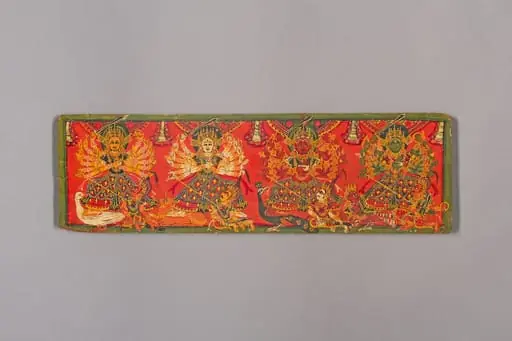 Untitled
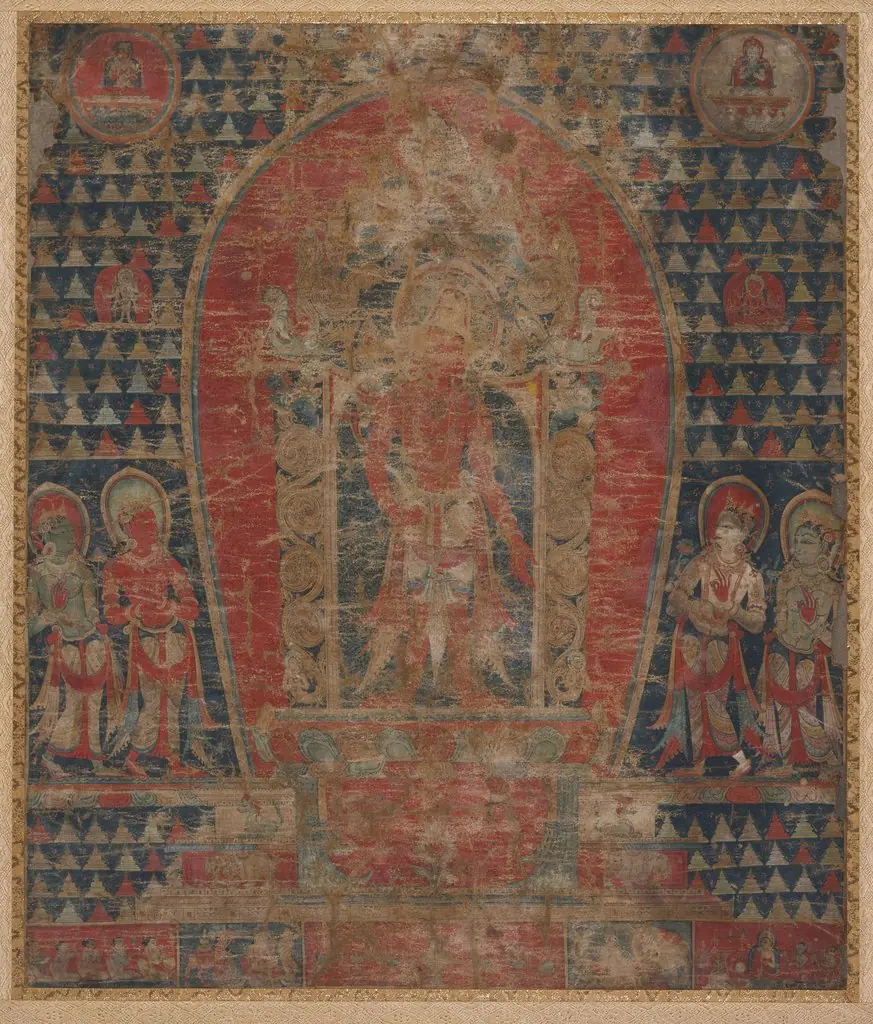 The Bodhisattva Avalokiteshvara and Four Taras
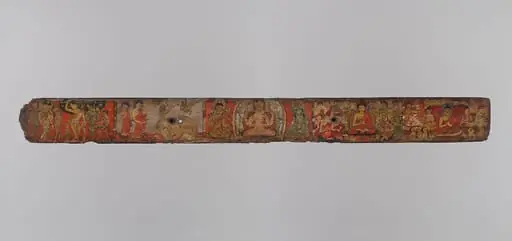 Untitled
 Manuscript of the Perfection of Wisdom in Eight Thousand Lines (Ashtasahasrika Prajnaparamita-sutra)
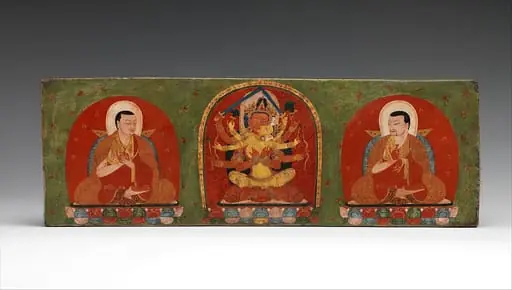 Untitled
 Perfection of Wisdom in Eight Thousand Lines: Ashtasahasrika Prajnaparamita: Back Cover
 Untitled
 不丹19世紀竹巴噶舉祖師藏巴甲熱·益西多杰及其相關傳承唐卡
 Untitled