Artwork
Untitled
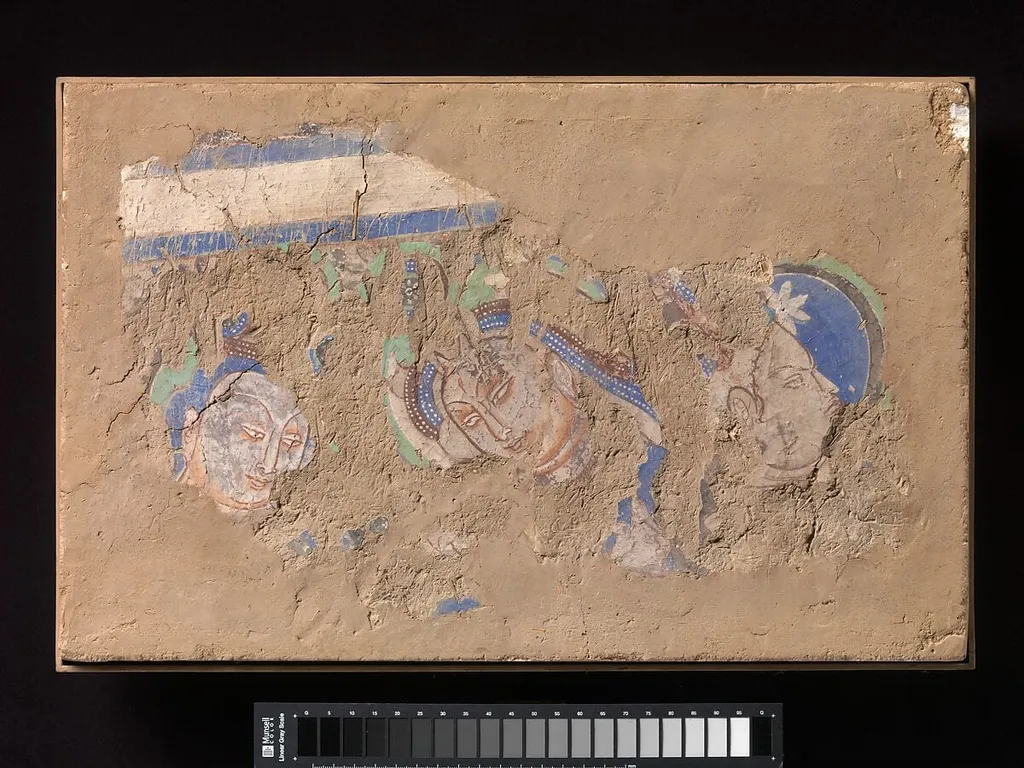
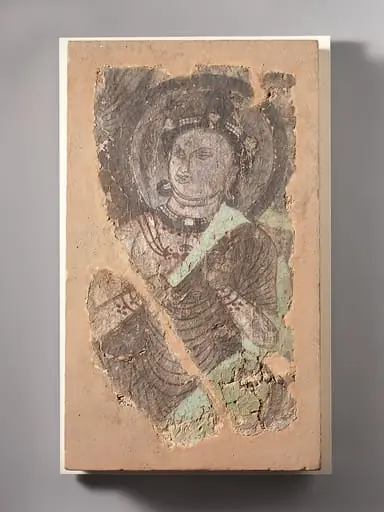
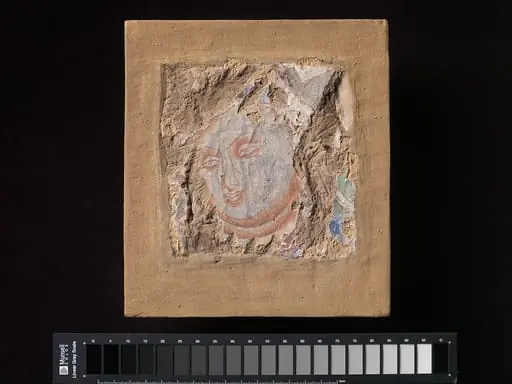
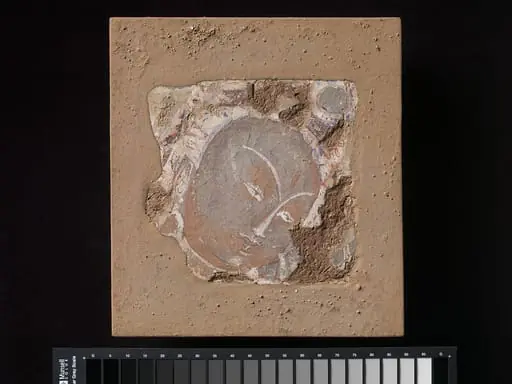
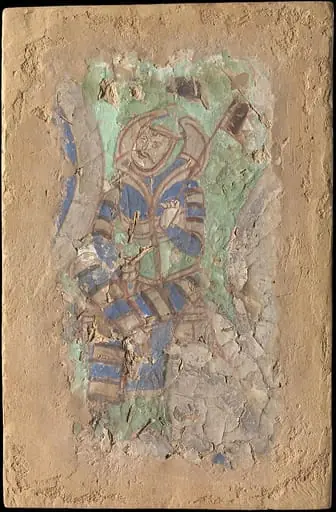
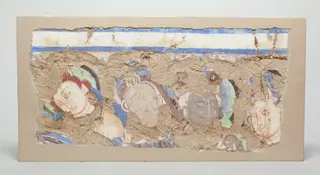
Untitled is an unspecified painting. It dates from 600 and is held in the collection of the Metropolitan Museum of Art. The work is a mural painted on mud plaster, depicting a bodhisattva poised upon a cloud with one hand raised in a gesture of benediction.
About this work
Subject & Meaning
The painting depicts a Bodhisattva, a figure central to Buddhist art who embodies compassion and assists in the enlightenment of others.
The painting depicts a Bodhisattva, a figure central to Buddhist art who embodies compassion and assists in the enlightenment of others. The iconography aligns with representations of this figure from the Northern and Southern Dynasties period in China, where such imagery served devotional and didactic functions within religious contexts. The mud plaster support and pigments indicate it was likely created for use in a temple or monastic setting, where visual narratives of Bodhisattvas conveyed spiritual ideals and aspirations.
Technique & Style
The painting employs pigments applied onto mud plaster, a traditional medium associated with early Chinese Buddhist murals. The support’s rough, absorbent ground suggests it was executed as wall painting or a panel prepared with a clay-based ground layer.
Stylistically, the figure is rendered with simplified linear outlines and flat color fields, consistent with the schematic rendering of a Bodhisattva typical of the Northern Qi to Sui transition period. Handling emphasizes contour over modeling, with minimal shading and a hieratic, frontal posture that prioritizes iconographic clarity over naturalism.
History & Provenance
The painting is an anonymous work produced in China, dated to approximately the 6th–7th century. It is executed in pigments on mud plaster and depicts a Bodhisattva, placing its creation within the religious artistic traditions of that period.
The work is held in the collection of the Metropolitan Museum of Art, where it is currently located. No further details regarding its commission, earlier ownership, or chain of custody prior to its accession are documented in the available sources.
The painting is held in the collection of the Metropolitan Museum of Art, where it remains part of the museum's holdings of religious paintings from China.
The work's dimensions, as recorded for the museum's catalogue, are 24.1 cm in height and 39.1 cm in width.
No specific accession number or exhibition history is documented in the available sources.
Overview
The work is a mural painted on mud plaster, depicting a bodhisattva poised upon a cloud with one hand raised in a gesture of benediction. The figure is surrounded by a luminous halo and dressed in draped robes rendered in muted reds, greens and gold tones. The composition occupies a wall of a cave sanctuary in the Xinjiang region of western China.
Context
During the period of Silk Road exchange, Xinjiang served as a cultural crossroads where Buddhist artistic motifs traveled between South Asia and East Asia. This mural exemplifies the syncretic visual synthesis that emerged as Indian Buddhist themes were adapted to Chinese aesthetic preferences, reflecting broader patterns of religious and artistic transmission along the trade routes.
Artist & collection