Artwork
Untitled
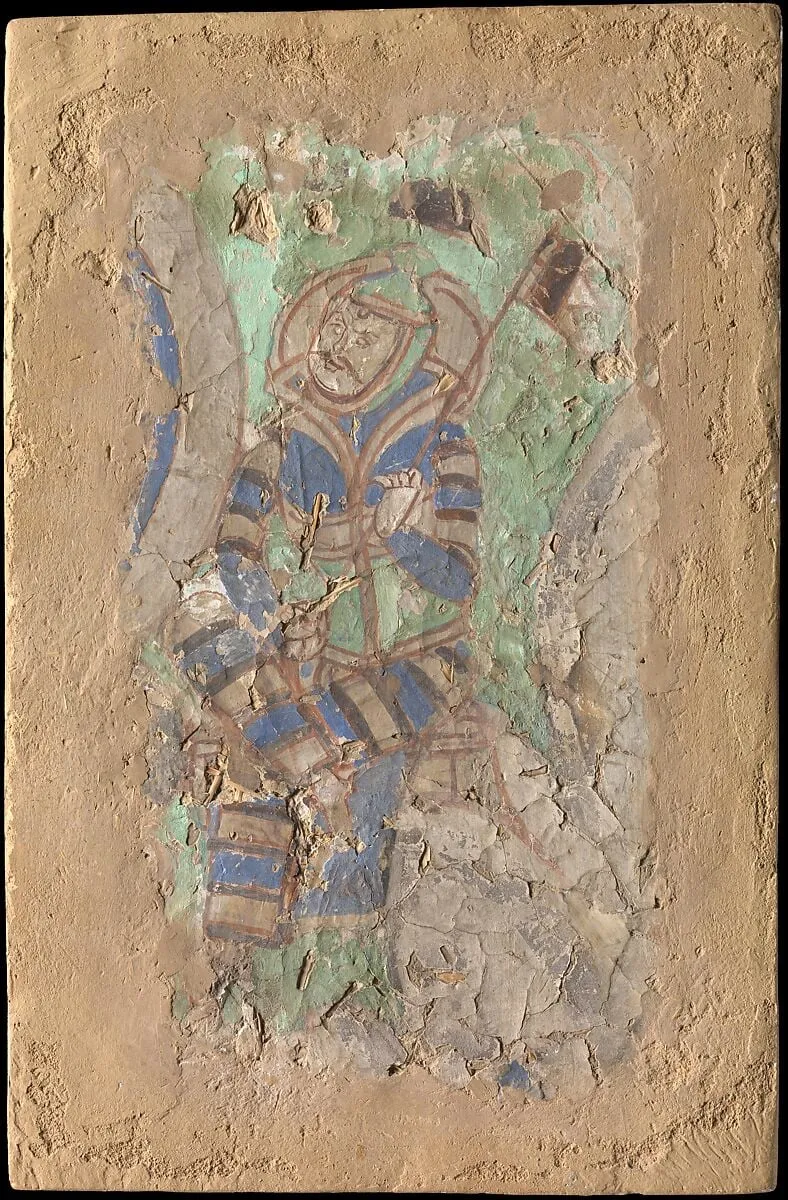
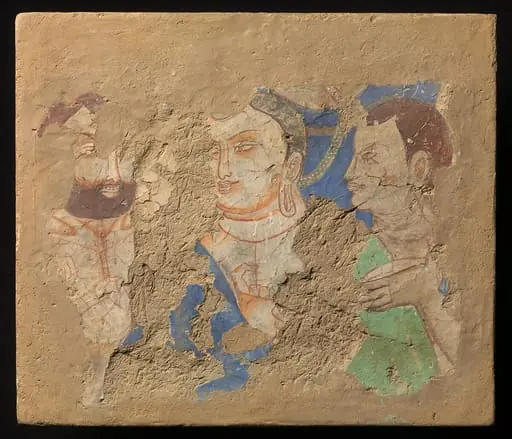
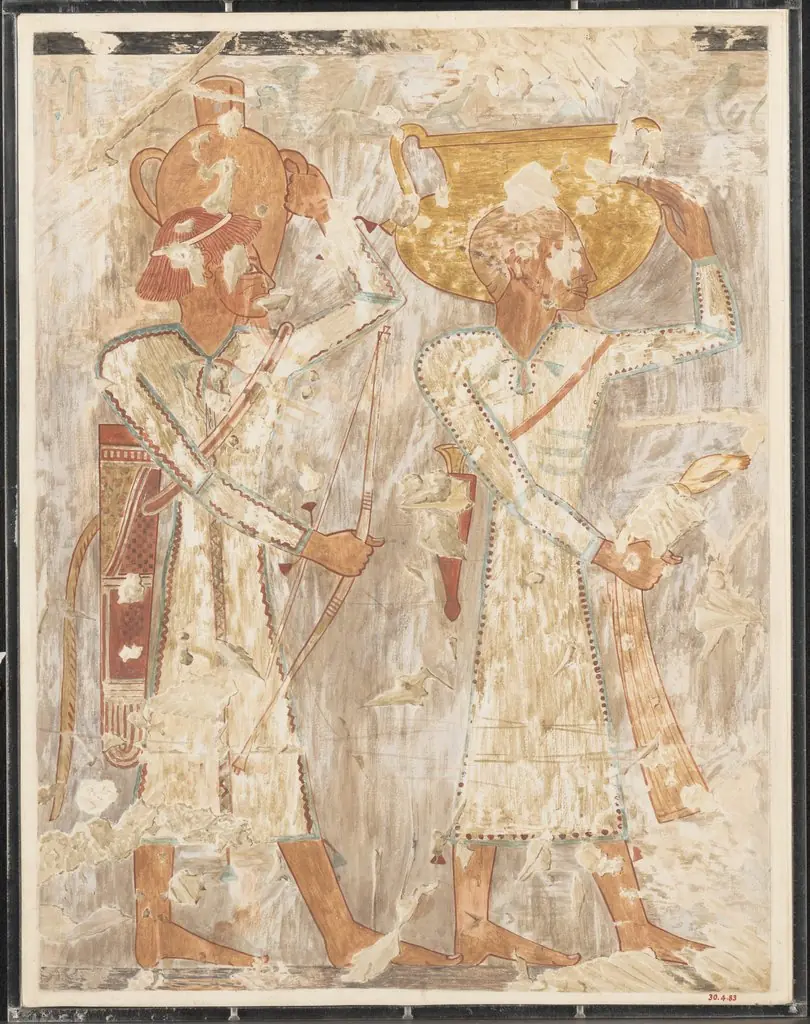
Untitled is an unspecified painting. It dates from 600 and is held in the collection of the Metropolitan Museum of Art. The work consists of two figures rendered side by side on a wall whose surface has faded to earthy reds and browns.
About this work
Subject & Meaning
The flat application of pigments and the abbreviated modeling suggest a schematic approach consistent with early Chinese Buddhist devotional imagery.
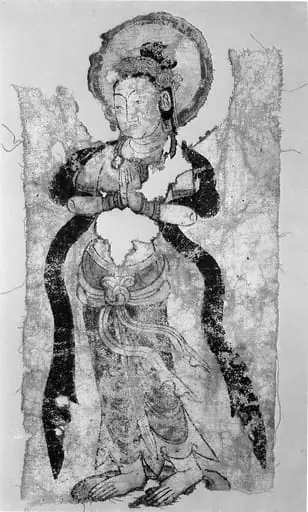
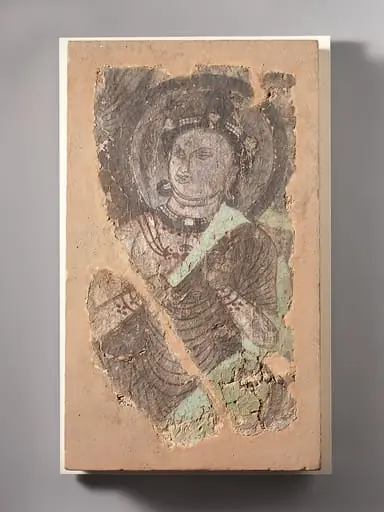
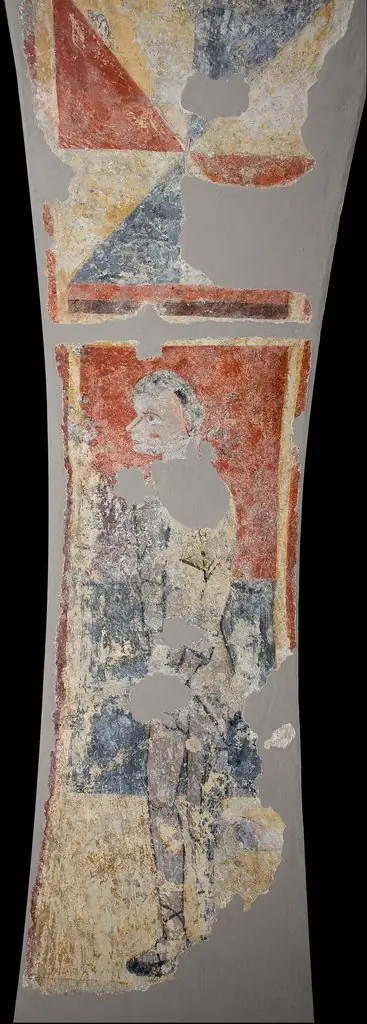
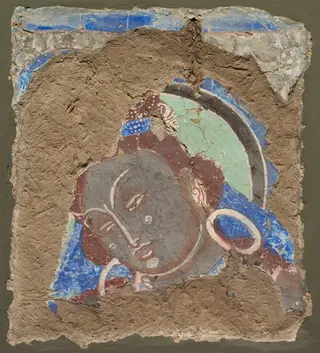
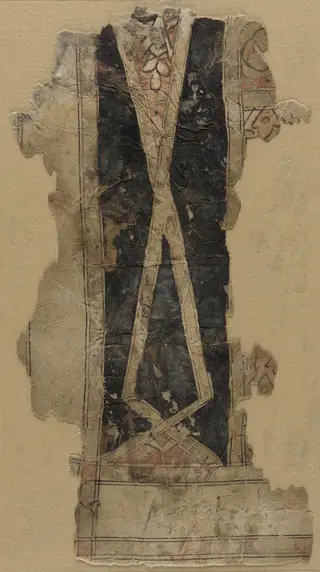
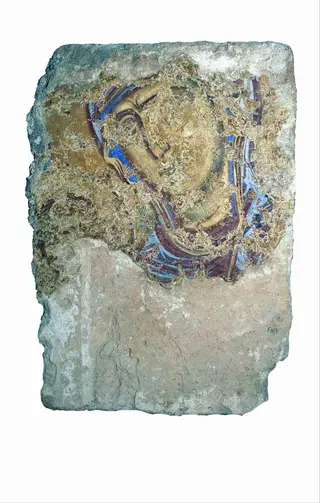
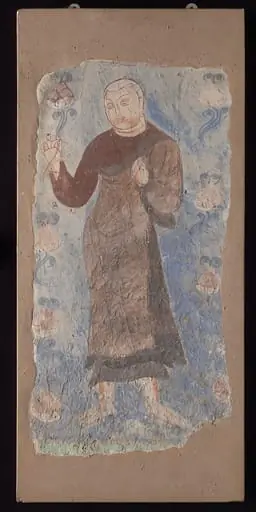
The fragment depicts a single standing male figure, rendered in a frontal pose with schematic proportions. The figure’s attire includes a draped outer robe, and the head is shown in three-quarter view beneath a simple cap or hair arrangement. The flat application of pigments and the abbreviated modeling suggest a schematic approach consistent with early Chinese Buddhist devotional imagery.
Given the anonymous origin and the Metropolitan Museum’s record of a male subject, the work likely functioned as a fragment of a larger narrative or iconic program, possibly from a mural or panel painting.
Technique & Style
The work employs pigments applied to a mud-plaster support, consistent with mural practices from the period indicated. The paint layer is preserved in a limited palette, with the figure rendered in a simplified linear style and minimal modeling, emphasizing outline and flat color fields rather than volumetric form. The small dimensions and compact composition suggest it may have functioned as a devotional panel or fragment of a larger ensemble.
No visible underdrawing or pentimenti are recorded, and the surface appears stable with only minor abrasions along the edges.
History & Provenance
The painting, executed in pigments on mud plaster, was created in China around the 6th to 7th century and is attributed to an anonymous painter. It is now held in the collection of the Metropolitan Museum of Art, which is also its current location. No further details about its commission, intermediate ownership, or acquisition history are documented in the available sources.
Context
The painting Untitled depicts a man and belongs to the religious genre within the broader tradition of Chinese paintings from the 6th–7th century. Executed in pigments on mud plaster, it measures 23.5 cm in height and 13.7 cm in width, and was created in China. Its religious subject matter and anonymous authorship situate it within the context of early Chinese religious art, reflecting spiritual themes prevalent in the period.
Scholarly attention to this work has been limited due to its unsigned and undated nature, though its inclusion in the Metropolitan Museum of Art collection underscores its cultural significance. The piece contributes to understanding anonymous artistic practices in early medieval China, where religious imagery was central to visual expression.
Overview
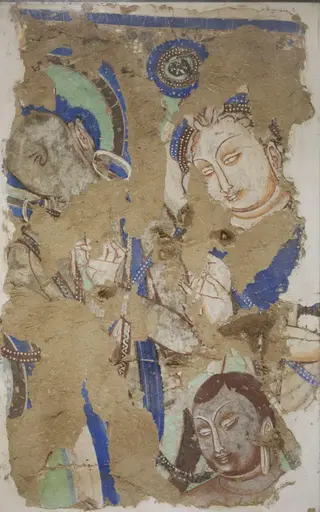
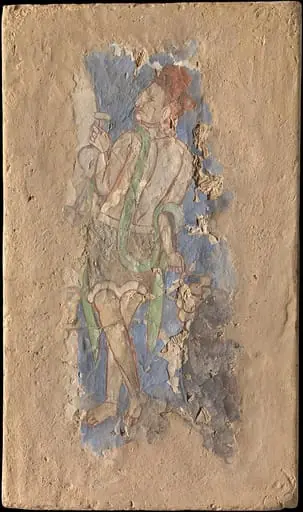
The work consists of two figures rendered side by side on a wall whose surface has faded to earthy reds and browns. Both individuals wear long, flowing robes and have dark hair, though the passage of time has softened the details of their faces. The composition is fragmentary, having been separated from a larger mural that once occupied the same space.
Artist & collection