Artwork
Untitled
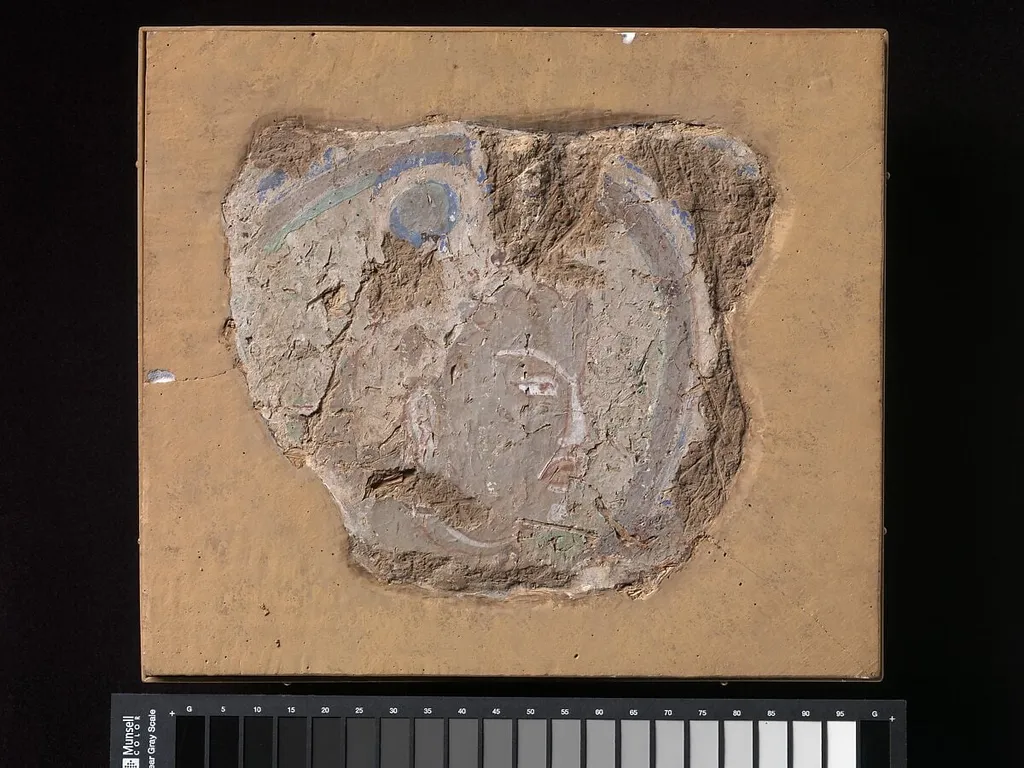
Untitled is an unspecified painting. It dates from 600 and is held in the collection of the Metropolitan Museum of Art.
About this work
Subject & Meaning
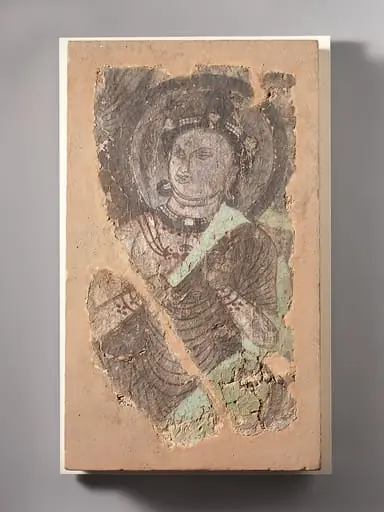
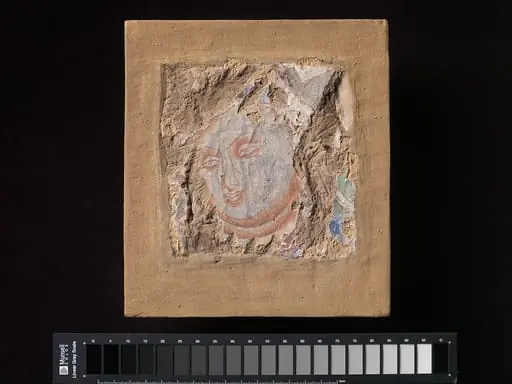
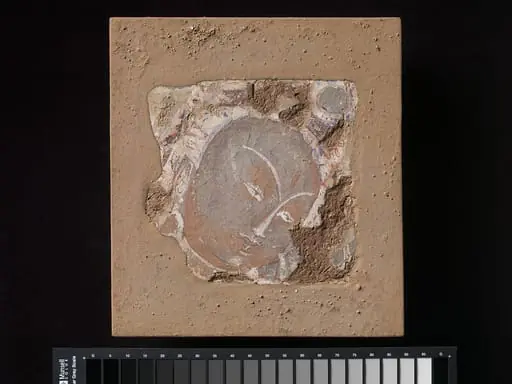
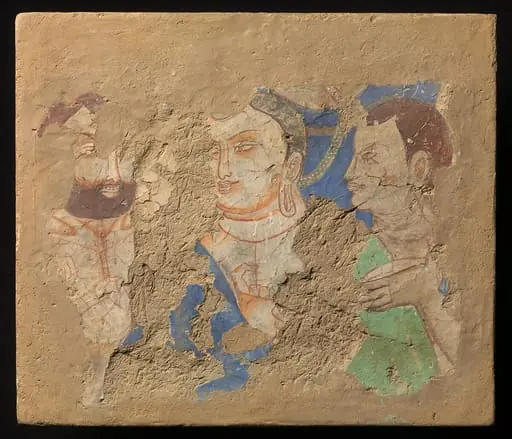
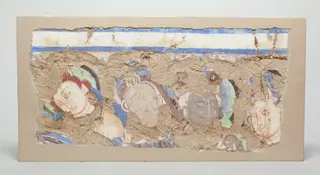
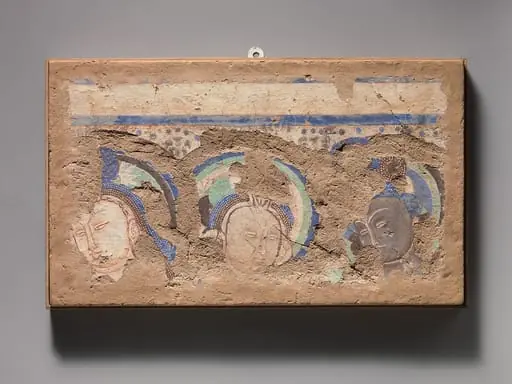
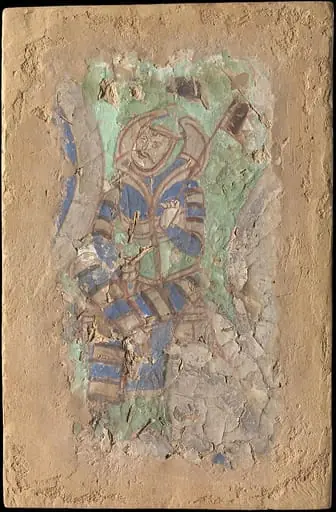
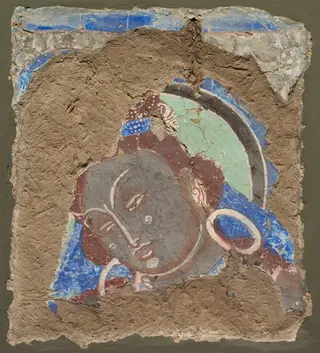
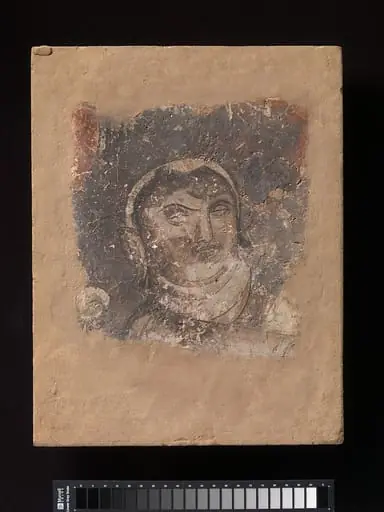
The painting presents a human head, rendered in pigments on mud plaster during the 6th–7th century in China.
The painting presents a human head, rendered in pigments on mud plaster during the 6th–7th century in China. Its religious genre indicates that the figure serves a devotional function, with the head likely embodying a symbolic or iconographic role within early Buddhist or related traditions. The depiction of a human head may function as an iconic representation in early Buddhist visual programs.
The work measures 15.2 cm by 17.1 cm and is part of the Metropolitan Museum of Art collection.
Technique & Style
Executed circa the 6th to 7th century in China, this religious painting features a depiction of a human head rendered with pigments applied directly onto a mud plaster support. The work measures 15.2 cm in height and 17.1 cm in width. Created by an anonymous artist, the piece uses a medium characteristic of mural traditions where colorants are bound to an earthen ground.
The classification as a painting underscores the application of pigment as the primary method of image creation on the fragile plaster surface.
History & Provenance
The work, titled Untitled, is a sixth‑to seventh‑century Chinese wall painting executed in pigments on mud plaster. An anonymous artist created the piece, which portrays a human head and was produced in China. The painting belongs to the genre of religious art and entered the collection of the Metropolitan Museum of Art in New York.
Its dating is based on stylistic analysis, placing it in the early medieval period. No records indicate a specific commission, prior owners, an accession number, or any exhibition history beyond its acquisition by the museum.
Overview
This untitled painting presents a solitary human head, rendered with pigments directly onto a mud plaster surface. Originating from a larger Buddhist mural within a cave temple in China's Xinjiang region, this fragment offers a glimpse into ancient religious artistry. Despite its age of approximately 1,400 years, the artwork retains its vibrant colors, a testament to its remarkable preservation.
Context
The exceptional preservation of the painting's vivid colors is primarily attributed to the arid climate of the Xinjiang desert. The dry air within the cave temple environment acted as a natural safeguard, protecting the delicate pigments and mud plaster from moisture and decay. This environmental factor allowed the artwork to endure for over a millennium, maintaining its original brightness.
Artist & collection